
 Call (323) 5215131
Should I Get My Aluminum Wiring Updated?
Updated June 2026
If your Los Angeles home was built between the mid-1960s and the late 1970s, there is a reasonable chance it still has aluminum branch circuit wiring inside the walls. RG Electric (License C10 #910807) encounters aluminum wiring regularly throughout older neighborhoods in the San Fernando Valley, Koreatown, Culver City, and across greater Los Angeles. The question of whether to update it is not one with a simple yes or no answer, but the factors that inform that decision are straightforward, and understanding them helps property owners make the right call before insurance or a home inspection forces the issue.
Why Aluminum Wiring Was Used in the First Place
Aluminum became a common wiring material during a period in the 1960s and 1970s when copper prices spiked significantly. Builders and electrical contractors turned to aluminum as a less expensive alternative, and for a time it was widely accepted. Millions of homes across the United States were wired with aluminum branch circuits during this period, and many of those homes are still standing in Los Angeles today.
The problem was not discovered immediately. Aluminum wiring performs adequately under normal conditions, but its physical and chemical properties create failure modes that copper does not. As those failure modes became better understood through fire investigations and engineering studies, the electrical industry shifted away from aluminum for residential branch circuit wiring. By the early 1980s, copper had become the standard for branch circuits in new residential construction, where it remains today.
What Makes Aluminum Wiring a Concern
The core issue with aluminum branch circuit wiring is not the wire itself under ideal conditions. It is the behavior of aluminum at the points where the wire connects to devices, terminals, and fixtures over time.
Aluminum expands and contracts more than copper does as it heats and cools during normal electrical use. Over years of thermal cycling, this movement causes connections at outlets, switches, and fixtures to loosen. Loose connections create resistance, and resistance creates heat. In a wall cavity with no airflow and no visibility, that heat buildup is the condition that precedes electrical fires.
Aluminum also oxidizes differently than copper. The oxide layer that forms on aluminum is a poor electrical conductor, which means that aluminum connections that are not treated or maintained correctly develop increasing resistance over time. That resistance generates heat at exactly the points in the circuit where connections are made, which are the same points that are most vulnerable to the loosening described above.
The Consumer Product Safety Commission has documented that homes with aluminum branch circuit wiring are significantly more likely to have outlets reach fire-hazard conditions than homes with copper wiring. The risk is concentrated at connection points, not in the wire runs themselves, which is why partial fixes that address only some connections are less reliable than comprehensive solutions.
What Aluminum Wiring Looks Like in a Los Angeles Home
Most homeowners do not know whether their home has aluminum branch circuit wiring unless they have been told by a previous inspector or electrician. The wiring is inside the walls and not visible during normal use. There are a few ways to identify its presence without opening walls.
The panel is often the first place to look. Aluminum branch circuit wiring will typically show silver-colored conductors entering the breakers rather than the orange-red color of copper. The panel may also have labels or markings from the original installation period that reference aluminum conductors.
Outlets and switches in an older home can sometimes be identified as aluminum-wired by looking at the devices themselves. Devices rated for use with aluminum wiring are marked CO/ALR, which indicates they are designed to handle aluminum’s expansion and oxidation characteristics. If the outlet or switch is a standard device without that marking, and the home is from the aluminum-wiring era, the connection between the aluminum wire and the non-rated device is a potential problem point.
A licensed electrician can confirm the presence of aluminum wiring during a service call or inspection. This is one of the assessments RG Electric performs when called to older properties for panel work, rewiring evaluations, or service calls that bring a technician into contact with the home’s wiring.
The Insurance Dimension
In Los Angeles, the insurance dimension of aluminum wiring has become more significant in recent years. California insurers, already under pressure from wildfire-related claims, have been tightening their underwriting standards for residential properties. Aluminum branch circuit wiring is on the list of conditions that some insurers will flag during coverage reviews, and properties with unaddressed aluminum wiring may face higher premiums, coverage restrictions, or requirements to remediate the wiring as a condition of renewal.
The pattern RG Electric sees most often is a homeowner who receives a letter from their insurance company requiring a licensed electrician to inspect the property and provide documentation about the wiring condition. In some cases the insurer requires remediation before renewing coverage. In others, the documentation alone satisfies the requirement if the wiring is found to be in acceptable condition with proper connections.
Property managers overseeing apartment buildings and multi-unit properties face the same dynamic, with the added complexity that aluminum wiring in a multi-unit building affects multiple units and common areas. The scope of remediation in a multi-unit setting is larger, and the insurance exposure from not addressing it is proportionally greater.
The practical guidance here is consistent with what RG Electric tells every customer in this situation: addressing aluminum wiring before insurance raises it as a condition of renewal gives the property owner more time, more options, and more control over the process than responding to an insurer’s deadline. A homeowner who proactively has their aluminum wiring evaluated and documented can choose the remediation approach that fits their budget and timeline. A homeowner responding to an insurer’s 30-day notice has far less flexibility. The cost of the work is the same either way. The timeline pressure and the stress are not.
Options for Addressing Aluminum Wiring
There is no single right answer for every property. The appropriate approach depends on the age and condition of the wiring, the scope of the property, the budget available, and what the insurance carrier specifically requires. RG Electric evaluates each situation individually and provides an estimate based on what the property actually needs rather than a one-size-fits-all recommendation.
Full rewiring with copper
The most comprehensive solution is to replace the aluminum branch circuit wiring entirely with copper. This eliminates the aluminum connection problem at every point in the circuit and brings the wiring up to current standards. For homes where the wiring is old, where there are already signs of connection degradation, or where the insurance requirement is specific about copper, a full rewire is the right answer.
A full rewire is a significant project. It involves opening walls in some locations, replacing all branch circuit conductors, and ensuring that all devices and fixtures are correctly rated for the new wiring. It requires a permit and a city inspection. RG Electric handles the full process including permit management and inspection coordination.
Pigtailing with copper at connection points
An alternative approach that is recognized by the CPSC and accepted by many insurers is pigtailing. This involves connecting a short length of copper wire to the end of each aluminum conductor at every outlet, switch, and fixture using a connector specifically approved for aluminum-to-copper connections. The copper pigtail then connects to the device, eliminating the direct aluminum-to-device connection that is the primary failure point.
Pigtailing does not replace the aluminum wire in the walls. It addresses the connection points where failure is most likely to occur. When performed correctly with approved connectors, it is a durable and code-accepted remediation. The work still requires access to every outlet, switch, and fixture in the home, and it must be performed by a licensed electrician using the correct materials and methods.
Whether pigtailing satisfies a specific insurer’s requirement depends on the insurer. Some accept it as full remediation. Others require complete copper rewiring. RG Electric can help property owners understand what their specific situation calls for before committing to an approach.
CO/ALR device replacement
In some cases, replacing standard outlets and switches with CO/ALR-rated devices is an appropriate partial measure. CO/ALR devices are specifically designed to handle aluminum wiring’s thermal expansion and oxidation characteristics at the connection point. This approach is less comprehensive than pigtailing or rewiring, and it does not address fixtures or other connection points that cannot use CO/ALR devices. It may be appropriate as part of a phased remediation plan or where the wiring condition is otherwise sound and the primary concern is device compatibility.
What Happens During a Wiring Evaluation
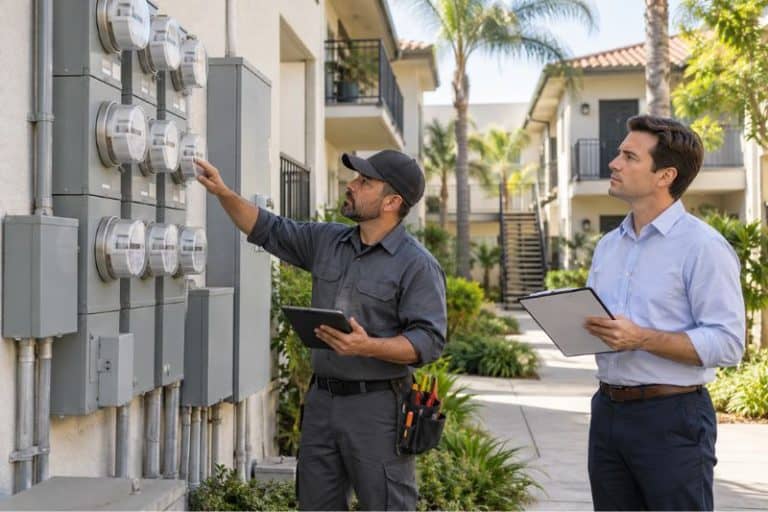
When a homeowner or property manager contacts RG Electric about aluminum wiring, the process begins with an assessment. A technician visits the property, examines the panel, checks accessible connection points, and assesses the overall condition of the wiring and devices. Findings are reported to Roy, the owner and master electrician, who reviews them and prepares an estimate that outlines the recommended approach with a clear explanation of each item.
For properties where the evaluation was triggered by an insurance requirement, RG Electric can provide the documentation the insurer needs, including a written assessment of the wiring condition and confirmation of any remediation work performed. This documentation is issued under the company’s C10 license and is acceptable to insurers who require a licensed contractor’s assessment.
RG Electric’s wiring services in Los Angeles cover the full range of aluminum wiring remediation, from single-room pigtailing to whole-home copper rewires. Every project is permitted, inspected, and backed by the 12-month workmanship guarantee that applies to all of RG Electric’s completed work.
Signs That Aluminum Wiring Connections Are Degrading
In some properties, aluminum wiring connection problems manifest as observable symptoms before they cause a fire or a significant failure. Knowing what to look for allows homeowners and property managers to identify a potential problem before it becomes an emergency.
Outlets or switches that are warm to the touch, even when nothing is plugged in or the switch is in the off position, indicate that resistance is generating heat at the connection point. This is one of the most direct signs of a failing aluminum connection and should be treated as an urgent concern.
Flickering lights that are not explained by a loose bulb or a dimmer compatibility issue may indicate a loose connection in the circuit feeding the fixture. In an aluminum-wired home, this kind of intermittent connection problem often traces back to the expansion-and-contraction loosening of the wire at a switch or junction point.
Outlets that have stopped working, particularly in a home where no other circuits were affected and the breaker has not tripped, can indicate that a connection has failed at the outlet itself. In aluminum-wired homes, this type of localized failure is more common than in copper-wired homes and warrants a professional evaluation rather than a DIY fix.
A burning smell near an outlet or switch, or discoloration on the outlet cover plate, is a serious warning sign that should prompt an immediate call to a licensed electrician. These symptoms indicate that heat is already present at the connection point at a level that is creating a fire risk.
None of these warning signs should be treated as a minor inconvenience or addressed with a temporary fix like replacing the outlet cover or tightening the device in the box. They are the visible end of a process that has been developing inside the wall for some time. The appropriate response is a diagnostic service call with a licensed electrician who can assess the full circuit, not just the visible symptom.
Why This Is Not a DIY Project
Aluminum wiring remediation requires a licensed C10 electrical contractor in California. The work involves opening electrical devices, working with live circuits, and using specific approved materials and methods for aluminum-to-copper connections. Incorrect pigtailing using the wrong connector type, or connections made without proper technique, can create failure points that are worse than the original aluminum connection.
A handyman who replaces outlets in an aluminum-wired home using standard copper-rated devices and standard connection methods is creating exactly the kind of incompatible aluminum-to-device connection that the remediation is supposed to eliminate. RG Electric regularly encounters properties where a previous repair of this type has left connections that are more problematic than what was there before.
The permit and inspection requirement for rewiring work is also a practical reason to use a licensed contractor. A rewire performed without permits has no inspection record and no city approval. For a property owner dealing with an insurer who requires documentation of remediation, unpermitted work provides no protection and may create additional complications.
RG Electric’s electrical repair services in Los Angeles include assessment and remediation of aluminum wiring conditions across all property types, from single-family homes in Sherman Oaks and Encino to multi-unit apartment buildings in Van Nuys, Inglewood, and Downtown Los Angeles. Every evaluation starts with a clear assessment of what is actually present and what the property owner’s specific situation requires.
For immediate assistance or to schedule a professional evaluation, call RG Electric directly at (323) 521-5131.