
 Call (323) 5215131
What RG Electric’s 12-Month Workmanship Guarantee Actually Covers
Updated July 2026
You call an electrician, pay for the repair, and two weeks later something goes wrong again. Now you’re deciding whether to call the same person back and risk another bill for the same problem, or start over with someone new and pay for a second diagnosis from scratch. That moment, more than almost any other, is where trust in a contractor either holds or breaks. RG Electric is a licensed C10 electrical contractor, License #910807, serving homeowners, property managers, and building owners across Los Angeles, and every job we complete carries a 12-month workmanship guarantee. This is what that guarantee actually means, what it covers, what it does not, and why we’re able to offer it when many electricians in this market cannot.
What “We Stand Behind Our Work” Actually Means
Almost every contractor says some version of “we stand behind our work.” Very few put a specific timeframe and a specific promise behind that phrase, because doing so means accepting real financial responsibility if something goes wrong after the truck has already left. RG Electric’s guarantee is simple and specific. For 12 months after a job is completed, if the workmanship itself fails, meaning the repair, replacement, or installation we performed develops a problem, we return and correct it at no additional charge. No new service call fee, no new diagnostic charge, no negotiation about whether it’s really our responsibility.
This matters more in electrical work than in most trades, because electrical failures are not always immediately obvious. A termination that isn’t quite torqued to spec, a connection that’s slightly loose behind a cover plate, or a device that was installed correctly but happens to fail early can all surface weeks or months after the original visit, not on the same day the work was performed. A guarantee that only covers the day of the appointment protects the contractor, not the customer. A 12-month guarantee protects the customer through the window where these issues actually tend to show up, which in our experience across hundreds of Los Angeles homes and buildings is almost always within the first year, not years down the line.
It also changes the incentive on our side of the relationship. When a contractor knows they’ll be the one coming back to fix any issue with their own work for a full year at no charge, it changes how carefully that work gets done the first time. A rushed termination or a shortcut taken to save fifteen minutes on site stops looking like a way to save time and starts looking like a callback waiting to happen. That’s by design.
What the Guarantee Covers, and What It Does Not
A guarantee is only useful if it’s honest about its limits, so it’s worth being direct about both sides of this rather than letting the term do vague marketing work it can’t actually back up. The guarantee covers the workmanship on the specific repair, replacement, or installation we performed. If a GFCI outlet we installed stops functioning, if a breaker we replaced fails, if a connection we made comes loose, or if a fixture we mounted develops a fault, that falls under the guarantee and we correct it at no charge, full stop.
The guarantee does not cover a new, unrelated problem that develops somewhere else in your electrical system. It does not cover damage caused by something outside our work, such as a separate wiring fault we were never asked to address, water intrusion after the original job that has nothing to do with what we installed, or a device failure caused by a manufacturer defect rather than the installation itself. It also does not extend to work performed by someone else after we’ve left the property, since we can only stand behind conditions we control.
When we’re not certain whether an issue is connected to our original work, we investigate first and explain clearly what we find before doing anything else. If it turns out to be a genuinely new issue rather than a continuation of the original one, we’ll still come out and take care of it, but that visit is treated like any other service call rather than a guarantee claim. We would rather walk a customer through that distinction honestly on the phone than have them discover it as a surprise on an invoice.
A Real Example: A GFCI Replacement in Sherman Oaks
This scenario has played out enough times that it’s worth walking through directly. A homeowner in Sherman Oaks calls about a GFCI outlet in the kitchen that won’t reset. Our technician diagnoses the fault, replaces the device, tests it under load, and confirms it’s working correctly before leaving the property. Three weeks later, the customer notices a different symptom, this time something connected to the same circuit but presenting differently than the original complaint.
Under our guarantee, that follow-up visit costs nothing. We’re not going to charge for a second service call on a circuit we were already working on inside the guarantee window, even if the specific symptom looks slightly different the second time around. The customer is already, in a very real sense, our customer, and we treat the situation accordingly rather than starting the billing relationship over from zero as though we’d never met. In this particular case, the second visit traced back to a loose neutral connection in the same junction box the GFCI fed from, a condition that had likely existed before our original visit and only became apparent once load patterns shifted slightly. We corrected it at no charge and documented the finding for the homeowner’s records, including photos of the corrected connection for their own file in case the issue is ever relevant to an insurance conversation down the road.
This is also why we take documentation seriously on every job, not just the larger commercial ones. Knowing exactly what was done, where, and when makes it much easier to determine quickly whether a follow-up issue falls inside the guarantee or outside it, which protects the customer from a lengthy back-and-forth and protects us from disputes about what was or wasn’t part of the original scope.
When a Follow-Up Issue Falls Outside the Guarantee
It’s worth showing the other side of this too, since a guarantee that never has an edge case isn’t really being explained honestly. Say the same Sherman Oaks homeowner calls back four months later, but this time about a flickering light fixture in an entirely different room, on a different circuit, with no connection to the original GFCI work. That’s a new issue. We’ll still come out and diagnose it, and we’ll be just as direct and thorough as we were the first time, but it’s billed as a standard service call rather than covered under the guarantee, because it has nothing to do with the work we originally performed.
We explain this distinction on the phone before a technician is ever dispatched, not after the visit when a customer is looking at two different outcomes and wondering why one call was free and another wasn’t. Clarity up front is part of what makes the guarantee mean something. A guarantee that quietly expands or contracts depending on the situation isn’t a guarantee, it’s a sales tactic, and that’s not how we operate.
Why Many Los Angeles Contractors Cannot Make This Same Promise
Los Angeles has no shortage of people willing to do electrical work, licensed and unlicensed. The difference shows up after the job is done, not while the sales pitch is being made. Some contractors, particularly unlicensed handymen, are simply not equipped to offer a real guarantee. If a repair fails, there’s no license on the line, no bond backing the work, and often no easy way to even reach the person who did the job in the first place. We regularly get called out to correct wiring that a handyman installed incorrectly, a regular outlet where code requires a GFCI, missing grounding, or connections that were never properly terminated. In almost every one of those cases, the original installer is long gone, and the homeowner has no recourse beyond paying someone else, us, to fix it correctly the second time.
Others avoid pulling permits or skip code requirements to keep costs down, which means the underlying work may never be inspected or verified by anyone outside the person who performed it. A guarantee from a contractor operating this way carries little practical weight, because there’s no accountability structure behind it beyond a verbal promise. And some contractors simply disappear after collecting a deposit, a pattern common enough across Los Angeles that it’s one of the first things we hear about from new customers who’ve been burned before switching to us.
RG Electric has operated under the same C10 license for more than 20 years. We’re bonded and insured, we pull permits when the work requires them, and our guarantee is backed by a business that has every incentive to do the job correctly the first time rather than hope a customer doesn’t call back. When you’re comparing quotes and one contractor’s price looks noticeably lower than the others, it’s worth asking directly whether they offer a written guarantee, and if so, what specifically it covers and for how long. The answer tells you a lot about what you’re actually paying for, and what you’re not.
What This Means for Property Managers and Multi-Unit Buildings
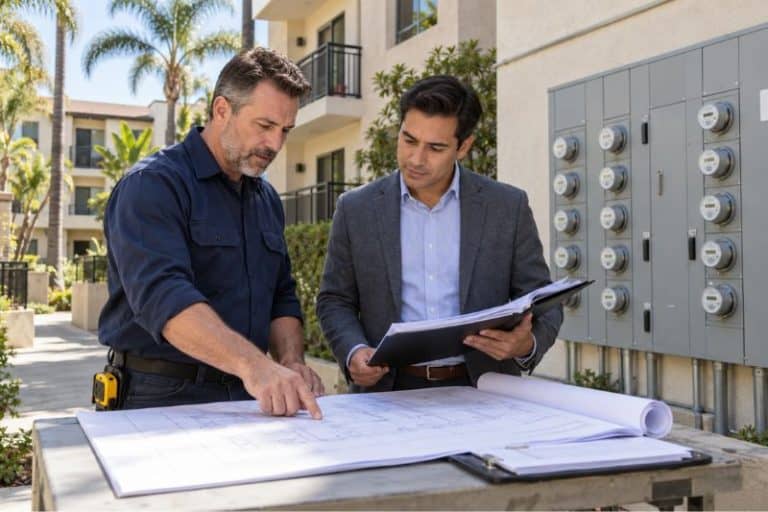
For property managers, a workmanship guarantee is not just a customer service nicety, it’s a practical risk management tool. A repeat electrical failure in an occupied unit means another tenant complaint, another maintenance ticket, and another scheduling conflict, on top of whatever the original issue already cost in time, materials, and tenant goodwill. When a contractor’s workmanship is guaranteed for a full year, a callback on that specific repair doesn’t turn into a second invoice or a second approval cycle routed back through ownership. It gets handled directly, without the friction of re-justifying a repeat expense.
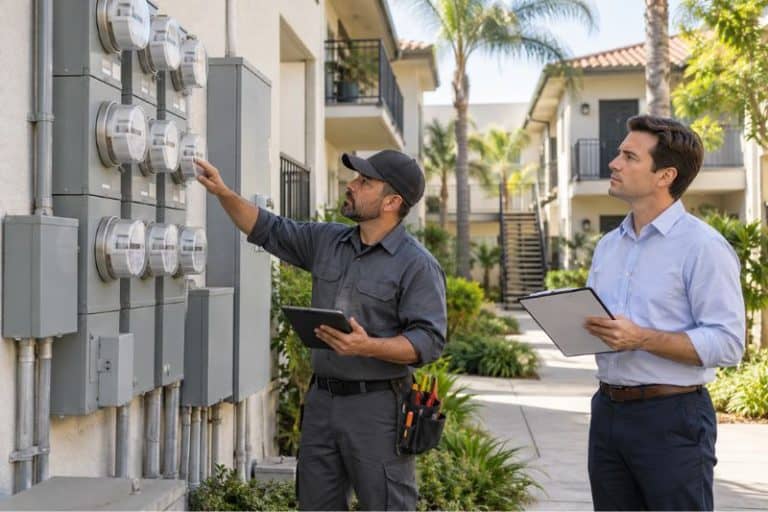
This becomes especially relevant across apartment buildings and multi-unit properties throughout Los Angeles, from Koreatown and Downtown LA to the San Fernando Valley communities of Encino, Sherman Oaks, and Van Nuys, where a single electrical contractor may be handling repairs across dozens of units over the course of a year. A guarantee that holds up consistently, unit after unit, is a meaningfully different vendor relationship than one where every callback is treated as a brand-new billable event requiring fresh authorization. For buildings dealing with insurance-driven compliance work or ongoing safety corrections, that consistency also supports the kind of documentation trail insurers and inspectors increasingly want to see, since it shows a pattern of corrections being completed and standing rather than repeatedly reappearing.
Property managers also benefit from having one number to call rather than juggling multiple vendors depending on which unit has an issue. When the same contractor who installed a panel, corrected a GFCI violation, or rewired a unit is also the one on the hook if that specific work fails, accountability doesn’t get lost in handoffs between different crews or subcontractors. Over a full year across a portfolio of buildings, that consistency adds up to meaningfully fewer surprises during budget planning, since repeat work on already-completed jobs simply doesn’t show up as an unexpected line item.
How the Guarantee Fits Alongside Permits and Inspections
A workmanship guarantee and a properly permitted job are related but distinct forms of protection, and it’s worth understanding how they work together. A permit and a passed inspection confirm that the work met code at the time it was completed, verified by someone outside our own company. The guarantee covers what happens after that inspection, during the period when a device could still fail even though it was installed correctly and passed muster on day one.
We follow code to the teeth on every job, which means the starting point is already work that’s built to pass inspection rather than work that merely functions. The guarantee is what happens on top of that baseline if something still goes wrong. Together, permitted work and a real guarantee give a homeowner or property manager two separate, independent reasons to trust that a job was done right, not just one contractor’s word taken on faith.
How to Know a Guarantee Is Real Before You Hire
Not every guarantee mentioned on a phone call survives contact with an actual problem. Before hiring an electrician based on a promised guarantee, it’s reasonable to ask a few direct questions and expect clear answers to each one.
- What specifically does the guarantee cover, workmanship only or parts as well
- How long does it last, and does that timeframe apply to every type of job or only certain ones
- Is it in writing anywhere, on the invoice or estimate, rather than just spoken on the phone
- Is the contractor licensed and bonded, since that’s what gives a guarantee any real weight behind it
A contractor who answers these questions clearly and without hesitation is generally a contractor confident enough in their own work to stand behind it. A contractor who gets vague, changes the subject, or can’t say how long their guarantee lasts is telling you something too. RG Electric’s guarantee applies to every job we complete, residential or commercial, and we’re glad to walk through exactly what it covers before any work begins, not after you’ve already signed off on an estimate.
For immediate assistance or to schedule a professional evaluation, call RG Electric directly at (323) 521-5131. Learn more about our electrical repair services in Los Angeles, or if you manage a multi-unit property, see our commercial electrical services in Los Angeles.
Always consult a licensed electrician like RG Electric before working on electrical systems.