
 Call (323) 5215131
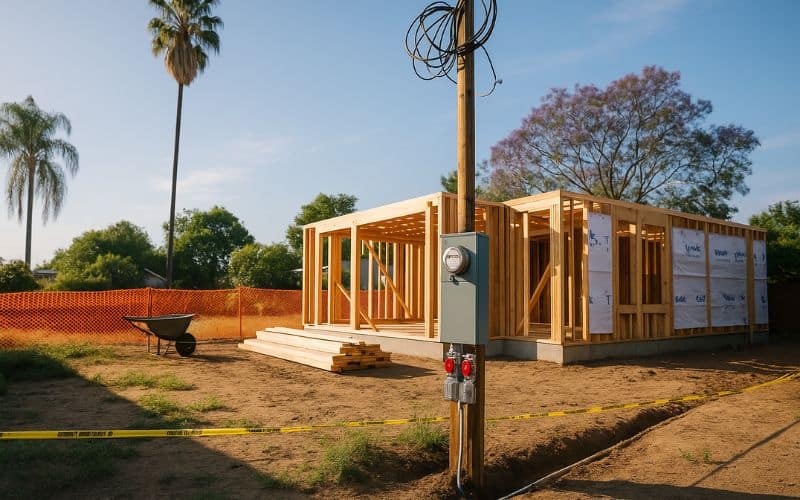
Temporary Power Pole Installation in Los Angeles
A construction site without power stalls before it starts. Tools sit idle, trailers run dark, and every trade scheduled to show up is waiting on something that should have been arranged weeks earlier. RG Electric, licensed C10 electrical contractor, License #910807, installs and permits temporary power poles throughout Los Angeles for general contractors, developers, and homeowners managing a remodel or new build, so the site has power on day one instead of week three.
Call (323) 521-5131 to schedule a site assessment for temporary power.
What Brings Most Customers to Us
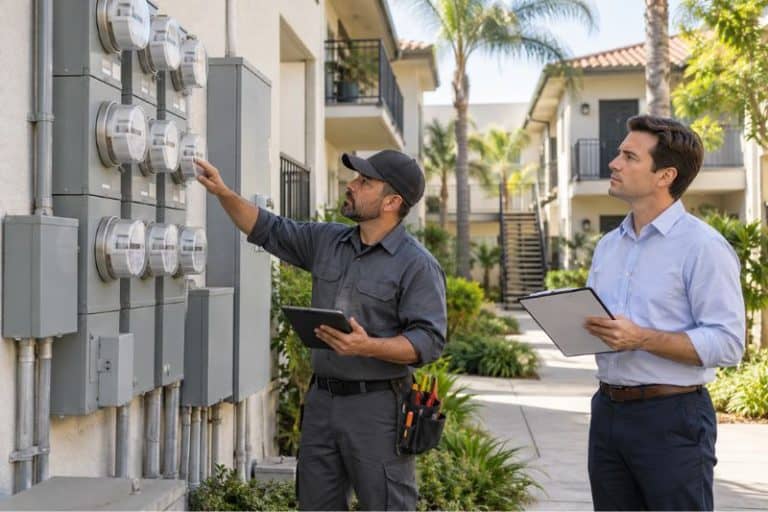
General contractors building in Sherman Oaks, Encino, and across the San Fernando Valley call us when a project’s start date is set but the site itself has no power source, and permanent service is months away. Developers working on multifamily builds in Koreatown, Downtown LA, and Culver City need temporary service sized for multiple trades running simultaneously, not a single-family setup. Homeowners mid-remodel in Beverly Hills, Santa Monica, and the Westside often discover they need temporary power only after their panel upgrade timeline runs longer than expected, and the crew is standing on site with nowhere to plug in.
Each of these situations shares the same underlying problem: the building permit already in hand does not cover electrical service to the site. A temporary power pole is its own installation, with its own permit and its own utility approval, and treating it as an afterthought is the single most common cause of an early-schedule delay we see.
Overhead and Underground Installation
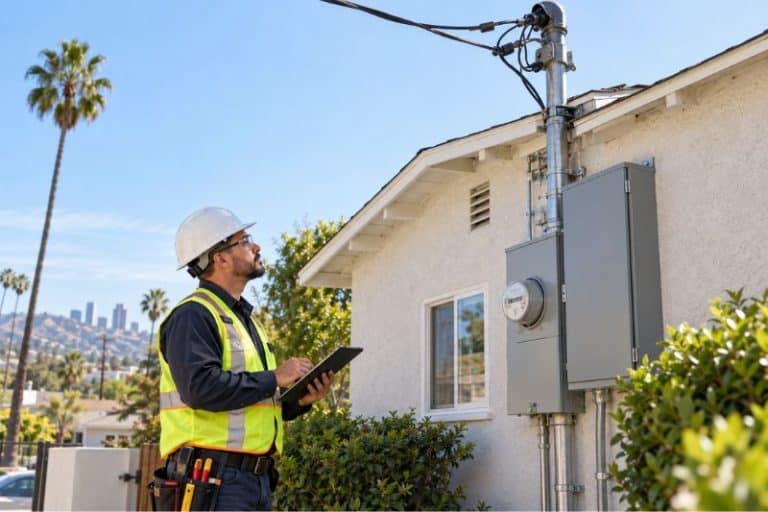
We install both overhead and underground temporary service, and site conditions usually decide which one fits. Overhead is faster to install and typically the lower-cost option, and it’s the right call on most residential remodels and smaller sites. Underground service makes sense where an overhead drop would have to cross a driveway, sidewalk, or an area with equipment traffic, which is common on tighter urban lots throughout Downtown LA and the Westside, or where the site’s layout rules an overhead run out entirely.
Both installation types require inspection and utility approval before the connection is energized. Trenching the service underground does not exempt it from that review. We build to code either way, meet the required siting clearances, and coordinate the inspection so the schedule doesn’t stall on a step that was skipped.
Sizing the Service Correctly
Temporary power is sized to what the site actually needs to run, not to a default. A single-family remodel with hand tools and basic site lighting typically runs on 100 amp service. Multifamily and small commercial sites, where several trades draw power at once, commonly need 200 amp service. Large developments running tower cranes, batch plants, or heavy equipment simultaneously may require 400 amp service or higher. We assess load during the site visit and size the pole to the project, not to whichever assembly happens to be on the truck, since undersizing means running out of capacity mid-project and paying to upgrade the temporary service a second time.
Every receptacle on the assembly is GFCI protected, which the National Electrical Code requires for construction power specifically because job site conditions, wet ground, damaged cords, shared use among multiple trades, create real shock risk. We don’t treat that as optional on any job, regardless of size.
Permitting and Utility Coordination
A temporary power pole requires its own permit, filed by a licensed C10 contractor, separate from the building permit already covering the project. Which department reviews it depends on where the site sits. Inside the City of Los Angeles, that’s the Los Angeles Department of Building and Safety. Outside city limits, in Pasadena, Burbank, Glendale, and unincorporated county areas, it’s a different building department entirely, each with its own review process. We confirm the correct jurisdiction before filing rather than after, since submitting to the wrong department resets the timeline.
Alongside the permit, the serving utility, LADWP, Southern California Edison, or a local municipal utility depending on the address, has to separately approve the connection and confirm service planning. We handle that request in parallel with the permit rather than waiting for one to clear before starting the other, which is usually the difference between a temp pole that’s live in a few weeks and one that drags into a month or more. For a full breakdown of what the permitting and inspection process actually involves, our guide on temporary power pole permits in Los Angeles covers it in detail.
Temporary Power for Multi-Unit and Commercial Developments
Property managers and developers working on apartment buildings and commercial sites throughout Torrance, Inglewood, and the South Bay have coordination needs a single-family remodel doesn’t. Multiple trades need reliable power at the same time, the service has to be sized correctly from day one since a mid-project upgrade costs more than getting it right the first time, and documentation, permits, utility approval, inspection sign-off, matters for insurance and lender requirements on top of code compliance.
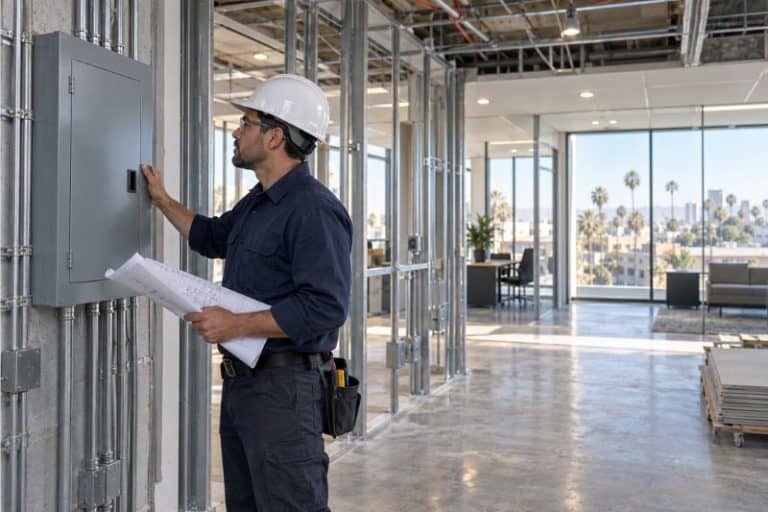
For developments where temporary power is one piece of a larger electrical scope, our commercial electrical services team coordinates the temp pole alongside permanent panel work, tenant improvement circuits, and everything else the project needs, so the same crew that sets the temporary service is available for the permanent work that follows it.
Our Process, Start to Finish
We start with a site visit to confirm amperage needs, siting, and distance to the utility’s existing drop. From there, we file the electrical permit with the correct jurisdiction and submit the parallel service request to the utility serving the address. We build the assembly to code, GFCI protection included, coordinate the inspection, and stay on the job until the utility energizes the connection.
Temporary service isn’t a set-it-and-forget-it installation. It’s tied to the life of the building permit, and when the permanent electrical service is inspected and approved, we come back, disconnect the temporary pole, and handle removal and site restoration as part of the original scope, not a separate call weeks later.
Costs and Timeline
There is no flat rate for temporary power, and any quote given without a site visit is a guess. Amperage is the biggest factor, distance from the utility’s drop matters, particularly for underground service where trenching adds cost, and jurisdiction fees vary by city. We price temporary power the same way we price every project: a site assessment and a written estimate scoped to what that specific job needs, not a chart of flat rates that ignores the site in front of us.
The physical installation itself is usually a half day of labor once materials are on site. The permit review and utility service planning are what take weeks, and requesting temporary power during pre-construction planning, rather than after the first trade shows up looking for an outlet, is the single best way to keep that timeline from becoming a schedule problem.
Scheduling and What to Expect
When you contact us about temporary power, a clear picture of the site, its address, what’s already been approved on the building permit, and roughly what the project involves, helps us prepare before the visit and give you a realistic estimate range up front. We provide free estimates for new temporary power installations, explain what the permit and utility process actually involves for that specific address, and don’t leave you guessing about what happens next.
We stand behind our work with a 12-month workmanship guarantee. If an issue comes up with the temporary service during that period, we come back without charging a second service call, since you’re already our customer.
Frequently Asked Questions
How soon can you get a temporary power pole installed?
The physical installation is fast, usually about half a day once materials are on site. The permit review and utility approval are what determine the real timeline, often several weeks, which is why we recommend starting the request during pre-construction planning rather than waiting until the site is already mobilized.
Do you handle both the permit and the physical installation?
Yes. We file the electrical permit with the correct jurisdiction, submit the parallel service request to the utility, build the assembly to code, and coordinate the inspection. You don’t need to manage the permitting process separately from the installation.
I’m not sure what amperage my site needs. Can you help figure that out?
Yes, that’s part of the site visit. We look at what the project will actually be running, the trades involved, and the timeline, and size the service accordingly rather than defaulting to whatever’s easiest to install.
Can you also handle the permanent panel installation once the project is further along?
Yes. Many of our temporary power clients have us return for the permanent electrical service once the site is ready, through our electrical panel services. Using the same contractor for both keeps site knowledge, documentation, and scheduling continuous instead of starting over with someone new.
What happens to the temporary pole when the project is finished?
Once the permanent electrical service passes inspection, we disconnect the temporary pole, remove the equipment, and restore the site. That removal is part of the original scope, not something you need to schedule separately.
For immediate assistance or to schedule a professional evaluation, call RG Electric directly at (323) 521-5131.