
 Call (323) 5215131
Electrical Permits in Los Angeles: What Property Managers and Homeowners Need to Know
Updated July 2026
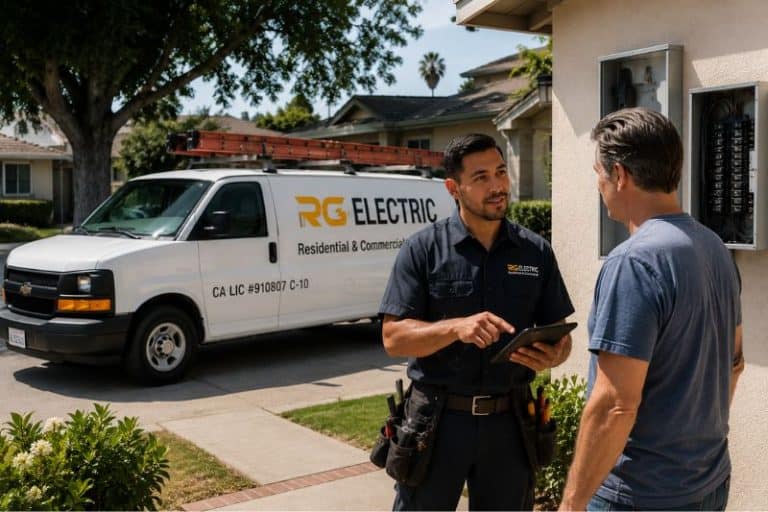
Electrical permits are one of those requirements that property managers and homeowners often treat as optional until something goes wrong. An unpermitted panel replacement surfaces during a real estate transaction. An insurance carrier asks for documentation that does not exist. An LADBS inspector finds work that was never approved and conditions a permit on corrections that now require tearing into finished walls. RG Electric is a licensed C10 electrical contractor, License #910807, serving residential and commercial properties across Los Angeles County. We handle permits on every project that requires one, and we have seen firsthand what happens when that step is skipped. This post explains what triggers a permit requirement in Los Angeles, how the process works, and what the consequences of unpermitted electrical work actually look like.
What triggers a permit requirement in Los Angeles
The Los Angeles Department of Building and Safety administers electrical permits under the California Electrical Code and the Los Angeles Municipal Code. The general rule is that any work that modifies the permanent wiring of a building, changes its electrical load, or affects the safety of the electrical system requires a permit before work begins.
Panel replacements and subpanel upgrades require permits without exception. This applies whether the panel is being replaced because it failed, because an insurance carrier required it, or because a load assessment determined that the existing panel cannot support the building’s current demand. The permit application for a panel replacement includes a load calculation, and the city inspector reviews both the installation and the calculation before issuing approval.
New circuits require permits. Adding a dedicated circuit for an EV charger, a kitchen appliance, a home office, or any other specific load is permitted work. The permit process confirms that the new circuit is correctly sized, that the panel has capacity to support it, and that the wiring meets current code requirements for the location and use of the circuit.
Rewiring projects require permits. Whether the scope is a full building rewire or targeted replacement of deteriorated wiring in a specific area, permitted work is required. This is particularly relevant for older Los Angeles buildings with knob-and-tube wiring, aluminum branch circuits, or cloth-insulated wiring, where the condition of the existing system requires replacement rather than repair.
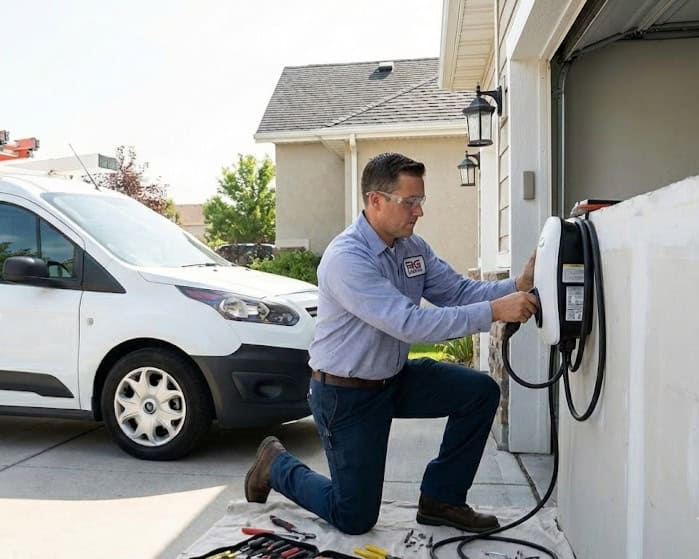
EV charger installations require permits. California’s Title 24 energy code governs EV readiness requirements, and LADBS enforces permit requirements for charger installations as part of its electrical permit process. A charger installed without a permit, on a circuit that was not sized and inspected for the purpose, creates both a code violation and a safety concern that follows the property.
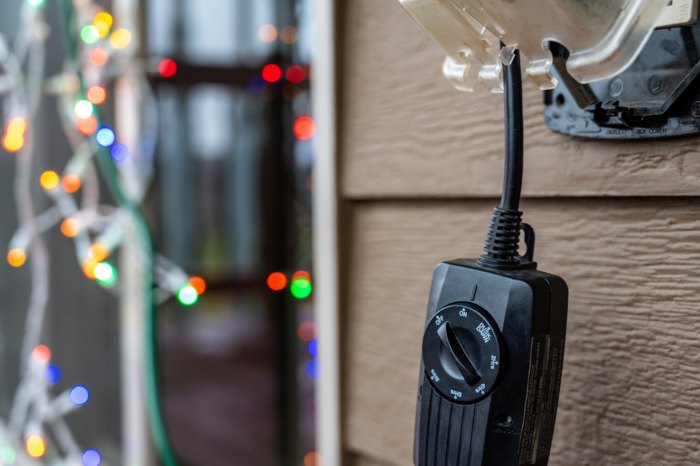
Work that does not typically require a permit includes like-for-like replacements of devices such as outlets, switches, and fixtures, where the circuit is not being modified. Replacing a GFCI outlet in a bathroom, swapping a light fixture, or replacing a failed breaker with an identical breaker in the same panel slot are examples of work that does not trigger a permit requirement in most cases. The distinction is whether the work changes the circuit or the system, not just the device.
How the LADBS permit process works
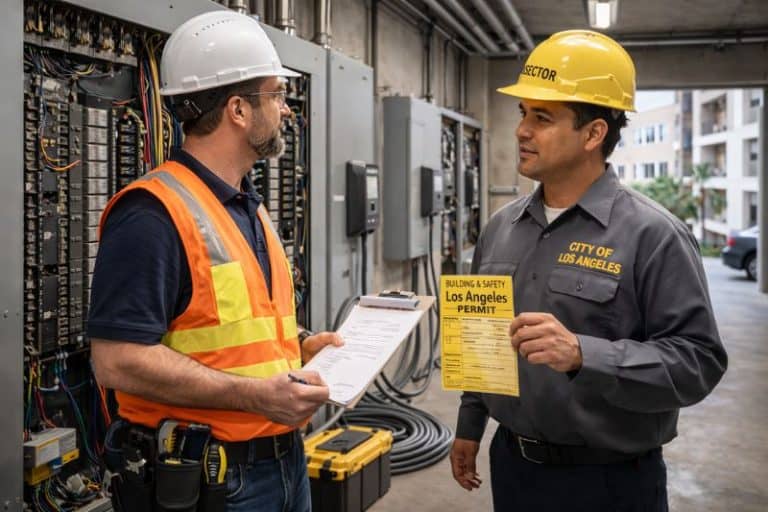
The permit process for electrical work in Los Angeles begins with an application submitted to LADBS. For straightforward projects such as a panel replacement or a circuit addition, the application includes a description of the work, a load calculation, and identification of the licensed contractor performing the work. For larger or more complex projects, the application may require engineered drawings or additional documentation.
LADBS reviews the application and issues the permit when the documentation is complete and the proposed work meets code requirements. Processing time varies depending on the project type and the current volume of applications. Permit fees are calculated based on the value of the work being performed.
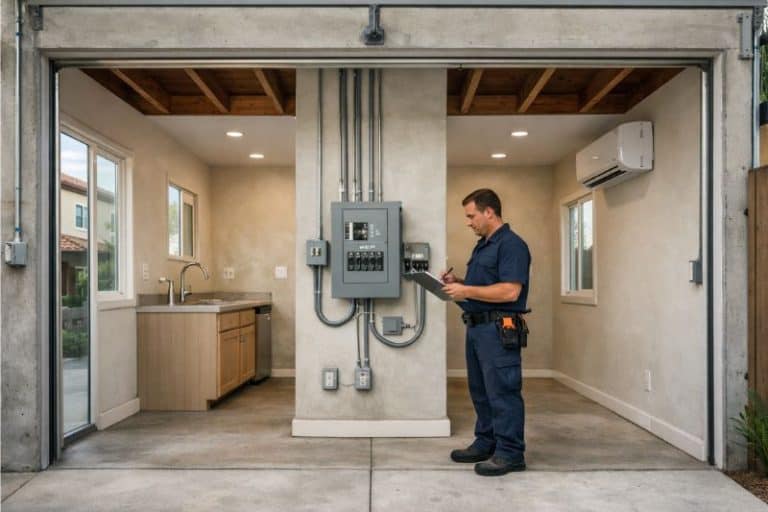
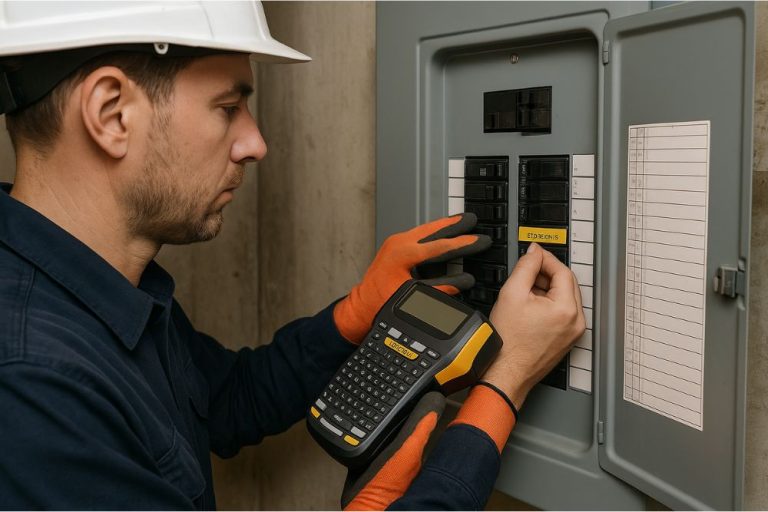
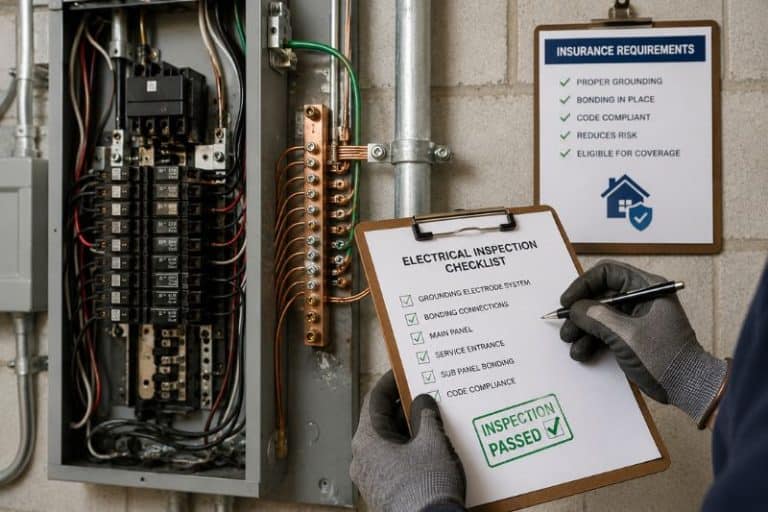
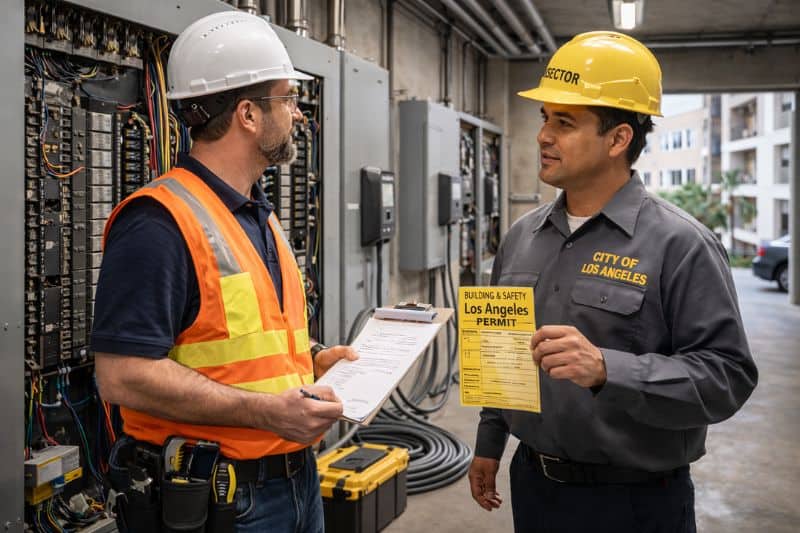
Once the permit is issued and the work is performed, LADBS schedules an inspection. For panel replacements, the inspection typically involves the inspector reviewing the installation, verifying the load calculation, confirming that bonding and grounding are correct, and checking that the circuit directory is accurate and complete. For larger projects, there may be multiple inspections at different stages of the work.
When the inspector approves the installation, the permit is closed and the property owner receives documentation of the completed, inspected work. That documentation is what an insurance carrier is asking for when they request proof of a permitted panel replacement, and it is what a buyer’s inspector will look for when reviewing the building’s electrical history.
We handle the permit application, coordinate the inspection schedule, and are on-site for all inspections on every project we permit. The property manager or homeowner does not need to manage the LADBS process. We manage it and provide the closed permit documentation at project closeout.
What happens when electrical work is done without a permit
Unpermitted electrical work creates a problem that compounds over time. The work may function correctly for years without any visible consequence, and then surface at the worst possible moment: during a property sale, during an insurance inspection, or during a permitted project when an LADBS inspector opens a panel and finds work that was never approved.
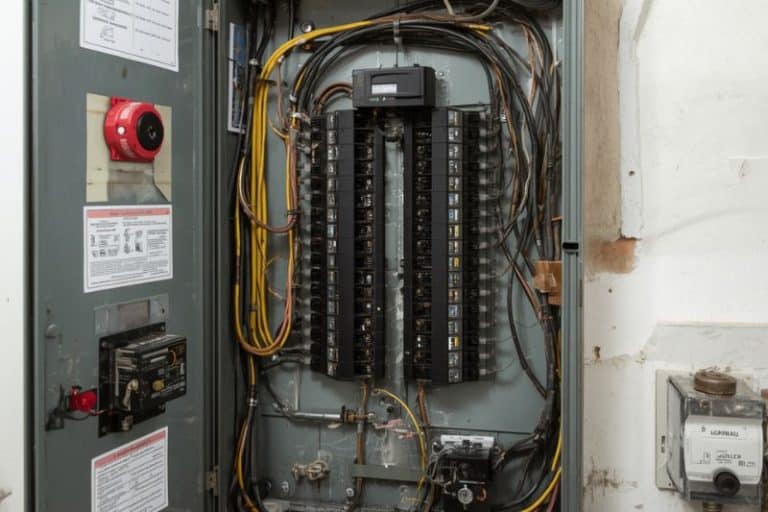
When an inspector discovers unpermitted work during a permitted project, they can condition approval of the current project on correction of the unpermitted work. This means that a property manager who hired a contractor to replace one panel may find themselves required to also address a panel replacement done three years earlier without a permit before the current project can close. The correction may require opening finished walls, removing and reinstalling work, or bringing systems up to a code standard that has changed since the original unpermitted work was done.
LADBS has the authority to issue stop-work orders and to require retroactive permits for unpermitted work. A retroactive permit requires the same documentation as a standard permit, plus the ability to inspect the work, which may require opening walls or ceilings to make the installation visible. In cases where the unpermitted work cannot be brought into compliance, demolition of the affected portion of the work may be required.
The cost of addressing unpermitted work retroactively is consistently higher than the cost of permitting the work correctly from the start. The disruption is greater, the documentation trail is messier, and the timeline is controlled by the city rather than the property owner.
Insurance, real estate, and liability consequences
Insurance carriers in California are paying closer attention to electrical system documentation than they were even two years ago. The combination of wildfire risk, an aging building stock, and an insurance market that has contracted significantly has led carriers to apply stricter underwriting criteria to multi-unit properties in particular. A carrier that requests documentation of a panel replacement is looking for a permit number and an inspection sign-off. A receipt from an unlicensed contractor or a permit that was never closed does not satisfy that requirement.
Property managers who cannot produce permit documentation for electrical work that was required to be permitted are in a weak position during a renewal negotiation. Some carriers will condition renewal on production of the missing documentation, which may require retroactive permitting and corrections. Others will decline to renew, leaving the property manager to find coverage in a market where options are already limited.
Real estate transactions surface unpermitted electrical work through buyer inspections and title reviews. A buyer whose inspector identifies an unpermitted panel replacement has leverage: they can require the seller to address it before close, negotiate a price reduction to account for the cost of correction, or withdraw from the transaction. In a market where buyers are already cautious, an unpermitted electrical system is a negotiating liability that did not need to exist.
Liability exposure from unpermitted work extends to tenant claims. If a tenant suffers property damage or injury connected to an electrical system that includes unpermitted work, the absence of a permit is evidence that the work was not inspected and approved. That evidence is relevant in a liability context in a way that is difficult to overcome. A permitted and inspected installation demonstrates that the work met code at the time it was done. An unpermitted installation demonstrates that no one verified it met code at all.
Our commercial electrical services in Los Angeles include complete permit management for every project that requires it. The documentation we provide at closeout is the documentation that satisfies insurance carriers, real estate buyers, and city compliance requirements.
What to do if you discover unpermitted electrical work
Property managers who discover that electrical work was performed on their building without a permit should address it proactively rather than waiting for the situation to surface during an inspection or a transaction. The options are not unlimited, but acting before the issue is discovered by someone else preserves more of them.
The first step is a professional assessment of the unpermitted work. A licensed electrician can evaluate whether the work meets current code requirements, identify any conditions that would prevent it from passing inspection, and estimate what corrections would be needed to bring it into compliance. That assessment provides the information needed to decide whether a retroactive permit is feasible and what it would involve.
If the work is in acceptable condition and can be made accessible for inspection without major disruption, a retroactive permit is often the right approach. LADBS has a process for permitting work after it has been performed, and while it involves more steps than a standard permit, it produces the same closed-permit documentation at the end.
If the work is not in acceptable condition, the assessment will identify what needs to be corrected. In most cases, addressing the corrections and permitting the corrected work produces a better outcome than leaving the unpermitted work in place and hoping it is not discovered. Buildings in Van Nuys, Koreatown, Sherman Oaks, and other parts of Los Angeles where the housing stock includes a significant proportion of older multi-unit buildings are the most likely to have accumulated unpermitted electrical work over the decades.
How RG Electric handles permits on every project
We do not perform work that requires a permit without one. This is not a policy we apply selectively based on project size or customer preference. It is a non-negotiable standard that has been consistent for the more than twenty years we have operated under our C10 license. A customer who asks us to skip the permit process on a project that requires one will be told clearly that we cannot do that, and offered the option of doing the project correctly with the permit included.
The permit cost and the permit management process are included in our estimate for any project that requires them. There are no surprises at closeout, and the permit documentation is delivered to the property manager or homeowner as part of the project record. For property managers who need to provide permit documentation to an insurance carrier, a lender, or a prospective buyer, that documentation is ready at project closeout.
We are on-site for every inspection. The inspector does not arrive to find that the contractor has left and no one can answer questions about the installation. We coordinate the inspection schedule, are present during the review, and address any inspection findings directly. For property managers overseeing projects in Inglewood, Culver City, Downtown LA, or anywhere else in the county, that means the permit process is managed without requiring the property manager to interface with LADBS directly.
Our electrical panel services in Los Angeles include permit management as a standard component of every panel replacement and subpanel upgrade. For property managers whose insurance carriers have required a panel replacement on a short timeline, we can prioritize the permit application and coordinate expedited scheduling where LADBS allows it.
Why the permit record matters beyond the project itself
A closed permit is not just a compliance document. It is a record that the work was performed by a licensed contractor, reviewed by a city inspector, and approved as meeting the code requirements in effect at the time it was done. For a property manager in Encino or Torrance who is building a maintenance history for a building they intend to hold for years, that record has compounding value. Each permitted project adds to a documentation chain that makes the building easier to insure, easier to sell, and easier to defend in a liability context. The permit is worth keeping, not just obtaining.
Scheduling and what to expect
For new work that requires a permit, the estimate we provide includes the permit cost and covers the permit management process from application through inspection closeout. The timeline we provide accounts for permit processing time, and we communicate proactively if the processing timeline changes.
For property managers dealing with existing unpermitted work, the first step is a site assessment that evaluates the condition of the work and identifies what would be required to bring it into compliance. That assessment is the basis for a realistic plan, and it happens before any commitment to a specific scope or cost.
All work is estimated with full itemization before it begins. The estimate covers labor, materials, permit fees, and any corrections identified during the assessment. There are no hidden fees and no work performed without written agreement. Our 12-month workmanship guarantee covers all completed work.
For immediate assistance or to schedule a professional evaluation, call RG Electric directly at (323) 521-5131.