
 Call (323) 5215131
Winter Electrical Preparedness for Los Angeles Multi-Unit and Commercial Properties
Updated August 2026
Winter in Los Angeles rarely brings freezing temperatures, but for apartment buildings, office complexes, and commercial properties, the season still changes electrical demand enough to expose weaknesses that summer usage never revealed. RG Electric is a licensed C10 #910807 electrical contractor serving apartment buildings, commercial properties, and multi-unit owners throughout Los Angeles, and December through February is consistently when we get called for load issues, lighting failures, and electrical room conditions that had been building quietly for months. Longer nights, heavier tenant electrical use, and shorter daylight hours all place concentrated demand on a building’s panels, circuits, and lighting systems at the same time, and older buildings tend to show the strain first.
Why winter load looks different across dozens of units at once
In a single-family home, one household’s winter habits change the load on one panel. In an apartment building, those same changes happen simultaneously across dozens of units, and the effect compounds. Tenants rely more heavily on heating systems, space heaters, extended lighting hours, and kitchen and entertainment devices, often during the same evening hours across the entire building. A panel or subpanel that handled summer load without issue can suddenly show signs of strain once winter concentrates that much demand into the same few hours each night. Common areas add to this. Garages, stairwells, and lobby lighting all shift to longer operating schedules as daylight shortens, adding a steady baseline load on top of the tenant-driven spike.
For a property manager, the practical effect is that a building’s electrical capacity should be evaluated against its winter peak, not its average annual load, since the winter peak is what actually determines whether the system has enough headroom. A building that has never had this evaluated is essentially operating on an assumption rather than a measured fact, and winter is when that assumption gets tested whether anyone planned for it or not.
Lighting systems working overtime
Winter dramatically increases the demand placed on hallway lights, stairwell fixtures, parking garage illumination, and outdoor security lighting, simply because darkness arrives so much earlier. Stairwell lights that might run eight or nine hours a day in summer can stay illuminated for fourteen or more once winter sets in, and photocell-controlled exterior lighting runs for a correspondingly longer stretch of the night. For buildings with fixtures, sensors, or circuits that haven’t been serviced in years, this extended operating window is often what finally exposes a weakness that stayed hidden during the shorter demand periods of spring and summer.
A lighting fixture that flickers, a photocell sensor that no longer switches reliably, or a circuit feeding common-area lighting that trips more often once the days shorten are not isolated annoyances. They are early indicators of a system running closer to its limit for a longer portion of each day, and the consequence of ignoring them is a common-area lighting failure at exactly the time of year when tenants depend on it most, in stairwells and parking areas where inadequate lighting is also a liability exposure, not just an inconvenience.
Emergency and egress lighting cannot fail when it’s needed most
Emergency and egress lighting exists specifically to activate when regular lighting fails, guiding occupants safely toward exits during an outage, fire, or evacuation event. Winter’s shorter daylight hours mean building occupants depend on interior and exit lighting for a longer portion of each day, which means an emergency lighting system that is marginal or poorly maintained has more opportunity to be tested by an actual outage during exactly the season when general building lighting is already under the most strain. Battery backup units that have degraded, fixtures that no longer illuminate on test, or exit signage that has gone dark are code compliance issues year round, but the real-world consequence of a failure is more likely to surface during the months when the building’s overall electrical system is working hardest.
For property managers across the range of Los Angeles commercial buildings we work with, from multi-unit apartment complexes to retail and mixed-use properties, a functioning inspection and testing schedule for emergency and egress lighting is not optional. A failed or underperforming system creates exposure to tenant injury, failed inspections, and increased liability, and winter is when the underlying electrical stress that causes these systems to fail is at its highest for the year.
Why the electrical room itself deserves a winter check
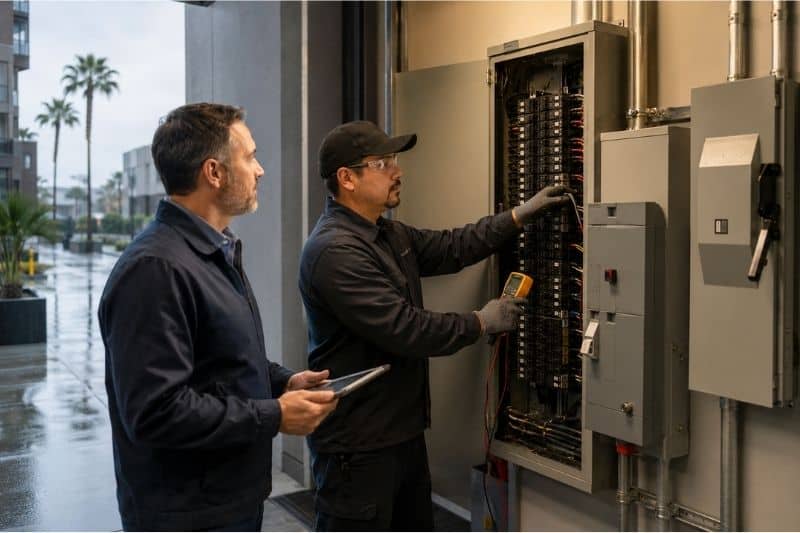
Electrical rooms are one of the most overlooked areas in a commercial building, yet they power every essential system that keeps a building’s tenants safe and operational. During winter, when a building carries heavier electrical load and higher occupancy, the physical condition of the electrical room matters more than at any other time of year. A condition that went unnoticed during summer, whether that is stored materials blocking required clearance around panels, a buildup of dust or debris, or a panel that has been quietly running warm, can turn into a real hazard once winter pushes panels and breakers harder than they’ve had to work all year.
Storage misuse is one of the more common findings during a winter electrical room review. Materials pushed against panels for convenient storage restrict the clearance required by code and make it harder to respond quickly if a breaker needs to be accessed during an actual electrical event. A five minute walkthrough of the electrical room before winter’s heaviest demand sets in, confirming clear access to every panel and checking for any signs of heat, discoloration, or unusual odor, catches most of what would otherwise surface as a problem later in the season.
Parking structures face a different set of winter risks entirely
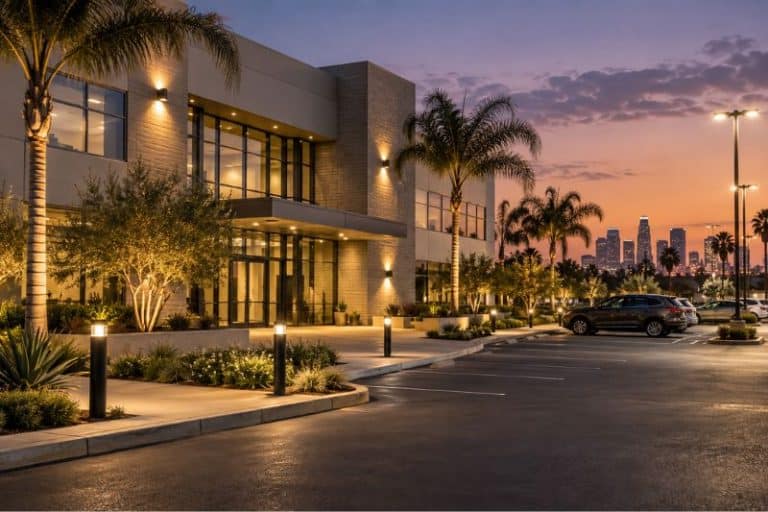
Commercial parking structures are among the most exposed areas of any property, experiencing humidity, temperature swings, vehicle exhaust, constant vibration, and direct contact with the elements in ways interior spaces never do. Los Angeles parking structures often run on older wiring, aging conduit, and a mix of fluorescent and outdated LED fixtures, and winter’s cold mornings, coastal fog, and increased rainfall push these components closer to their working limits than the rest of the year does. Condensation can form inside conduit runs, moisture can collect inside metal junction boxes, and lighting systems are forced to run longer hours as days shorten, all while exhaust fans and any carbon monoxide sensors present are cycling more frequently to manage the enclosed environment.
The consequence of an electrical failure in a parking structure is different from one inside an occupied unit. A dead lighting circuit in a parking garage is both a safety issue for tenants moving through a dark structure and a liability exposure for the property, and the moisture-driven failures that show up in parking structures during winter are often more advanced by the time they become visible than a comparable issue would be in a dry interior space. Property managers overseeing structures built with older wiring benefit from a winter-specific review of junction boxes, exterior-rated panels, and lighting circuits, rather than treating the parking structure as a lower priority than the residential or commercial units it serves.
EV charging infrastructure adds a growing winter variable
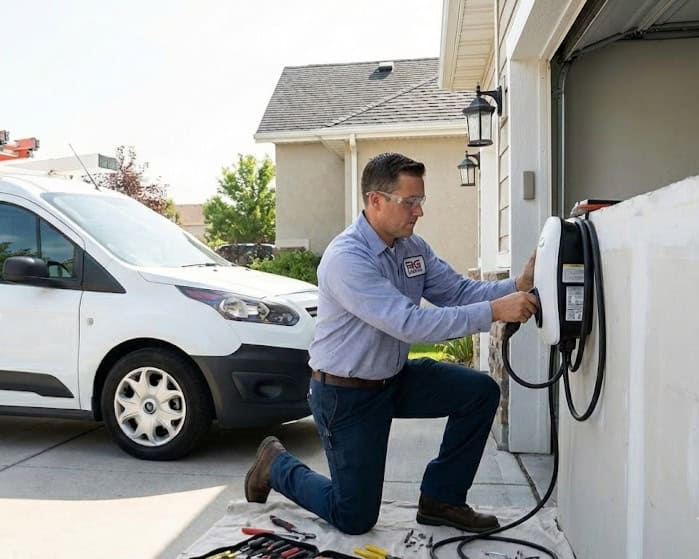
A growing number of Los Angeles apartment buildings and commercial parking structures now host EV charging stations, and this adds a load variable that many older electrical systems were never designed to account for. Winter’s shorter daylight hours mean more tenants are charging vehicles overnight or during evening hours, precisely the window when the rest of the building’s electrical demand is also at its peak. A parking structure’s electrical infrastructure that was adequate before EV chargers were installed can find itself operating much closer to capacity once charging load is added on top of the winter lighting and ventilation demands already described above.
Property managers planning to add EV charging capacity, or who have already installed a small number of chargers and are considering more, benefit from having the building’s full winter peak load evaluated before expanding charging infrastructure further, rather than adding chargers incrementally and discovering a capacity ceiling only after tenants are already relying on them. This is a distinctly different evaluation than a summer capacity check, since winter is when every other draw on the system is also elevated at once.
Documentation matters as much as the repair itself
For property managers, a winter electrical issue is rarely just a maintenance event. It is also a liability and insurance question, particularly when the issue involves common-area lighting, emergency egress systems, or a parking structure where a tenant or visitor could be affected. Documenting the condition found, the corrective work performed, and the date it was completed protects the building if a question about that system’s reliability ever comes up later, whether through an insurance renewal, a tenant complaint, or a future inspection. This is especially relevant for emergency and egress lighting, where documentation of regular testing is often what a fire inspector or insurance auditor asks to see first.
Buildings that treat winter electrical review as a documented, recurring process rather than a reactive response to whatever fails first tend to move through inspections and insurance renewals with far fewer surprises, since the paper trail itself demonstrates a pattern of proactive maintenance rather than a series of unexplained repairs.
Coordinating repairs around tenants and building operations
Winter electrical work in an occupied building carries scheduling considerations that a vacant property or a single-family home does not. Common-area lighting repairs, electrical room work, and parking structure corrections all need to happen without leaving tenants without safe lighting or access during the process, and winter’s shorter daylight hours make lighting outages more disruptive than the same work would be in summer. Coordinating a repair window during daytime hours when natural light is still available, providing temporary lighting where a fixture is out of service, and communicating clearly with tenants or building staff about the timeline all reduce the disruption a necessary repair causes.
For larger projects, such as a panel upgrade affecting building-wide service, advance notice to tenants and coordination with building management on timing prevents the repair itself from becoming the kind of disruption that generates complaints, even when the underlying work is necessary and overdue. We work directly with property managers to schedule this kind of work around a building’s actual occupancy patterns rather than defaulting to a generic timeline that doesn’t account for how the property is actually used. This is especially true for buildings with a resident population that includes elderly tenants or families with young children, where an unannounced lighting or power interruption carries more real risk than it would in a typical office building. A short heads-up notice posted in common areas or sent through whatever communication channel the building already uses costs almost nothing and meaningfully reduces the number of tenant calls and complaints during a scheduled repair window, and it reinforces to residents that the building is being actively maintained rather than left to react to problems as they surface.
A practical winter readiness review for property managers
A short seasonal review, run before winter’s peak demand sets in, addresses most of what has been described here. Confirming clear access to every electrical room and panel, testing emergency and egress lighting rather than assuming it will work when needed, checking common-area and parking structure lighting for signs of strain such as flickering or delayed switching, and reviewing whether the building’s main service has adequate headroom for a full winter peak across every unit simultaneously, all take a fraction of the time that responding to an actual winter outage does. For buildings that have never had this kind of review, winter is the season most likely to reveal exactly where the gaps are.
This review is worth repeating annually rather than treating as a one-time fix, since tenant turnover, added appliances, and gradual wear on aging fixtures all shift a building’s electrical profile year over year, and a building that passed its winter review two years ago is not guaranteed to be in the same condition today.
How RG Electric supports commercial and multi-unit properties through winter
We work with property managers across Los Angeles apartment buildings, commercial properties, and mixed-use developments to evaluate winter load capacity, service and test emergency and egress lighting systems, review electrical room conditions for code compliance and access, and assess parking structure wiring and fixtures for winter-specific moisture and load risk. When a review identifies a capacity issue at the panel or subpanel level, we provide a written scope and estimate before any work begins, and we coordinate scheduling around tenant occupancy and building operations rather than treating every commercial job the same way we would a single-family home.
Our commercial electrical services in Los Angeles cover load evaluation, panel and subpanel work, and lighting system corrections for apartment buildings and commercial properties. For emergency and egress-specific corrections, or repairs isolated to a single circuit or fixture, that work is handled through our electrical repair services in Los Angeles.
Electrical work is hazardous. Consult a licensed electrician like RG Electric before working on panels, wiring, or emergency lighting systems.
For immediate assistance or to schedule a professional evaluation, call RG Electric directly at (323) 521-5131.