
 Call (323) 5215131
Does Grounding and Bonding Affect Electrical Safety and Insurance in Los Angeles?
Grounding and bonding are two of the least understood parts of a residential or commercial electrical system, and they are increasingly showing up as findings during insurance reviews of Los Angeles properties. RG Electric (License C10 #910807) is asked about grounding and bonding most often in the context of an insurance notice, a failed inspection, or a panel replacement project where the existing grounding system does not meet current code. Yes, grounding and bonding affect both safety and insurance, and the connection between the two is more direct than most property owners realize.
What Grounding Actually Does
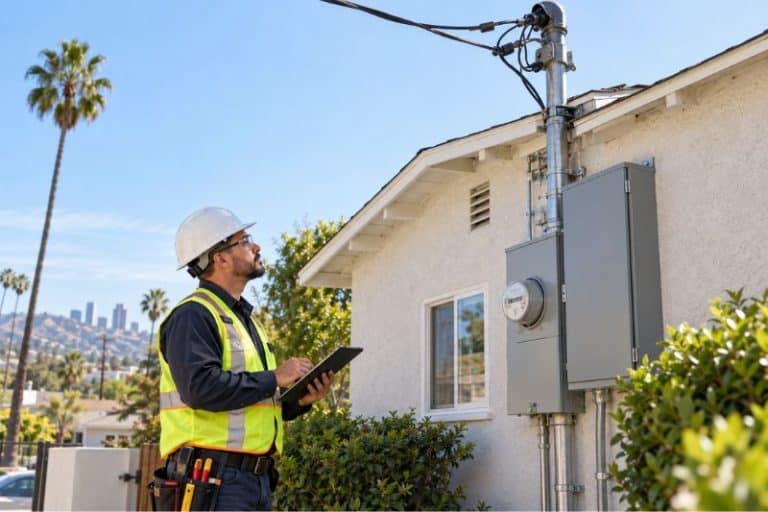
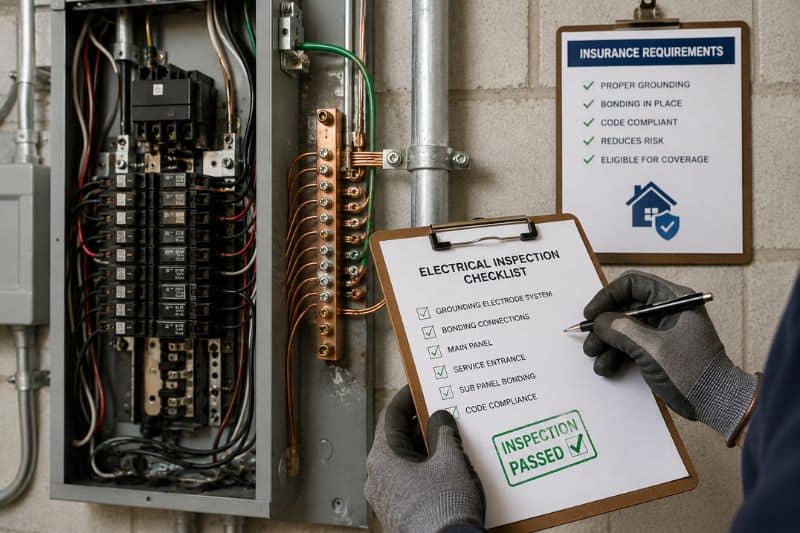
Grounding provides a deliberate, low-resistance path for electrical current to travel safely into the earth in the event of a fault. The grounding system connects the electrical panel to a grounding electrode, typically a ground rod driven into the earth or a connection to the metal water service pipe, through a grounding electrode conductor.
When a fault occurs, such as a hot wire coming into contact with a metal appliance casing or a metal outlet box, the grounding system gives that current somewhere safe to go rather than allowing it to remain on the metal surface where a person could be shocked. The grounding system works together with circuit breakers and GFCI protection, which detect the fault current and interrupt the circuit. Without a functioning grounding system, a fault condition can persist on an energized metal surface with no path to clear it, which is a direct shock hazard.
The cause of grounding deficiencies in Los Angeles is almost always the age of the property. Homes built before grounding requirements were standardized, or homes where the original grounding electrode has deteriorated or was never properly installed, lack this safety path entirely or have a degraded version of it. The effect is that electrical faults in these properties have nowhere safe to go. The consequence is an elevated shock and fire risk that exists independently of any other electrical condition in the property.
What Bonding Actually Does
Bonding is related to grounding but serves a distinct function. Bonding connects all the metal parts of an electrical system, and certain other metal systems in the building such as water piping and gas piping, together electrically so that they are all at the same electrical potential. If a fault energizes one metal component, bonding ensures that the current has a path to the grounding system rather than creating a dangerous voltage difference between two metal surfaces that a person might touch simultaneously.
A common scenario that illustrates why bonding matters involves metal water piping. If a property’s water piping is not properly bonded and an electrical fault somehow energizes the piping system, anyone touching a faucet or pipe while also touching a grounded surface could receive a shock. Bonding eliminates this risk by ensuring all metal systems share a common electrical reference point connected to the grounding system.
Bonding requirements extend to gas piping, structural metal in some commercial buildings, and metal ductwork in certain configurations. The specific bonding requirements for a property depend on what metal systems are present, which is why a proper bonding assessment requires a licensed electrician’s evaluation of the entire property rather than a generic checklist.
Why Older Los Angeles Properties Often Have Grounding and Bonding Deficiencies
Los Angeles has a substantial inventory of homes and apartment buildings constructed before modern grounding and bonding requirements were established or before they were enforced as rigorously as they are today. Properties wired in the 1950s and 1960s frequently have minimal or no grounding at the branch circuit level, even if a grounding electrode exists at the panel.
This creates a specific and common scenario: a panel that has a grounding electrode connection, paired with branch circuit wiring throughout the rest of the home that has no ground wire at all. Two-prong outlets in older homes are often the visible sign of this condition, since a two-prong outlet has no path to provide grounding to whatever is plugged into it, regardless of what is happening at the panel.
Even in homes with three-prong outlets, the ground prong is not a guarantee that proper grounding exists. Some renovations over the decades replaced two-prong outlets with three-prong outlets without running an actual ground wire to the new device, a practice that creates the appearance of grounding without the underlying safety function. This is one of the most common findings RG Electric identifies during panel replacement and rewiring assessments in older properties.
How Grounding and Bonding Connect to Insurance
California insurers have increasingly tightened their underwriting standards for electrical systems, particularly following the acceleration of wildfire-related claims across the state. Grounding and bonding have become part of what insurers look at when reviewing a property’s electrical risk profile, both at initial underwriting and at renewal.
An insurer that identifies inadequate grounding during a property inspection, or that receives a claim where inadequate grounding is identified as a contributing factor, may respond in several ways. Coverage can be conditioned on correcting the grounding system within a specific timeframe. Premiums can be adjusted to reflect the elevated risk. In some cases, particularly where the grounding deficiency is severe or combined with other electrical risk factors like an outdated panel, coverage can be denied or non-renewed until the issue is corrected.
This insurance dimension is one of the main reasons grounding and bonding evaluations have become a more frequent request at RG Electric. Property owners who receive an insurance notice referencing grounding, or whose insurance renewal includes a condition about electrical system updates, often do not understand what specifically needs to be corrected. A licensed electrical evaluation identifies exactly what is deficient and provides the documentation the insurer is asking for.
How Grounding Requirements Have Changed Over Time
Grounding requirements in residential construction were not static, and understanding how they evolved explains why a property’s age is such a strong predictor of its grounding condition. Early grounding requirements in the National Electrical Code applied primarily to specific equipment and locations rather than every branch circuit in a home. It was not until later code cycles that grounded conductors became a standard requirement for general-purpose branch circuits throughout a residence.
This means a home built in full compliance with the code in effect at the time of its construction may still lack grounding that would be required if the same home were built today. This is an important distinction for property owners to understand, because it means the absence of grounding in an older home is not necessarily evidence of substandard original construction. It is evidence that the code has changed, and that the property has not been updated to reflect those changes.
The cause is the evolution of safety standards over decades of fire and shock incident data informing code revisions. The effect is a large inventory of legally constructed, currently non-compliant properties throughout Los Angeles. The consequence for current owners is that bringing a property up to current grounding standards is a code-driven upgrade need, not a correction of a past mistake, and it should be approached and budgeted for as exactly that.
The Relationship Between Grounding and Other Safety Systems
Grounding does not operate in isolation. It works alongside other protective systems in ways that property owners often do not realize until those systems interact in a specific situation.
GFCI protection, which is required in kitchens, bathrooms, and outdoor locations, does not require a functioning ground to detect a fault, since it works by comparing current flow rather than relying on a ground path. However, a circuit with both GFCI protection and proper grounding provides a more complete safety system than GFCI protection alone, since grounding gives fault current a defined path while GFCI protection interrupts the circuit when an imbalance is detected. Relying on GFCI protection as a substitute for proper grounding addresses one risk but does not address the others that grounding is specifically designed to manage.
AFCI protection, which detects arcing conditions in wiring and is increasingly required in residential circuits under current code, also benefits from a properly grounded system, since grounding helps the panel and connected devices behave predictably under fault conditions. Properties undergoing panel replacement in Los Angeles are increasingly required to include AFCI protection on covered circuits, and the combination of AFCI protection and corrected grounding represents the current code-required standard for residential electrical safety.
The practical takeaway is that grounding, bonding, GFCI protection, and AFCI protection together form a layered safety system. Addressing one component while leaving others in their original, outdated condition leaves gaps in that system. A comprehensive electrical evaluation considers all of these systems together rather than treating each as an independent checklist item.
Grounding and Bonding During Panel Replacement
Whenever RG Electric performs a panel replacement, the grounding and bonding system is evaluated and brought up to current code as part of the project. This is not an optional add-on. LADBS inspectors place specific emphasis on grounding and bonding verification during panel inspections, and a panel replacement that does not address deficient grounding will not pass.
Common corrections made during a panel replacement include installing new grounding electrodes that meet current depth and configuration requirements, replacing degraded grounding electrode conductors, bonding the water service piping and gas piping if not already bonded, and verifying that the connection points throughout the system are properly secured and free of corrosion.
What a panel replacement does not automatically fix is grounding at the branch circuit level throughout the rest of the property. If individual circuits lack a ground wire, that is a separate condition from the panel’s grounding electrode system, and correcting it generally requires either running new ground wires to affected circuits or, in cases where the wiring throughout is in poor condition, a broader rewiring project. RG Electric identifies this distinction clearly in any estimate so property owners understand what the panel replacement addresses and what additional scope, if any, is needed to address branch circuit grounding throughout the building.
Grounding and Bonding in Multi-Unit Properties
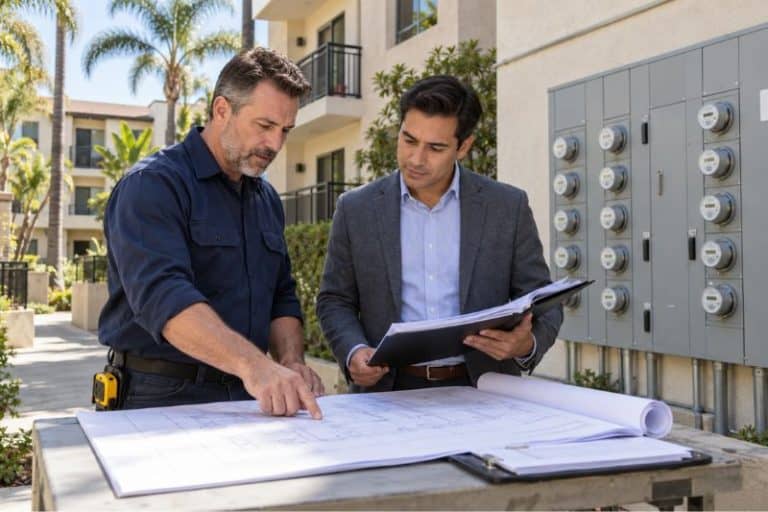
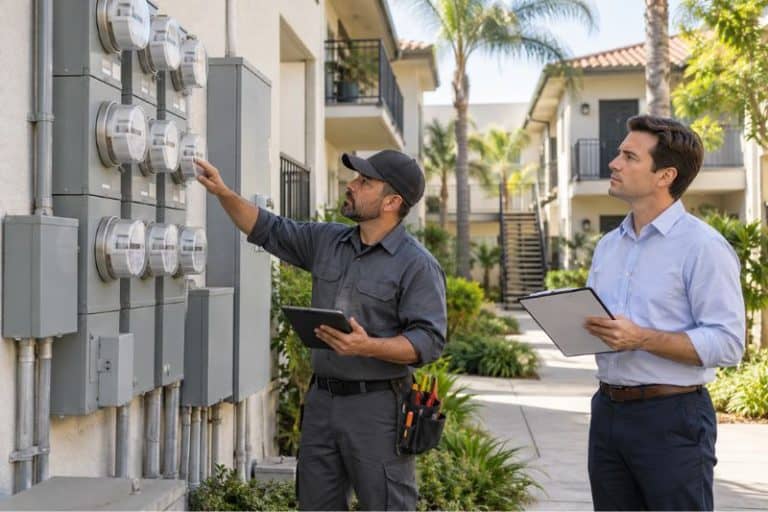
For property managers overseeing apartment buildings, grounding and bonding deficiencies carry compounded risk because they affect tenant safety across multiple units rather than a single household. An ungrounded circuit in a rental unit is a liability exposure for the property owner regardless of whether a tenant ever experiences a shock, because the condition itself represents a known and documentable hazard once identified.
Insurance carriers reviewing commercial and multi-unit properties apply the same underwriting scrutiny to grounding and bonding as they do to panel condition, and in some cases more so, because a grounding deficiency in shared building infrastructure affects every unit connected to it. A property manager addressing an insurance-driven electrical upgrade should treat grounding and bonding as a standard component of the evaluation rather than something to consider only if it happens to come up.
RG Electric’s commercial electrical services in Los Angeles include grounding and bonding assessments as a standard part of any compliance evaluation for apartment buildings and multi-unit properties, with documentation suitable for insurance review and city inspection records.
Warning Signs of Grounding and Bonding Problems
Several observable conditions can indicate a grounding or bonding deficiency, though a definitive assessment requires a licensed electrician’s testing rather than visual inspection alone.
Two-prong outlets throughout a home, particularly in a property built before the 1960s, indicate that branch circuits were never wired with a ground conductor. This is one of the clearest visible signs and is common enough in older Los Angeles housing stock that it should prompt an evaluation rather than simply being replaced with a three-prong outlet without addressing the underlying wiring.
A mild tingling sensation when touching an appliance, particularly one with a metal casing such as a washing machine or refrigerator, can indicate a fault condition that the grounding system is not properly clearing. This symptom should never be dismissed as normal static or minor electrical quirk, because it indicates current is present on a surface it should not be present on.
Frequent nuisance tripping of GFCI outlets, in cases where the cause is not an appliance fault or moisture, can sometimes trace back to grounding issues affecting how the circuit behaves under normal conditions. While GFCI protection does not depend on grounding to function, grounding deficiencies elsewhere in the system can create conditions that complicate diagnosis of circuit problems generally.
How RG Electric Evaluates Grounding and Bonding
A grounding and bonding evaluation begins with a visual and testing assessment of the panel’s grounding electrode system, the condition of the grounding electrode conductor, and the bonding connections to water and gas piping where applicable. The technician also tests representative circuits throughout the property to assess whether branch circuit grounding is present and functioning correctly.
Findings are reported to Roy, the owner and master electrician, who reviews them and prepares a written assessment that distinguishes between code-required corrections and recommended improvements. For property owners responding to an insurance requirement, this documentation is structured to address exactly what the insurer is asking for, issued under the company’s C10 license.
RG Electric’s electrical panel services in Los Angeles include grounding and bonding correction as a standard part of every panel project, and standalone grounding evaluations are available for property owners who need documentation without a full panel replacement.
For immediate assistance or to schedule a professional evaluation, call RG Electric directly at (323) 521-5131.