
 Call (323) 5215131
Why Insurance Companies Treat Multi-Unit Buildings Differently Than Single-Family Homes
Updated June 2026
Property managers and apartment owners in Los Angeles are often caught off guard when insurance requirements for their buildings turn out to be far more demanding than anything they encountered with single-family properties. Two buildings on the same street, built in the same decade, with similar electrical systems, can face completely different renewal conditions from the same insurer.
This is not inconsistency. It reflects a deliberate difference in how insurance companies evaluate risk. Multi-unit buildings carry a fundamentally different exposure profile than single-family homes, and electrical systems are one of the primary reasons insurers apply stricter standards, tighter timelines, and heavier documentation requirements to apartment buildings and other multi-tenant properties.
RG Electric, a licensed C10 electrical contractor serving Los Angeles under License #910807, works regularly with property managers navigating insurance-driven electrical requirements. Understanding why insurers treat these properties differently is the first step toward anticipating what they will ask for and avoiding the disruption that comes from being unprepared.
How Insurance Companies Assess Risk Differently in Multi-Unit Properties
Insurance companies base their underwriting decisions on probability and impact. A single electrical failure in a single-family home affects one household. In a multi-unit building, the same failure can affect dozens of tenants simultaneously, disrupt shared systems, and trigger multiple claims from a single incident.
That compounding effect is what separates the two property types in the eyes of an underwriter. The potential claim severity in a multi-unit building is not just higher, it is categorically different. Insurers account for this by applying more conservative evaluation standards, requesting more documentation, and setting stricter conditions during renewals.
In Los Angeles, this dynamic has intensified since the 2025 wildfire season accelerated carrier departures and pushed remaining insurers toward tighter underwriting criteria. Multi-unit properties, particularly older apartment buildings in neighborhoods like Koreatown, Van Nuys, and North Hollywood, are experiencing this pressure in a way that many owners did not anticipate when they last renewed coverage.
The result is that requirements which might have been waived or overlooked in prior years are now being enforced as conditions of renewal. For property managers, recognizing this shift early makes the difference between a managed process and a crisis.
Shared Electrical Systems Increase Exposure for Every Tenant
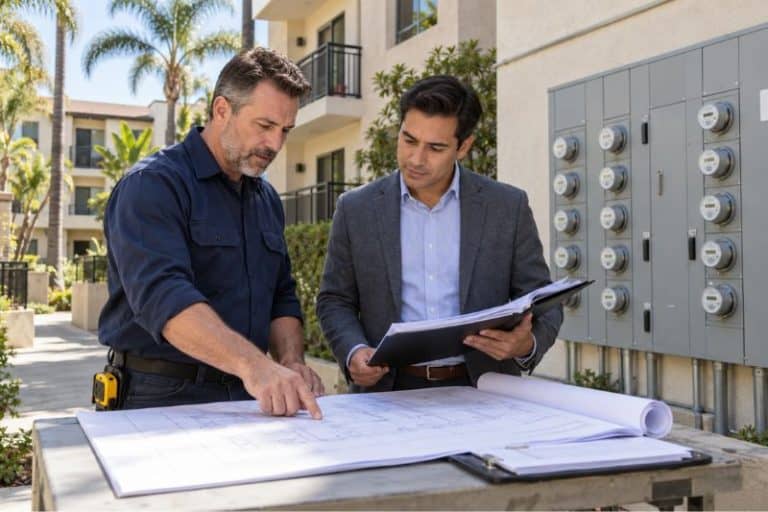
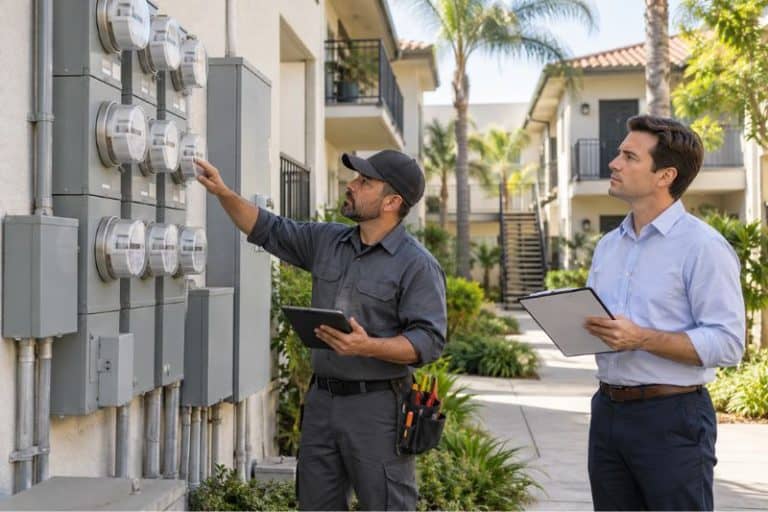
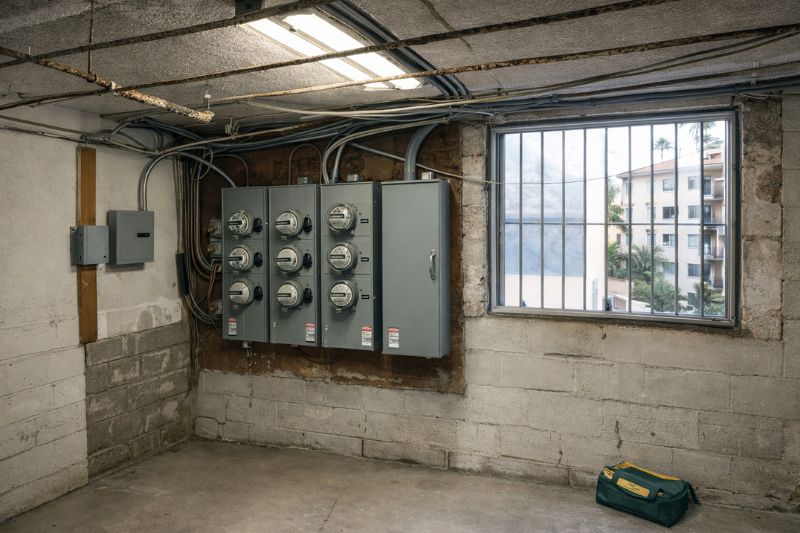
One of the most significant differences between multi-unit and single-family properties is the presence of shared electrical infrastructure. In apartment buildings, panels, feeders, and service equipment frequently supply multiple units along with common areas. A failure in any part of that shared system can cascade in ways that a single-family failure never would.
From an insurance standpoint, this concentration of risk is significant. A panel failure or wiring fault in a shared system does not produce one claim. It can produce many, from different tenants, at the same time. Insurers model this when determining how aggressively to scrutinize a building’s electrical systems during underwriting.
Older Los Angeles apartment buildings compound this problem because their shared systems were often designed for electrical loads far lower than what tenants use today. Over decades, units have added appliances, HVAC systems, charging equipment, and personal electronics that strain infrastructure built for a different era. Insurers understand this gap and treat it as unquantified risk when documentation is incomplete.
This is why insurers often look closely at panel conditions, load capacity, and overall system design when evaluating multi-unit properties, and why their requirements frequently extend beyond individual units to include the shared infrastructure that connects them.
Why Occupant Density Changes the Stakes Entirely
Insurance companies place significant weight on how many people rely on a single electrical system when something goes wrong. In a single-family home, an electrical failure affects one household. In an apartment building, the same failure can displace dozens of residents, interrupt essential services across multiple units, and create emergency situations that affect people with no ability to simply leave.
Electrical systems in multi-unit buildings must handle simultaneous usage across every occupied unit. When tenants cook, run HVAC, charge vehicles, and operate appliances at the same time, the combined load on shared feeders and panels can be substantial. Even when each unit’s individual usage seems reasonable, the aggregate demand can strain systems that were never updated to reflect real-world usage patterns.
Insurers are aware of this. When they evaluate a multi-unit building, they are not just assessing whether the electrical system works today. They are assessing whether it can safely sustain the load placed on it over the policy period without failure. Buildings where wiring, feeders, and branch circuits have not been evaluated against actual demand represent a risk that insurers will price accordingly, or decline to write at all.
Higher occupant density also increases liability exposure independent of the electrical system itself. Any electrical incident that results in injury, displacement, or property damage affects more people, which makes insurers far more cautious about what they are willing to accept without verification.
Fire Spread and Liability Are Treated as Building-Wide Concerns
Fire risk is one of the primary drivers behind the different treatment multi-unit buildings receive from insurers. In a single-family home, an electrical fire may be contained by the structure’s design. In a multi-unit building, shared walls, utility chases, and connected systems create pathways that allow fire and smoke to spread between units rapidly.
Insurance inspectors evaluate whether electrical systems reduce or amplify this risk. Improper wiring, overloaded circuits, undocumented modifications, and outdated equipment all increase the likelihood of ignition. Once a fire starts in a multi-unit structure, the potential for widespread damage, tenant injury, and complete displacement is far greater than in a comparable single-family incident.
From a liability standpoint, insurers also consider the systems that support tenant safety in an emergency. Electrical systems in apartment buildings power egress lighting, smoke detectors, intercoms, and common-area safety equipment. When those systems are outdated or operating without inspection approvals, insurers view the property as a higher liability risk, not just a higher property risk.
In multi-unit buildings, the consequences of electrical fire extend well beyond property damage. Tenant injury, long-term displacement, legal exposure, and regulatory involvement all follow, which is precisely why insurers apply stricter standards before those consequences can materialize.
Why Documentation Standards Are Stricter for Apartment Buildings
Insurance companies apply significantly higher documentation standards to multi-unit properties than to single-family homes. When multiple households rely on shared electrical infrastructure, insurers need clear evidence that systems were installed, modified, and maintained correctly, and that those modifications were approved by the appropriate authorities.
In buildings where electrical work has been performed incrementally over decades, documentation gaps are common. Previous owners may have handled repairs informally, permitted work may lack final inspection sign-offs, or contractor records may simply no longer exist. When insurers cannot verify what was done and how it was approved, they treat that uncertainty as unquantified risk, and they respond accordingly.
This scrutiny intensifies during renewals. Insurers may request records related to past upgrades, repairs, or panel changes that were never questioned in prior years. For multi-unit buildings, documentation gaps are more likely to trigger follow-up inspections or required corrections precisely because the potential impact of failure affects many tenants at once.
Property managers who work with licensed contractors experienced in commercial electrical services are generally better positioned to meet these documentation expectations because permitting, inspection coordination, and record-keeping are part of the standard process rather than an afterthought.
How Insurance Requirements Typically Surface During Renewals
For many property managers, insurance requirements do not arrive as a clear, immediate demand. They surface gradually, sometimes framed as routine questions, until it becomes clear that coverage depends on compliance. Understanding how this process typically unfolds helps property managers recognize warning signs before they become conditions.
The most common trigger is policy renewal. What may have been a simple annual process in prior years can suddenly involve detailed questionnaires about electrical system age, panel types, and whether recent work was permitted and inspected. For multi-unit buildings, these questions routinely extend to shared infrastructure and common-area systems, not just individual units.
When responses are incomplete or documentation is missing, insurers may require a third-party electrical evaluation as a condition of renewal. This does not necessarily mean a problem has already been identified. It often reflects uncertainty on the insurer’s side, and once an evaluation is underway, any deficiencies discovered may need to be corrected before coverage continues.
A third common scenario is a conditional renewal, where the insurer agrees to renew coverage temporarily while requiring specific electrical issues to be addressed within a defined timeframe. These deadlines are firm. Missing them can result in coverage cancellation or exclusions even when work is already in progress, which makes early engagement with a licensed contractor essential rather than optional.
How Electrical Issues Escalate Quickly in Multi-Unit Properties
Electrical problems in apartment buildings rarely stay isolated. A panel concern in one area of the building often prompts broader evaluation of the entire system. Once an inspector or insurer identifies one issue, they frequently look for patterns or related risks elsewhere in the property.
This escalation can lead to requirements that extend well beyond what triggered the initial review. A targeted concern about one panel can become a building-wide upgrade plan once the full system is evaluated. Property managers who have not had a professional assessment of their electrical infrastructure are often surprised by the scope of what is uncovered once the process begins.
This pattern is well documented in older Los Angeles apartment buildings, where electrical work was often performed in phases over many years by different contractors with different standards. When a licensed electrician evaluates the full system, the accumulated inconsistencies and deferred upgrades become visible all at once, which is exactly what happens when an insurer-required inspection reaches the same conclusion.
Working with electricians experienced in electrical panel services before an insurer-required inspection reduces the likelihood that evaluation results will produce unexpected scope and timeline pressure.
Why Timelines Are Tighter Than Property Managers Expect
Insurance companies typically allow less flexibility for multi-unit properties than for single-family homes when compliance deadlines are involved. The reasoning is straightforward. If an electrical issue remains unresolved in a single-family home, the risk is contained to one household. In an apartment building, unresolved issues affect multiple tenants, and that exposure grows with every day that passes without correction.
As a result, insurers set firm deadlines and expect prompt action from building owners and managers. Tenant safety is a major factor behind this urgency. Electrical issues in shared systems can affect egress lighting, fire safety equipment, and power to multiple units simultaneously. Insurance companies are less tolerant of delays when safety implications extend across an entire occupied building.
Documentation timelines are equally compressed. Permits, inspection approvals, and contractor credentials may be requested within days of an insurer inquiry. Property managers who already maintain organized electrical records and work with licensed contractors are significantly better positioned to meet these demands without triggering additional scrutiny or jeopardizing coverage.
How Property Managers Can Prepare Before Insurance Asks
Multi-unit property owners who treat insurance renewals as a planning process rather than a formality consistently experience fewer disruptions and better outcomes than those who wait for a requirement to arrive. Preparation does not require upgrading everything at once. It requires understanding where systems fall short of current expectations and creating a realistic plan to address those gaps before insurers identify them first.
Proactive preparation starts with anticipating the questions insurers are likely to ask. They consistently want to understand the condition of electrical systems, whether recent work was permitted, and how known risks are being managed. Property managers who can answer these questions with documentation rather than guesswork reduce the likelihood of follow-up requests that slow the renewal process and introduce uncertainty.
Scheduling evaluations on a controlled timeline rather than reacting to insurer demands is the other critical advantage. When insurers require inspections unexpectedly, property managers are forced to coordinate electricians, tenants, and inspectors under pressure. When evaluations are scheduled proactively, work can be planned around tenant needs, permitting timelines, and operational priorities. The result is less disruption to the building and a cleaner record to present during renewal.
For multi-unit buildings in Los Angeles, especially those with older electrical infrastructure in neighborhoods like Sherman Oaks, Culver City, Inglewood, and the broader San Fernando Valley, proactive planning is not a best practice. It is a risk management strategy that directly protects insurability and avoids the costly scenario of managing compliance under an insurer-imposed deadline.
What Property Managers Should Do Now
Insurance companies treat multi-unit buildings differently because the consequences of failure are fundamentally greater. Shared systems, higher occupant density, broader fire spread risk, and expanded liability exposure all raise the stakes in ways that single-family properties simply do not face.
Property managers who understand this reality can work within the system rather than being caught off guard by it. That means maintaining organized documentation, working with licensed contractors who understand permit and inspection requirements, scheduling evaluations before renewals rather than after, and treating electrical upgrades as a strategic investment in insurability rather than a reactive expense.
RG Electric holds C10 License #910807 and has extensive experience working with Los Angeles property managers on insurance-driven electrical requirements, system-wide evaluations, panel replacements, and permit-backed upgrades. The process works best when it begins before an insurer sets the timeline.
For immediate assistance or to schedule a professional evaluation, call RG Electric directly at (323) 521-5131.