
 Call (323) 5215131
How Electrical Permits Work in Los Angeles and Why Skipping Them Creates Long-Term Problems
Updated September 2026
When a homeowner or property manager in Los Angeles hires an electrician, the question of permits rarely comes up in the first conversation. Most people assume their contractor handles it, or they assume it is not required for the work they are having done. Both assumptions lead to problems. RG Electric (License C10 #910807) pulls permits on every job that requires one, and the reason goes well beyond following the rules. Permitted electrical work protects the property owner in ways that only become visible when something goes wrong.
What an Electrical Permit Actually Is
An electrical permit is an authorization issued by the Los Angeles Department of Building and Safety that allows licensed contractors to perform specific electrical work on a property. The permit is tied to the scope of the job, the address, and the licensed contractor performing the work. Once the work is complete, a city inspector visits the property, examines the installation, and either approves it or identifies corrections that must be made before approval is issued.
The permit system exists because electrical work that is done incorrectly creates fire hazards, shock risks, and structural vulnerabilities that are invisible inside finished walls and panels. A city inspector is the independent check on the quality of the installation. Their approval is the documentation that the work was done correctly and to current code.
From the property owner’s perspective, a permit and a passed inspection are the paper trail that proves the work was done right. That paper trail matters at insurance renewal time, at sale time, and in the event of a fire or injury investigation.
Which Electrical Jobs Require a Permit in Los Angeles
Not every electrical job requires a permit. Replacing an outlet, swapping a light fixture, or installing a ceiling fan in a location that already has the appropriate wiring generally does not require one. But the category of work that does require permits is broad, and many property owners underestimate how much of the common electrical work they plan to have done falls within it.
Panel replacements and upgrades require permits in Los Angeles without exception. This includes main panel replacements, subpanel installations, and panel capacity upgrades. The permit requirement exists because panels are the central safety component of any electrical system, and their installation must be inspected before the property can rely on them.
New circuit installations require permits. Adding a dedicated circuit for an EV charger, a new HVAC system, a hot tub, or a kitchen appliance all fall into this category. Running new wiring through walls to serve a new location also requires a permit, regardless of whether the destination is a new outlet, a new fixture, or a new subpanel.
Full or partial rewiring requires permits. This is one of the most significant categories for older Los Angeles properties. When a rewire is performed on a home or apartment building that has knob-and-tube wiring, aluminum branch circuit wiring, or cloth-insulated conductors, the work triggers a permit and a multi-point inspection process.
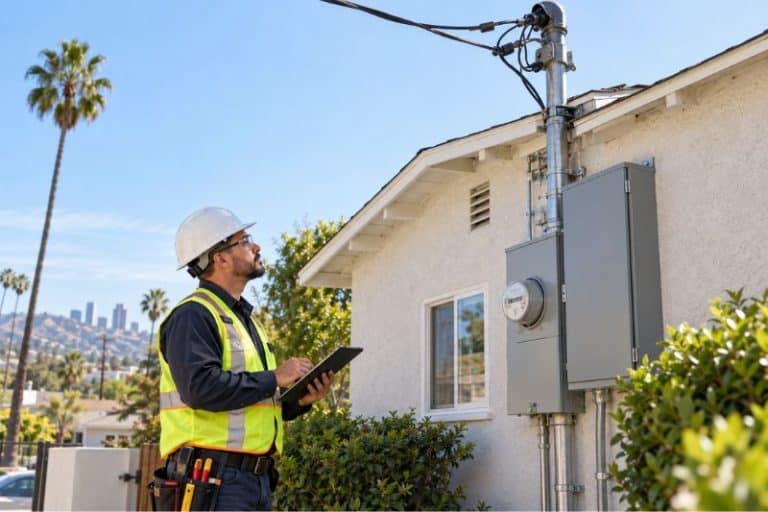
Service upgrades, meaning work that increases the amperage capacity of the electrical service entering the building, require permits. A property upgrading from 100-amp to 200-amp service, for example, requires coordination with LADWP as well as a building permit and inspection.
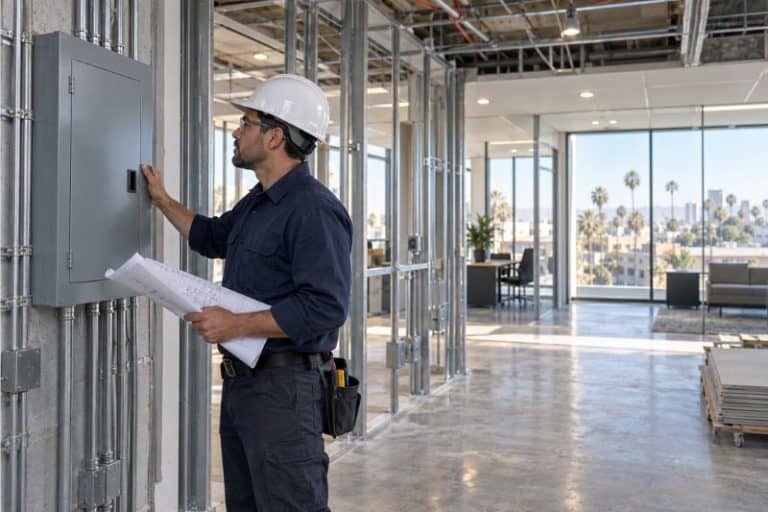
Commercial electrical work, including any work on the electrical systems of an apartment complex, multi-unit building, or commercial property, almost always requires permits. The threshold for permit-required work in commercial settings is lower than in residential, and the inspection process is more involved.
How the Permit Process Works in Practice
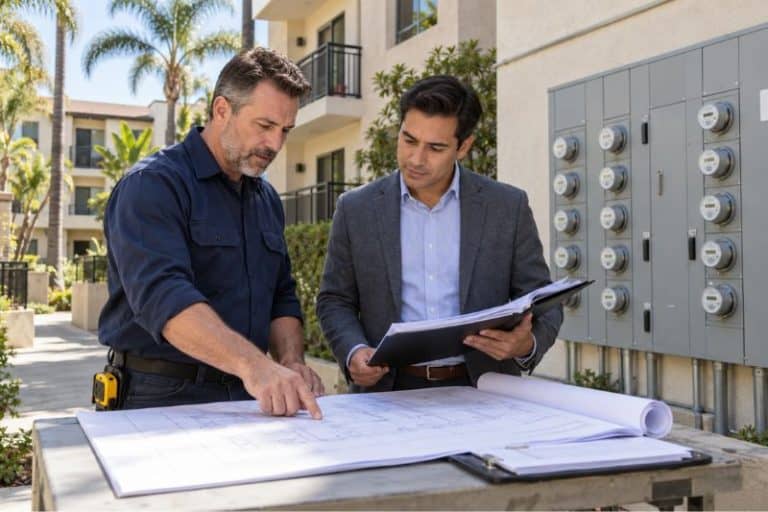
The permit process begins before work starts, not after. A licensed contractor submits the permit application to LADBS, specifying the scope of work, the address, and the license information. For straightforward jobs like panel replacements, permits are often issued quickly. For more complex projects involving new construction wiring, commercial buildings, or multi-panel replacements, the process may involve plan review before the permit is issued.
Once the permit is issued and the work is complete, an inspection is scheduled. For panel replacements, the inspector will examine the new panel, verify the breaker configuration, check for double-tapping, assess the grounding and bonding, and review the adjacent wiring conditions. For rewiring projects, the inspection process may include a rough-in inspection before walls are closed and a final inspection after the work is complete.
If the inspector finds a deficiency, a correction notice is issued. The contractor addresses the deficiency and requests a re-inspection. The permit is not finaled until the inspector is satisfied that everything meets current code. For older buildings, this process sometimes surfaces conditions in adjacent panels or wiring runs that were not part of the original scope, which requires additional coordination between the contractor, the property owner, and the inspection department.
RG Electric manages the entire permit process on behalf of the property owner. This includes the application, the scheduling coordination, the inspection readiness of the work, and the resolution of any correction notices. Property owners and managers do not need to navigate the LADBS system themselves.
What Happens When Permits Are Skipped
Unpermitted electrical work is common in Los Angeles, particularly in older neighborhoods where small contractors and handymen perform work without pulling permits. The property owner often does not know that the work was unpermitted until the consequences surface, sometimes years later.
The most immediate risk is safety. Work that was never inspected may have errors that a licensed inspector would have caught. A panel installed without a permit may have improper bonding, undersized conductors, or breakers that were connected incorrectly. A rewire performed without inspection may have splices made outside of junction boxes, incorrect wire gauges, or missing GFCI protection in required locations. None of these problems are visible from the outside, and none of them improve over time.
The insurance risk is significant. California insurers are increasingly conducting electrical inspections as part of coverage reviews, particularly following the acceleration of wildfire-related claims. When an insurer discovers unpermitted electrical work during a coverage review or a claim investigation, the consequences range from a requirement to bring the work up to permitted standards to a denial of coverage for claims connected to the unpermitted installation. A property owner who paid to have a panel replaced without a permit may find their insurer treating that panel as unverified and unacceptable.
The real estate risk materializes at the point of sale. When a property is sold in California, the seller is required to disclose known material defects, and unpermitted work is a material defect. A home inspection performed for a buyer will often identify unpermitted electrical work through the absence of permits in the building records, through visible signs of non-standard installation, or through the inspector’s assessment of the panel configuration. Buyers may require that unpermitted work be brought to permitted standards before closing, or they may use it as leverage to reduce the sale price. Either outcome is more costly than the original permit would have been.
The liability risk is ongoing. If a fire occurs in a property that has unpermitted electrical work, the investigation will examine the building’s electrical history. A fire connected to a panel or wiring installation that was never permitted or inspected creates a different liability picture than one connected to inspected, code-compliant work. For property managers and building owners, this distinction is particularly consequential because of tenant safety exposure.
What to Do If You Discover Unpermitted Electrical Work
Finding out that a previous owner, a past tenant, or an earlier contractor left unpermitted electrical work behind is more common than most property owners expect, and the right response is to deal with it before an inspector, an insurer, or a buyer finds it first. Waiting rarely improves the situation, and it tends to narrow the options rather than protect them.
The first step is a professional assessment. A licensed electrician can evaluate whether the existing work meets current code, flag anything that would fail an inspection outright, and scope what correction would take if any is needed. That assessment is what turns an open question into a concrete decision.
When the work turns out to be in reasonably good condition and can be made accessible for inspection, LADBS does have a path for permitting work after the fact. It takes more coordination than a standard permit pulled before work starts, but it ends in the same place, a closed permit and an inspection record tied to the address.
When the assessment turns up real problems, correcting them and permitting the corrected work is almost always the better outcome compared to leaving unpermitted work in place and hoping it goes unnoticed. This comes up often in older multi-unit buildings across Van Nuys, Koreatown, and Sherman Oaks, where decades of ownership changes and small repairs have a way of leaving unpermitted work scattered through a property’s electrical history without any single owner necessarily knowing it was there.
The Unlicensed Contractor Problem
The most common reason electrical work gets done without permits is that the contractor performing it is not licensed to pull them. In California, only a licensed C10 electrical contractor can legally perform electrical work and pull the associated permits. Handymen, general contractors without electrical licensing, and unlicensed workers cannot legally pull electrical permits regardless of how experienced they may be.
This creates a straightforward test for any property owner evaluating a contractor. If a contractor is willing to do electrical work without pulling a permit, either they cannot pull one because they are not licensed, or they are choosing not to in order to avoid inspection of their work. Neither situation benefits the property owner.
Hiring unqualified professionals is one of the most common electrical safety problems in Los Angeles. The pattern is consistent: a homeowner hires someone to save money on a panel replacement or a wiring job, the work is done without permits, and the property owner is left with an installation that has no inspection record and no guarantee of code compliance. When problems surface later, the unlicensed contractor is typically unavailable or unresponsive, and the property owner bears the full cost of correction.
RG Electric has been operating under the same C10 license for over 20 years. The license is the foundation of the company’s ability to pull permits, pass inspections, and stand behind its work. A contractor who skips the permit process is not saving the property owner money. They are transferring risk onto the property owner that the permit process was designed to prevent.
Permits and Commercial Properties in Los Angeles
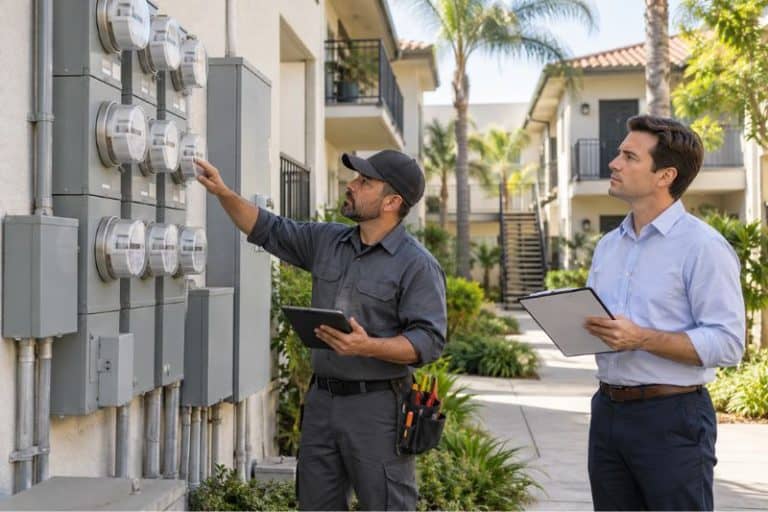
For property managers overseeing apartment complexes and multi-unit buildings, the permit requirement is not optional on any significant electrical work. Commercial clients who contact RG Electric consistently ask two questions first: can you provide permits, and can you provide a certificate of insurance. Both are required for any work on a commercial property, and both protect the building owner and the tenants.
The permit requirement in commercial settings is more expansive than in residential. Adding circuits to common areas, upgrading subpanels that serve individual units, correcting code violations identified during an insurance inspection, and replacing main panels on multi-unit buildings all require permits and city inspections. The inspection process for commercial properties is also more thorough, often involving multiple site visits and a more detailed review of the installation.
RG Electric’s commercial electrical services in Los Angeles include full permit management for every commercial project. This means the property manager does not need to track permit status, coordinate inspection scheduling, or navigate correction notices. That work is handled as part of the job.
For property managers in Encino, Sherman Oaks, Koreatown, Downtown Los Angeles, Culver City, and across the San Fernando Valley, having a licensed electrical contractor who handles the permit process from start to finish removes a significant administrative burden and ensures that every completed job has a clean inspection record.
What Permitted Work Looks Like Compared to Unpermitted Work
The difference between permitted and unpermitted electrical work is not always visible in the finished installation. A panel replacement done without a permit can look identical to one done with a permit from the outside. The difference is in what the inspection process required the contractor to verify and correct before the permit was finaled.
Permitted work means a licensed inspector examined the installation and confirmed that the panel is correctly bonded and grounded, that no breakers are double-tapped, that the conductor sizes are appropriate for the breaker ratings, that the panel location and clearances meet code requirements, and that the adjacent wiring conditions do not present violations that would affect the approval. This list of verifications is what the property owner is paying for when they choose a contractor who pulls permits.
Unpermitted work means none of those verifications occurred. The installation may be correct, or it may have errors that will not surface until a failure occurs. The property owner has no independent documentation of the installation’s condition and no recourse against a standard that was never applied.
For older Los Angeles properties where the electrical system is being partially upgraded, this distinction is particularly important. RG Electric’s wiring services in Los Angeles cover the full scope of work that requires permits in older buildings, from partial rewires addressing specific wiring types to full rewiring projects that bring an entire property into current code compliance. Every project includes permit management and inspection coordination as standard.
How to Verify That a Contractor Pulls Permits
The simplest way to verify that electrical work was properly permitted is to check the permit records through LADBS. The Los Angeles Department of Building and Safety maintains public records of all permits issued for a property address. A search on the LADBS website will show whether a permit was pulled, what the scope of work was, and whether a final inspection was issued. This search takes a few minutes and gives a property owner a clear picture of the permitted work history for any address.
Before hiring an electrician, asking directly about the permit process is both appropriate and informative. A licensed contractor will be able to explain which aspects of your job require permits, how they handle the application and inspection process, and what the timeline looks like. A contractor who is vague about permits, who suggests that permits are unnecessary for work that clearly requires them, or who offers a lower price in exchange for skipping the permit is not a contractor who is protecting your interests.
RG Electric’s approach is straightforward: if the job requires a permit, the permit is pulled before work begins. There are no exceptions, no workarounds, and no situations where skipping the permit process is presented as an option. The license that the company has maintained for over 20 years depends on operating within those standards, and so does the property owner’s protection.
The Long-Term Value of Permitted Electrical Work
Property owners who consistently use licensed contractors and maintain clean permit records have a measurable advantage at every major decision point in a property’s life. At insurance renewal, a property with a documented history of permitted electrical upgrades is in a stronger position than one with a history of unpermitted work or no record at all. Insurers who are increasingly scrutinizing electrical systems in California are looking for exactly this kind of documentation.
At the point of sale, clean permit records reduce friction. A buyer’s inspector who finds permitted panel and wiring records has less to flag. A title search that shows a history of properly closed permits removes a category of negotiation leverage that unpermitted work creates. The cost of a permit on a panel replacement or rewiring project is a fraction of the cost of the negotiating position it protects.
For property managers, the cumulative value of maintaining permitted electrical records across a portfolio of buildings is significant. It establishes a documented history of responsible maintenance, supports insurance coverage eligibility, and creates a clear baseline for future work. When an insurance company or a prospective buyer asks about the electrical condition of a building, a permit history is the most credible answer available.
RG Electric works with property managers and homeowners throughout Los Angeles to ensure that every electrical project is documented, inspected, and closed with a clean permit record. The goal is not just to complete the work correctly but to leave the property owner with the documentation that proves it.
For immediate assistance or to schedule a professional evaluation, call RG Electric directly at (323) 521-5131.
Always consult a licensed electrician like RG Electric before working on electrical systems.