
 Call (323) 5215131
What to Do When Your Los Angeles Electrician Finds More Problems Than Expected
Updated June 2026
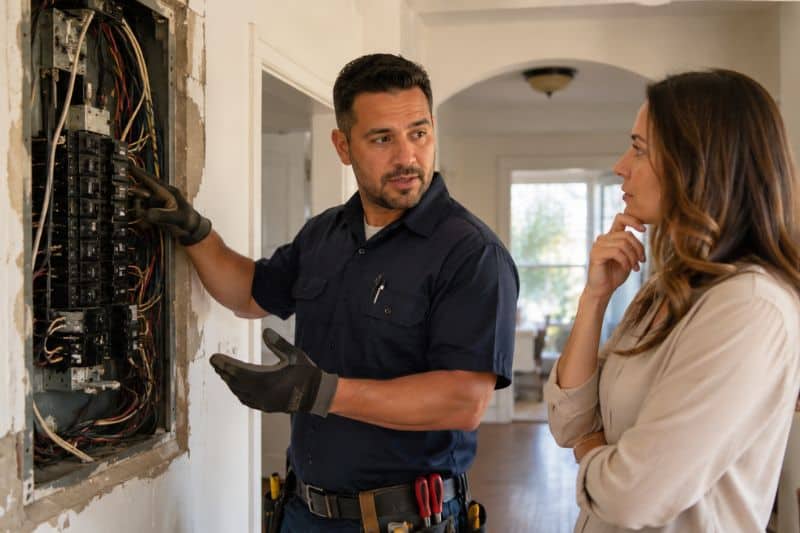
You called RG Electric (License C10 #910807) about one thing. Maybe a breaker that keeps tripping, an outlet that stopped working, or a panel that your insurance company flagged. The electrician arrives, starts the diagnostic work, and then comes back with a longer list than you anticipated. This situation is more common than most homeowners and property managers expect, and how you respond to it matters. Knowing what to do, what to ask, and how to think through the next steps can save you money, protect your property, and prevent a bigger problem down the road.
Why Electricians Find More Than the Original Problem
Electrical systems in older Los Angeles properties are layered. Decades of upgrades, repairs, and additions stack on top of each other inside walls, panels, and junction boxes. When a licensed electrician opens a panel or pulls out an outlet to address one issue, they are not just looking at that one component. They are looking at everything connected to it, everything behind it, and everything that the inspection requires them to flag.
This is not a bait-and-switch. It is how honest electrical work actually functions. A technician who arrives, fixes only the one visible problem, and leaves without mentioning the double-tapped breaker or the ungrounded circuit nearby is not doing you a favor. They are leaving a liability in place and walking away from it.
Los Angeles has a significant concentration of housing stock built before 1980. In these properties, what looks like a single failing outlet can be connected to wiring that has not been evaluated in decades. A panel replacement in a multi-unit building can expose wiring conditions that trigger additional inspection requirements. None of this is unusual, and none of it reflects poorly on the property. It reflects the reality of aging infrastructure in a city where electrical codes have been updated repeatedly since the original construction.
The cause is always the same: deferred maintenance and incremental upgrades over time create a system where one component may be modern while the one beside it is original to a 1960s build. The effect is that opening one part of the system exposes the condition of adjacent parts. The consequence is a choice: address what was found, or leave known hazards in place.
The Most Common Discoveries During Electrical Work in LA
Understanding what electricians typically find when they open a panel or pull wiring helps you evaluate what you are being told and make an informed decision about how to proceed.
Double-tapped breakers are one of the most frequent findings. This is when two wires are connected to a single breaker terminal that was designed to carry only one. It is a code violation, a fire risk, and something an inspector will not pass. It is also something a technician will see as soon as a panel door opens, even if the original call had nothing to do with the panel itself.
Missing or non-functional GFCI protection is another common finding, particularly in kitchens, bathrooms, garages, and outdoor areas. California code has required GFCI outlets near water sources for decades, but properties built before those requirements were adopted often still have standard outlets in those locations. When a rewire or panel upgrade triggers a permit and inspection, those outlets come into scope.
Ungrounded circuits appear frequently in homes and apartment buildings built in the 1950s and 1960s. The original wiring did not include a ground wire, which is now required. Ungrounded circuits create shock hazards and limit what equipment can be safely connected. They also affect insurance eligibility in some cases.
Outdated panels are sometimes discovered as a secondary finding during what was initially a service call for a different reason. The four panel brands that insurers and inspectors flag most consistently in Los Angeles are Zinsco, Federal Pacific Electric, Challenger, and Pushmatic. If any of these is present and was not the reason for the original call, the electrician is obligated to point it out. RG Electric’s electrical panel services in Los Angeles cover the full replacement process for all four recalled brands, from permit to final inspection.
Deteriorated wiring insulation is a finding in very old properties where the original wiring used cloth or rubber insulation that has dried, cracked, or become brittle over time. This is not a minor issue. Bare or degraded insulation in a wall cavity is a fire risk that does not resolve itself.
Junction boxes that were covered over during renovations, improper splices made without boxes, and backstabbed outlets are also recurring findings. Each represents a code violation and a potential failure point.
What the Estimate Process Looks Like at RG Electric
When a technician finds additional issues during a job, the process at RG Electric does not involve the technician making decisions on the spot or presenting you with an expanded bill at the end of the day. The workflow is deliberate and transparent.
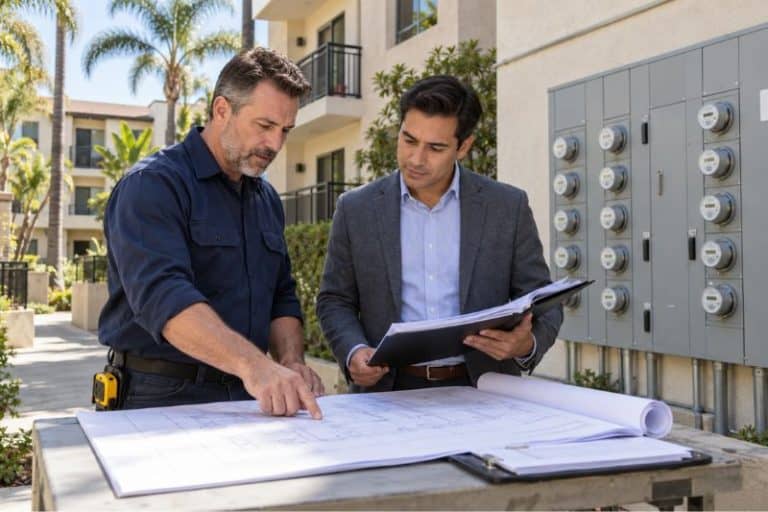
The technician documents what was found and reports to Roy, the owner and master electrician. Roy reviews the findings, assesses what is required by code versus what is recommended, and builds an itemized estimate that separates the two. That estimate is then communicated to the customer directly, with a clear explanation of each item.
Nothing proceeds without your approval. If the expanded scope involves work you were not expecting, you have the opportunity to ask questions, understand what each item addresses, and decide how to move forward. RG Electric’s electrical repair services in Los Angeles are built around this transparent workflow, from the initial diagnostic call through final approval of any expanded scope. There are no hidden charges and no pressure to approve everything at once.
This is worth emphasizing because it is not how every contractor handles this situation. Some will present an expanded scope verbally at the end of a job and expect payment. Others will do the minimum and leave the rest undisclosed. RG Electric’s approach is to give you a written estimate before any additional work begins, with a clear explanation of why each item is on the list.
How to Evaluate What You Are Being Told
When a licensed electrician presents additional findings, the first question worth asking is whether the items are code-required or recommended upgrades. These are meaningfully different categories.
Code-required corrections are items that a city inspector will flag if the job moves into permit territory, or that represent existing violations regardless of whether a permit was pulled. Double-tapped breakers, missing GFCI protection in required locations, and ungrounded circuits in areas where grounding is now mandated fall into this category. These are not optional. Leaving them in place after a licensed contractor has identified them creates documented liability.
Recommended upgrades are items that improve safety, efficiency, or reliability but are not currently required by code for your specific situation. Surge protection, panel capacity expansions, and outlet replacements in areas that are not covered by current GFCI requirements fall here. These are worth considering but do not carry the same urgency as code corrections.
The second question is whether the findings are connected to the original problem. A technician who finds a double-tapped breaker while replacing a panel is pointing to something directly in scope. A technician who recommends a full rewire during a service call for a single tripped breaker deserves a clear explanation of why the two are connected. Ask for that explanation. A licensed professional should be able to provide it without hesitation.
The third question is what the consequence of deferring each item looks like. Some findings can be addressed in a future visit without creating immediate risk. Others cannot responsibly be left in place. Understanding which category each item falls into helps you prioritize if budget is a constraint.
When an Inspection Creates Scope Beyond the Original Job
This is the scenario that catches property managers and building owners most off guard. A permit is pulled for a panel replacement. The inspector arrives and begins examining the building. In the course of that inspection, they open a panel that was not part of the original job scope and find a violation. They will not approve the permitted work until the violation in the adjacent panel is corrected.
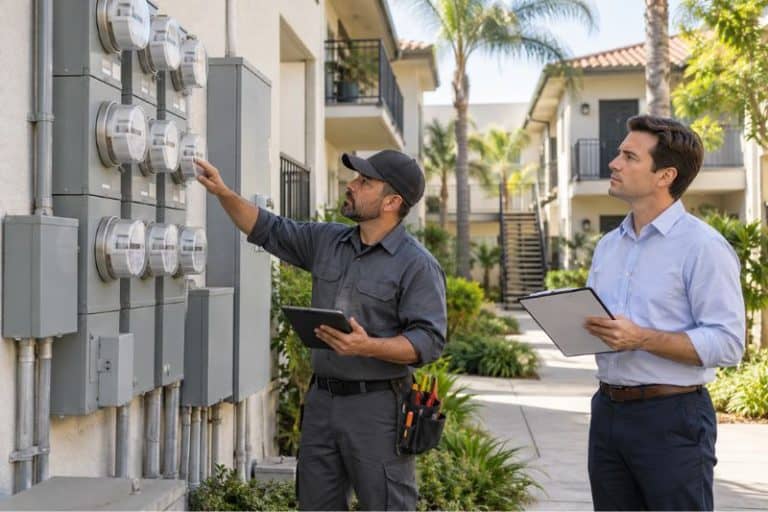
This happened during a multi-unit project RG Electric completed in Los Angeles. Three panels were replaced as part of the contracted work. The inspector approved all three, then opened a fourth panel that had not been touched. Inside it, he found double-tapped breakers. He informed the team that he would not issue approval for the project until that panel was also corrected, even though RG Electric had not worked on it and was not responsible for its condition.
The cause was straightforward: older buildings accumulate deferred maintenance across all their electrical infrastructure, not just the components that triggered the current job. The effect was a delayed approval and expanded project scope. The consequence for the building owner was a choice between correcting the fourth panel immediately or waiting with the project in limbo.
This kind of outcome is not a failure of the original estimate. It is a structural feature of working on older buildings under permit. Experienced contractors will flag this possibility in advance. Property managers who understand it are better positioned to respond without panic when it happens.
The practical takeaway for anyone managing a multi-unit property in Los Angeles is to build contingency into any permitted electrical project. A reasonable buffer for older buildings is fifteen to twenty percent of the contracted scope. Not every project will require it, but having it available avoids the situation where an inspector finding triggers a project halt.
What to Do When the Scope Expands and Budget Is a Concern
The expanded scope conversation is uncomfortable for everyone involved. A homeowner who budgeted for a panel replacement does not want to hear about additional wiring corrections. A property manager operating within a maintenance budget does not want an unexpected line item. But there are constructive ways to handle this situation.
The first option is phased work. Not all findings have the same urgency. A licensed electrician can help you identify which items need to be addressed before the inspection closes out and which can be scheduled for a follow-up visit. This approach allows you to stay within budget for the current job while creating a clear plan for the remaining work.
The second option is to get everything documented even if you cannot act on all of it immediately. If an electrician identifies a code violation and you decline to correct it right now, having that finding in writing protects you from a different kind of risk, which is being held responsible for something that was never disclosed. Documentation also gives you a baseline for planning future work and budgeting accurately for it.
The third option is to understand what the insurance implications are before deciding. Some findings affect your coverage eligibility. A Zinsco or Federal Pacific panel that was previously unknown to your insurer may become a condition of renewal if it surfaces during permitted work. Knowing this before your next renewal cycle is better than being surprised by it after.
RG Electric works with property managers and homeowners throughout the San Fernando Valley, Encino, Sherman Oaks, Koreatown, Culver City, and across greater Los Angeles to structure this kind of phased approach. The goal is always to address what is most urgent first, document everything that was found, and give the property owner a clear picture of what comes next.
Why Leaving Known Problems in Place Creates Larger Risks
When a licensed electrician identifies a problem and documents it, that finding exists in the record of the job. Choosing not to correct a documented electrical hazard has consequences that extend beyond the hazard itself.
From an insurance perspective, a carrier that becomes aware of an unresolved electrical violation may treat a future claim differently. If a fire occurs and the investigation finds the cause connected to a known hazard that was not corrected, coverage may be challenged. This is particularly relevant for the four recalled panel brands that are already on insurers’ watch lists in California.
From a liability perspective, a property manager who received written notice of an electrical hazard and chose not to address it is in a different legal position than one who was never informed. Tenant safety complaints, injuries, and fire damage all carry greater exposure when documentation shows the condition was known.
From a practical perspective, electrical problems do not stay static. A double-tapped breaker that is left in place continues to operate under conditions it was not designed for. Deteriorated wiring insulation continues to degrade. A panel that trips inconsistently does not improve on its own. The cost of correcting a problem now is almost always lower than the cost of correcting the problem after it has caused damage.
RG Electric’s standard is to find cost-effective solutions for every situation. That sometimes means phased work, staged permits, or prioritized corrections that allow a property owner to address the most critical items first. What it never means is ignoring what was found or pretending a hazard is not present in order to keep the original estimate intact.
How to Work Productively With Your Electrician When Scope Expands
The most productive version of this conversation starts with asking the right questions rather than reacting to the number at the bottom of the revised estimate.
Ask the electrician to walk you through each additional item and explain what it addresses. A licensed professional should be able to tell you what the finding is, why it matters, whether it is code-required or recommended, and what happens if it is deferred. If the explanation is clear and connects to what was actually found, that is a good sign. If the explanation is vague or the connection to the original work is unclear, it is reasonable to ask for more detail before approving.
Ask specifically which items are required to close out the current permit and which can be addressed separately. This question is particularly useful in permitted work because it separates the non-negotiable items from the ones that can be scheduled on a different timeline.
Ask for the estimate in writing before any additional work begins. This is standard practice for any reputable contractor. At RG Electric, no additional work proceeds without a written estimate and explicit approval. If a contractor is resistant to putting the expanded scope in writing, that is a meaningful red flag.
Ask about the 12-month workmanship guarantee. RG Electric stands behind all completed work for 12 months. If something connected to the work performed develops an issue within that window, a service call is not charged. Understanding the guarantee before the work begins removes uncertainty about what happens if a problem surfaces after the job is closed.
Choosing a Contractor Who Communicates Clearly
The expanded scope conversation is easier when the contractor handles communication well. One of the consistent frustrations homeowners and property managers in Los Angeles report is discovering that their electrician communicated findings to a call center or a sales layer, and what eventually reached them was filtered, delayed, or incomplete.
RG Electric operates differently. When the technician finds something additional, that information goes directly to Roy. Roy assesses it, builds the estimate, and explains each item to the customer-facing team. When the customer has questions, there is a direct line back to someone who can answer them accurately. There is no call center, no sales layer, and no runaround.
This matters most in exactly the situation described in this post, when the scope has changed and the customer needs to make a decision quickly. Clear, direct communication from a licensed professional who understands the work is not a luxury. It is the baseline for making a sound decision about your property.
For immediate assistance or to schedule a professional evaluation, call RG Electric directly at (323) 521-5131.