
 Call (323) 5215131
Electrical Wiring Services in Los Angeles
Wiring problems in Los Angeles homes and apartment buildings rarely announce themselves clearly. They show up as a circuit that keeps tripping, an outlet that stopped working, a room that loses power when too many things run at once, or a panel that can no longer handle what the building demands. RG Electric is a licensed C10 electrical contractor, License #910807, serving Los Angeles County. We diagnose wiring conditions accurately, correct them to current code, and handle permits and inspections as part of the job. Whether the work involves a single circuit or a complete rewire of a building, we tell you clearly what we found, what it means, and what correcting it involves before any work begins.
When wiring becomes the problem, not the symptom
Most customers who call about an electrical problem describe what they see: a tripping breaker, a dead outlet, a light that flickers. Those are symptoms. The underlying condition is frequently in the wiring itself, and identifying it correctly is what determines whether a repair holds or the problem comes back.
Wiring degrades. Insulation becomes brittle and cracks. Connections loosen over decades of thermal expansion and contraction. Conductors sized for a 1960s household cannot carry the load of a modern kitchen, home office, and EV charger on the same circuits. In older Los Angeles neighborhoods, buildings that have never had a full electrical evaluation are routinely running on systems that would fail a current inspection, even if they have not failed yet.
The gap between “still working” and “safe and code-compliant” is where most of the wiring work in Los Angeles happens. Insurance carriers have narrowed their focus on this gap considerably in the past two years, particularly after the Palisades fire. Property owners with aging wiring are increasingly receiving renewal conditions requiring documented upgrades. Homeowners preparing to sell are discovering that inspections surface wiring conditions that buyers will not accept. The question for most property owners is not whether the wiring will eventually need attention, but whether they address it on their own timeline or someone else’s.
The wiring conditions RG Electric finds most often in Los Angeles
Los Angeles has a large stock of buildings constructed between the 1930s and 1980s. The wiring in those buildings reflects the materials and standards of the era in which they were built, and many of those materials are no longer considered adequate or safe under current code.
Knob-and-tube wiring appears in homes built before the 1940s and occasionally in later additions to older buildings. It is ungrounded, cannot support modern load demands, and the insulation on surviving knob-and-tube systems is almost universally at or past the end of its service life. Insurance carriers have become increasingly unwilling to cover homes with active knob-and-tube wiring, and the ones that will often charge premiums that make replacement the more economical choice.
Aluminum branch circuit wiring was installed widely in residential construction during the 1960s and early 1970s, when copper prices spiked. The problem is not aluminum itself but the connection points: aluminum expands and contracts at a different rate than the copper devices it connects to, and over time those connections loosen, overheat, and create fire hazards. Homes in the San Fernando Valley, the Westside, and older parts of the South Bay built during that period frequently have aluminum branch circuits that have never been evaluated.
Cloth-insulated wiring, also called rubber-insulated wiring, appears in mid-century construction and loses its protective properties as the insulation dries and cracks. When that insulation fails in a wall cavity or junction box, the bare conductor presents a fire risk that is invisible until something goes wrong. We find cloth-insulated wiring in Encino, Sherman Oaks, and Koreatown buildings regularly during panel replacement jobs, often in sections of the building that were never part of any prior electrical upgrade.
Ungrounded systems and improperly grounded circuits are among the most common code violations we document. An ungrounded circuit cannot safely dissipate a fault, which means that a defective appliance or a lightning surge has nowhere to go except through whatever is connected to it. Homes with three-prong outlets installed over two-wire ungrounded circuits, a shortcut taken by many contractors and handymen over the years, present exactly this problem.
Overloaded and undersized circuits are the most frequent cause of recurring breaker trips in older homes and apartment buildings. A 15-amp circuit that was adequate for a bedroom in 1972 may now be serving a bedroom plus a home office, multiple charging devices, and a window air conditioner. The breaker is responding correctly. The circuit simply cannot carry what is being asked of it.
Full home rewiring: what triggers it and what it involves
A full rewire replaces the branch circuit wiring throughout a building with new conductors, new devices, and new connections that meet current code. It is the correct solution when the existing wiring is knob-and-tube, when aluminum branch circuits are present throughout the building, when the insulation condition is uniformly degraded, or when an insurance carrier has required it as a condition of coverage.
Full rewires are also the appropriate scope when a building is being substantially renovated, when a major panel upgrade is being done and the existing wiring cannot safely connect to a modern panel, or when a property inspection has surfaced wiring conditions across multiple areas of the building rather than in one isolated location.
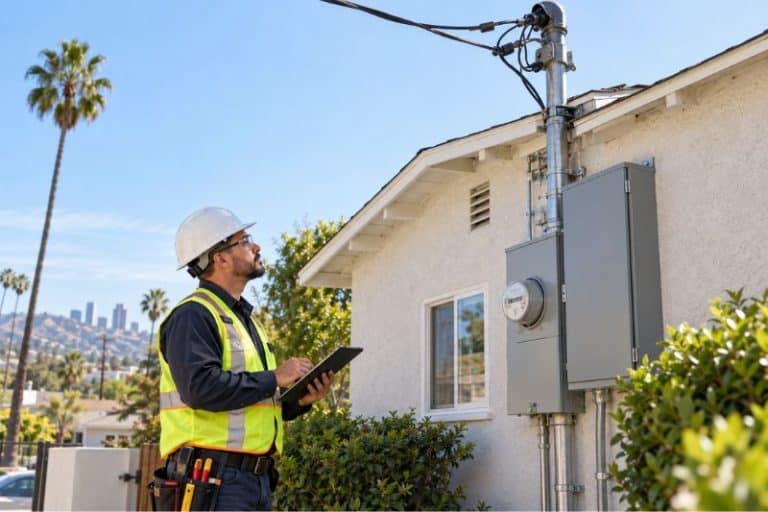
The process begins with an assessment of the existing system: what is present, what condition it is in, what the current load demands are, and what the building will need to support going forward. That assessment shapes the scope and the permit application. In Los Angeles, a full rewire requires a permit and city inspection, and we handle both as part of the project.
The physical work involves opening walls and ceilings to access the existing wiring, removing it, routing new conductors, installing new outlet, switch, and fixture boxes, and making all connections at the panel end. We work to minimize damage to finished surfaces and coordinate access with property managers and homeowners to sequence the work in a way that reduces disruption. At the end of the project, the city inspector reviews the work and issues approval. That approval is the document that satisfies an insurance carrier or a real estate buyer asking for documented compliance.
Partial rewiring and targeted circuit work
Not every wiring job requires a full rewire. When a problem is isolated to a specific area of a building, or when the goal is to add capacity for a specific use rather than replace the entire system, targeted circuit work is the right approach.
Dedicated circuits for high-demand appliances are among the most common targeted jobs we do. A kitchen that trips breakers when the microwave and refrigerator run simultaneously often needs a dedicated circuit for each appliance rather than sharing a circuit that cannot handle the combined load. EV chargers require a dedicated circuit by code, and the panel must have capacity to support it. A home office with multiple monitors, computers, and peripherals benefits from a dedicated circuit that keeps sensitive equipment off the same branch as appliances that create electrical noise.
GFCI and AFCI protection upgrades are a common partial job in older buildings. Current code requires GFCI protection in kitchens, bathrooms, garages, outdoors, and near any water source. AFCI protection is required on bedroom circuits in new construction and is increasingly required when those circuits are being modified. Buildings that were wired before these requirements existed frequently lack both, and adding them is considerably less disruptive than a full rewire while meaningfully improving both safety and code compliance.
Circuit extensions and additions are the right scope when a room is being repurposed, when a new space is being finished, or when a specific area of the building needs capacity it does not currently have. We assess the existing panel capacity before any addition to confirm the panel can support it without creating conditions that affect other circuits.
Wiring for apartment buildings and multi-unit properties
Wiring work in multi-unit buildings is a different operational problem than the same work in a single-family home. The building is occupied. Tenants depend on power. Access requires coordination. And the conditions in one unit often reflect conditions throughout the building, which means a wiring job that starts as a single-unit repair frequently surfaces findings that affect the property manager’s planning for the rest of the building.
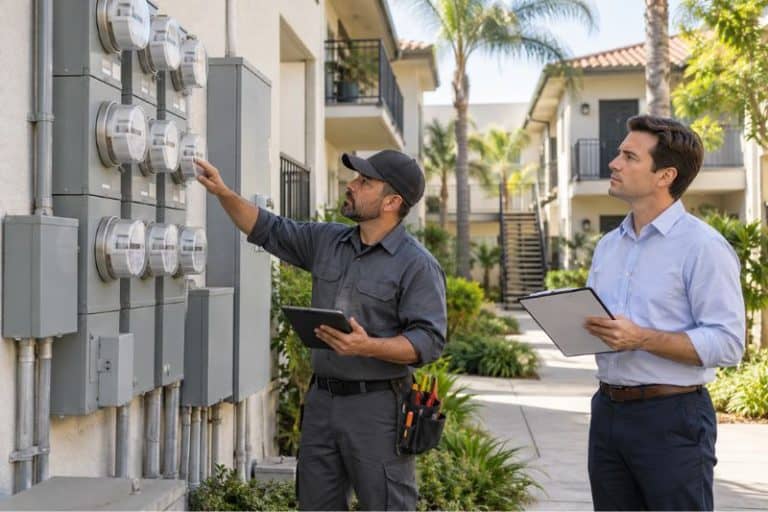
We work with property managers in Van Nuys, Inglewood, Downtown LA, and across the San Fernando Valley who are managing aging buildings with electrical infrastructure that was never designed for current occupancy patterns. The work we do in those buildings ranges from unit-level circuit repairs and GFCI upgrades to full rewires of common areas, laundry rooms, and parking structures.
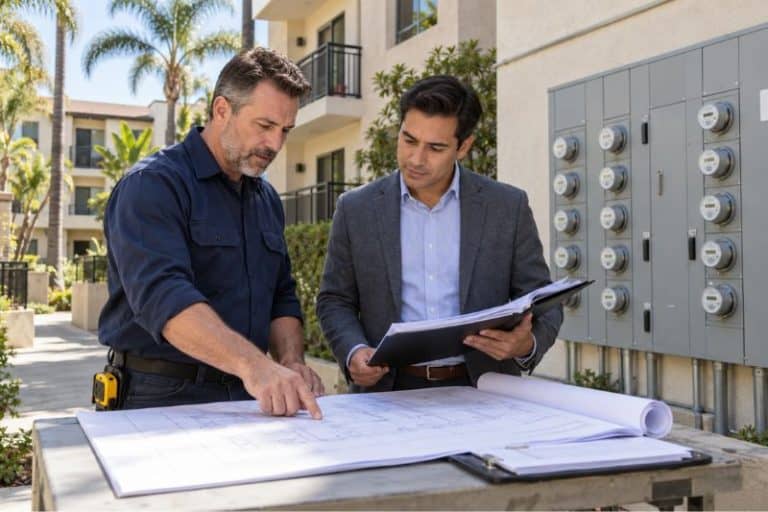
For multi-unit properties, we document conditions with photos, provide written assessments of what we find, and coordinate with the property manager before, during, and after the job. When a wiring assessment reveals conditions that extend beyond the original scope, we report those conditions clearly and provide a phased plan that addresses the most urgent items first. Property managers who need to present findings to building owners or insurance adjusters get documentation that supports that conversation.
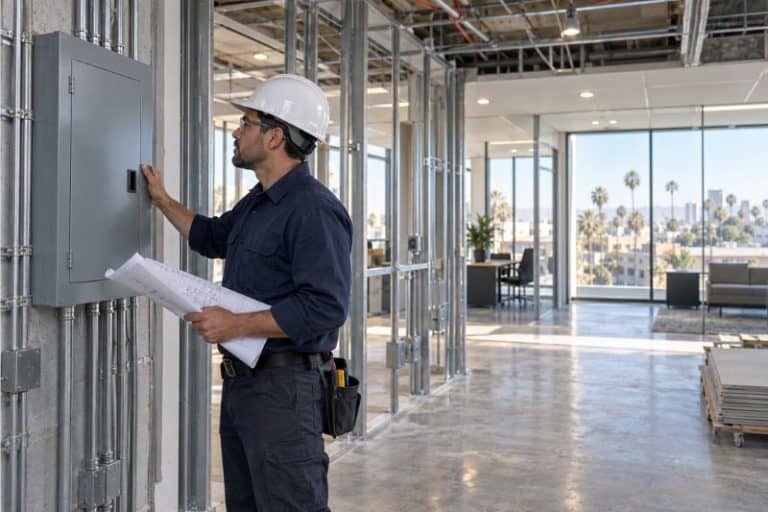
Our commercial electrical services in Los Angeles cover the full scope of multi-unit wiring work, from initial assessment through permitted installation and inspection approval. We provide certificates of insurance for any commercial project and handle all permit coordination with the city.
Permits, inspections, and why they protect the property owner
Wiring work done without a permit is a liability that follows the property. When a building sells, an unpermitted electrical upgrade surfaces in the inspection and becomes a negotiating point, a repair requirement, or a deal-breaker. When an insurance carrier asks for documentation of work done, unpermitted work provides none. When a fire or injury occurs and the cause traces to electrical work, unpermitted work removes the insulation that a properly permitted and inspected job would have provided.
We pull permits for all wiring work that requires them and do not perform work that code requires to be permitted without one. The permit process in Los Angeles involves an application, a plan review for larger projects, and a city inspection after the work is complete. We coordinate the entire process and are on-site for inspections. The permit and inspection record becomes part of the building’s documentation and satisfies the requirements that insurance carriers and buyers are increasingly placing on electrical systems.
Customers who have been quoted on work by contractors who did not mention permits should ask directly whether permits are included. Work that skips the permit process is cheaper in the short term and considerably more expensive over the life of the property.
Scheduling and what to expect
New wiring work, including full rewires, circuit additions, and GFCI or AFCI upgrades, begins with a free estimate. A technician or foreman visits the property, assesses the scope, and returns a written estimate that itemizes the work, the materials, and the total cost. There are no hidden fees and no work performed without written agreement on scope and price.
For existing problems that require diagnosis before a scope can be determined, a service call fee covers the technician’s time and travel. Once the diagnosis is complete, the findings go to our supervisor, who builds the estimate. We walk through that estimate with you before any repair work begins.
We use Siemens panels and top-tier materials on all wiring work. All completed work carries a 12-month workmanship guarantee. If a related issue surfaces within that period, we return without charging a second service call. Our electrical panel services in Los Angeles are available when a wiring assessment reveals that the panel itself needs attention, which is common in buildings where the wiring and the panel are the same age.
For immediate assistance or to schedule a professional evaluation, call RG Electric directly at (323) 521-5131.
Frequently asked questions
How do I know if my home needs a full rewire or just targeted repairs?
The scope depends on what the assessment finds. If the wiring is knob-and-tube, aluminum branch circuit throughout, or cloth-insulated with degraded insulation, a full rewire is usually the right answer. If the problem is isolated to specific circuits or areas, targeted work is often sufficient. An on-site evaluation is the only reliable way to determine which applies. We assess the existing system and provide a written recommendation before any scope is agreed to.
My insurance company is asking about my wiring. What does that mean?
Insurance carriers in California are paying closer attention to wiring type and condition during policy renewals, particularly for older homes and multi-unit buildings. If your carrier has flagged the wiring as a condition of renewal, it means they have identified a risk they are not willing to carry without documentation of corrective work. Acting before the renewal deadline gives you control over the timeline. Waiting until coverage is conditioned on a short correction window puts you in a difficult position with fewer options.
Does rewiring require permits and inspections in Los Angeles?
Yes. Full rewires and most significant wiring work require a permit from the city and a final inspection before the work is approved. We handle both as part of any wiring project. The permit and inspection record is the documentation that satisfies insurance carriers, real estate buyers, and city compliance requirements. Work done without a permit does not provide that documentation and creates liability that follows the property.
How long does a full home rewire take?
Timeline depends on the size of the building, the complexity of the existing system, and the scope of the work. A single-family home rewire typically takes several days to a week of active work, followed by the permit inspection process. Larger buildings or those with more complex conditions take longer. We provide a realistic timeline as part of the estimate and coordinate with property managers and homeowners to minimize disruption during the work.