
 Call (323) 5215131


Surge Protection for Los Angeles Multi-Unit Buildings: Code Requirements, LADWP Power Quality, and What Drives the Cost
Updated October 2026
A tenant in Unit 4 says the refrigerator died overnight. By noon, two more units report dead televisions, a fried router, and a furnace board that will not start, and everyone is looking at you to explain what happened and who pays. RG Electric is a licensed C10 #910807 electrical contractor serving property managers and building owners across Los Angeles, and surge damage claims like this one are among the most avoidable calls we get. This guide covers what causes surges in multi-unit buildings, what the electrical code now expects, how the utility fits in, and how to protect a building in layers so the next surge is a non-event.
What a Surge Actually Does to a Building
A surge is a short spike in voltage that rides in on a wire. Most of what people call a power surge lasts a tiny fraction of a second, yet it can push far more voltage through a circuit than the equipment inside was designed to tolerate. A single large spike can destroy a circuit board outright. Smaller ones are quieter and more expensive in the long run, because each one wears down components until a device fails months later with no obvious cause.
That second pattern is the one that confuses owners. A tenant reports that a microwave stopped working in March, another reports a dead thermostat in June, and nobody connects the two. In a building with no surge protection, the electronics in every unit absorb a steady drip of small events, and the failures look random when they are not.
Where surges come from
Surges come from two directions. External events include lightning, utility switching, a downed line, and a fault on the grid that a distant transformer has to clear. Los Angeles does not get the lightning most of the country does, which leads some owners to assume surges are rare here. They are not. Utility switching and grid faults happen year round, and a heavy rain or wind event can add to them.
Internal events are the larger share in most buildings. Every time a compressor, elevator motor, pool pump, or large air conditioner cycles off, it can kick a small spike back onto the building’s wiring. In a multi-unit building, dozens of motors share the same service, so a surge that begins in one unit’s air handler can reach the television in the unit next door. Older buildings in Koreatown, Van Nuys, and Inglewood, with aging wiring and a lot of shared equipment, see this often.
What this means for the property manager
A surge protection plan is not about preventing a rare disaster. It is about stopping a steady, preventable stream of tenant complaints, repair calls, and insurance questions. Cause leads to effect, and effect leads to a bill that lands on someone. The earlier the protection goes in, the fewer of those bills show up.
What the Electrical Code Expects Now
Surge protection has moved from a recommendation to a code requirement in a growing number of situations. The California Electrical Code, which adopts the national model code with state amendments, now requires a surge protective device for the service of a dwelling unit. That requirement is in section 230.67, and it applies to new services and also when service equipment is replaced, so a panel replacement in a dwelling triggers it. A matching provision in section 215.18 covers feeders that supply dwelling units from a separate panel.
The national model code has gone further than California in one respect. Its 2023 edition extended the surge protection requirement to multifamily buildings, and it sets a minimum nominal discharge rating of 10 kA for the devices. Which edition applies to a given project depends on what the local authority has adopted and when your permit is filed, so we confirm the current adopted cycle and its local amendments at the start of each job rather than assuming. The direction of travel is clear, though. Buildings that plan for surge protection now will not be scrambling when the rule reaches them.
Exceptions worth knowing
The code allows the surge device to be installed at the next level of downstream equipment instead of at the service in some arrangements. In a multi-unit building, that can mean protection at a distribution panel or at each unit’s panel rather than only at the main. That flexibility is useful, but it has to be designed on purpose. A device placed in the wrong spot can leave the shared equipment unprotected, which is the equipment that tends to be most expensive to replace.
What this means at the permit counter
In the City of Los Angeles, panel and service work is permitted through LADBS and inspected by a city inspector. When a building’s service equipment is replaced, the surge device belongs on the permit and on the inspection checklist. When it is missing, a correction notice can follow. Our approach is to put the device in the scope from the first estimate so it is never a surprise at inspection.
The Utility’s Role: LADWP Power Quality
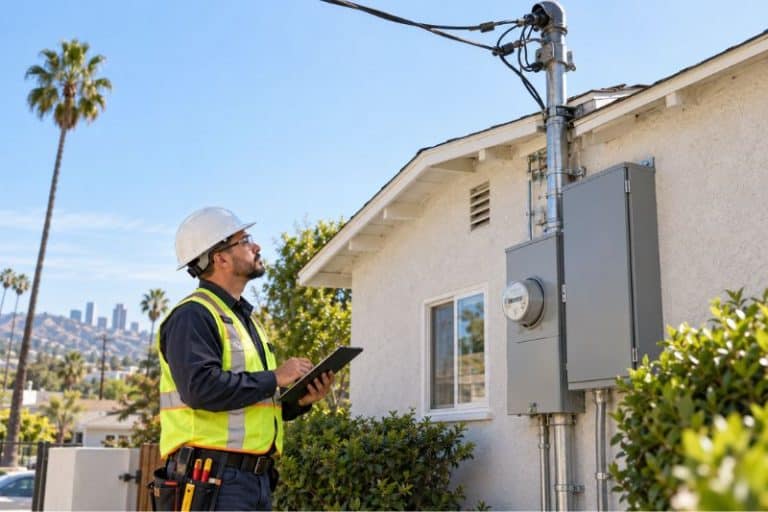
Many Los Angeles buildings get their power from LADWP, and the utility has a team that matters here. LADWP’s Power Quality Group investigates voltage complaints and equipment failures, and it can perform a site survey to look at what the building is receiving at the meter. That does not replace protection inside the building, but it answers a different question: is the problem coming from the grid, or from inside the property?
This distinction saves money. If a survey shows clean incoming power, the cause is usually internal, such as a failing motor load or a loose neutral, and a surge device alone will not solve it. If the survey shows events on the utility side, a whole-building device at the service becomes the first line of defense. Either way, you stop guessing.
When to involve the utility
Repeated unexplained failures across several units point toward a power quality question, and that is the moment to contact LADWP’s Power Quality Group and ask about a site survey. Keep a log of dates, units, and the equipment that failed. A pattern in that log is the evidence a utility investigator will want. We help property managers assemble it, because a clean record makes everything that follows faster. For current procedures and what the utility will cover, confirm directly with LADWP, since programs and processes change.
Whole-Building Protection Versus Plug-In Strips
Plug-in surge strips are not the answer for a building, though they have a place. A strip protects what is plugged into it, and only for as long as the protective components inside it last. Those components wear out with use, and a strip that has absorbed a few large events may keep its indicator light on while it no longer protects anything.
A whole-building device is wired into the electrical system at the service or at a distribution panel. It diverts surge energy before it reaches the circuits inside every unit. For a property manager, that is the difference between asking dozens of tenants to buy and maintain their own protection and handling the problem once, at the source.
Why layering works
No single device catches everything. The right design uses layers. A device at the service takes the largest events coming in from outside. Devices at sub-distribution panels or unit panels catch what gets through and what is generated inside the building. Plug-in protection at sensitive electronics, such as medical equipment, servers, or a tenant’s home office, handles whatever is left. Each layer lowers what the next one has to absorb, and the whole arrangement lasts longer as a result.
Our whole house surge protection work follows this approach. We pair the service-level device with the Siemens panel where one is being installed, so the protection and the panel are specified together rather than as an afterthought.
Tenant Claims, Liability, and Insurance
Surge damage lands on property managers in uncomfortable ways. A tenant whose equipment was destroyed asks who is responsible, and the honest answer depends on the lease, the cause, and the insurance policies involved on both sides. Some tenants carry renters insurance that covers electronics. Some do not. Owner policies treat surge damage differently from one carrier to the next, and some exclude it or limit it.
We are electricians, not attorneys, and we will not tell you who is liable. What we can do is give you the documentation that every one of those conversations depends on. A written finding of what the cause was, a record of what protection existed, and proof that the protection was installed to code and inspected are all things an adjuster or a tenant’s insurer will want to see. When you can show that you protected the building to the standard the code expects, the conversation changes.
Reducing the claims before they start
The best answer to a tenant claim is not having one. A building with surge protection at the service and at the distribution level sees fewer failures, and the ones that happen are easier to explain. For owners with a portfolio, standardizing the protection across buildings also standardizes the paperwork, which matters for insurers who look at the whole portfolio. Property managers in Downtown LA, Santa Monica, and Culver City often ask us for this first when a building changes hands or an insurer asks about electrical risk.
What Drives the Cost
We do not publish a price for surge protection, because the real answer depends on the building. What changes the cost is predictable, though, and knowing the variables makes it easier to compare bids honestly.
The first variable is how many layers you want. A single device at the service costs less than a full design with distribution-level protection. The second is the service size and configuration, because a building with multiple meters or a large service needs devices rated for it. The third is access, meaning how easy it is to reach the panels and how much work the install requires. The fourth is whether a panel replacement or upgrade is happening at the same time, which often makes the protection cheaper to add than installing it separately. The fifth is permitting and any coordination with the utility.
Why the cheapest bid can cost more
A low bid that leaves out the device rating, the permit, or the placement can cost more than it saves. A device that is undersized or installed in the wrong place is a purchase that looks like protection and does not behave like it. When you compare estimates, ask what rating the device has, where it goes, whether it is on the permit, and what the warranty covers. Those four answers tell you more than the price does.
How We Install Surge Protection in a Multi-Unit Building
Walkthrough and documentation
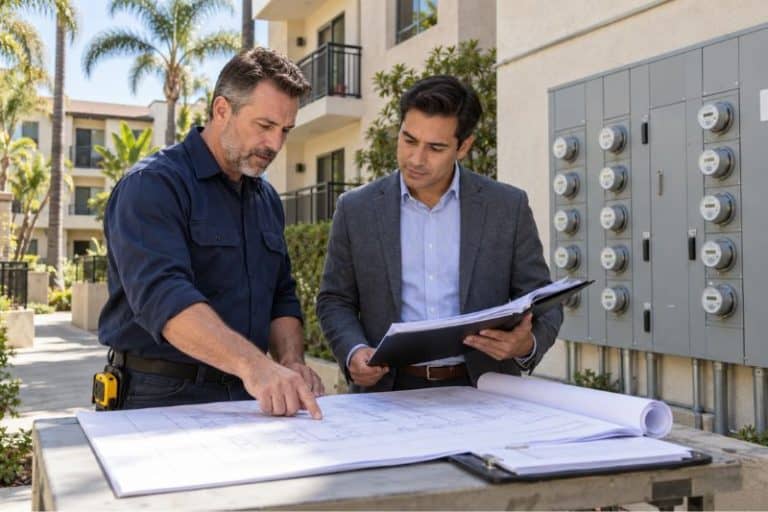
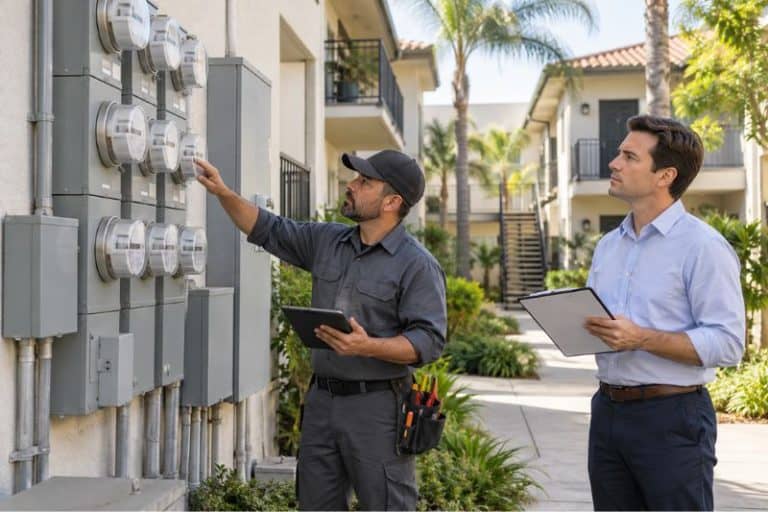
We start by looking at the service, the main distribution equipment, and any sub-panels, and we ask what failures have happened and when. If you have a log of tenant complaints, that is worth bringing. We photograph the existing equipment so the record shows what was there before.
Design and estimate
The design decides where each layer goes and what ratings are needed. Our process is simple. A technician reports what was found to our supervising electrician, who writes the estimate, and someone on our team then calls you to walk through each line and why it is there. New work gets a free estimate, and we do not bill by the hour. You get a written scope with everything necessary in it.
Permit and scheduling
Service-level work requires a permit and an inspection. We prepare the permit, and we schedule the installation to limit outages. Because surge devices are installed in the service equipment, the building loses power while the work is done. We give property managers a window in advance and notify tenants through you so nobody is surprised.
Installation and testing
We install the devices to the manufacturer’s instructions with short, direct conductors, because lead length affects how well a device performs. Then we label each device and test the installation. The inspector reviews the work, and you receive a record of what was installed, where, and at what rating.
Maintenance and Warning Signs
Surge devices do not last forever. Most have an indicator that shows whether the protection is still active, and a device that has absorbed a large event may have used up its capacity even though the building still has power. Check the indicators on a regular schedule and replace any device that shows a fault.
Warning signs that a building needs attention include repeated failures of electronics across several units, flickering lights when large equipment starts, tripped breakers with no clear cause, and tenants reporting that appliances die in clusters. Any of these is a reason to look at protection and at the wiring behind it. A surge device is one part of a healthy electrical system, and it works best when the grounding and the connections it relies on are sound.
When the problem is not a surge
Sometimes failures that look like surges are really something else. A loose neutral can send damaging voltage to equipment on one phase. Overloaded or undersized wiring can cause dimming and heat. In those cases a surge device alone will not fix the cause, and we will tell you so. Our commercial electrical services cover the diagnosis, the repair, and the protection together, so you are not paying twice for a half solution.
Our Guarantee and What to Expect
When you call, you speak with someone on our team. A building problem that starts as a symptom, such as repeated equipment failures, usually begins as a service call, because a technician has to find the cause before there is anything to price. That visit carries a fee up front. Installing protection is new work, and that gets a free estimate. We stand behind our work for 12 months. If something we installed misbehaves in that window, you are already our customer, and we come back without charging another service call.
Questions Property Managers Ask About Surge Protection
Is surge protection required in my building?
For dwelling units, the California Electrical Code requires it at the service when new service equipment is installed or replaced. Requirements for older buildings that are not being altered depend on the project and the adopted code. We confirm what applies before we quote.
Can I install it myself or let a handyman do it?
No. Whole-building devices connect to the service and the panels, and that work requires a licensed electrician and a permit, and a handyman without a C10 license cannot pull it.
Will it stop every failure?
No device stops everything. It reduces the number and severity of surge events that reach the equipment. Failures caused by loose connections, overloads, or old wiring need a different fix, and we check for those too.
Who pays when a surge damages tenant property?
That depends on the lease, the cause, and the insurance policies involved, and we cannot give legal advice. Documentation of the cause and the protection in place helps everyone involved make a decision.
How long does an installation take?
Many installations at a single service take part of a day, plus the permit and inspection around it. Larger buildings with several layers take longer. The estimate lists the schedule.
For immediate assistance or to schedule a professional evaluation, call RG Electric directly at (323) 521-5131.
Electrical work is hazardous. Always consult a licensed electrician like RG Electric before working on electrical systems.