
 Call (323) 5215131

Can I Get Homeowners Insurance in Los Angeles With Knob-and-Tube Wiring?
Updated October 2026
Sometimes the answer is yes, sometimes it is yes with conditions, and sometimes a carrier simply declines. The people who get stuck are usually the ones who discover the wiring only after an insurer’s inspector, a buyer’s inspector, or a nonrenewal notice does it for them. RG Electric is a licensed C10 #910807 electrical contractor serving Los Angeles homeowners, and knob-and-tube wiring is one of the older-home problems we are asked about most. This guide explains why insurers react to it, what coverage options exist in California, what documentation helps, and how a repair or rewire works through the permit process.
Why Insurers Treat Knob-and-Tube Wiring as a Risk
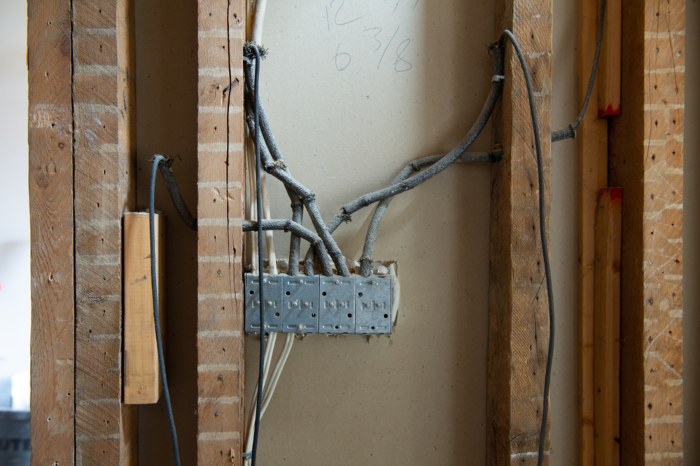
Knob-and-tube wiring is the system used in houses built roughly from the late 1800s through the early 1940s. Individual conductors run through the air on porcelain knobs and through porcelain tubes where they pass through framing. It was designed for homes with a few lights and a radio, not for a modern household with refrigerators, microwaves, space heaters, and chargers.
What is different about the system
Three features matter to an underwriter. First, there is no ground conductor, so grounded appliances and surge protection cannot work the way they were designed to. Second, the conductors rely on rubber-based insulation that stiffens, cracks, and flakes with age. Third, the system depends on open air around the wire to shed heat, which is the reason it was never meant to be buried in insulation.
That last point is a code matter, not only a safety preference. The California Electrical Code does not permit concealed knob-and-tube wiring in the hollow spaces of walls, ceilings, and attics that are insulated with loose, rolled, or foamed-in-place material that envelops the conductors. A previous owner who added blown-in attic insulation over live knob-and-tube wiring created a condition that the code specifically disallows.
How the risk shows up in a claim file
Insurers care about the pattern more than the age. Aging insulation, overloaded circuits, and amateur splices combine in ways that produce heat inside a wall or attic where nobody sees it. An underwriter looking at a 1930s house with original wiring is pricing the chance of that fire.
So the cause is aged insulation and a system never built for modern loads, the effect is hidden heat, and the consequence is that many carriers decline the risk, restrict the coverage, or ask for proof that the wiring has been dealt with. This is a general pattern, not a promise about any particular company, and every carrier sets its own rules.
What Insurance Options Exist in California
There is no single California rule that says a home with knob-and-tube wiring cannot be insured. What exists is a market in which individual carriers decide for themselves, and their appetite has tightened for older electrical systems. We are electricians and not insurance brokers, so treat this section as orientation and confirm specifics with a licensed agent.
Shop the market first
The California Department of Insurance recommends that consumers shop the market first. Different carriers ask different questions about wiring, and some will write a policy on an older home if the wiring has been inspected, partly replaced, or documented as safe. An independent broker who places homes with older systems regularly will know which carriers are currently receptive and what each wants to see.
The FAIR Plan as a last resort
The California FAIR Plan exists for residents who cannot obtain coverage through a regular insurance company. According to the Department of Insurance, you apply through a licensed agent or broker, and you are expected to have tried the regular market first. The FAIR Plan’s standard residential policy is a limited fire policy, so homeowners often pair it with a Difference in Conditions policy for water damage, liability, and other coverage a basic fire policy leaves out. Whether a particular house with knob-and-tube wiring is accepted, and on what conditions, is a question for the FAIR Plan or a broker who writes it.
What this means for you
Knob-and-tube wiring does not make a home uninsurable by law, but it narrows your choices and raises the odds of conditions or nonrenewal. The practical takeaway is that the wiring is easier to address before you shop than after you are declined.
What Documentation Helps
An underwriter can say yes to a document more easily than to a promise. When we are asked what helps a home with older wiring, the answer is almost always paper.
An electrical inspection report
A written evaluation from a licensed contractor describing what wiring is present, where, and in what condition gives an insurer something to underwrite. It separates a house where knob-and-tube remains in one attic run from a house where it feeds every room, and it tells you which situation you are in.
Permit and final inspection records
When wiring is replaced, a permit and a passed city inspection are the strongest proof that the work meets code. In the City of Los Angeles that record lives with the Los Angeles Department of Building and Safety, and permit history can be looked up by address. Send your broker the permit number and the final sign-off when the work is done.
Panel and service information
Insurers also look at the panel. A modern panel from a brand like Siemens, with correctly sized breakers, signals a maintained system. Older fuse boxes and some outdated panel brands are flags on their own. If your home has original wiring and an original panel, the insurer is looking at two issues, not one.
Put simply, the best evidence you can offer is a contractor’s written findings and, where work was done, a permit with a passed inspection.
Partial Fixes Versus a Full Rewire
Not every home needs the same answer, and a good electrician will tell you which situation you are in before recommending a project.
When partial replacement can be enough
Some houses have a small amount of original wiring left, such as a single attic run or a few circuits in a back room, with the rest already updated by earlier owners. In that situation, removing or replacing the remaining knob-and-tube sections and documenting the result may be all an insurer needs. Wiring that is abandoned must be disconnected and no longer energized, and where knob-and-tube remains active in an attic, the code position on insulation matters.
When a full rewire is the honest answer
If knob-and-tube serves most of the house, partial fixes tend to chase problems around the building. A full rewire replaces the old circuits with modern grounded cable, adds outlets where today’s use demands them, and gives the home a clean record. Our wiring services cover both scopes, and we tell customers which one the house calls for before any work is priced.
Rewiring and the panel
A rewire often leads to a panel conversation. A house with knob-and-tube wiring may also have a fuse box or a panel sized for a much smaller load, and new circuits need somewhere to land. Our electrical panel services start with a load calculation so the new wiring and the panel are planned together, and we use Siemens panels when one is replaced.
The right scope is whatever matches how much of the house still runs on the original system.
Warning Signs in a Home That May Have It
You do not need to be in the attic to suspect knob-and-tube wiring. The house often tells you through the way it behaves.
Signs you can see
Two-prong outlets throughout the house are the first clue, because the system has no ground to connect a third prong to. Cloth-covered or cracked wire in an attic or crawl space, and white porcelain knobs holding single conductors in the open, confirm it. Wire that looks brittle, or insulation that crumbles when disturbed, is already past its service life.
Signs you can feel and hear
Lights that flicker or dim when an appliance starts, a fuse or breaker that trips more than occasionally, switch plates that feel warm, and a faint burning smell near an outlet all suggest a system under strain. Heavy use of power strips and extension cords is a symptom too, because the house never had enough outlets for how people live in it now.
What to do when you notice them
Stop adding load to those circuits and have a licensed electrician look at the house. Please do not open walls or move old wire yourself, because brittle insulation can come away in your hands and leave a live conductor exposed. A short evaluation will tell you what you have, how much of it, and whether it is active.
Noticing the signs is useful only if it leads to an evaluation, since the evaluation is what an insurer can eventually read.
How to Prepare Before You Talk to a Broker or Carrier
Homeowners who handle this well tend to do the same few things in the same order.
Know what you actually have
Before you describe your wiring to anyone, find out what it is. Saying “some old wiring” invites an underwriter to assume the worst. A contractor’s written findings let you say, for example, that knob-and-tube remains in one attic run and the rest was updated, or that it still feeds most of the house.
Ask what the carrier wants to see
Different companies set different conditions. Ask your agent which documents or repairs would let the policy be written or renewed, and get the answer in writing where you can. Then bring that list to the electrician so the scope matches the requirement.
Time the work around the deadline
Permits and inspections run on the city’s schedule, not your insurer’s. If you have a renewal date or a closing date, tell us when you call so we can plan the permit and the inspection around it. Starting before the notice arrives gives you the most options.
The LADBS Permit and Inspection Path
Replacing wiring in a Los Angeles home is permitted work. In the City of Los Angeles, the permit comes from the Los Angeles Department of Building and Safety, the installation is inspected, and the inspector signs off when the work meets the electrical code in force. The 2025 California Electrical Code, based on the 2023 National Electrical Code, took effect statewide on January 1, 2026.
Not every address answers to LADBS
LADBS covers the City of Los Angeles only. Santa Monica, Beverly Hills, Culver City, Inglewood, and Torrance each have their own building departments with their own permit processes. Many of the pre-war bungalows where knob-and-tube turns up are in those cities as well as in Koreatown, Downtown LA, and older parts of the San Fernando Valley. We pull the permit in the correct jurisdiction for your address.
What the inspector looks at
The inspector reviews the new cable and its support, the grounding and bonding, box fill and connections, and the panel and labeling. In older houses, opening walls and ceilings sometimes reveals more than the estimate anticipated, such as spliced circuits or other contractors’ repairs, and a correction before approval is part of the process.
What you want at the end is a passed inspection on file with the city, because that is the document an insurer can read.
What to Expect From RG Electric
When you call (323) 521-5131, you reach someone on our team. The first visit for a wiring concern is a service call, which carries a fee up front, because a technician has to see what is in the house before there is anything to price. The technician reports what was found to our supervising electrician, who writes the estimate, and someone on our team then calls to walk through each line and why it is there.
A rewire or panel replacement is new work, and new work gets a free estimate. We do not bill by the hour. You see the scope and the price in writing before we begin, there are no hidden fees, and we stand behind our work for 12 months. We will also tell you plainly if the wiring in your house is in better shape than you feared.
Questions Homeowners Ask About Knob-and-Tube and Insurance
Is knob-and-tube wiring illegal in California?
No, existing knob-and-tube wiring is not automatically illegal, but new installations are generally not allowed, and the code restricts how it can be used, including a ban on burying it in loose, rolled, or foamed-in-place insulation. Whether you are required to replace it depends on what you are doing to the house and who you are dealing with, including your insurer.
Will my current insurer cancel my policy if they find it?
It depends on the company and the policy. Some carriers ask about wiring at renewal or after an inspection and may request repairs, restrict coverage, or not renew. Read your policy and ask your agent directly, since we cannot speak for any insurer.
Can I get the FAIR Plan with knob-and-tube wiring?
The FAIR Plan is the option for people who cannot get coverage on the regular market. Whether a specific house is accepted, and under what terms, should be confirmed with the FAIR Plan or a broker who writes it.
How do I know if my house has it?
It is most often visible in attics, basements, and crawl spaces as single wires running on white porcelain knobs. If you are not comfortable looking, or you see cloth-covered or cracked wiring, a licensed electrician can confirm what you have in a single visit. Do not disturb it yourself.
Can I put insulation over it?
Not loose, rolled, or foamed-in-place insulation where it envelops the conductors. That is the specific condition the California Electrical Code prohibits. If you plan to insulate your attic, have the wiring evaluated first.
For immediate assistance or to schedule a professional evaluation, call RG Electric directly at (323) 521-5131.
Electrical work is hazardous. Always consult a licensed electrician like RG Electric before working on electrical systems.