
 Call (323) 5215131

What Electrical Code Requirements Apply to Hot Tub Wiring in Los Angeles?
Updated September 2026
In September 2015, a hot tub circuit in a small Lake County community started the Valley Fire, California’s third most destructive wildfire at the time. Investigators traced the ignition point to a wire nut connection the homeowner had installed himself, without a permit, in 2009. The connection overheated, arced, and ignited dry grass nearby. Four people died, close to two thousand structures were destroyed, and the fire cost roughly fifty seven million dollars to extinguish. RG Electric, license C10 #910807, brings this up not to alarm anyone considering a hot tub, but because it is the clearest possible illustration of why hot tub wiring gets its own section of the electrical code rather than being treated as a minor appliance hookup.
Hot Tubs Fall Under a Different Part of the Same Code That Governs Pools
The National Electrical Code addresses pools, spas, hot tubs, and other bodies of water in Article 680, the same article that covers swimming pool wiring. Hot tubs and spas are not treated identically to pools within that article, though. Part IV of Article 680 sets requirements specific to spas and hot tubs, and those requirements differ from the pool rules in several meaningful ways, even though both share the same underlying goal of preventing shock in a wet environment.
Indoor spas and hot tubs must also comply with the general provisions in Parts I and II of Article 680, the same foundational rules that apply to pools, except where Part IV specifically modifies them. This layered structure is part of why hot tub wiring confuses people who have read about pool electrical requirements and assume the same rules apply without modification. Some do. Several important ones do not.
The practical effect of this layered structure is that a hot tub or spa installation gets evaluated against two sets of requirements at once, the general water related rules everyone expects, and a second, more specific layer that only applies to spas and hot tubs. An electrician familiar with pool wiring but unfamiliar with the spa specific modifications can miss requirements that only show up in Part IV, which is one reason hot tub electrical work benefits from being treated as its own category rather than assumed to be a smaller version of a pool job.
Grounding, Bonding, and GFCI Protection for Hot Tubs
Every circuit supplying hot tub or spa equipment needs GFCI protection, regardless of voltage. That covers pumps, heaters, blowers, controls, and lighting, the same broad standard that applies to pool equipment. The metal parts of the hot tub structure itself, along with fittings attached to it, must be bonded together, establishing the same equipotential grid concept used around pools, so that no metal surface someone might touch carries a different electrical potential than any other.
Where hot tubs diverge from pools is in how that bonding connects to the rest of the property. If the building has a metal piping system, it typically needs to be bonded to the circulating pump using a solid copper conductor, eight gauge or larger, unless the pump itself is double insulated, in which case that specific bonding jumper is not required. Getting this detail wrong is a subtle enough mistake that it rarely shows up as an obvious problem day to day, which is exactly the kind of gap a permitted inspection exists to catch before it becomes dangerous.
Switch placement is another detail that carries its own spa specific rule. Switches controlling hot tub equipment need to sit at least five feet from the inside walls of an indoor spa or hot tub, a clearance requirement that exists for the same reason every other distance rule in Article 680 exists, to keep a control someone might touch while wet at a safe remove from the water itself. It is a simple measurement, but it is easy to get wrong on a retrofit where the most convenient wall for a switch happens to be closer than code allows.
The Dedicated Service Receptacle Rule for Indoor Spas
Indoor spas and hot tubs carry a requirement that outdoor pools do not have. Code calls for a dedicated 120 volt, 20 amp receptacle, GFCI protected, installed within five feet of an indoor spa or hot tub, specifically for use by service technicians. This receptacle exists so that anyone servicing the equipment later has a safe, code compliant power source available without needing to run an extension cord from somewhere else in the house or bypass the unit’s dedicated protection.
Homeowners planning an indoor spa installation, a growing request in Los Angeles as more properties convert bonus rooms or enclosed patios into wellness spaces, often do not know this receptacle requirement exists until an electrician brings it up during the estimate. It is a small addition to the scope of work, but it is not optional, and skipping it is the kind of gap that surfaces during inspection rather than during everyday use.
Plug In Portable Spas Versus Hardwired Installations
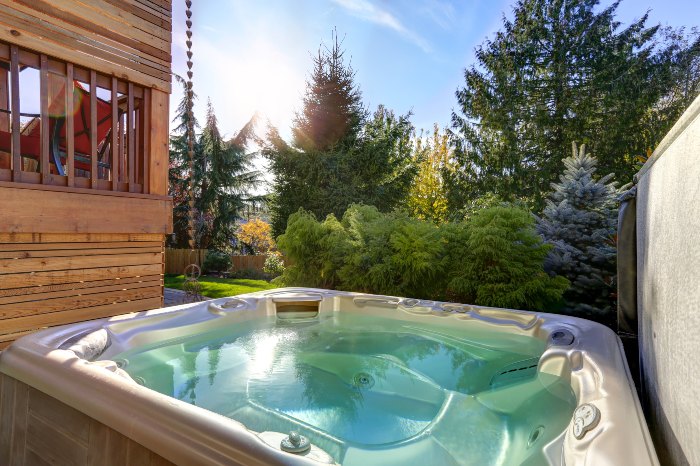
Not every hot tub is wired the same way, and this is where a meaningful distinction gets lost in most general advice about pool and spa electrical work. Listed, factory packaged spa and hot tub units rated at 20 amps or less are permitted to be cord and plug connected, using a cord no longer than fifteen feet, terminating in a GFCI protected receptacle. This covers a large share of the portable spas sold for residential backyards, the kind delivered assembled and simply plugged in rather than hardwired during installation.
Larger, field assembled spas, and any hot tub drawing more than 20 amps, do not qualify for that cord and plug exception. These need a hardwired, dedicated circuit sized correctly for the unit’s actual electrical demand, installed the same way a pool’s equipment circuit would be, with a disconnect that is readily accessible and within sight of the equipment. A homeowner shopping for a hot tub should know which category their chosen unit falls into before assuming installation is as simple as plugging it in, since the answer changes both the scope of the electrical work and whether a permit applies.
This distinction matters most at the point of purchase, before a hot tub has even arrived. A unit marketed as plug and play still needs a correctly rated, GFCI protected outdoor receptacle nearby, positioned within the cord’s fifteen foot limit and not simply routed through an extension cord to reach a more distant outlet. A hot tub that ships as plug and play but ends up powered through an improvised extension cord arrangement has effectively recreated the exact kind of substandard connection that code was written to prevent, even though nothing about the unit itself was ever hardwired.
What the Valley Fire Investigation Actually Found
The connection that started the Valley Fire was not a dramatic, obviously broken piece of equipment. Investigators described it as a poor electrical connection at a wire nut that generated enough heat over time to melt copper wire and ignite dry grass nearby. It was installed by the homeowner without a permit, and no record of a required building permit was ever found for the circuit. That combination, unpermitted work and a connection that looked fine until it failed, is precisely the failure mode that permitting and inspection exist to prevent.
This is not a Los Angeles story specifically, but the lesson applies with equal force here. A wire nut connection that is slightly loose, slightly undersized, or slightly out of spec does not announce itself the way a tripped breaker does. It can sit behind an access panel functioning normally for years before conditions align badly enough to cause a real problem. An inspection performed as part of a permitted installation is the mechanism that catches this kind of defect while it is still just a connection, not yet a hazard.
What makes the Valley Fire case particularly relevant to a permit conversation is that investigators specifically noted the absence of any building permit on file for the circuit. That is not a coincidence. A permitted installation gets inspected by someone whose entire job is to look for exactly the kind of marginal connection that eventually failed at that property. An unpermitted installation, however competently the installer believes it was done, never gets that second set of eyes before it goes into service.
What LADBS Requires Before a Hot Tub Installation Begins
Hot tub and spa electrical work in Los Angeles requires a permit from the Los Angeles Department of Building and Safety, performed by a licensed C10 electrical contractor, the same requirement that applies to pool electrical work. This holds whether the installation is a large, field wired spa built into a deck or a smaller portable unit that ultimately still needs a properly sized, GFCI protected circuit and, where applicable, the dedicated service receptacle Part IV requires for indoor units.
LADBS inspects the completed circuit, the bonding, and the GFCI protection before signing off, the same layered check used for pool electrical work. A homeowner who skips this step is not avoiding a bureaucratic formality. They are skipping the one part of the process specifically designed to catch a connection like the one that started the Valley Fire before it has years to quietly degrade.
Always consult a licensed electrician like RG Electric before working on electrical systems.
Older Los Angeles Properties and Hot Tub Electrical Capacity
Hot tubs draw substantial power, particularly larger, hardwired spas with multiple pumps and a heater running simultaneously. Adding one to an older property in Sherman Oaks, Encino, Tarzana, or Woodland Hills often means checking whether the existing panel has room for the added load before the hot tub itself becomes the priority. A panel that is already close to capacity, or one from a brand RG Electric flags often for replacement such as Zinsco, Federal Pacific, Challenger, or Pushmatic, deserves that evaluation before a hot tub gets added on top of it, not after installation reveals a problem.
Detached patio structures and pool house conversions add another common wrinkle in these neighborhoods. A hot tub installed some distance from the main panel, on a covered patio or inside a converted structure, often needs a subpanel to serve it reasonably, rather than a single long circuit run all the way from the house. That decision affects both cost and timeline, and it is exactly the kind of detail a site visit during the estimate stage is meant to catch before a homeowner has already committed to a specific hot tub location based on assumptions about how the power would get there.
How RG Electric Handles Hot Tub and Spa Wiring
RG Electric provides a free estimate for new hot tub and spa electrical work, evaluating panel capacity, confirming whether the chosen unit qualifies for cord and plug connection or requires a hardwired dedicated circuit, and identifying whether the dedicated service receptacle applies for an indoor installation. Where a permit is required, RG Electric pulls it and schedules the inspection as a standard part of the project, following code to the teeth on every connection, including the ones that would be easy to rush on a job most people assume is simple.
That same standard applies whether the hot tub in question cost two thousand dollars or twenty thousand. The price of the equipment has no bearing on how carefully the electrical connection feeding it needs to be done, and RG Electric treats a modest portable spa on a straightforward circuit with the same code discipline as a large custom installation, because the failure mode that matters, a connection that degrades quietly over years, does not care what the hot tub itself cost.
Every completed installation is backed by RG Electric’s twelve month workmanship guarantee. Pricing reflects the actual scope of the work, since a plug and play portable spa on an already adequate circuit is a very different job from a large, field wired spa that needs a new dedicated line run from a panel with limited remaining capacity.
Getting Hot Tub Wiring Right From the Start
Hot tub electrical work shares a code section with pools, but it is not the same set of rules applied to a smaller body of water. The dedicated service receptacle, the cord and plug exception for smaller listed units, and the bonding requirements specific to spa equipment all deserve their own attention. RG Electric handles hot tub and spa electrical wiring and repairs across Los Angeles with these distinctions built into the estimate from the start, and coordinates any panel capacity questions through the same team that handles circuit breaker services for homes adding new high demand equipment.
A hot tub is meant to be the easy, relaxing part of owning a home. The wiring behind it deserves to be treated with the same seriousness as any other connection that carries real current in a space full of water and bare skin, whether that means a quick confirmation that an existing circuit is adequate or a full permitted installation from the panel out. The difference between a five minute conversation with a licensed electrician before installation and skipping that conversation entirely is rarely visible on day one, which is exactly what makes it worth having anyway.
For immediate assistance or to schedule a professional evaluation, call RG Electric directly at (323) 521-5131.