
 Call (323) 5215131
Electrical Warning Signs Property Managers Should Never Ignore
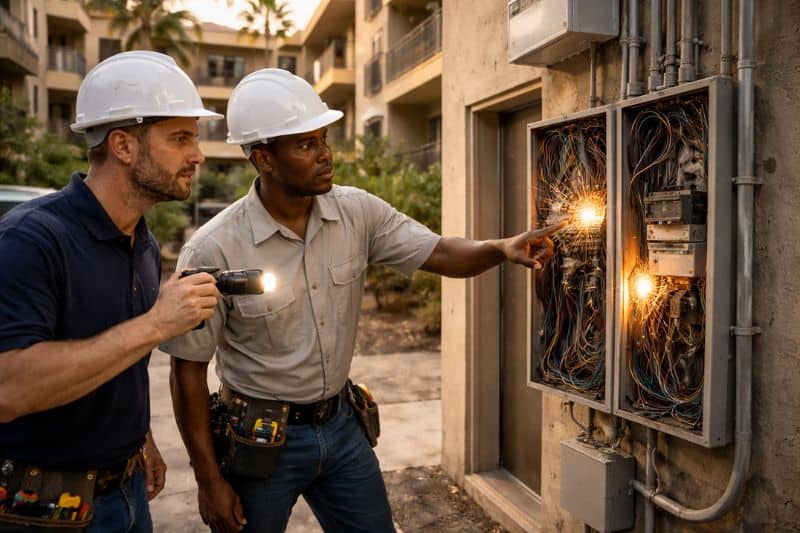
In many Los Angeles apartment buildings, electrical problems rarely appear all at once. They surface gradually, through small warning signs that are easy to dismiss when buildings are busy, and tenants keep moving in and out.
Property managers often encounter these signs during routine maintenance, tenant complaints, or unit turnovers. A breaker trips occasionally. Lights flicker in a hallway. An outlet stops working in one unit but works fine in another. On their own, these issues may seem minor. Together, they often point to deeper system-level risks.
The challenge is that older multi-unit buildings can operate for years while electrical systems slowly degrade. By the time a serious failure occurs, the warning signs were usually present long before, but ignored or treated as isolated incidents.
Understanding which electrical warning signs should never be ignored helps property managers prevent emergencies, reduce insurance risk, and avoid costly disruptions that affect multiple tenants at once.
Always consult a licensed electrician like RG Electric before working on electrical systems.
Why Recurring Electrical Issues Are a Red Flag in Multi-Unit Buildings
One of the clearest warning signs in apartment buildings is recurring electrical problems, even when they appear small. Issues that return repeatedly are rarely isolated. They are often symptoms of underlying stress on shared electrical systems.
In multi-unit properties, recurring breaker trips, repeated outlet failures, or frequent lighting issues usually indicate that circuits are overloaded, wiring is aging, or previous modifications were made without addressing overall system capacity. When the same type of problem shows up in multiple units or common areas, it suggests that the issue extends beyond individual tenant usage.
Property managers sometimes address these issues reactively, resetting breakers or replacing individual devices as complaints come in. While this may restore service temporarily, it does not resolve the root cause. Over time, repeated stress on the system increases the likelihood of overheating, equipment failure, or fire risk.
This is why recurring issues often lead insurance inspectors and electricians to recommend a broader evaluation involving electrical repairs services or system-wide assessments through commercial electrical services. Addressing the pattern early helps prevent minor problems from escalating into emergencies.
What Flickering Lights and Dimming Power Actually Indicate
Flickering lights are one of the most commonly ignored electrical warning signs in apartment buildings. Because the issue often comes and goes, it is easy to attribute it to a faulty fixture, a bad bulb, or tenant usage. In multi-unit buildings, flickering is rarely that simple.
When lights flicker or dim across multiple units or common areas, it often points to voltage instability, loose connections, or overloaded circuits. These conditions place stress on wiring and equipment over time. While the system may continue functioning, the underlying issue increases heat buildup and accelerates component failure.
In older Los Angeles buildings, flickering lights are frequently tied to aging wiring methods or circuits that were never designed to support modern electrical demand. Over time, additional lighting, appliances, and tenant electronics push the system beyond its original capacity. The result is inconsistent power delivery that shows up as flickering or dimming.
Insurance inspectors and electricians treat this as an early warning sign, not a cosmetic issue. When flickering is ignored, it often leads to more serious failures later. Addressing the cause early through
indoor lighting installation services or broader system evaluations helps prevent escalation and reduces long-term risk.
Why Warm Outlets, Switches, or Panels Should Never Be Ignored
Another critical warning sign property managers should never ignore is heat. Electrical components should never feel warm to the touch under normal operation. When outlets, switches, or breaker panels begin to heat up, it indicates resistance, overload, or failing connections.
In apartment buildings, warm devices are often the result of circuits carrying more load than they were designed to handle. This may happen gradually as tenant usage increases or suddenly after new equipment is added. In either case, heat buildup is dangerous because it increases the risk of insulation breakdown and electrical fires.
Warm outlets and switches are especially concerning when they appear in multiple units or common areas. This suggests a shared system issue rather than a single device failure. Panels that feel warm or emit unusual smells signal even more serious concerns and should be evaluated immediately.
These conditions frequently lead to corrective work involving electrical switches and outlets or assessments through electrical panel services. Ignoring heat-related warning signs almost always results in more costly and disruptive repairs later.
Why Frequent Breaker Trips Signal Deeper Electrical Stress
Frequent breaker trips are one of the clearest indicators that an electrical system is under stress. While an occasional trip can happen, breakers that trip repeatedly are doing exactly what they are designed to do, protecting wiring and equipment from dangerous conditions.
In multi-unit buildings, repeated trips often indicate that circuits are overloaded or that electrical demand has grown beyond what the system was designed to handle. This is especially common in older Los Angeles properties where additional appliances, air conditioning units, or tenant electronics were added over time without upgrading the underlying infrastructure.
Property managers sometimes respond by resetting breakers or replacing individual devices. While this may restore power temporarily, it does not address why the breaker is tripping in the first place. Over time, repeated overloads can weaken connections, damage wiring insulation, and increase the likelihood of fire.
When breaker issues appear across multiple units or common areas, insurers and electricians view it as a system-wide concern. These situations often require evaluation through circuit breaker services or a broader review of panel capacity and load distribution. Addressing frequent trips early helps prevent emergency situations and reduces insurance risk.
What Buzzing Sounds, Burning Smells, or Unusual Noises Reveal
Electrical systems should operate quietly and without noticeable odors. When property managers or tenants report buzzing sounds, crackling noises, or burning smells, those warnings should never be ignored.
Buzzing or humming often indicates loose connections, failing breakers, or overloaded components. Burning smells may signal overheated insulation or arcing within wiring or devices. These conditions can exist behind walls or inside panels, making them especially dangerous because they are not always visible.
In apartment buildings, these warning signs are particularly concerning because shared systems mean a failure in one area can affect multiple units. Unusual sounds or smells are often reported shortly before serious electrical failures or fires occur.
When these symptoms appear, immediate evaluation is critical. These situations frequently lead to corrective work through electrical repairs services or urgent response via emergency electrical repairs. Delaying action when sensory warning signs are present significantly increases risk.
Why Outdated Wiring and Temporary Fixes Become Long-Term Liabilities
In many older Los Angeles apartment buildings, electrical systems have been modified repeatedly over decades. When issues arise, temporary fixes are often used to restore power quickly. While these solutions may work in the short term, they often create long-term safety and insurance liabilities.
Outdated wiring methods were never designed to support today’s electrical demand. As additional loads are added, temporary fixes such as oversized breakers, improvised connections, or unsupported wiring extensions place stress on components that are already aging. These conditions can remain hidden until a serious failure occurs.
Property managers sometimes inherit these issues from previous ownership or management. Wiring that appears functional may actually be operating beyond safe limits. When inspectors or electricians eventually uncover these conditions, corrections are often more extensive and disruptive than if the issues had been addressed earlier.
This is why insurers and electricians often recommend system evaluations involving wiring services rather than isolated fixes. Addressing outdated wiring proactively helps reduce long-term risk and prevents repeated emergencies.
Conclusion: Early Warning Signs Protect Buildings, Tenants, and Coverage
Electrical warning signs in multi-unit buildings rarely appear without cause. Flickering lights, warm devices, frequent breaker trips, unusual sounds, or temporary fixes all signal stress within the electrical system. Ignoring these signs increases the likelihood of emergencies, tenant disruption, and insurance complications.
For property managers in Los Angeles, recognizing and addressing these warning signs early is one of the most effective ways to protect buildings and maintain insurability. Proactive evaluations, proper documentation, and system-level planning help prevent minor issues from escalating into costly failures.
Always consult a licensed electrician like RG Electric before working on electrical systems.
If you are seeing any of these warning signs in your property, request a free estimate or contact RG Electric at (323) 521-5131 to discuss your options.