
 Call (323) 5215131
Electrical Upgrades That Add Value to Commercial Properties in Los Angeles
Updated August 2026
In Los Angeles, commercial properties compete on more than location and aesthetics. Behind every well-run apartment complex, office building, and mixed-use property is an electrical system that either supports the operation or quietly undermines it. Outdated panels, undersized circuits, and aging wiring create safety risks, compliance exposure, and tenant dissatisfaction that accumulate over time and become expensive to address under pressure. RG Electric (License C10 #910807) works with property managers and building owners throughout Los Angeles to plan and execute electrical upgrades that protect assets, satisfy inspectors, and support the demands modern tenants actually place on a building.
This guide covers the electrical upgrades that deliver the most value for commercial and multi-unit properties in Los Angeles, how to sequence them strategically, and what the permitting and compliance process looks like when the work is done correctly.
Why Electrical Infrastructure Matters More Than Most Property Managers Expect
The electrical system is invisible until it fails, and that invisibility leads many property owners to defer upgrades that would meaningfully reduce their risk. A panel that looks functional from the outside may be carrying loads it was never designed for, protecting circuits with breakers that fail to trip, or generating heat inside the wall cavity that will eventually become a loss event. In Los Angeles, where building stock skews older and tenant electrical demand has increased substantially over the past decade, the gap between what a building’s electrical system was designed to handle and what it is actually being asked to do has widened for most properties that haven’t been professionally evaluated.
Insurance carriers in the California market have become more rigorous about electrical system documentation, particularly for older multi-unit buildings. Properties with outdated or high-risk panel types, no inspection history, or documented electrical complaints face higher premiums, reduced coverage, or non-renewals that create real operational problems. Proactive electrical upgrades are not just a maintenance expense. They are a risk management strategy that affects insurability, tenant retention, compliance standing, and long-term property value in ways that reactive maintenance cannot replicate.
Panel Replacement and Service Upgrades
The electrical panel is the foundation of every other system in the building. When it is undersized, outdated, or equipped with breakers that do not function correctly, no other upgrade fully compensates for the deficiency. Panel replacement is frequently the most important electrical project a commercial or multi-unit property undertakes, and for properties with Federal Pacific, Zinsco, or Pushmatic equipment, it is not a discretionary upgrade. These panel types have documented failure modes that allow circuits to carry current beyond their rated capacity without tripping, which creates the conditions for electrical fires to develop inside wall cavities where no one sees them.
A panel replacement also creates the opportunity to right-size the service for what the building is actually carrying today. Many older commercial properties in neighborhoods like Mid-City, Van Nuys, and Koreatown were built around 100A or 150A panels that made sense when the primary electrical loads were lights and basic appliances. Adding HVAC upgrades, tenant office equipment, security systems, and EV charging to a panel that was never sized for those loads produces the persistent electrical problems that tenants report and that property managers treat as routine when they are actually symptoms of an undersized system.
For properties where the existing service is genuinely insufficient for current and planned loads, a service upgrade coordinated with LADWP may be part of the picture. This is a separate process from LADBS permitting and has its own timeline, which is why it needs to be initiated early when it is part of a larger project. RG Electric manages both tracks concurrently to keep permitted electrical projects on schedule.
Our electrical panel services in Los Angeles cover the full scope of this work for commercial and multi-unit properties, from initial assessment and load calculation through LADBS permitting, LADWP coordination, and post-installation inspection.
Arc Fault and Ground Fault Protection
Arc fault circuit interrupters and ground fault circuit interrupters are the most effective fire and shock prevention technology available for commercial and multi-unit residential electrical systems, and many older Los Angeles buildings have neither. The National Electrical Code requires AFCI protection in living areas and GFCI protection in kitchens, bathrooms, laundry areas, garages, and outdoor circuits. Buildings that were constructed or last had major electrical work done before these requirements took effect are operating without protection that current code mandates.
AFCI breakers detect the electrical signature of arcing within a circuit, including the arcing that occurs at a damaged wire inside a wall, and trip the breaker before ignition can occur. This is particularly important in older buildings with aging wiring or a history of unpermitted work, where connection quality and insulation condition are unknown. GFCI protection prevents current leakage from becoming a shock or ignition hazard in the locations where it is most likely to occur.
In buildings where the panel is being replaced, AFCI and GFCI protection is incorporated into the new panel as part of the same project. In buildings with serviceable panels that don’t require full replacement, these breakers can often be installed as a standalone upgrade. For property managers working through a phased improvement plan, AFCI and GFCI installation represents strong risk reduction per dollar spent.
EV Charging Infrastructure
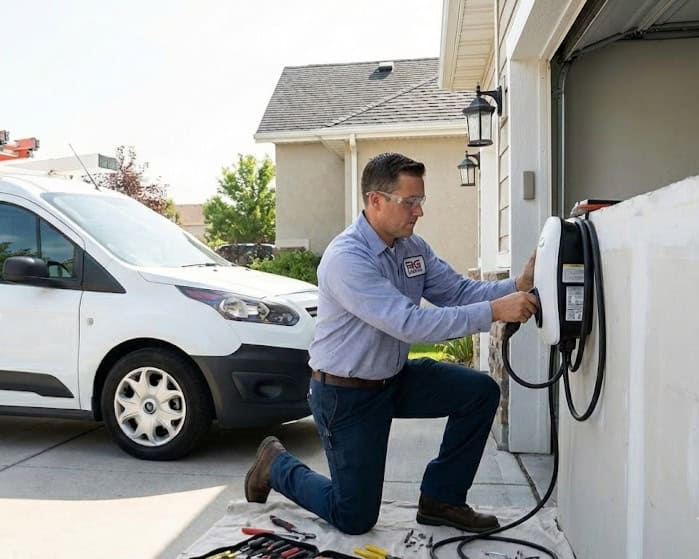
EV charging has moved from an amenity to an expectation for a growing segment of commercial tenants and multi-unit residents in Los Angeles. California’s electrification goals have accelerated adoption, and properties that cannot support EV charging are increasingly at a disadvantage in competitive rental and lease markets. In Sherman Oaks, Culver City, Downtown LA, and similar markets, tenants with electric vehicles evaluate charging access as part of their leasing decision.
The electrical requirements for EV charging are significant. A Level 2 charger draws between 30 and 50 amps continuously for several hours. Adding multiple chargers to a building without a load assessment first creates exactly the kind of sustained overload that degrades wiring, stresses panels, and produces the electrical symptoms that tenants report. The correct approach starts with understanding what the existing system can support, determining whether a panel or service upgrade is required, and then installing dedicated circuits that are correctly sized for the charging equipment.
For larger properties planning multiple charging stations, load management systems can optimize when charging occurs to stay within panel limits without requiring a full service upgrade, but that determination requires accurate load data. Properties in Van Nuys, Encino, and throughout the San Fernando Valley that are planning EV infrastructure additions should budget for a load assessment as the first step in that project, before any equipment purchasing or contractor commitments are made.
Energy-Efficient Lighting
Lighting upgrades are among the most straightforward electrical improvements a commercial property can make and among the most consistently rewarding. Transitioning common areas, parking structures, corridors, and exterior lighting to LED systems reduces energy consumption meaningfully compared to fluorescent or incandescent alternatives, and the maintenance interval for LED fixtures is substantially longer, which matters for properties where lamp replacement in high or hard-to-access locations is a recurring cost.
Smart lighting controls extend the benefit. Motion sensors in low-traffic areas like stairwells, storage rooms, and restrooms ensure lighting is active only when needed. Daylight harvesting systems in spaces with natural light exposure reduce artificial lighting demand during peak daylight hours. For large commercial properties, these controls can produce meaningful reductions in the portion of the utility bill attributable to lighting without affecting tenant experience.
LADWP and the California Energy Commission offer rebate programs for qualifying energy-efficient lighting upgrades. RG Electric provides the documentation required to support rebate applications, which can offset a portion of the project cost and improve the overall return on the investment.
Dedicated Circuits for High-Load Equipment
Shared circuits carrying loads they were not designed for are one of the most common sources of persistent electrical problems in older commercial and multi-unit buildings. Portable HVAC units, space heaters, commercial kitchen equipment, medical diagnostic equipment, server rooms, and EV chargers all represent high or continuous draws that belong on dedicated circuits with conductors and breakers matched to the load.
When these devices share circuits with general-purpose outlets, the result is the pattern of nuisance trips, voltage sag, and appliance failures that tenants describe as the building having “electrical issues.” The underlying cause is not a defective breaker or failing appliance. It is a circuit carrying more than it was designed to carry, and the correct fix is a dedicated circuit, not a breaker reset.
For commercial properties with specialized tenants, medical offices, creative studios, technology companies, food service operations, the ability to provide dedicated circuits for their equipment is part of what makes the space leasable to them at all. Pre-wiring for these needs during a renovation or panel upgrade is substantially less expensive than retrofitting dedicated circuits after the space is occupied and finished.
Surge Protection
Whole-building surge protection installed at the main panel intercepts voltage spikes from the utility before they reach branch circuits and the equipment connected to them. For commercial properties with server rooms, medical equipment, point-of-sale systems, or any other sensitive electronics, surge protection reduces the risk of equipment damage and data loss from utility events that happen without warning and without recourse after the fact.
In buildings with aging wiring that is already operating close to its insulation limits, surge protection also reduces the cumulative dielectric stress that repeated voltage spikes place on insulation. This is a lower-cost upgrade relative to panel replacement or circuit additions, and it provides meaningful protection for both the property’s infrastructure and the tenant’s equipment.
How to Sequence Electrical Upgrades Strategically
For property managers working through a portfolio of older buildings, the practical question is sequencing. Not every building has the same risk profile, and not every upgrade needs to happen simultaneously. A strategic approach starts with triage based on actual risk rather than deferred maintenance schedules.
Buildings with Federal Pacific, Zinsco, or Pushmatic panels should be prioritized for panel replacement regardless of other factors. The risk associated with non-tripping breakers is not amenable to a phased approach. While the panel replacement is being planned, a professional inspection that includes thermal imaging of the existing panel identifies whether the hazard is actively manifesting in ways that require immediate attention versus representing a serious but not yet acute risk.
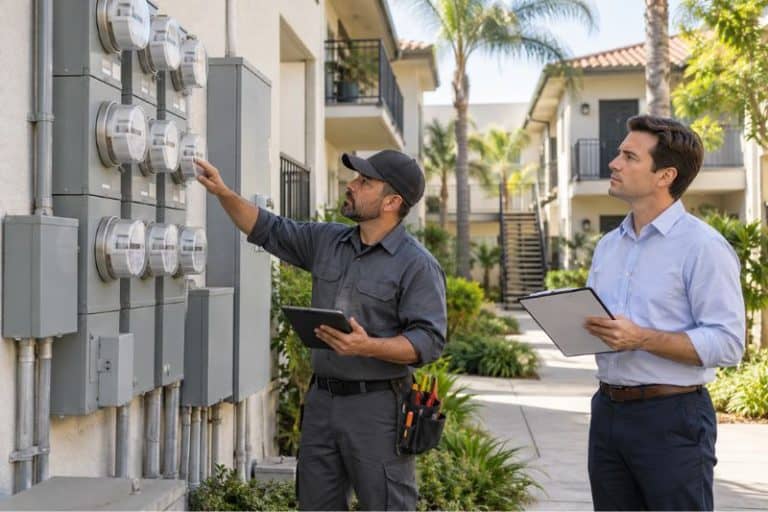
Buildings without high-risk panel types but with aging wiring, no AFCI or GFCI protection, or a history of electrical complaints should be prioritized for a professional inspection that produces a documented hazard inventory. That inventory becomes the basis for a phased upgrade plan that can be executed across one or two maintenance cycles rather than requiring a single large capital commitment.
Buildings with relatively recent electrical work and no known defects should still be on a regular inspection cycle. Professional inspections every three to five years for older buildings catch developing problems before they become emergencies and maintain the documentation record that insurers and regulatory agencies are increasingly expecting to see.
LADBS Permitting and Compliance
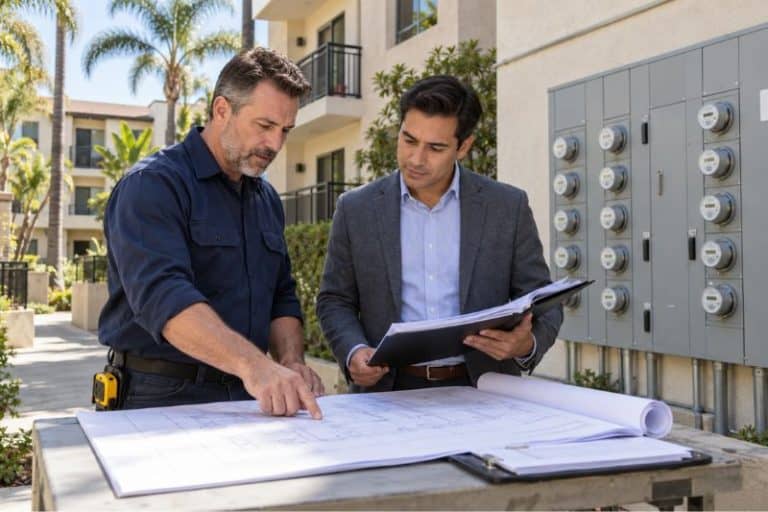
Most significant electrical upgrades in Los Angeles require LADBS permits and inspections. Panel replacements, new circuit installations, service upgrades, and EV charger additions all fall into this category. The permitting process requires load calculation documentation showing the system can support the work being done, and LADBS inspectors will review this documentation and reject permits that don’t include it.
For property managers, permitted and inspected work is the only work that produces the documentation record that holds up during insurance audits, property sales, and due diligence reviews. Unpermitted electrical work creates exactly the uncertainty that underwriters, buyers, and lenders price unfavorably. The cost of doing work correctly the first time is consistently lower than the cost of addressing unpermitted work after the fact.
RG Electric handles all LADBS permitting for work that requires it, prepares the required load calculation documentation, and coordinates with LADWP on service upgrades when the scope requires utility involvement. For property managers who are not familiar with the permitting process, this coordination is part of what we provide, not an additional complexity they need to manage.
Frequently Asked Questions
What electrical upgrades deliver the most value for a commercial property?
Panel replacement delivers the broadest impact because it addresses safety, capacity, and compliance simultaneously. After that, AFCI and GFCI protection, EV charging infrastructure, and energy-efficient lighting are consistently high-value upgrades for commercial and multi-unit properties in Los Angeles.
Do electrical upgrades require LADBS permits?
Most significant upgrades do, including panel replacements, service upgrades, new circuit installations, and EV charger additions. RG Electric manages the permitting process and prepares all required documentation, including load calculations, as part of our permitted project services.
Can electrical upgrades affect insurance coverage?
Yes. Properties with outdated or high-risk panel types face real insurance exposure, including non-renewals and coverage restrictions. Modern panels, documented inspections, and permitted upgrade records are concrete risk management tools that affect how underwriters evaluate a property. RG Electric provides documentation suitable for insurance applications and renewals.
How should a property manager prioritize multiple upgrades across a portfolio?
Start with buildings that have Federal Pacific, Zinsco, or Pushmatic panels, as these carry the most immediate safety and insurance risk. Follow with buildings that have aging wiring, no AFCI or GFCI protection, or a documented history of electrical complaints. Buildings with more recent electrical work can be managed on a regular inspection cycle.
What is involved in adding EV charging to a multi-unit property?
A load assessment comes first to determine what the existing panel can support. Depending on the results, a panel upgrade or service increase may be required before chargers are installed. RG Electric installs dedicated circuits sized for the charging equipment and coordinates any required LADWP approval for service capacity increases.
How often should a commercial property have a professional electrical inspection?
Every three to five years for older buildings, and any time a significant new load is added, such as EV charging, major HVAC upgrades, or a new tenant with specialized power requirements. Properties that have never had a professional inspection should schedule one regardless of when the last permitted work was done.
Schedule an Electrical Assessment for Your Los Angeles Property
If your commercial or multi-unit property hasn’t had a professional electrical evaluation in the last several years, if you know you have aging or high-risk electrical equipment, or if you are planning to add EV charging, expand tenant capacity, or prepare for a sale or insurance renewal, a professional assessment is the right starting point. It gives you an accurate picture of what the system can support, what needs to change, and what the LADBS permitting requirements are for any planned work.
RG Electric provides commercial and multi-unit electrical services throughout Los Angeles, including Encino, Sherman Oaks, Van Nuys, Beverly Hills, Santa Monica, Koreatown, Downtown LA, Culver City, Inglewood, Torrance, and the broader San Fernando Valley. Our commercial electrical services in Los Angeles cover the full scope of assessment, permitted upgrades, inspections, and ongoing maintenance for properties of all sizes. For immediate assistance or to schedule a professional evaluation, call RG Electric directly at (323) 521-5131.