
 Call (323) 5215131
How Los Angeles Apartment Buildings Should Handle Aging Electrical Infrastructure Before Insurance Forces the Issue
Most property managers in Los Angeles know that older apartment buildings carry electrical risk. What’s less clear is when to act, what to prioritize, and how to build a plan that gets ahead of the insurance deadline rather than reacting to it under pressure. The insurance conversation has become impossible to ignore. Carriers are requiring panel replacements, flagging recalled equipment, and in some cases declining to renew coverage for buildings that haven’t addressed known electrical deficiencies. The property managers who are handling this well aren’t waiting for the renewal notice. They’re working through a systematic assessment of their building’s electrical condition and making decisions based on what they find rather than what the insurer demands. RG Electric holds California C10 License #910807 and works with property managers throughout Los Angeles on exactly this kind of planning, from initial assessment through permitted installation and inspection. This article outlines the framework that makes proactive electrical management possible for apartment buildings in this city.
Why Older Los Angeles Apartment Buildings Carry Compounding Electrical Risk
Los Angeles has an enormous stock of apartment buildings constructed between the 1950s and the 1980s. These buildings were wired to the electrical code standards of their era, designed for the load patterns of their era, and in many cases haven’t had their core electrical infrastructure meaningfully updated since they were built. The problem isn’t just age. It’s the compounding effect of increased load demand, code evolution, equipment that’s now known to be defective, and decades of deferred maintenance decisions that each made sense in isolation but collectively left the building in a position of significant exposure.
Electrical load in apartment buildings has grown substantially since most of these buildings were wired. Tenants who once had a television, a lamp, and a few small appliances now have multiple devices drawing continuous power, modern HVAC systems, and increasingly, EV chargers. Circuits that were adequately sized for 1970s tenant load are frequently undersized for today’s actual usage. The result is chronic overloading, repeated breaker trips, and wiring that’s operating under sustained stress it was never designed to handle.
At the same time, electrical code has evolved significantly. Requirements for GFCI protection, arc-fault circuit interrupters, grounding, and panel safety have all been updated through successive code cycles. A building that was fully compliant when it was constructed may have accumulated dozens of code deficiencies over the decades simply because the standard moved and the building didn’t move with it. Those deficiencies don’t create immediate emergencies in most cases. They create background risk that accumulates until something triggers a formal review.
The trigger, increasingly, is the insurance renewal. And by the time the insurer is requiring changes on a deadline, the property manager is no longer in a planning conversation. They’re in a crisis management conversation.
The Four Recalled Panel Brands Still Found in Los Angeles Apartment Buildings
The most urgent electrical issue in older Los Angeles apartment buildings is the presence of recalled electrical panels. Four brands appear consistently in the city’s older housing stock and represent a specific, documented hazard that insurance carriers have identified as a condition of coverage.
Zinsco panels, manufactured through the 1970s, have a documented failure mode in which the breaker mechanism can fuse to the bus bar, preventing the breaker from tripping under overload conditions. A circuit that should trip at 20 amps continues to carry current past that threshold, generating heat in the wiring and connections with no automatic protection. Federal Pacific Electric panels, sold under the Stab-Lok name, have been found to fail to trip under overload at rates far higher than code allows. Challenger panels have similar breaker reliability issues. Pushmatic panels, while mechanically different, age poorly and are no longer supported with replacement parts, making maintenance of existing breakers unreliable.
None of these panels can be repaired to eliminate the underlying deficiency. The only correct response is replacement. Insurance carriers have reached the same conclusion, and property managers who still have one of these panels in their building should treat it as the first item on the electrical priority list, not because the insurer is asking, but because the fire hazard and coverage exposure it represents are real regardless of whether anyone has formally flagged it yet.
In multi-unit buildings, it’s also worth noting that the recalled panel may not be the only panel on the property. A building with a main panel and multiple subpanels serving individual units or common areas may have a recalled brand in a subpanel that hasn’t been looked at in years. A thorough assessment covers the full panel inventory, not just the main service entrance.
Building an Electrical Assessment Before the Insurance Deadline
The most effective way to handle aging electrical infrastructure is to commission a licensed assessment before the renewal deadline creates a compressed timeline. An assessment performed on the property manager’s schedule, with adequate time to plan and budget the work, produces better outcomes than the same work performed under a 30 or 60 day insurance ultimatum.
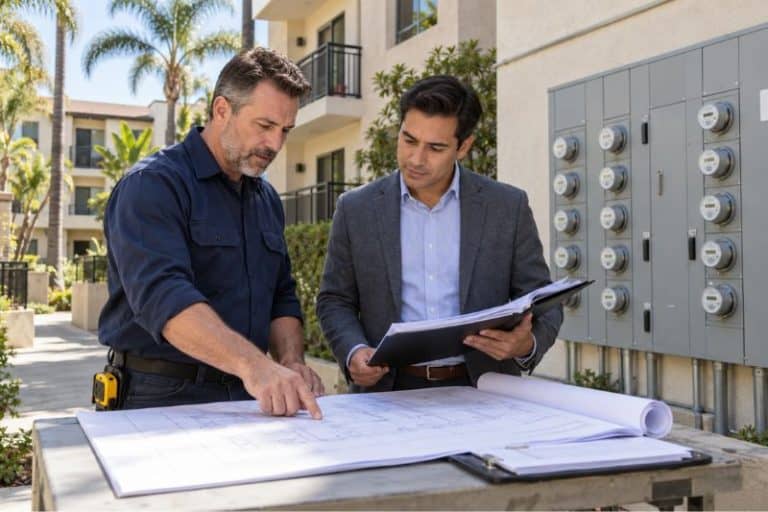
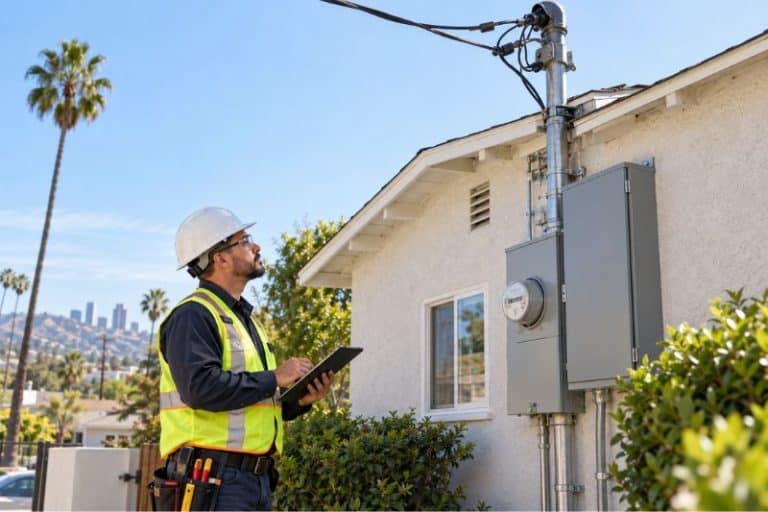
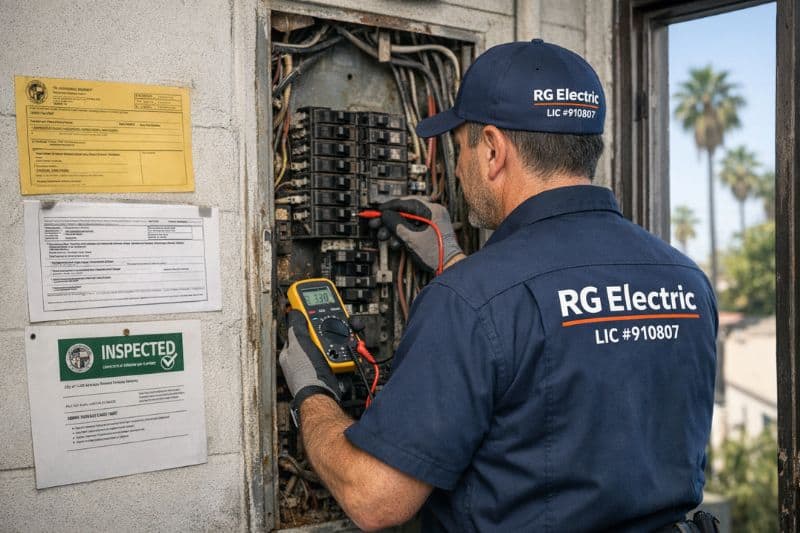
A useful electrical assessment for an older apartment building covers several specific areas. Panel inventory is the starting point: how many panels serve the building, what brand and age is each one, what is the service capacity at the main panel, and are any of the four recalled brands present. Circuit condition comes next: are circuits appropriately sized for current load, are there signs of chronic overloading such as discoloration at breaker connections or repeated trip histories, and are there double-tapped breakers that indicate the panel was pushed beyond its original design. GFCI compliance covers all locations where ground-fault protection is required by current code, including bathroom circuits, kitchen circuits, outdoor outlets, and any outlet within six feet of a water source. Grounding is reviewed for circuits and equipment that may have been installed before grounding was required or that have lost their ground connection over time.
The assessment produces a prioritized list of conditions, not a single repair order. Some findings are urgent and should be addressed immediately regardless of the insurance timeline. Recalled panels are in this category. Wiring that shows signs of heat damage or arcing is in this category. Other findings are important but can be scheduled over a reasonable timeframe with proper planning. Understanding which is which allows the property manager to present building owners with a rational capital plan rather than an emergency budget request.
What Insurance Carriers Are Looking for in Los Angeles Apartment Buildings
California’s insurance market has shifted materially in the last two years. Carriers who previously renewed commercial and residential policies with minimal electrical scrutiny are now asking specific questions about panel age, brand, and condition as part of the renewal process. The Pacific Palisades fire and the broader wildfire liability environment have accelerated a trend that was already developing. Insurers are trying to reduce their exposure on older properties with known electrical risk factors, and they have the leverage of renewal to enforce compliance.
What carriers typically flag as conditions of renewal includes the presence of any of the four recalled panel brands, panels older than a certain age regardless of brand, buildings without documented electrical upgrades within a specified period, and properties where prior inspections identified deficiencies that haven’t been corrected. The specific requirements vary by carrier, but the direction is consistent: carriers want evidence that the building’s electrical system has been reviewed by a licensed contractor, that identified deficiencies have been addressed, and that the work was permitted and inspected.
That last point matters more than property managers sometimes realize. A carrier that requires a panel replacement doesn’t just want the panel replaced. They want documentation that the replacement was performed by a licensed contractor, that a permit was pulled, and that the work passed a city inspection. A panel that was replaced without a permit, even if the work was competently done, doesn’t satisfy the documentation requirement. The property manager ends up in a situation where the physical work is complete but the coverage condition isn’t met because the paperwork trail doesn’t exist.
Sequencing the Work in an Occupied Building
One of the practical challenges of electrical upgrades in occupied apartment buildings is minimizing tenant disruption while completing work that requires temporary outages, access to individual units, and coordination with city inspectors. Property managers who have managed this well understand that sequencing and communication are as important as the technical work itself.
Panel replacements in multi-unit buildings typically require a planned outage for the portion of the building served by the panel being replaced. That outage can usually be scheduled during daytime hours when fewer tenants are home and can be completed within a single workday for a straightforward replacement. Buildings with multiple panels can stagger the work so that no single outage affects the entire property at once. Advance notice to tenants, a clear explanation of the timeline, and a confirmed schedule for restoration reduces complaints and demonstrates professional property management.
Work that requires access to individual units, such as GFCI outlet installations or circuit-level corrections, requires coordination with tenants for entry. California law governs the notice requirements for entry into occupied units, and a licensed contractor working in Los Angeles is familiar with those requirements. Building them into the project schedule from the start avoids delays that arise when tenants are unavailable or entry isn’t properly coordinated.
City inspections add another scheduling layer. An inspector visiting a permitted panel replacement will review the work and may identify conditions in adjacent parts of the building that require correction before approval is granted. Property managers who have been through this process know that older buildings sometimes surface unexpected findings during inspections, not because the contractor did something wrong, but because the inspector’s review of the new work reveals conditions in the existing system that weren’t part of the original scope. Planning for the possibility of additional findings, and having a clear protocol for how those findings will be addressed, prevents a single inspection from extending the project indefinitely.
Documentation That Protects the Property Manager and the Building Owner
A proactive electrical upgrade program produces documentation that has value well beyond the immediate project. Permit records filed with the city establish that work was performed to code and inspected. COIs from the licensed contractor confirm that the work was performed by an insured professional whose coverage responds if the work later causes a problem. Inspection approvals document that a city official reviewed the installation and accepted it.
This documentation package is what the insurance carrier is asking for when they require evidence of a panel replacement. It’s also what a buyer’s lender will ask for during a sale. It’s what a plaintiff’s attorney will look for if a tenant claims injury from an electrical condition in the building. Having a complete, organized record of electrical work performed on the property, by licensed contractors, under permits, with inspection approvals, is the evidentiary foundation that demonstrates the property was managed responsibly.
Property managers who treat electrical documentation as a formal record rather than an afterthought are in a materially better position when any of those review events occurs. The work was done either way. The documentation is what makes it defensible.
How RG Electric Works with Property Managers on Multi-Unit Electrical Projects
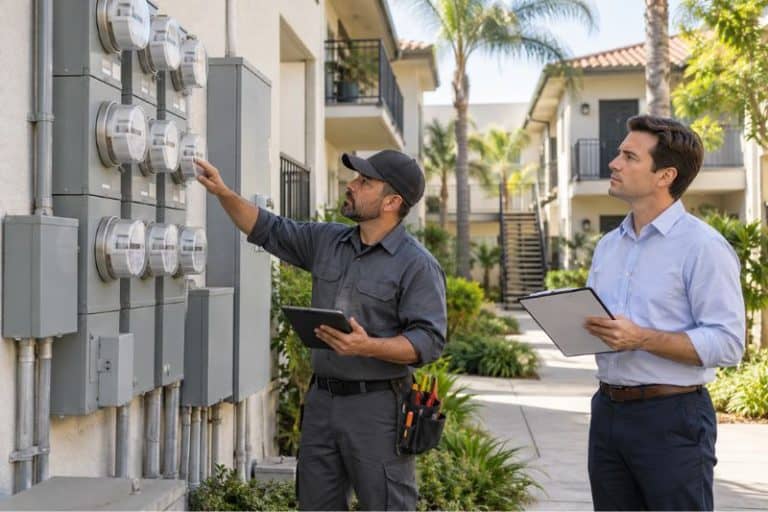
RG Electric’s work with apartment buildings in Los Angeles starts before any work begins. Property managers who contact us for a multi-unit project get a site evaluation that covers the full panel inventory, identifies any recalled brands, assesses the condition of the distribution system, and produces a prioritized scope of work with a clear estimate. Free estimates are provided for new work. If the evaluation identifies emergency conditions, those are communicated immediately with a clear explanation of why they need to be addressed first.
Permits are pulled before work begins. The COI is available on request and can be provided directly to the building owner or insurer. All work is performed to current California electrical code, and the installation is inspection-ready when the work is complete. We manage the inspection scheduling and are present during the inspection. If the inspector identifies additional conditions requiring correction, we communicate what was found, what addressing it involves, and what it will cost before any additional work begins.
Communication throughout the project is direct. Property managers aren’t routed through layers of staff to get a status update or a question answered. The same person who received the initial call can explain what the technician found, what the estimate covers, and what the inspection result was. For property managers coordinating with building owners and tenants simultaneously, that communication structure matters.
Our commercial electrical services in Los Angeles cover the full scope of multi-unit building work, from panel replacements and subpanel upgrades to code corrections and full rewiring projects. For buildings where the panel condition is the primary concern, our electrical panel services in Los Angeles address the assessment, replacement, and documentation process from initial evaluation through final inspection approval.
For immediate assistance or to schedule a professional evaluation, call RG Electric directly at (323) 521-5131.