
 Call (323) 5215131
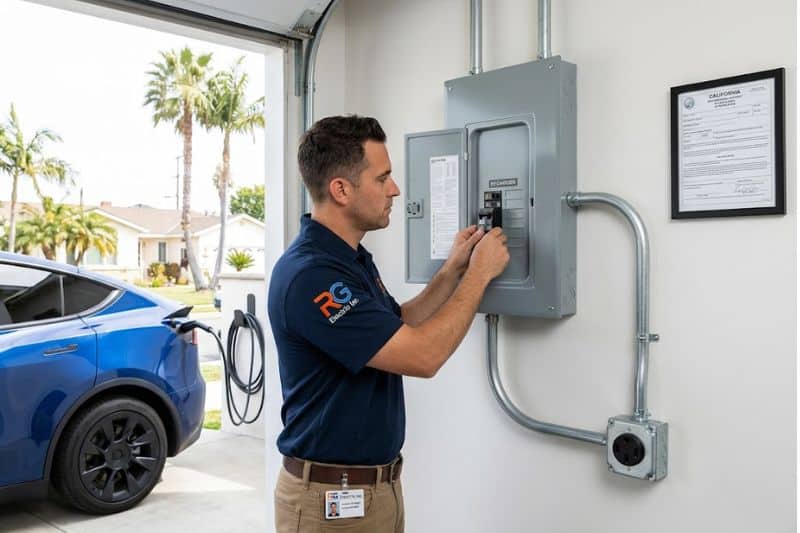
Dedicated Circuit for an EV Charger in Los Angeles: Panel Capacity, LADBS Permits, and Installation Mistakes
Updated October 2026
You bought the car, ordered the charger, and found out the garage outlet is shared with the freezer and the garage door opener. Now the breaker trips at 2 a.m. and the car is at 40 percent. RG Electric, License C10 #910807, installs EV chargers for homeowners across Los Angeles, and the dedicated circuit comes up on nearly every job we do. This guide explains what a dedicated circuit is, how it is sized, how panel capacity decides the project in older homes, what the LADBS permit involves, and which installation mistakes cause the most trouble.
What a Dedicated Circuit Is and Why a Charger Needs One
A dedicated circuit serves one load and nothing else. It runs from its own breaker in the panel to the charger, and no other outlet, light, or appliance draws from it. Most homes already have several. The electric range, the clothes dryer, the water heater, and the central air conditioner are almost always on circuits of their own.
The reason is the same for a charger as for those appliances. EV charging is a sustained load. A toaster draws its current for a few minutes. A charger can draw close to its full rating for six, eight, or ten hours. Wires and breakers that handle a toaster comfortably can run hot under that kind of steady demand, especially at terminations, where most heat problems begin.
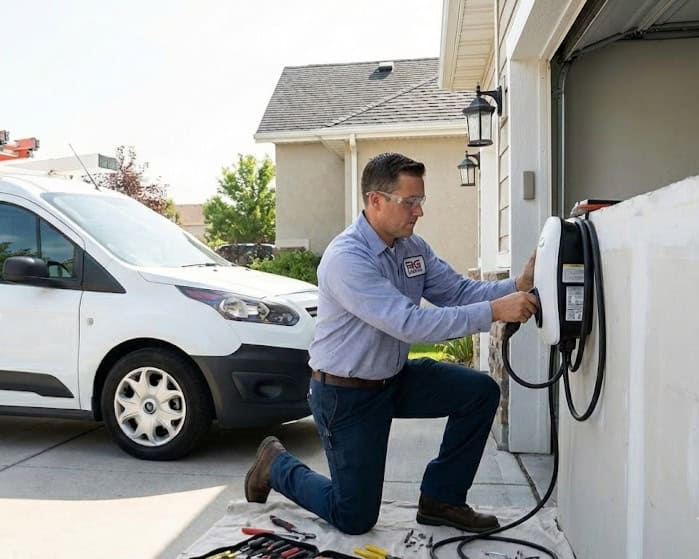
A charger on a dedicated circuit gets the circuit’s full capacity at all times. It does not compete with a freezer compressor or a table saw, and it does not trip the breaker when something else starts up. Our EV charger installation services start from exactly that principle, with the circuit designed before the charger is chosen.
The conclusion
A charger shares nothing because a charger is built to run continuously. Give it its own circuit and the equipment, the wiring, and the car all behave the way they were designed to.
How the Circuit Is Sized
Electrical code treats EV charging as a continuous load, and a continuous load requires the circuit to be sized at 125 percent of the charger’s rating. A charger that draws 32 amps goes on a 40-amp circuit. A charger that draws 40 amps goes on a 50-amp circuit. The extra margin is what keeps wires and breakers from running at their limit for hours at a time.
Level 2 chargers run on 240 volts, which is why they charge so much faster than a standard 120-volt outlet. Depending on the charger and the vehicle, a Level 2 session typically adds somewhere in the range of twenty to thirty miles of range per hour. The short version of why is that the same power is delivered at half the current, which keeps the wiring cooler and the circuit practical.
Outlet or hardwired
Many chargers plug into a NEMA 14-50 receptacle, the same large four-prong outlet used for electric ranges. Others are hardwired directly to the circuit. The choice has tradeoffs.
A receptacle makes it easy to swap or take the charger when you move, and it suits a portable charging cord. The outlet, however, has to be a quality device rated for the load and installed with tight terminations, because a worn or loose receptacle is where heat shows up first. A hardwired charger removes the plug connection entirely and is often the better choice for a permanent installation, particularly when the charger is mounted outdoors or will be used daily.
We install both. Our outlet and switch services include setting a correctly rated 14-50 receptacle on its own breaker, and we will tell you plainly when a hardwired charger is the stronger choice.
The conclusion
Size the breaker to the charger plus the continuous load margin, and choose the connection that suits how you will live with the charger. Both decisions are made once, so they are worth making well.
Panel Capacity in Older Los Angeles Homes
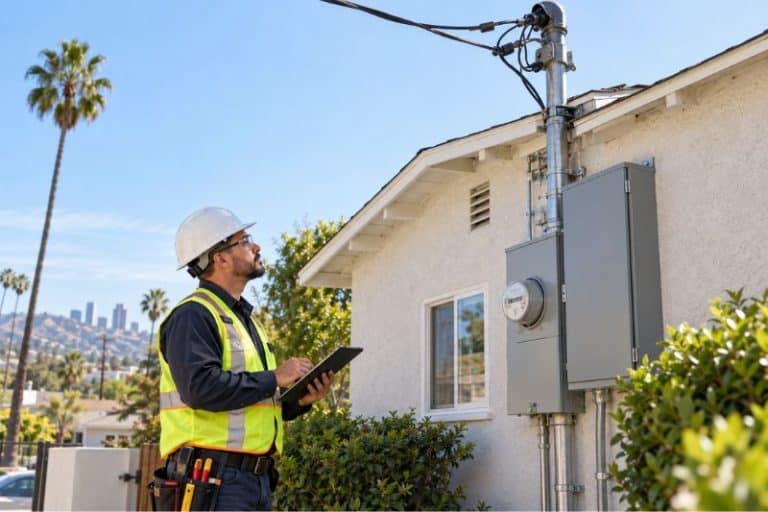
Whether a dedicated circuit fits comes down to the panel. A 40-amp circuit uses 40 amps of the panel’s capacity on paper, and many older Los Angeles homes still run a 100-amp service. By the time the range, dryer, water heater, air conditioning, and everyday loads are counted, there may not be room.
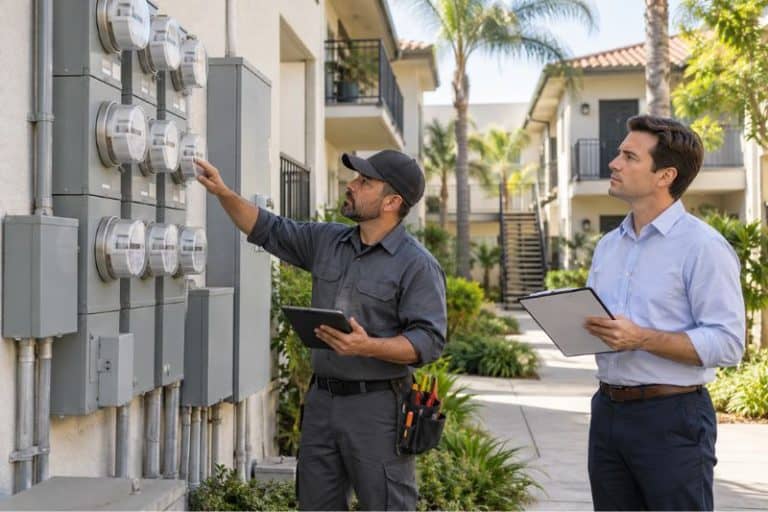
The answer comes from a load calculation, not from guessing or from looking at empty slots in the panel. It tallies what the home can draw and shows what remains. Homes in Van Nuys, Torrance, and Culver City, built when a house needed far less power, often reach this point earlier than owners expect.
When there is not enough room
There are three routes, and the right one depends on the home and the goals.
A service or panel upgrade adds capacity for the charger and for what comes after it, such as a heat pump or an induction range. A load management device limits the charger’s draw based on what the rest of the house is using, so it can share a smaller service safely. And a lower-amperage charger configuration can work within what an existing panel supports, at the cost of slower charging. Each has different costs and tradeoffs, and we lay them out side by side so the choice is yours.
When the panel itself is the problem
If the panel is a Federal Pacific, Zinsco, Pushmatic, or Challenger, the conversation is shorter. Those designs have a documented record of breakers that fail to trip or connections that overheat, and adding a sustained high-current load to one is not something we will do. The panel is replaced first. We use Siemens panels for replacements, and the replacement is part of the same project scope, so you are not hunting for a second contractor.
The conclusion
The panel decides the project. A charger is straightforward when capacity exists and a planning exercise when it does not, and a load calculation tells you which one you have before you spend anything.
What Happens When a Charger Shares a Circuit
The risks of skipping the dedicated circuit range from annoying to dangerous.
Breaker trips
The most visible symptom is a tripped breaker. A charger running next to a freezer or a workshop tool pushes the shared circuit past its rating again and again. Charging stops, and you find out in the morning. In older garages where circuits are 15 or 20 amps and already serve several outlets, this happens quickly.
Heat inside the wall
The less visible risk is what happens before the breaker trips. A circuit carrying more than it was built for generates heat in the conductors and at the connections. Under a sustained load, that heat builds up instead of dissipating, and it can degrade insulation and loosen terminations over time. That is the path from a tripped breaker to a fire hazard, and it is why a charger is not a good fit for a shared circuit.
Charger performance and warranty
Chargers are rated to work within defined voltage and current limits. A circuit that sags under combined load can slow charging, and many manufacturers state in their warranty terms that the charger must be installed on a dedicated circuit that meets their requirements. An installation that does not meet those terms may leave you without warranty support.
Permits and insurance
A charger on a shared circuit will not pass inspection in Los Angeles, and unpermitted work leaves no record that it was done properly. We cannot tell you how a given insurer will handle a claim, but a permitted, inspected installation gives you documentation that an unpermitted one cannot.
The conclusion
Every one of these problems comes from the same decision. The cheapest part of the project, sharing the circuit, is the one that costs the most later.
The LADBS Permit and Inspection
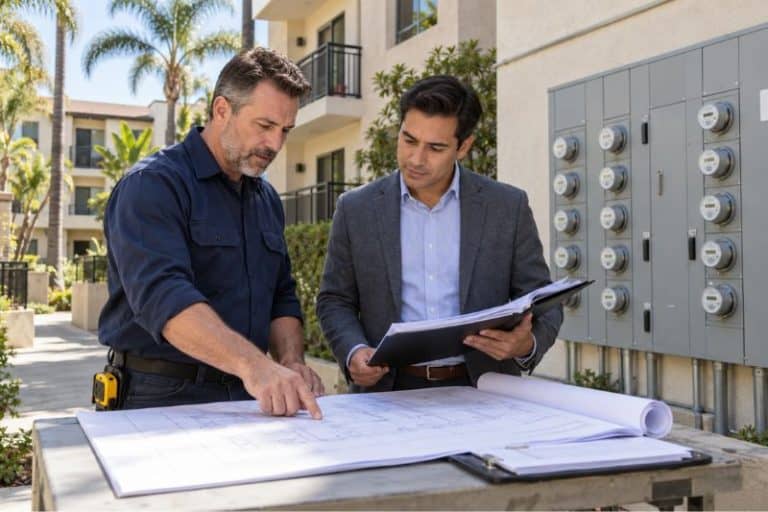
A new EV charger circuit in the City of Los Angeles requires an electrical permit through LADBS, followed by an inspection after the work is complete. The inspector confirms that the circuit is dedicated, that the conductor and breaker are sized correctly, and that the installation matches the permit. We prepare the application, schedule the inspection, and meet the inspector, so you do not have to take time off to be there.
The permit also serves a second purpose. It ensures the new work meets the standard currently in force, not the one that applied when the house was built. For a homeowner, that is the difference between a charger with a paper trail and one that becomes a question when the home is sold.
New construction and major alterations may also trigger EV readiness requirements under the building code. CALGreen’s 2025 cycle took effect on January 1, 2026. Which provisions apply to a given project depends on the scope of the work, so we confirm that at the start.
Incentives
The federal 30C tax credit for charging equipment ended on June 30, 2026, so older articles that mention it are out of date. Other incentives may be available through utilities or state programs, and eligibility and amounts change. We do not quote a figure here. If incentives matter to your decision, confirm what is currently offered directly with LADWP or the program administrator before you commit to a budget.
The conclusion
The permit is not paperwork for its own sake. It is the proof that the circuit was built to the standard that applies today.
Installation Mistakes That Cause Trouble
Most of the problems we are called to fix trace back to a short list of mistakes.
Sizing the circuit to the charger’s rating and nothing more
This skips the continuous load margin. A 32-amp charger on a 32-amp breaker looks fine on paper and trips or overheats in practice.
Using an extension cord or adapter
Cords and adapters are not designed for hours of continuous high current. They are a common source of melted plugs and scorched receptacles.
Skipping the load calculation
Adding a charger to a panel that has no room is a recipe for nuisance trips and for a panel that runs at its limit. The calculation takes little time and prevents the whole problem.
Poor connections and the wrong wire
Loose terminations and undersized wire turn into heat under a long charging session. Torque specifications exist for a reason, and copper conductors are sized to the breaker, not to what happens to be in the garage.
Unpermitted installations
An unpermitted charger may work for years and then become a problem during a sale or an insurance review. Correcting it later usually means opening walls that were closed.
The conclusion
Each of these is a decision made at installation, and each is cheaper to get right the first time than to correct later.
Planning for a Second Vehicle
Many Los Angeles households that start with one EV end up with two. Planning for that at the beginning costs little. Running a circuit sized for a higher-amperage charger gives you room to grow, and stubbing out conduit or a junction box for a second charging point can save significant labor later. In Encino, Sherman Oaks, and Santa Monica, where multi-car households are common, we raise the question at the estimate stage. You do not have to build the second charger now. You only have to avoid making it impossible.
What to Expect From RG Electric
When you call, you speak with someone on our team. A charger that trips breakers or an outlet that feels warm usually starts as a service call, because a technician has to find the cause before there is anything to price. That visit carries a fee up front. The technician reports what was found to our supervising electrician, who writes the estimate, and someone on our team then calls to walk through each line and why it is there.
A new charger installation is new work, and new work gets a free estimate. We do not bill by the hour. We start with a panel evaluation and a load calculation, tell you what we found, and give you a written scope with everything necessary in it. We pull the permit, install the circuit, test it under load, and manage the inspection. We stand behind our work for 12 months. If something we installed misbehaves in that window, you are already our customer, and we come back without charging another service call.
Questions Homeowners Ask About EV Charger Circuits
Can I plug my charger into the dryer outlet?
Not safely, unless the circuit was installed for that purpose. The dryer outlet is on a circuit sized for the dryer, and a charger needs its own. Sharing the two on an adapter is a common cause of overheated plugs.
Does every charger need a 50-amp circuit?
No. The circuit follows the charger. A 32-amp charger needs a 40-amp circuit, and a 40-amp charger needs a 50-amp circuit. Choosing 50 amps up front leaves room for a faster charger later.
What if my panel is full?
There are options besides a new panel, including load management and a lower-amperage charger. A load calculation shows which one fits.
Can a landlord or HOA stop me from installing one?
That depends on your lease or your association’s rules, and we cannot give legal advice. What we can do is provide a written scope and permit documentation, which most boards and landlords ask for before they approve a charger.
How long does an installation take?
The installation itself is often a single visit for a straightforward home. The permit and inspection happen around it, and we run those steps together where we can.
Is a permit really required?
Yes. A new circuit in Los Angeles goes through LADBS and is inspected. We handle the process.
For immediate assistance or to schedule a professional evaluation, call RG Electric directly at (323) 521-5131.
Electrical work is hazardous. Always consult a licensed electrician like RG Electric before working on electrical systems.