
 Call (323) 5215131
Which Electrical Upgrades Do Los Angeles Apartment Buildings Need to Satisfy Insurance Requirements?
If you manage or own an apartment building in Los Angeles, the conversation with your insurance carrier has changed. What once amounted to a standard renewal review now includes detailed questions about your electrical systems, and the answers you give, or cannot give, determine whether coverage is issued, restricted, or declined entirely. RG Electric is a licensed C10 electrical contractor serving Los Angeles under License #910807, and the calls we receive from property managers dealing with insurance-mandated upgrade deadlines have increased steadily over the past two years. This post addresses the specific question those property managers are asking: which electrical upgrades do Los Angeles apartment buildings actually need to satisfy insurance requirements, and what happens if those upgrades are not completed before the deadline arrives.
Why Apartment Buildings Face Stricter Electrical Scrutiny Than Single-Family Homes
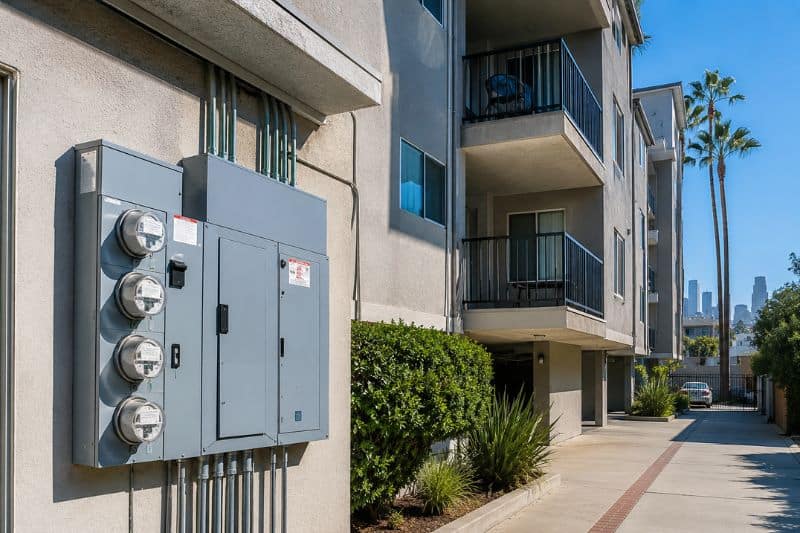
Insurance carriers evaluate apartment buildings differently than single-family residences, and the difference is not subtle. A single-family home has one electrical panel, one set of circuits, and one household creating load demand. An apartment building has a main service panel, multiple subpanels, common area circuits, individual unit panels, exterior lighting systems, laundry room wiring, garage circuits, and in many cases, aging infrastructure that connects all of these systems together through decades of patchwork repairs. The exposure is simply larger, and insurers price it accordingly.
The California insurance market has been contracting since the major wildfire events of recent years. Carriers that remain active in the state are underwriting more selectively, and multi-unit residential properties are among the most scrutinized categories. An electrical fire in a single-family home affects one household. An electrical fire in a twelve-unit apartment building affects twelve households, creates substantial liability exposure for the building owner, and generates a claim that most carriers would prefer to avoid entirely. The result is that insurers are requiring apartment building owners to demonstrate electrical compliance in ways that were not standard even five years ago.
For Los Angeles specifically, the challenge is compounded by the age of the housing stock. A significant portion of the city’s multi-unit buildings were constructed before 1980, and many were built before modern electrical codes existed in their current form. That means panels installed fifty years ago that have never been replaced, wiring that predates grounding requirements, and common area circuits that were designed for the electrical loads of a different era. Insurers know the age profile of LA’s apartment building inventory, and their underwriters are asking direct questions about what has and has not been updated.
The consequence for property managers is a compliance gap that cannot be ignored. A building that cannot demonstrate electrical upgrades meeting current standards faces non-renewal, conditional coverage with a short remediation window, or premium increases that make the property economically difficult to hold. Addressing the electrical systems proactively, before a renewal review forces the issue, is the only position that gives property managers control over the timeline and the cost.
The Four Recalled Panel Brands Most Common in LA’s Multi-Unit Housing Stock
The single most reliable trigger for an insurance-mandated electrical upgrade in a Los Angeles apartment building is the presence of a recalled or known-defective electrical panel. Four brands appear consistently on insurer watch lists, and a building with any of them is almost certain to receive a replacement requirement as a condition of coverage.
Zinsco Panels
Zinsco panels, also manufactured under the Sylvania name, were installed widely in California multi-unit buildings from the 1950s through the 1970s. The known defect involves breakers that fuse to the aluminum bus bar over time. Once fused, the breaker can no longer trip when a fault or overload occurs. Current continues flowing through the affected circuit regardless of the load condition, which creates a direct fire risk. In an apartment building where individual unit circuits feed through a Zinsco subpanel, a single fused breaker can sustain a dangerous overcurrent condition in a tenant’s unit without any visible warning to the property manager or the tenant.
Federal Pacific Electric Panels
Federal Pacific Electric panels, which used the Stab-Lok breaker design, are among the most documented cases of defective electrical equipment in residential construction history. Independent testing and litigation established that Stab-Lok breakers fail to trip at rates that are substantially higher than safety standards allow. In a multi-unit building, FPE panels are particularly dangerous because a breaker protecting shared wiring or a common area circuit may appear functional during a visual inspection while being incapable of responding to an actual fault. Insurance carriers flag FPE panels immediately, and most will not issue or renew coverage on a building where they are present without a documented replacement timeline or completed replacement.
Challenger Panels
Challenger panels were manufactured from the late 1970s through the early 1990s and appear frequently in Los Angeles apartment buildings constructed or renovated during that period. The primary failure mode involves breaker connections that loosen over time, creating resistance at the connection point that generates heat. In a building where panels are located inside utility closets or mechanical rooms that are not regularly inspected, this heat buildup can go undetected for extended periods. Insurers treat Challenger panels as a known-risk item, and their presence in a renewal inspection almost always prompts a replacement requirement.
Pushmatic Panels
Pushmatic panels, manufactured by Bulldog Electric, use a push-button breaker design rather than a toggle switch. The mechanical components in these breakers harden and degrade with age, making them increasingly unreliable at tripping under fault conditions. Pushmatic panels are also no longer manufactured, which means replacement breakers are unavailable, and any repair attempt involves sourcing used components with unknown failure histories. For a property manager, a Pushmatic panel is not a maintenance item to be monitored, it is a liability that needs to be replaced. Insurance carriers share that view.
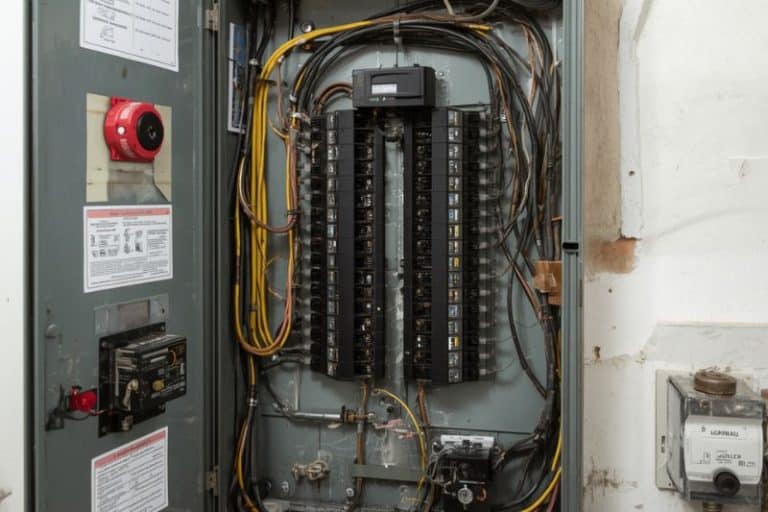
In apartment buildings, any of these four panel brands may appear in multiple locations simultaneously. A building that needs an electrical panel upgrade in Los Angeles may face that requirement across several locations at once. A building might have a Zinsco main panel and Challenger subpanels serving individual unit clusters, or an FPE panel in the laundry room alongside a Pushmatic panel in the garage. Each location requires its own replacement, and each replacement requires a permit and city inspection. Property managers who discover multiple recalled panels during an insurance review are facing a larger compliance project than a single panel swap, and the timeline for completing it matters significantly to whether coverage lapses.
Subpanel Systems, Common Area Wiring, and What Insurers Flag Beyond the Main Panel
In a single-family home, the insurance review is often focused on the main panel. In an apartment building, the electrical system is layered, and insurers are increasingly looking beyond the main service entrance to evaluate subpanels, common area circuits, and the wiring infrastructure that connects them. A building with a compliant main panel but deteriorating subpanels serving individual units is not a building that will pass a thorough underwriting review.
Subpanels in older Los Angeles apartment buildings frequently present the same problems as main panels: outdated breaker designs, inadequate capacity for current load demands, and in some cases, the same recalled brands. A subpanel installed in 1975 to serve a cluster of four units was sized for the electrical loads of that era. Today, those same units may contain multiple large appliances, high-draw electronics, and in some buildings, EV chargers drawing power from circuits that were never designed to handle that load. The subpanel does not know the difference between a designed load and an overload, but a failing breaker does not trip to protect against it either.
Common area wiring is another area where apartment buildings accumulate compliance gaps that insurers notice. Laundry rooms, parking garages, exterior lighting circuits, hallway outlets, and mechanical room wiring are often the least-maintained parts of a building’s electrical system. Outlets in laundry rooms that predate GFCI requirements, garage circuits that were extended or modified without permits, and exterior fixtures wired through unsealed junction boxes are all conditions that appear in insurance inspection reports. These are not cosmetic issues. Each one represents a condition where a fault could produce a fire or an injury, and insurers are no longer willing to accept buildings where these conditions exist undocumented and unaddressed.
The practical implication for property managers is that an insurance compliance project for an apartment building is rarely limited to replacing one panel. A thorough assessment before the insurance review is the most efficient way to identify every condition that could produce a coverage problem, address them in a single coordinated project, and document the completed work before the renewal conversation begins.
GFCI and Grounding Requirements That Apply Specifically to Multi-Unit Buildings
Ground fault circuit interrupter protection is one of the most consistently flagged deficiencies in Los Angeles apartment building inspections, both by city inspectors and by insurance underwriters. The requirement is straightforward: any outlet located within proximity to a water source, outdoors, or in a high-moisture environment must be GFCI-protected. In a multi-unit building, that requirement applies to every kitchen, every bathroom, every outdoor outlet, every laundry area, and every garage circuit across every unit and every common area.
In buildings constructed before GFCI requirements were codified, the absence of ground fault protection throughout those locations is not unusual. It is, however, a code violation, and it is a condition that insurance carriers are now treating as a coverage risk. A tenant using an outlet near a kitchen sink that lacks GFCI protection is exposed to a shock hazard that the building owner is responsible for. When that condition exists in twelve units simultaneously, the liability exposure is substantial, and insurers are unwilling to price that risk at standard rates.
Grounding deficiencies present a related but distinct problem. Older wiring systems in LA apartment buildings frequently used two-wire configurations without a dedicated ground conductor. Replacing those outlets with three-prong receptacles without addressing the grounding condition creates a false sense of safety, as the ground prong is not actually connected to anything protective. Insurers and inspectors both look for evidence of proper grounding, and a building with three-prong outlets on ungrounded circuits is not compliant simply because the outlet face looks modern.
For property managers, the most efficient approach to GFCI and grounding compliance in a multi-unit building is to address it as part of a broader electrical assessment rather than responding to individual complaints unit by unit. Correcting one unit’s kitchen GFCI while leaving identical conditions in eleven other units does not resolve the building-wide compliance gap. A licensed C10 contractor can assess all units and common areas simultaneously, identify every location requiring correction, and complete the work under a single permit that documents building-wide compliance.
What Documentation Insurance Carriers Request Before Issuing or Renewing Coverage
The documentation requirements for apartment building electrical compliance have become more detailed as insurers have tightened their underwriting standards. Property managers who arrive at a renewal review without organized documentation are in a weaker negotiating position than those who can demonstrate completed, permitted, inspected work before the underwriter asks for it.
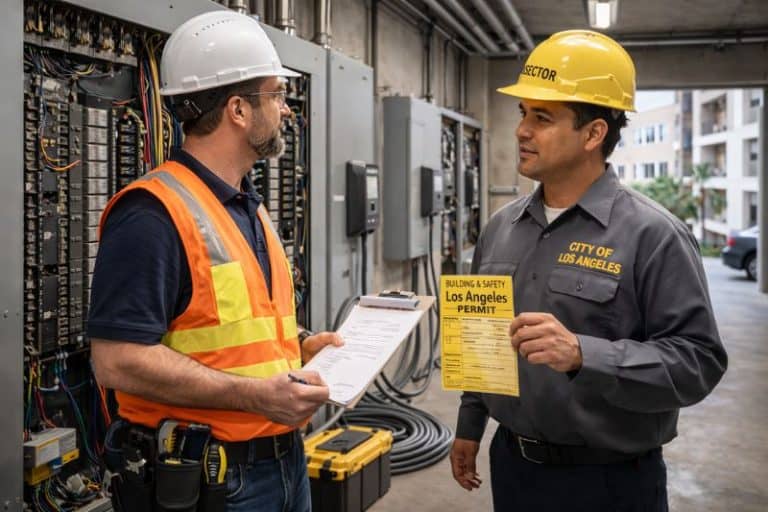
Permits are the foundation of any compliance documentation package. When a licensed electrical contractor completes panel replacements, subpanel upgrades, or significant wiring work, that work should be permitted with the city and inspected before the permit is closed. A closed permit is a formal record that the work was reviewed by a city inspector and found to meet code requirements at the time of inspection. Insurers recognize closed permits as evidence of compliant work in a way that contractor invoices alone do not provide.
Certificates of insurance from the electrical contractor are a separate but related requirement. Commercial clients, including apartment building owners and property managers, routinely ask for COIs before authorizing work. This is correct practice. A COI confirms that the contractor performing electrical work on the building is insured, which protects the building owner from liability exposure if a worker is injured on the property. When the same documentation is later presented to an insurance carrier as part of a compliance file, it also demonstrates that the electrical work was performed by a credentialed contractor rather than unlicensed labor.
Panel photographs taken before and after replacement, along with documentation of the specific equipment installed, provide insurers with a visual record that supplements the permit documentation. Some carriers request this explicitly. Others do not ask, but having it available allows a property manager to respond immediately if questions arise during underwriting. RG Electric provides this documentation as part of the project close-out process for commercial clients.
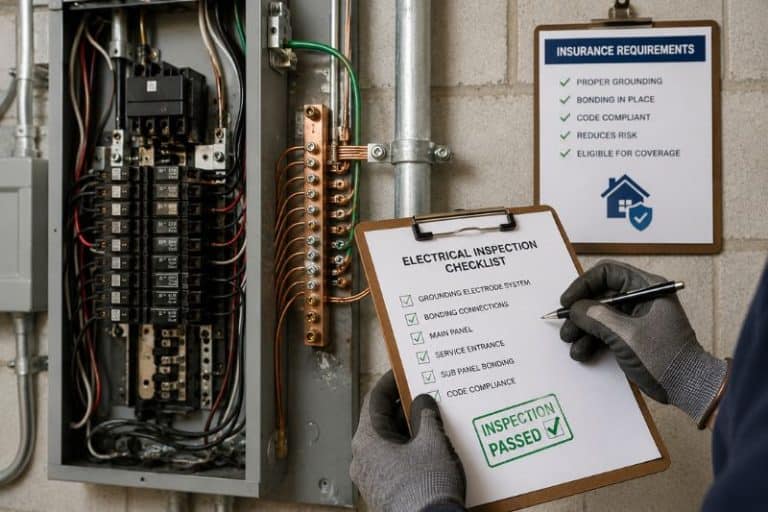
The combination of closed permits, contractor COIs, and photographic documentation creates a compliance file that gives insurers what they need to make a coverage decision without ambiguity. Property managers who can produce this file at renewal are in a fundamentally different position than those who are responding to an insurer’s request for documentation after a deficiency has already been flagged.
The Consequence of a Conditional Renewal with a 30 to 90 Day Deadline
A conditional renewal is the situation property managers most need to avoid, and the one that creates the most pressure when it arrives. A conditional renewal means the insurer has agreed to extend coverage, but has attached a requirement that specific electrical upgrades be completed and documented within a defined window, typically between 30 and 90 days. If the condition is not satisfied within that window, coverage lapses.
The problem with a conditional renewal timeline is that it compresses every step of a compliance project into a period that may not be adequate for the work involved. Panel replacements in apartment buildings require permits, which require submission and review by the city. In Los Angeles, permit processing times vary, and a project that requires permits for multiple panels may take two to three weeks simply to receive permit approval before work can begin. Add the scheduling time for a licensed contractor, the duration of the work itself, and the wait for a city inspection appointment, and a 30-day conditional renewal window becomes very tight for anything beyond a straightforward single-panel replacement.
The financial consequence of a coverage lapse for an apartment building is not limited to the inconvenience of finding a new carrier. A building that has allowed its coverage to lapse, even briefly, becomes a higher-risk underwriting target for any carrier reviewing the application. The lapse itself signals to underwriters that the property owner was unable or unwilling to address known deficiencies on the required timeline, which is exactly the risk profile that carriers are trying to avoid in the current California market.
The alternative is to complete the electrical assessment and any required upgrades before the renewal conversation begins. A property manager who can demonstrate to an insurer that the building’s panels have been replaced, the GFCI deficiencies corrected, and the work documented with closed permits is not negotiating from a position of conditional compliance. They are presenting a building that meets the standard, and the renewal conversation is straightforward as a result. That position is only available to property managers who addressed the electrical systems proactively, before the insurer identified the problem first.
How RG Electric Manages the Compliance Process for Los Angeles Property Managers
RG Electric works with property managers across Los Angeles on exactly the type of compliance projects described in this post. The process is structured to give property managers clarity at every stage, from the initial assessment through permit closure and documentation delivery.
The first step is a site assessment. For apartment buildings, this means evaluating the main service panel, all subpanels, common area wiring, and a representative sample of unit-level conditions. The assessment identifies every item that would be flagged in an insurance underwriting review, which gives the property manager a complete picture of the work involved before any commitment is made. There are no surprises once work begins because the scope was established during the assessment.
Estimates for commercial and multi-unit projects are customized to the specific building. RG Electric does not use a price chart for this type of work because the variables, number of panels, building layout, wiring conditions, permit requirements, and coordination with tenants, are different for every property. The estimate reflects the actual scope, and the pricing covers materials, labor, permit fees, and inspection coordination without hidden additions after the fact.
Permit handling is managed entirely by RG Electric. Property managers do not need to navigate the city’s permit process independently. The application is submitted, the permit is obtained, and the inspection is scheduled and completed as part of the project. The closed permit documentation is delivered to the property manager as part of the project close-out package, along with the certificate of insurance and any other documentation the insurer has requested.
Communication throughout the project goes through Michael directly. Property managers are not routed through a call center or passed between departments. When a question arises during a multi-panel project in an occupied building, the answer comes from someone who knows the project and can coordinate with the field team immediately. For property managers who are managing insurance deadlines alongside tenant relationships and normal building operations, that directness is not a minor convenience. It is a material difference in how smoothly the project runs.
RG Electric serves apartment buildings and commercial properties throughout Los Angeles, including the San Fernando Valley, Encino, Sherman Oaks, Van Nuys, Downtown LA, Koreatown, Culver City, Santa Monica, Inglewood, Torrance, Pasadena, and Glendale. For commercial electrical services in Los Angeles that include full compliance project management, the process starts with a site assessment and a clear estimate.
For immediate assistance or to schedule a professional evaluation, call RG Electric directly at (323) 521-5131.