
 Call (323) 5215131
How Electrical Safety Audits Protect Los Angeles Property Managers from Liability
Updated July 2026
A failed inspection, a tenant injury, or an insurance carrier refusing to renew a policy are not random events. In most cases they are the predictable result of electrical conditions that a professional audit would have identified and addressed before they became problems. RG Electric is a licensed C10 electrical contractor, License #910807, serving apartment buildings, multi-unit properties, and commercial buildings across Los Angeles County. We conduct electrical safety audits that document existing conditions accurately, identify code violations and safety hazards, and give property managers a clear picture of what their buildings actually contain, and what correcting it involves.
What an electrical safety audit actually covers
An electrical safety audit is a systematic inspection of a building’s electrical infrastructure. It is not a walk-through and it is not a sales call. It produces a documented record of conditions: what is present, what condition it is in, what code requires, and where the gaps between current condition and code compliance are.
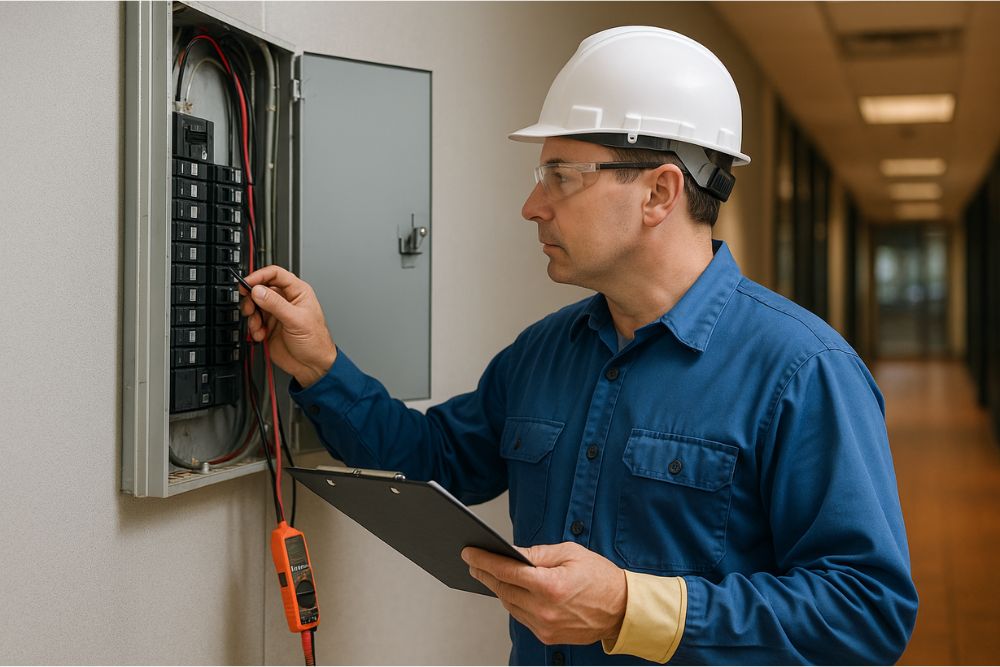
A professional audit of a multi-unit building covers the main service panel and all subpanels, including panel brand, age, condition of the bus bars and breakers, bonding and grounding, and the presence of any recalled or non-code-compliant equipment. It covers branch circuit wiring throughout the building, including wiring type, insulation condition, and whether circuits are sized correctly for current load demands. It covers GFCI protection in all required locations, including kitchens, bathrooms, laundry rooms, garages, outdoor outlets, and any location near a water source. It covers common area systems including lighting, gate operators, pool and spa equipment, and elevator power where applicable. And it covers life safety devices, including smoke detectors and carbon monoxide detectors, for placement and function.
The output of a professional audit is a written report that documents each finding, identifies whether the condition is a code violation, a safety hazard, or a maintenance concern, and provides a basis for prioritizing corrective work. That report is the document that protects a property manager when an insurer, a city inspector, or a tenant’s attorney asks what was known and when.
The insurance pressure driving audit demand in Los Angeles
California’s insurance market has changed significantly in the past two years. Several major carriers have withdrawn from the state entirely. Those that remain are applying stricter underwriting criteria, and electrical system condition has moved to the top of their inspection checklist, particularly for multi-unit residential properties.
The connection to wildfire risk is direct. Electrical failures are among the leading causes of residential fires, and insurers who are already managing elevated exposure from climate-related claims are not willing to carry additional risk from aging electrical infrastructure that has never been professionally evaluated. The result is that property managers who have owned their buildings for decades without an electrical incident are now receiving renewal conditions they have never seen before.
The conditions vary by carrier, but common requirements include documentation that the building’s electrical panels are not from the four recalled brands, Zinsco, Federal Pacific Electric, Challenger, and Pushmatic; that GFCI protection is present in all code-required locations; that wiring has been professionally evaluated within a specified period; and that any identified deficiencies have been corrected by a licensed electrical contractor. A carrier that requires documentation wants documentation from a licensed C10 contractor, not a handyman’s receipt or an owner’s attestation.
Property managers who commission an audit before renewal receive that documentation proactively. Those who wait for the renewal notice to arrive are managing a deadline alongside a repair project, which compresses both timelines and increases costs. The audit is the tool that creates lead time.
What audits find most often in older Los Angeles buildings
Los Angeles has a large stock of apartment buildings constructed between the 1950s and 1980s. The electrical infrastructure in those buildings reflects the codes and materials of the era in which they were built. Most of that infrastructure has never been comprehensively evaluated.
Recalled panel brands are among the most frequent findings in buildings of that era. A building with a Zinsco or Federal Pacific main panel may have three or four subpanels in the same condition. Property managers often know about one panel that was flagged during a prior inspection but are unaware of the others. During an audit of an apartment complex in Van Nuys, our team identified a recalled subpanel in a utility room that had not been included in a prior panel replacement project. The insurer’s inspector found it during the renewal inspection. A professional audit would have surfaced it first.
Missing GFCI protection is among the most common code violations in older multi-unit buildings. Buildings wired before GFCI requirements were codified in their current form frequently have standard outlets in bathrooms, kitchens, laundry rooms, and outdoor locations where GFCI protection is now mandatory. Tenants who reset a tripped GFCI in one location without understanding the circuit may be resetting protection for multiple locations, masking a hazard rather than resolving it.
Aluminum branch circuit wiring appears in buildings constructed during the late 1960s and early 1970s. The connection points between aluminum wiring and the copper devices it terminates at are the hazard: aluminum expands and contracts at a different rate, and over time those connections loosen, overheat, and create conditions that increase fire risk. Many properties in the San Fernando Valley and the South Bay that were built during that period have aluminum branch circuits that were never evaluated and never corrected.
Double-tapped breakers, circuits with undersized conductors, improper junction box covers, and missing bonding connections are among the other conditions that audits surface regularly. None of these are unusual findings. In older buildings that have been maintained reactively rather than proactively, they are expected findings.
How audit findings affect inspection outcomes
City inspectors in Los Angeles review the work that was permitted and installed. They do not limit their review to the scope of the permit. An inspector approving a panel replacement in one unit of an apartment building can open any panel in the building, and if that inspection surfaces a hazard, the inspector can condition approval on correction of the deficiency, even if the correction is outside the original scope of work.
This is not a theoretical scenario. During a panel replacement project at an apartment complex in the Koreatown area, the inspector found a double-tapped breaker in a fourth panel that was not part of the permitted work. The correction was required before final approval was issued. The property manager was not aware the condition existed. A prior audit would have identified it, allowed it to be addressed proactively, and avoided the delay.
The consequence of an inspection surprise is not limited to delay. A condition found during inspection that was not previously documented creates a record of a previously unknown hazard. In a liability context, that record is more problematic than a documented finding that was corrected. An audit that surfaces a condition and a repair record that shows it was corrected tells a different story than an inspection finding with no prior documentation.
Property managers who commission audits before beginning permitted work give themselves the ability to address all findings in a single coordinated project rather than discovering them sequentially during inspections. That approach is less disruptive, less expensive, and produces a cleaner documentation record.
What property managers should do with audit documentation
An audit report has value only if it is used. The documentation from a professional electrical audit should be retained as part of the building’s permanent records, provided to the insurance carrier as part of the renewal submission, provided to the city if requested during a permit process, and reviewed with the building owner when the findings affect capital planning.
When an audit identifies conditions that require correction, the correct response is a written repair plan that prioritizes findings by urgency, life safety hazards and insurance-required corrections first, and sequences the remaining work in a way that fits the building’s operational and budget requirements. That plan, combined with the audit report and the repair records, creates the documentation chain that demonstrates responsible property management.
Property managers who receive a violation notice from the city, an adverse inspection finding, or a renewal condition from an insurer after an audit has already been completed and corrections have already been made are in a fundamentally stronger position than those who are responding to those notices without documentation. The audit is the foundation of that position.
Documentation also matters in tenant relations. When a tenant reports an electrical concern in their unit, a property manager with a recent professional audit report can respond with a record of what was evaluated, what was found, and what was corrected. That response is materially different from one that has no documentation to offer.
How RG Electric conducts audits for multi-unit properties
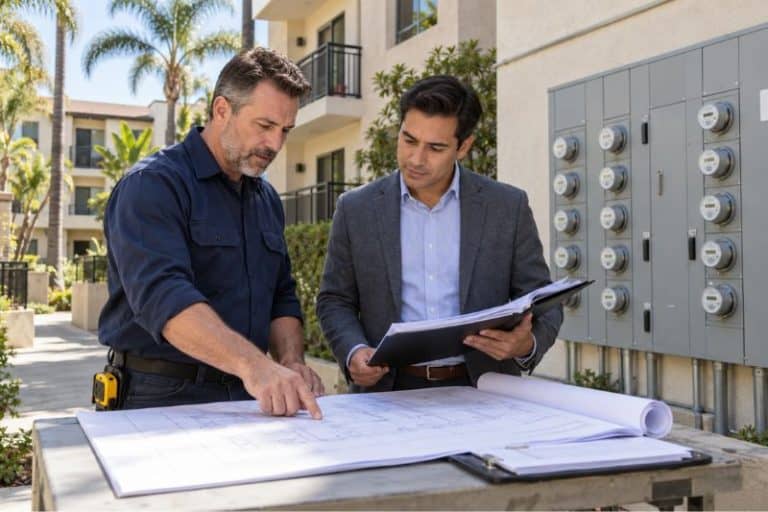
Our audit process for multi-unit buildings begins with a scope conversation with the property manager. We confirm which panels, units, and systems are to be included, coordinate access with tenants or building staff, and establish a timeline that minimizes disruption to the building’s operations.
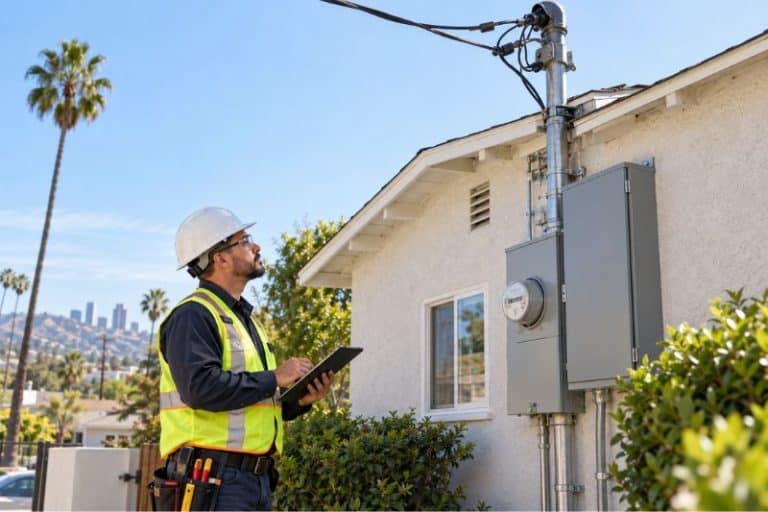
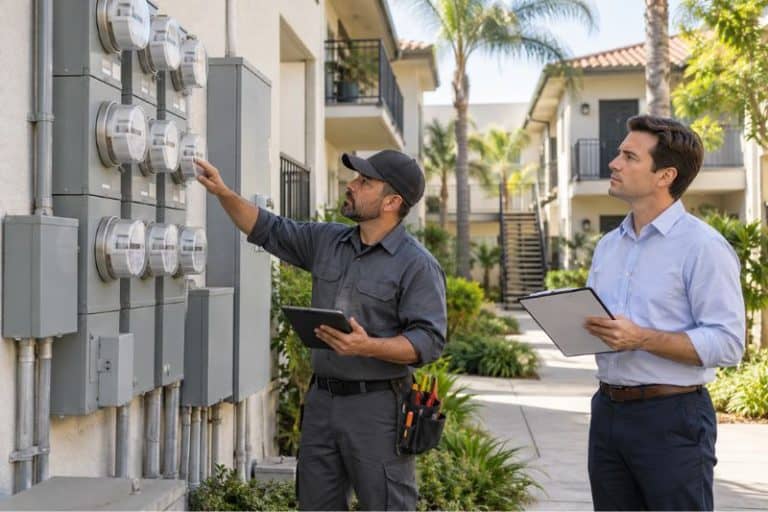
On-site, our licensed electricians inspect each panel, document conditions with photographs, test GFCI devices and verify protection coverage, and assess branch circuit conditions in accessible areas. We note the panel brands, breaker condition, bonding and grounding status, and any visible wiring concerns in common areas, mechanical rooms, laundry facilities, parking structures, and exterior locations.
Our commercial electrical services in Los Angeles include the full range of corrective work that an audit may identify: panel replacements, subpanel upgrades, GFCI installations, circuit repairs, wiring corrections, and permit coordination for any work that requires city approval. Property managers who want a single contractor to handle both the audit and the corrective work get continuity between the finding and the fix, with documentation that covers both.
We provide certificates of insurance for all commercial projects and can supply documentation in the format required by insurance carriers, building owners, or city agencies. Communication throughout the project goes directly to the property manager, not through a call center or a scheduling system. If a question comes up after the technician leaves, the property manager can reach someone who can answer it.
What the audit report includes and how to use it
The written report from a professional electrical safety audit should be organized to be useful, not just comprehensive. A report that lists every condition without distinguishing between a life safety hazard and a minor maintenance item does not help a property manager prioritize decisions or communicate findings to a building owner.
Our audit reports separate findings into three categories: conditions that require immediate correction because they present a safety hazard or a code violation that will affect insurance eligibility or inspection approval; conditions that require correction within a defined timeframe to maintain compliance; and maintenance observations that should be monitored and addressed as part of routine building upkeep. Each finding is documented with a photograph, a description of the condition, the applicable code reference where relevant, and a recommended corrective action.
That structure makes the report useful in multiple contexts. A property manager presenting findings to a building owner can point to the prioritized list and the estimated correction costs as the basis for a capital planning conversation. A property manager submitting documentation to an insurance carrier can provide the audit report alongside repair records showing which findings have been addressed. A property manager preparing for a city inspection can use the report to confirm that all conditions likely to be flagged have already been corrected before the inspector arrives.
For buildings where corrective work is needed across multiple systems, our electrical panel services in Los Angeles are often the starting point, since panel condition affects every circuit in the building and panel replacement is the most common insurance-required correction. From there, circuit repairs, GFCI upgrades, and wiring corrections can be sequenced in a way that fits the building’s operational needs and budget cycle.
Scheduling and what to expect
Electrical safety audits for multi-unit buildings begin with a free consultation to confirm the scope, timeline, and access requirements. The audit itself is priced based on the size of the building and the number of panels and units to be included. Following the audit, we provide a written report that documents all findings, identifies which conditions are code violations or safety hazards, and provides a basis for prioritizing corrective work.
Property managers who are working toward an insurance renewal deadline, preparing for a city inspection, or planning a capital improvement project benefit from scheduling the audit as early in the process as possible. The findings shape the project scope, and the project scope determines the timeline. Starting the audit after the deadline has arrived compresses both.
We work with buildings throughout Los Angeles County, including properties in Sherman Oaks, Culver City, Inglewood, Long Beach, Pasadena, and across the San Fernando Valley. Access coordination, tenant communication support, and scheduling flexibility are part of how we manage multi-unit audit projects without disrupting building operations.
All corrective work identified in the audit is estimated separately with full itemization before any work begins. There are no hidden fees and no work performed without written agreement on scope and price. Our 12-month workmanship guarantee covers all completed repairs.
For immediate assistance or to schedule a professional evaluation, call RG Electric directly at (323) 521-5131.