
 Call (323) 5215131
What are the electrical responsibilities of property managers in Los Angeles?
Updated July 2026
For many property managers in Los Angeles, electrical issues start the same way: a tenant complaint, a flickering light, a breaker that keeps tripping, or a notice from an insurance company asking questions about the building’s electrical system. At first glance these feel like routine maintenance issues. In reality, electrical systems in multi-unit buildings represent one of the largest hidden sources of liability for property managers and building owners. RG Electric is a licensed C10 electrical contractor, License #910807, serving apartment buildings, multi-unit properties, and commercial buildings across Los Angeles County. This post covers what property managers are legally responsible for when it comes to electrical systems, where liability commonly arises, and how proactive electrical management prevents emergencies, failed inspections, and insurance problems before they happen.
What property managers are legally responsible for in Los Angeles
Property managers in Los Angeles have a legal duty to maintain safe and habitable living conditions for tenants. Electrical systems fall squarely within that responsibility, whether issues occur inside individual units or in shared building infrastructure.
At a basic level, property managers are responsible for ensuring that electrical systems are safe, functional, and compliant with applicable codes. This includes responding to known hazards, addressing recurring electrical issues, and correcting conditions that could reasonably pose a risk to occupants. Ignoring a problem or delaying action once an issue is identified does not reduce liability. It often increases it.
Common areas are especially important. Main electrical rooms, shared panels, lighting in hallways, parking structures, laundry rooms, and outdoor spaces all fall under the manager’s responsibility. If a failure in one of these systems leads to injury, fire, or property damage, responsibility can extend well beyond routine maintenance.
Documentation is a critical factor. If an electrical issue has been reported previously and no corrective action was taken, or if work was performed without proper permits or inspections, liability can escalate quickly. In these cases, the issue is no longer just the electrical failure itself, but the failure to act appropriately once the risk was known.
In multi-unit buildings, electrical responsibilities also overlap. A problem in one unit can affect others, especially when panels, feeders, or shared circuits are involved. This interconnected nature of apartment electrical systems is one of the main reasons inspectors and insurance companies pay such close attention to how electrical work is handled in multi-unit properties.
The conclusion: the legal responsibility for electrical safety in a rental building is ongoing, not limited to the condition at lease signing. A property manager who receives notice of a problem and fails to respond promptly with a licensed electrician is building a liability record with every day of inaction.
Electrical panels and subpanels in multi-unit buildings
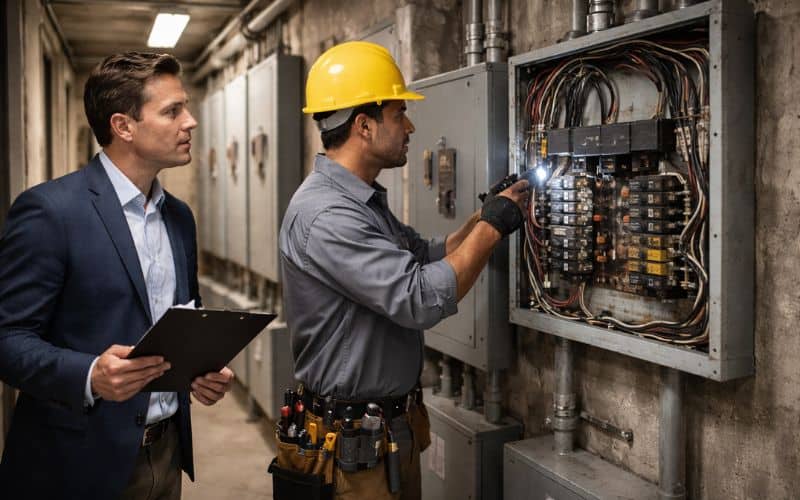
Electrical panels and subpanels are one of the most important and most overlooked components in apartment buildings. For property managers, they represent a centralized point of risk. When something goes wrong at the panel level, the impact is rarely limited to a single unit.
In multi-unit properties, there is typically a main service panel supplying power to the building and individual subpanels serving each unit or zone. If the main panel is outdated, overloaded, or unsafe, every tenant in the building is affected. Even a single dangerous subpanel can create broader problems during inspections or insurance reviews.
Outdated panels are a major liability issue. Panels installed decades ago were never designed for modern electrical demand. Today’s apartments rely on far more electricity than they did when many Los Angeles buildings were constructed. Over time, this increased load stresses breakers, connections, and wiring.
For insurance companies and inspectors, panels are one of the first things evaluated because they are a known failure point. A panel does not need to fail catastrophically to create a problem. Its presence alone, if it belongs to a known high-risk category such as Zinsco, Federal Pacific, Challenger, or Pushmatic, can trigger insurance requirements or inspection corrections.
This is why many property managers are receiving notices from insurance companies requiring electrical panel upgrades in Los Angeles, even when no incident has occurred. Insurers are reducing exposure by eliminating known risks before they turn into claims.
When panel issues are identified, working with a contractor experienced in commercial electrical services in Los Angeles is essential. Multi-unit buildings require a different level of planning, coordination, and documentation than single-family homes, especially when permits and inspections are involved.
The conclusion: panels are the highest-impact electrical liability in multi-unit buildings. A recalled panel brand identified during an underwriting inspection can trigger a building-wide replacement requirement on a compressed timeline. Identifying and replacing recalled panels before the insurer does it first protects the property manager’s ability to control the process.
Permits and inspections: why they matter more than most managers realize
One of the biggest mistakes property managers make is underestimating the importance of permits and inspections for electrical work. In Los Angeles, permits are not just bureaucratic paperwork. They are a critical layer of protection for both property owners and managers.
Most significant electrical work requires permits. This includes panel replacements, subpanel upgrades, rewiring, and many common electrical modifications in apartment buildings. When work is performed without permits, it creates a documentation gap that causes serious problems later.
Unpermitted work surfaces during insurance renewals, property sales, refinancing, or inspections. When that happens, managers may be required to undo previous work and redo it correctly, increasing costs and delaying projects. In some cases, insurers refuse coverage until compliance issues are resolved.
Permits also ensure that work is inspected and verified to meet current electrical codes. This protects tenants and reduces liability. If an electrical incident occurs and unpermitted work is discovered, liability shifts quickly toward the property owner and manager.
For property managers, permits are not a burden. They are a form of risk management. Properly permitted and inspected electrical work provides a paper trail that demonstrates due diligence and compliance, which is invaluable when dealing with insurers, inspectors, and legal questions.
When electrical issues escalate unexpectedly, such as sudden outages or safety hazards, having access to emergency electrical repairs in Los Angeles can stabilize the situation while ensuring the work is still handled correctly and documented appropriately.
The conclusion: unpermitted electrical work is a liability that compounds over time. It surfaces at the worst possible moments, during sales, renewals, and incidents, and always costs more to address retroactively than it would have cost to permit correctly from the start.
Common electrical violations found in apartment buildings
In Los Angeles, many electrical violations found in apartment buildings are not the result of neglect but of age. Older buildings were constructed under very different electrical standards, and unless systems have been comprehensively updated, violations accumulate quietly over time.
Outdated electrical panels or subpanels are among the most common issues inspectors encounter. Even when panels are still functioning, they may no longer meet current safety standards. In multi-unit buildings, one unsafe panel can affect inspections for the entire property.
Missing or improperly installed GFCI protection is another frequent violation. Bathrooms, kitchens, laundry rooms, outdoor outlets, and common areas near water sources all require GFCI protection. In older buildings, these protections were often never installed or were incorrectly added later by unqualified workers.
Ungrounded electrical systems are common in older units. While grounding was not always required when many buildings were constructed, it is now a critical safety component. Ungrounded systems increase shock risk and often fail inspections when upgrades or renovations are performed.
Improper outdoor electrical installations, overloaded circuits, and makeshift wiring modifications are other issues inspectors regularly flag. These problems often arise from years of piecemeal repairs, tenant modifications, or handyman work performed without permits or oversight.
What makes these violations particularly challenging for property managers is that they often remain hidden until an inspection, insurance review, or renovation brings them to light. At that point they are no longer optional fixes. They become mandatory corrections tied to deadlines, permits, and inspections.
The conclusion: the most common violations in older Los Angeles apartment buildings were not created by negligence. They were created by time. But once they are known, the legal obligation to correct them attaches immediately. A professional assessment identifies them on the property manager’s timeline rather than the inspector’s.
How electrical issues increase liability and insurance risk
Electrical problems in apartment buildings are not just technical issues. They are liability issues. When an electrical failure leads to a fire, injury, or extended outage, the consequences can be severe for property owners and managers.
From an insurance standpoint, electrical systems are a known risk factor. If an incident occurs and the investigation reveals outdated panels, unpermitted work, or ignored violations, coverage may be denied or limited. Even without an incident, insurers may refuse to renew policies if they identify unacceptable electrical risks during audits or renewals.
Tenant safety is another major factor. Property managers have a duty of care to maintain safe living conditions. If a tenant is injured due to an electrical issue that was known, reported, or reasonably foreseeable, liability exposure increases significantly. Documentation of prior complaints or unfinished repairs can further complicate matters.
Electrical issues also create operational risk. Power outages affecting multiple units lead to tenant complaints, habitability concerns, and potential legal action. In severe cases, buildings may be temporarily uninhabitable, creating additional financial losses.
The conclusion: electrical liability in rental properties is not limited to incidents. It extends to known conditions that were not addressed, prior complaints that were not properly investigated, and work that was performed without permits. The documentation record is the difference between a defensible response and an indefensible one.
Why hiring a licensed, insured electrical contractor matters
One of the most important decisions a property manager makes is who they trust to work on a building’s electrical systems. In Los Angeles, the difference between licensed electrical work and unqualified repairs is legal and financial protection, not just quality.
Licensed electrical contractors understand local codes, permitting requirements, and inspection processes. They know how to document work properly and ensure it stands up to scrutiny from inspectors and insurance companies. This documentation becomes critical during renewals, audits, and claims.
Unlicensed or shortcut work creates more problems than it solves. Improper installations may work temporarily but fail inspections later, forcing managers to pay twice for the same work. Worse, unpermitted work discovered after an incident can significantly increase liability.
For property managers, choosing a licensed contractor is not about selecting the lowest upfront cost. It is about choosing reliability, compliance, and long-term protection for the property and the tenants it houses.
The conclusion: a licensed C10 contractor provides the documentation, permit management, and inspection coordination that protects a property manager when an insurer, a city inspector, or a tenant’s attorney asks what was done and when. That protection is not available from unlicensed work regardless of how well it was performed.
Electrical upgrades that reduce risk for property managers
Not every electrical project needs to be reactive. Some upgrades consistently provide the greatest return when it comes to reducing liability, stabilizing insurance relationships, and preventing emergencies.
Electrical panel and subpanel replacements are at the top of that list. Replacing outdated or high-risk panels removes one of the most common red flags that insurers and inspectors focus on. It also provides a foundation that can safely support modern electrical demand across multiple units.
GFCI upgrades are another critical improvement. Ensuring proper protection in kitchens, bathrooms, laundry areas, outdoor spaces, and common areas significantly reduces shock risk and helps bring older buildings closer to current safety standards.
Rewiring older units or correcting unsafe circuits is an important risk-reduction measure. Aging wiring, overloaded circuits, and improper modifications often remain hidden until a renovation or inspection exposes them. Addressing these issues proactively prevents delays and unexpected correction notices.
Dedicated circuits for modern loads such as EV chargers or shared equipment help prevent nuisance tripping and overheating. In multi-unit buildings, planning for electrical demand before it becomes a problem is far more cost-effective than responding after failures occur.
The conclusion: proactive electrical upgrades allow property managers to plan work on reasonable timelines, budget accurately, and communicate clearly with owners and tenants. That predictability is one of the most effective ways to reduce both operational stress and long-term liability.
When property managers should act
Timing matters when it comes to electrical upgrades. The worst time to act is when a deadline has already been imposed by an insurance company or inspector.
Policy renewals are one of the most important trigger points. This is when insurers often reassess risk and request documentation or upgrades. Addressing known electrical concerns before renewal gives property managers leverage and flexibility that disappears once a compliance letter arrives.
Tenant complaints are another signal that should not be ignored. Recurring outages, tripping breakers, or power issues often indicate deeper problems within panels or shared systems. Treating these complaints as early warnings rather than isolated inconveniences prevents larger failures.
Renovations, unit turnovers, and property acquisitions are also ideal times to evaluate electrical systems. These moments naturally involve inspections and improvements, making it easier to address issues without disrupting occupied units.
Proactive action allows property managers to stay in control. It avoids rushed decisions, emergency pricing, and unnecessary conflict with insurers or inspectors. More importantly, it protects tenants and preserves the long-term value of the property.
The conclusion: the three best times to act on electrical upgrades are before an insurance renewal, during a planned renovation, and after a professional assessment identifies conditions that are likely to surface during the next inspection. Waiting for a compliance letter eliminates all three of those options.
How RG Electric supports property managers in Los Angeles
RG Electric, C10 #910807, (323) 521-5131, works with property managers throughout Los Angeles, in Encino, Sherman Oaks, Van Nuys, Koreatown, Inglewood, Torrance, and across the San Fernando Valley, to evaluate, plan, and execute electrical projects of all sizes in occupied multi-unit buildings.
Every project includes direct communication with the property manager rather than through a call center or scheduling system. Permits are handled as part of every project that requires them. Inspections are coordinated and attended by our team. Documentation at project closeout includes the permit, inspection certificate, photographs of completed work, and updated circuit directories.
Property managers who need to respond to a tenant complaint, prepare for an insurance renewal, or plan a phased upgrade across multiple buildings get a licensed contractor who understands that the electrical work is one part of a larger operational picture. We communicate clearly, document completely, and stand behind our work with a 12-month workmanship guarantee.
For immediate assistance or to schedule a professional evaluation, call RG Electric directly at (323) 521-5131.