
 Call (323) 5215131
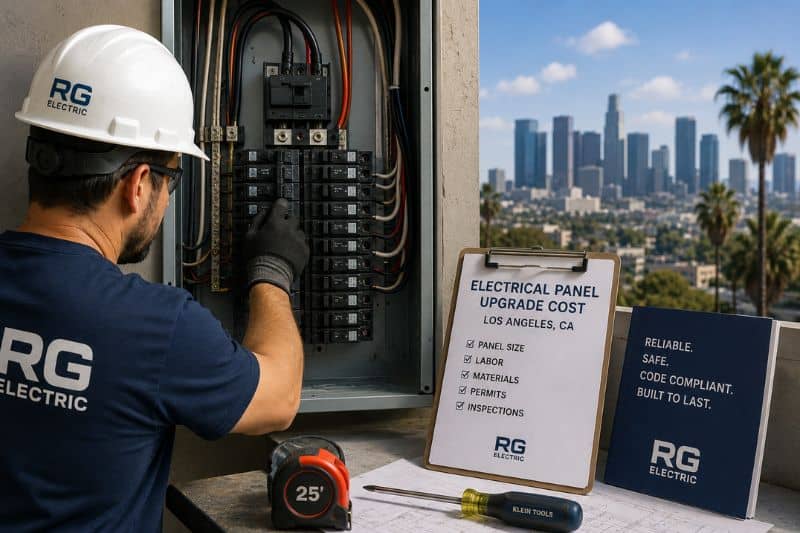
Electrical Panel Upgrade Costs in Los Angeles: What Really Drives the Price
One of the most common questions RG Electric (License C10 #910807) receives before a panel replacement is: what is this going to cost? It is a reasonable question and one that deserves a direct answer. The honest answer is that panel upgrade costs in Los Angeles vary significantly depending on several factors specific to each property, and anyone who gives you a single number without seeing your property is guessing. What this post does is explain exactly what those factors are, how they affect the final price, and what to expect at each stage of the process, so that you can evaluate any estimate you receive with the knowledge to understand what is and is not included.
Why Panel Upgrade Costs Vary So Much in Los Angeles
Los Angeles has one of the most diverse housing stocks in the country, ranging from pre-war bungalows in older neighborhoods to mid-century apartment complexes in the San Fernando Valley to newer commercial construction in Downtown and Culver City. Each property type presents different conditions, and those conditions drive cost more than the panel hardware itself.
A single-family home in Sherman Oaks with an easily accessible panel in the garage, straightforward wiring, and an existing 200-amp service is a very different project from a 1960s apartment complex in Van Nuys with multiple subpanels, aging conduit, limited access to the main service equipment, and a main panel that needs to be relocated to meet current clearance requirements. Both are panel upgrades. The cost difference between them can be substantial.
Understanding what drives cost helps property owners evaluate estimates accurately, budget realistically, and avoid the mistake of choosing the lowest bid without understanding what it does and does not include. The lowest bid is not always the best value, particularly for permitted electrical work in Los Angeles where inspection requirements are specific and failure to meet them means a re-inspection, additional correction work, and project delays.
Panel Size and Amperage: The Starting Point
The amperage rating of the new panel is the most obvious cost variable and the right place to start when thinking about price. Older Los Angeles homes were commonly wired with 60-amp or 100-amp main panels. Those capacities were adequate for the electrical loads of the era, but they are not adequate for a home that now runs central air conditioning, an electric vehicle charger, a home office, and a modern kitchen.
A 200-amp panel replacement is the most common residential upgrade in Los Angeles and represents the baseline for most homeowner estimates. For properties with larger loads, including multi-unit buildings, properties adding significant EV charging capacity, or homes planning major additions, 400-amp service may be the appropriate starting point.
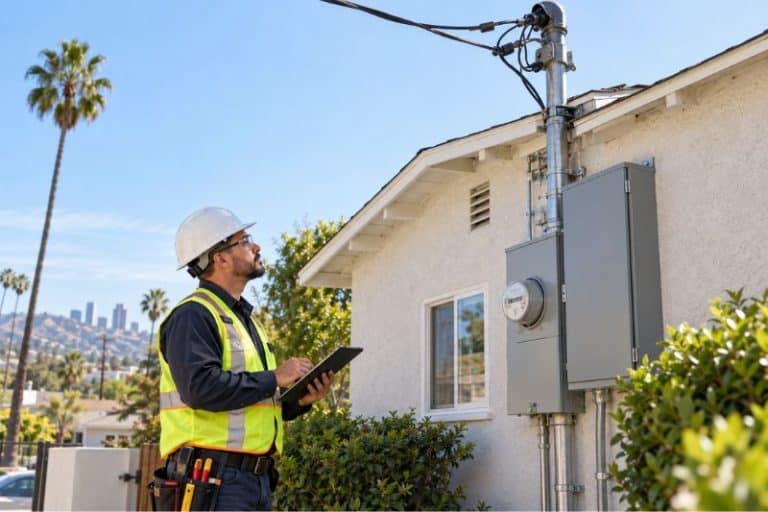
Higher amperage means heavier conductors, larger panel hardware, and in many cases a service upgrade that involves coordination with LADWP to increase the amperage coming into the property from the street. A service upgrade is a more involved project than a panel replacement and carries a higher cost, but it is often the correct long-term solution for properties that have been operating close to their capacity limits.
The cause is straightforward: more capacity requires more material and more coordination. The effect is a higher project cost relative to a like-for-like panel swap. The consequence of choosing insufficient capacity to save money is a property that reaches its limits again within a few years, requiring another upgrade sooner than necessary.
Building Age and Existing Wiring Conditions
The condition of the existing electrical system surrounding the panel is one of the most significant cost variables in older Los Angeles properties, and it is one that cannot always be fully assessed until the panel is opened and work begins.
In properties built before the 1980s, the wiring connected to the panel may be in a condition that creates additional work before the new panel can be safely installed and inspected. Deteriorated grounding electrodes need to be replaced. Corroded conduit needs to be cleared or replaced. Wiring that does not meet current code for the circuits it serves needs to be corrected. None of this is optional once it is identified by a licensed electrician, because a city inspector will review all of it during the panel inspection.
This is where the “hidden cost” of older buildings comes from. It is not hidden in the sense of being concealed. It is hidden in the sense of being inside the walls, not visible during an initial walkthrough, and only discoverable once the work begins. RG Electric documents these findings transparently and presents them as a separate line item in the estimate, with a clear explanation of why each correction is required. Nothing proceeds without the property owner’s approval.
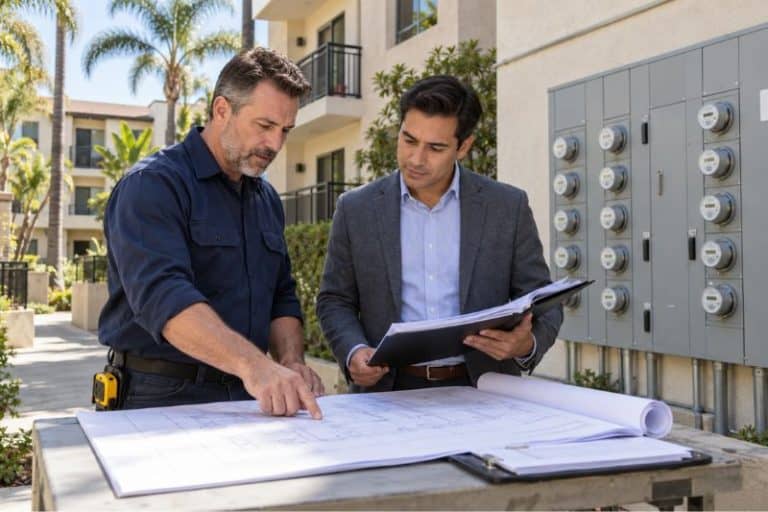
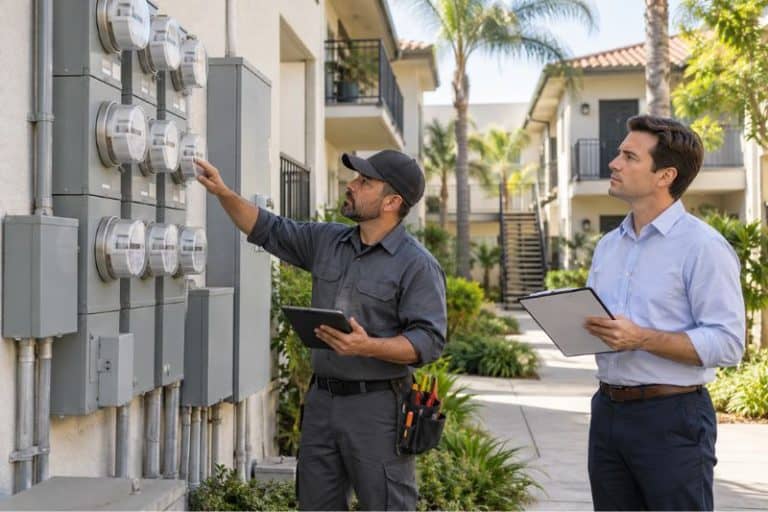
For multi-unit apartment buildings, the complexity increases further. Multiple subpanels that feed individual units may need to be assessed alongside the main panel. Tenant coordination for service shutoffs adds scheduling complexity. In some cases, an inspector who reviews a multi-panel replacement will open panels that were not part of the original scope and identify violations in adjacent equipment, as has happened on RG Electric projects in older Los Angeles apartment complexes. Building owners who plan multi-panel projects should budget a contingency for findings of this type rather than assuming the scope will remain exactly as originally quoted.
Accessibility and Panel Location
Where the panel is located and how easily it can be accessed directly affects labor cost. A panel in an open garage with clear working space around it is straightforward to replace. A panel in a tight utility closet, behind finished walls, in a space that requires clearance modifications, or on an upper floor of a commercial building takes more labor hours and more careful coordination.
Panel relocation adds cost beyond accessibility. When a panel needs to be moved to meet current clearance requirements, to satisfy LADBS or LADWP requirements about proximity to service entrances, or to bring it out of a space that is no longer acceptable under current code, the project involves running new conduit, extending conductors, patching the original location, and ensuring the new location meets all dimensional and clearance requirements. Relocation is more expensive than replacement in place, but it is sometimes the only path to a passing inspection.
Permits, Inspections, and LADWP Coordination
Every panel replacement in Los Angeles requires a permit from the Los Angeles Department of Building and Safety. The permit fee varies based on the scope of the project and the number of panels involved, but it is a fixed cost that every legitimate electrical contractor includes in their estimate. A contractor who does not include permit costs is either planning to work without a permit or planning to surprise the property owner with the cost later. Neither is acceptable.
The inspection process adds time to the project timeline but not significant cost. What it does add is certainty. A project that has passed a LADBS inspection has been reviewed by an independent city inspector who confirmed that the installation meets current code. That confirmation is what makes the work insurable, documentable, and compliant for real estate disclosure purposes. An installation that was never inspected provides none of those protections regardless of how well it was done.
For projects that involve a service upgrade, meaning an increase in the amperage coming into the property, coordination with LADWP is required in addition to LADBS. LADWP must disconnect service before the work begins and reconnect after the final inspection. Scheduling this coordination can add one to two days to the project timeline, and in busier periods, LADWP scheduling can extend that further. RG Electric manages all LADWP coordination as part of the project, so property owners do not need to navigate that process independently.
For multi-unit and commercial projects, LADBS may require plan review before issuing the permit, particularly for projects that involve significant load calculations or multiple panels. Plan review adds time at the front end of the project but is a standard part of any complex commercial electrical project in Los Angeles.
Materials and Equipment: Where Quality Matters
The panel hardware itself varies in quality and price, and the choice of materials matters both for performance and for inspection outcomes. RG Electric installs Siemens panels, which are a top-tier choice that LADBS inspectors are familiar with and that perform reliably under the load conditions found in Los Angeles properties.
Lower-cost panels from lesser-known manufacturers may appear identical on a quote but can create problems at inspection and may not carry the UL listings required for Los Angeles permitted work. The cost difference between a quality panel and a budget panel is typically small relative to the total project cost, and the difference in long-term reliability and inspection outcomes is not small.
Grounding and bonding materials are another cost component that affects both price and compliance. Current code requires specific grounding electrode configurations, bonding of metallic water and gas piping, and grounding conductor sizing that matches the service capacity. In older properties where the existing grounding system does not meet current requirements, bringing it up to code is part of the panel replacement scope and is verified during inspection.
Some property owners also choose to include whole-house surge protection as part of a panel replacement project. Installing a surge protector at the time of panel replacement is more cost-effective than adding one later because the panel is already open and the installation labor is already on site. It is not required but is worth including in the budget evaluation for properties with sensitive equipment or EV chargers.
The Four Recalled Panels and What Replacement Costs
A significant portion of panel replacement work in Los Angeles involves the four recalled panel brands that California insurers flag most consistently: Zinsco, Federal Pacific Electric (FPE), Challenger, and Pushmatic. These panels are present in a substantial number of older Los Angeles homes and apartment buildings, and insurers have been increasingly requiring their replacement as a condition of coverage renewal.
Replacing one of these panels involves the same cost variables as any other panel replacement, with the added context that the urgency is often externally driven by an insurance deadline. A property owner who receives an insurance notice requiring replacement within 30 to 60 days has less flexibility to plan and schedule than one who is proactively upgrading. The cost of the work is the same in both cases. The timeline pressure is not.
In some cases, older recalled panels are in locations or conditions that add complexity beyond the panel swap itself. Zinsco panels, for example, were sometimes installed in configurations that require additional work to bring the surrounding wiring into compliance with current code at the time of replacement. Property owners who are planning to replace a recalled panel should request an on-site assessment before finalizing their budget rather than working from a phone estimate.
RG Electric’s electrical panel services in Los Angeles include replacement of all four recalled panel brands, with full permit management and documentation suitable for insurance compliance requirements.
What a Panel Replacement Does Not Include
Understanding what is typically outside the scope of a panel replacement helps avoid surprises when reviewing an estimate or when additional work is identified during the project.
A panel replacement replaces the panel itself and brings the immediate panel installation into compliance with current code. It does not automatically update every circuit in the building. Old wiring in the walls, ungrounded branch circuits, missing GFCI protection in required locations, and other code deficiencies in the existing wiring are separate from the panel replacement scope unless they are specifically included in the estimate.
When a city inspector reviews a panel replacement, they examine the panel installation and the immediately adjacent conditions. If they identify violations in connected wiring or adjacent panels that were not part of the original scope, they may require those violations to be corrected before approving the permitted work. This is the scenario that catches property owners off guard most often, particularly in older multi-unit buildings where deferred maintenance has accumulated across multiple electrical systems.
RG Electric addresses this by conducting a thorough pre-work assessment and flagging any adjacent conditions that are likely to come up during inspection. Where possible, these are included in the original estimate. Where conditions are only discoverable once work begins, they are presented as a written addendum with a clear explanation before any additional work proceeds.
How to Evaluate a Panel Replacement Estimate
When you receive a panel replacement estimate, several things should be visible to assess whether it is complete and trustworthy. The estimate should identify the contractor’s C10 license number. It should specify the panel brand and amperage rating being installed. It should include permit fees as a line item, not describe permits as the property owner’s responsibility. It should identify any grounding or bonding work required. And it should describe the scope clearly enough that you can identify what is and is not included.
An estimate that lacks a license number, omits permit costs, or provides only a single total without line items should prompt questions before you accept it. Transparent pricing is not complicated to provide for a contractor who is planning to do the work correctly. It is only complicated for contractors who are planning to do the work in a way that does not survive close examination.
RG Electric’s estimate process begins with an on-site assessment by a technician who reports findings to Roy, the owner and master electrician. Roy builds a written, itemized estimate that explains each cost component. The estimate is reviewed with the property owner before any work begins, and nothing outside the approved scope proceeds without explicit approval. For property owners and managers across Los Angeles, from Encino and Sherman Oaks to Koreatown, Inglewood, and Long Beach, that process is the same on every project.
RG Electric’s commercial electrical services in Los Angeles include the full permit and documentation package that multi-unit building owners and property managers need for insurance compliance and building record purposes.
For immediate assistance or to schedule a professional evaluation, call RG Electric directly at (323) 521-5131.