
 Call (323) 5215131
Electrical Due Diligence Checklist for Buying a Multi-Unit Property in Los Angeles
Updated September 2026
An investor under contract on a 24 unit building in Koreatown is three weeks from closing when the lender’s underwriter asks a question nobody on the deal team can answer with confidence, whether the electrical service has ever been upgraded. The general inspection report mentioned the panels in passing. Nobody actually opened one. RG Electric, license C10 #910807, gets pulled into deals at exactly this stage more often than property managers and investors expect, usually because a lender, an insurer, or a sharp-eyed broker asked a question the standard inspection never answered. Electrical due diligence on a multi-unit acquisition is not the same as a general property inspection, and treating it as an afterthought is one of the more expensive mistakes a buyer can make on an otherwise carefully underwritten deal.
Why a General Inspection Is Not Electrical Due Diligence
A general property inspector checks that outlets work, that the panel is labeled, and that nothing looks obviously unsafe from the outside. That is useful information, but it is not the same as an electrician evaluating whether the building’s electrical infrastructure can support current occupancy, meets current code, and will pass the scrutiny an insurer or a future buyer will eventually apply. A panel can look completely normal from the front cover and still be a known fire hazard, carry inadequate capacity for the building’s actual load, or hide code violations that only surface once a licensed electrician opens it up.
The scope difference comes down to training and liability. A general inspector is trained to spot visible defects across every system in a building, plumbing, roofing, structural, and electrical among them, which means electrical gets a fraction of the attention a specialist would give it. A licensed electrician evaluating the same property is not distracted by a dozen other systems and carries the professional liability that comes with signing off on electrical findings specifically. That difference in depth is exactly where the risk in a rushed due diligence process tends to hide.
This gap matters most on older Los Angeles multi-unit properties, where decades of ownership changes, unpermitted tenant improvements, and deferred maintenance accumulate in ways a walkthrough inspection is not designed to catch. A buyer who treats the general inspection as sufficient electrical due diligence is often making a six or seven figure decision based on information that was never meant to answer that question.
What an Electrical Due Diligence Review Actually Covers
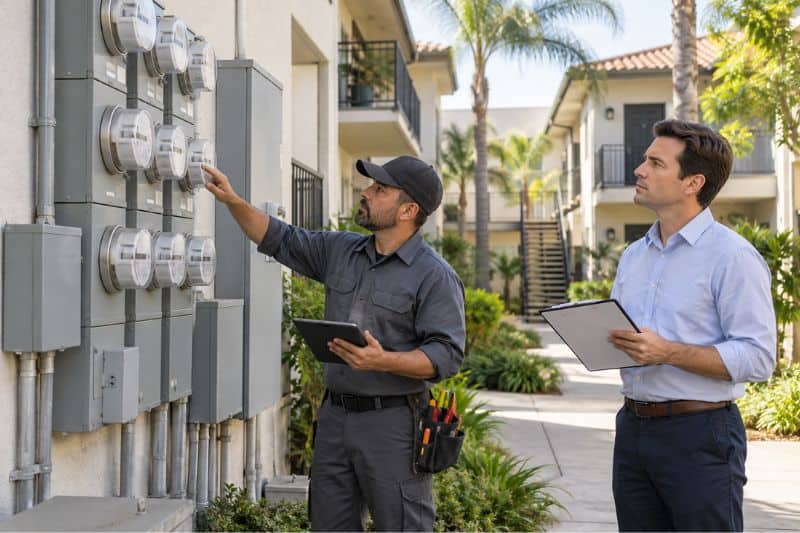
A proper electrical assessment before acquisition starts with the panels themselves, every one of them, not just the ones a general inspector happened to photograph in passing. That means identifying the brand and age of each panel, checking for any of the panel brands most frequently flagged for fire risk, Zinsco, Federal Pacific, Challenger, and Pushmatic, and confirming whether the service size is adequate for the building’s current and reasonably anticipated load. It also means checking permit history against the visible electrical work, since unpermitted upgrades and unpermitted repairs are common enough in older buildings that they should be assumed present until confirmed otherwise, not assumed absent because nothing looks wrong.
Bonding and grounding, common area lighting compliance, GFCI protection in required locations, and the condition of any subpanels serving individual units all belong on the same checklist. None of these are things a general inspector is trained or equipped to evaluate with the depth a licensed electrician brings, and each one has direct financial consequences if it surfaces after closing instead of before.
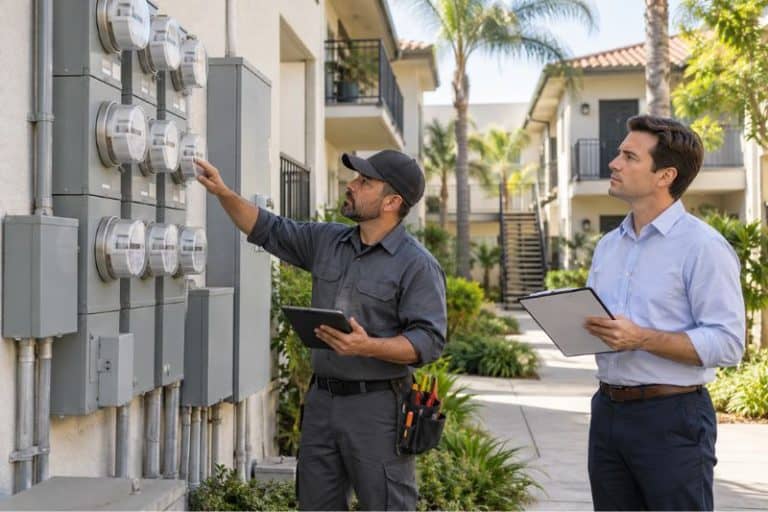
Metering configuration deserves its own line on the checklist, particularly on older buildings that may still run on a master meter rather than individual unit metering. A property being evaluated for a conversion to individual metering, or one where tenants dispute how utility costs are allocated, carries an electrical scope of work that needs to be priced into the acquisition, not discovered as a surprise capital project after the new owner already controls the building’s operating budget.
Why a Panel Nobody Touched Can Still Be the Problem
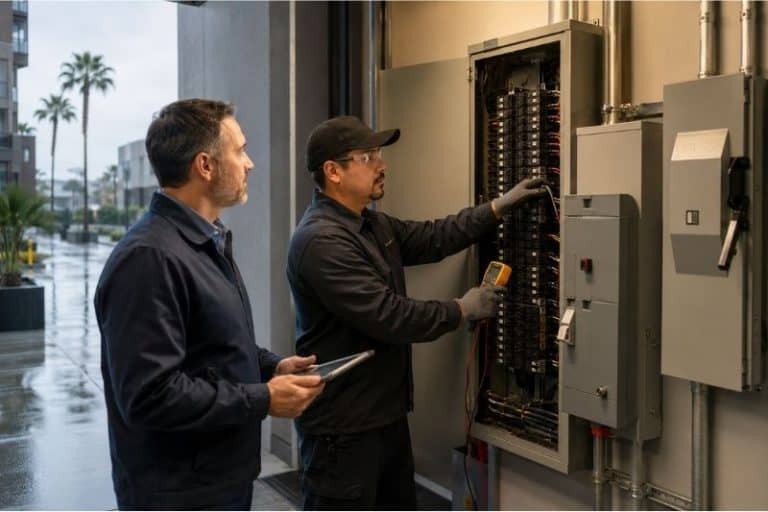
RG Electric replaced three panels in an apartment complex during a recent upgrade project, straightforward, permitted work on the panels the client had identified as failing. During the final inspection, the inspector opened a fourth panel the crew had never touched, one that was not part of the original scope, and found breakers that had been double tapped, two circuits landed on a single breaker terminal never rated for that. The inspector would not approve the job until that panel was corrected too, even though RG Electric had nothing to do with the original installation.
That story is a useful preview of what a buyer’s due diligence process is actually trying to prevent. A building can have three panels in reasonable shape and one that has quietly carried a code violation for years, invisible to anyone who was not specifically looking for it. In an acquisition context, that fourth panel becomes the new owner’s problem the moment escrow closes, whether or not anyone flagged it beforehand.
The unsettling part of that story is not that the violation existed. Older buildings accumulate small deviations from code over decades of ownership, tenant turnover, and minor repairs, and that is close to unavoidable. The unsettling part is how close it came to being missed entirely, caught only because a permitted project happened to bring an inspector onto the property who had reason to look at a panel nobody had asked about. A buyer doing due diligence does not get the benefit of that coincidence. The only way to find the fourth panel’s problem before closing is to go looking for it on purpose.
How Panel Condition Affects Financing and Insurance
Lenders and insurers have both grown more attentive to electrical condition on multi-unit properties, and a due diligence process that ignores this reality risks a deal stalling late, not early. An insurer that discovers a Zinsco or Federal Pacific panel after binding coverage can respond by excluding electrical fire coverage, raising premiums significantly, or declining to renew, none of which are outcomes a buyer wants to discover for the first time after closing. Lenders increasingly ask about electrical service age and condition as part of underwriting, particularly on properties built before modern load standards existed, and a vague or incomplete answer can slow an already tight closing timeline.
Surfacing panel condition early, before the insurance binder is issued and before the lender’s underwriting file is finalized, gives a buyer room to negotiate a credit, request seller-funded repairs, or simply price the eventual upgrade into the offer. Discovering the same information after closing removes all three of those options and leaves the new owner covering the full cost on a timeline they do not control.
The negotiating leverage question is worth being explicit about, since it is the practical reason timing matters as much as the findings themselves. A credit negotiated during escrow, when the seller still wants the deal to close, is a fundamentally different conversation than asking a seller for money after they have already been paid and moved on. The same repair costs the same either way. Only one version of that conversation results in someone else paying for it.
What to Ask a Seller Before Making an Offer
Requesting permit history for any electrical work performed during the current ownership is a reasonable and common due diligence request, and a seller’s inability or reluctance to provide it is itself useful information. Asking directly whether any panels have been replaced, when, and by whom, along with whether the property has had any electrical fire, code violation, or insurance claim history, narrows down what an on-site assessment needs to focus on before the buyer’s inspection contingency period runs out. A seller who answers these questions quickly and specifically is a different kind of counterparty than one who deflects or provides vague reassurance, and that difference is worth noting before it becomes relevant to the negotiation.
A seller’s electrical work required at the point of sale for a single family home follows a fairly well understood disclosure process in California. Multi-unit and commercial transactions do not carry that same residential disclosure framework, which means the burden shifts more heavily onto the buyer’s own due diligence to surface what a residential transaction’s disclosure rules might otherwise catch. Assuming a commercial or multi-unit seller is obligated to volunteer the same level of detail a home seller would is a mistake worth correcting before an offer is finalized, not after.
This distinction catches experienced residential investors more often than first time buyers, oddly enough, because residential experience creates an expectation of disclosure that commercial and multi-unit transactions simply do not carry in the same form. An investor moving from single family properties into their first multi-unit acquisition should treat the absence of proactive disclosure as the default assumption, not an exception, and build the due diligence timeline around confirming information rather than waiting for it to be offered.
Timing the Assessment Within the Transaction
The most useful window for an electrical due diligence assessment is during the inspection contingency period, before it expires and before earnest money becomes harder to walk away from. Scheduling this early, rather than as a final check right before closing, preserves the buyer’s negotiating leverage and their ability to exit the deal cleanly if the findings are serious enough to change the economics.
Properties in older neighborhoods across Los Angeles, including parts of Koreatown, Downtown LA, Echo Park, and the San Fernando Valley, carry a higher likelihood of legacy panel brands and undocumented electrical work simply because of their age. Buyers evaluating properties in these areas benefit from budgeting for an electrical assessment as a standard part of due diligence rather than an optional add-on triggered only if something looks obviously wrong during the walkthrough.
Properties in Sherman Oaks, Encino, and Van Nuys with a mix of older and renovated units present a related but distinct challenge. A partial renovation can leave a building with genuinely modern electrical in some units and original, unmodified wiring in others, which means a single spot check in whichever unit happens to be vacant during the inspection period tells a buyer very little about the building as a whole. A representative sample across several units, not just the easiest one to access, is what actually produces a usable picture of the property’s real condition.
Always consult a licensed electrician like RG Electric before working on electrical systems.
How RG Electric Supports Acquisition Due Diligence
RG Electric performs pre-purchase electrical assessments for investors and property managers evaluating multi-unit acquisitions, documenting panel condition, permit history discrepancies, and code compliance gaps in a report a buyer can use directly in negotiations, with a lender, or with an insurance carrier. This is the same licensed, code focused evaluation RG Electric applies to every job, following code to the teeth whether the client is a current owner correcting a known problem or a prospective buyer trying to understand what they are actually purchasing.
The report itself is written to be usable outside the relationship between RG Electric and the buyer, since a due diligence document that only makes sense to the electrician who wrote it is not much help at the negotiating table. Findings are documented in plain terms, with panel brands, ages, and specific deficiencies named clearly enough that a broker, a lender, or an attorney reviewing the deal can understand exactly what was found without needing a follow-up call to translate it.
Turnaround matters quite a bit during an active, time sensitive transaction, and RG Electric schedules acquisition assessments with the buyer’s contingency timeline in mind rather than treating them as a lower priority than active installation work. A clear report, delivered while there is still room to negotiate, is worth far more to a buyer than the same information arriving after the deal has already closed.
RG Electric is licensed, bonded, and insured, credentials that matter as much on a due diligence engagement as they do on any installation job, since a report used to negotiate a six figure credit needs to come from a source a lender or an insurer will actually trust. An assessment performed by someone without the proper license carries little weight at the negotiating table, whatever it actually finds.
Making Due Diligence Do Its Job
The panel a general inspector never opens is exactly the one worth worrying about. RG Electric provides commercial electrical services for property managers and investors throughout Los Angeles, and coordinates panel condition assessments through the same team that handles electrical panel upgrades once a purchase closes and remediation actually begins.
Buyers who commission a real electrical assessment before closing walk into ownership with an accurate picture of what they own. The ones who skip it find out the same information eventually, just later, more expensively, and without any leverage left to do anything about it, usually from a tenant complaint, a failed inspection, or an insurance adjuster rather than from a report they commissioned on their own terms.
For immediate assistance or to schedule a professional evaluation, call RG Electric directly at (323) 521-5131.