
 Call (323) 5215131
Why Subpanel Installation in Los Angeles Takes Longer Than Property Managers Expect
Updated May 2026
The decision to add a subpanel to an apartment building or commercial property in Los Angeles is almost always made in response to a problem that already exists. A building’s electrical load has outgrown its main panel. An insurance carrier has flagged the service as inadequate. A tenant is requesting EV charging, and there is no capacity to support it without distribution upgrades. The decision feels urgent because the underlying problem is urgent. What follows, however, is a process that moves on a timeline most property managers underestimate when they make that initial call. RG Electric, licensed C-10 #910807, installs subpanels for multi-unit buildings and commercial properties throughout Los Angeles. This post explains what drives the timeline, what happens at each stage, and how to plan so the delay does not compound the operational problem that prompted the project in the first place.
What a Subpanel Actually Does and Why It Matters
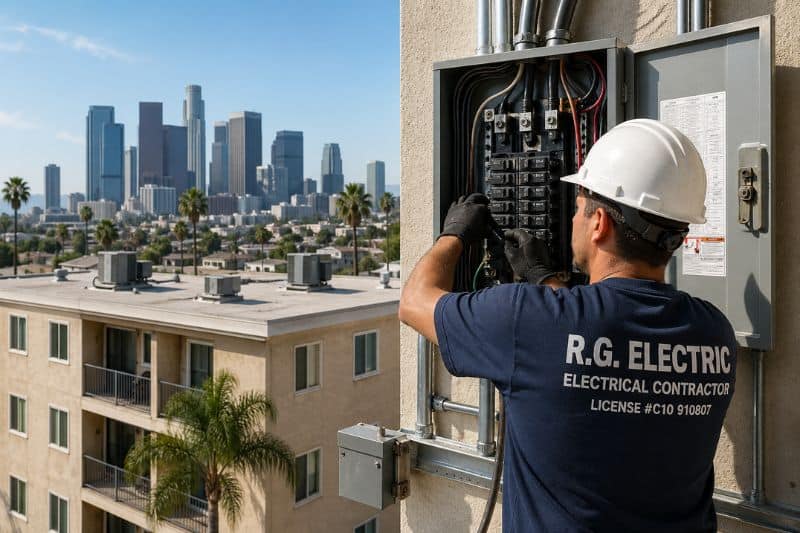
A subpanel is a secondary distribution panel that receives power from the main service panel and distributes it to a defined area of the building — a specific floor, a wing, a parking structure, or a set of units. It does not increase the total power coming into the building from the utility. What it does is organize and isolate distribution so that different loads can be managed independently, circuits can be sized correctly for their actual use, and future upgrades can be made to a specific zone without affecting the rest of the building.
In practical terms, a subpanel solves several different problems simultaneously. It allows a building that has run out of breaker slots in its main panel to add circuits without replacing the main service. It isolates HVAC, EV charging, or laundry loads onto dedicated distribution so that a tripped breaker in one zone does not affect another. And it creates a defined electrical boundary that makes the system easier to maintain, label, and present to an inspector or insurance adjuster.
For multi-unit buildings throughout the San Fernando Valley, Koreatown, Downtown LA, and the Westside, subpanel installations are one of the most common electrical capital projects we see. They are also consistently the projects where property managers arrive with timeline expectations that do not match what the permit and inspection process actually requires.
The Evaluation Stage Takes Longer Than a Single Visit
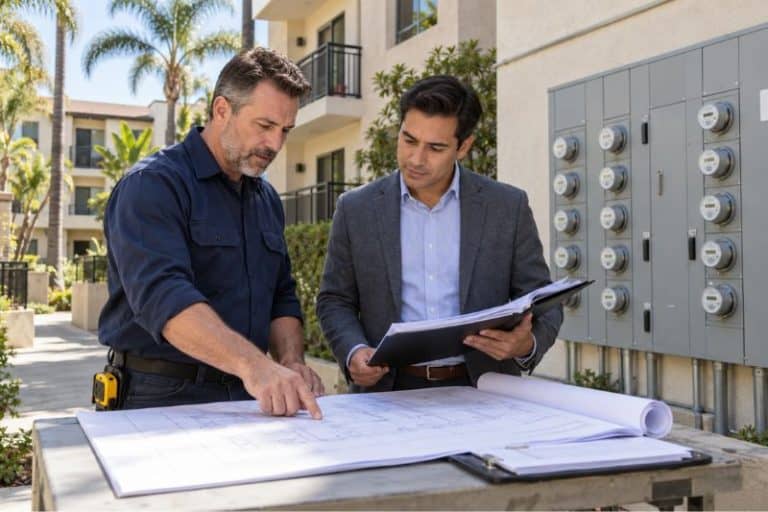
Before any permit is pulled or any materials are ordered, a subpanel installation requires a load evaluation. The evaluation answers two questions: does the main service panel have available capacity to feed a new subpanel, and what size and configuration does the subpanel need to be for its intended load?
The first question sounds simple but frequently is not. In older Los Angeles buildings, the main panel’s rated ampacity is often close to the building’s actual peak load, particularly in buildings where EV charging, upgraded HVAC, or in-unit laundry has been added over the years without a corresponding service upgrade. A subpanel fed from a main panel that is already at capacity does not solve the problem — it relocates it. The load evaluation has to account for the building’s actual demand, not just the panel’s label, before the subpanel can be sized correctly.
The second question involves the intended use of the subpanel. A subpanel serving six EV charging stations in a parking structure is a very different engineering problem from a subpanel serving a laundry room on the third floor of an apartment building. The feeder wire size, the panel ampacity, the breaker configuration, and the physical routing of the feeder all depend on what the subpanel will actually power. Getting those specifications right at the evaluation stage prevents the project from requiring mid-installation revisions that delay the inspection timeline.
For buildings where the main panel itself is a recalled brand — Zinsco, Federal Pacific, Challenger, or Pushmatic — the evaluation sometimes reveals that the subpanel project needs to be preceded by a main panel replacement. That is a different project, a different permit, and a different timeline. Discovering it after the subpanel permit has been submitted creates delays that a thorough evaluation at the beginning would have avoided.
The Permit Process in Los Angeles Has a Real Timeline
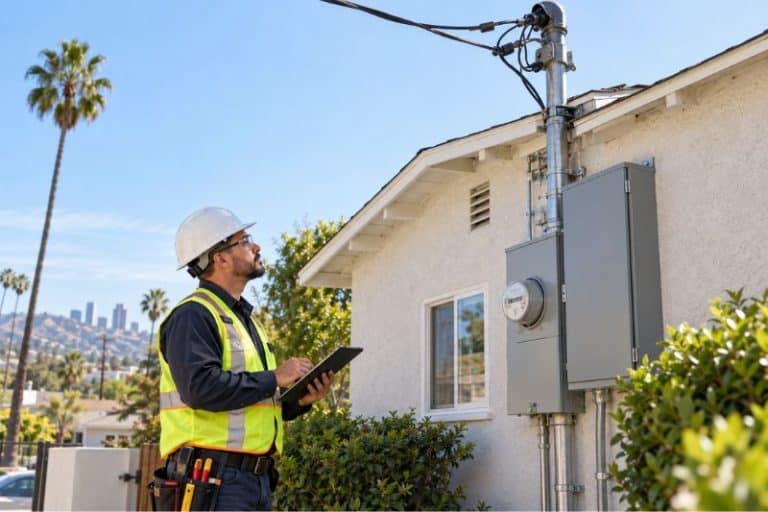
Subpanel installations in Los Angeles require a permit from LADBS. This is not discretionary — any work that involves adding a new panel, running a new feeder from the main service, or modifying the building’s electrical distribution system requires a permit. Work performed without a permit creates problems at the point of sale, during insurance underwriting, and when a future permitted project triggers an inspection that finds unpermitted work.
The permit application requires load calculations that justify the subpanel size and feeder capacity. These calculations are not complicated for an experienced electrical contractor, but they do take time to prepare correctly. An application submitted with incomplete or incorrect calculations is rejected and must be resubmitted, which restarts the review clock.
Standard permit review timelines
LADBS permit review for electrical work typically runs two to four weeks for straightforward projects under normal conditions. During periods when the department is handling high volume — after major weather events, during construction peaks, or when new code amendments create a surge of upgrade projects — that timeline can extend. Property managers who initiate a subpanel project expecting to start construction within a week of the first call are consistently surprised by this stage.
Over-the-counter permits for smaller scopes
Some subpanel projects qualify for over-the-counter permit issuance, which can reduce the front-end timeline significantly. Whether a project qualifies depends on its scope, the total load, and whether it triggers any additional code requirements — AFCI protection on new circuits, for instance, or grounding system upgrades that an older building’s existing system does not meet. We evaluate permit pathway options during the estimation stage so the timeline expectation is accurate before the project is approved.
Material Lead Times Have Become a Real Variable
Panel availability in Los Angeles has been inconsistent for the past several years. Specific panel models, particularly in larger ampacity ratings, are not always in stock at local electrical suppliers. For projects with unusual feeder sizes or specialty panel configurations, lead times can add one to three weeks to the project timeline between permit approval and the ability to start installation.
The practical implication is that material ordering should begin as early as the permit process allows, and the project schedule should not assume that materials will be available immediately after permit approval. We track material availability as part of project planning and flag lead time concerns to property managers during the estimation stage so the construction start date is based on actual availability rather than optimistic assumptions.
The Installation Itself Is Rarely the Longest Stage
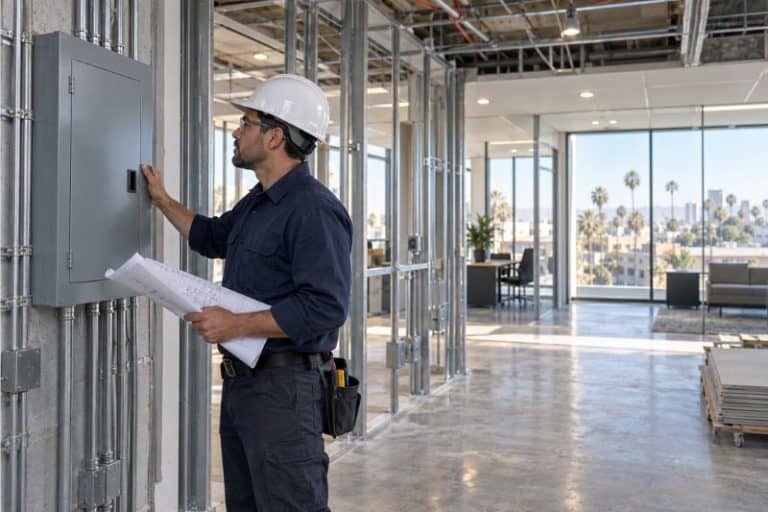
Once the permit is in hand and materials are on site, the installation phase of a subpanel project is typically the shortest part of the overall timeline. A single subpanel installation in a mid-size apartment building — feeder run from the main panel, panel mounted and wired, circuits distributed — generally takes one to three days depending on the feeder route, the building construction, and the number of circuits being served.
Feeder routing in occupied buildings
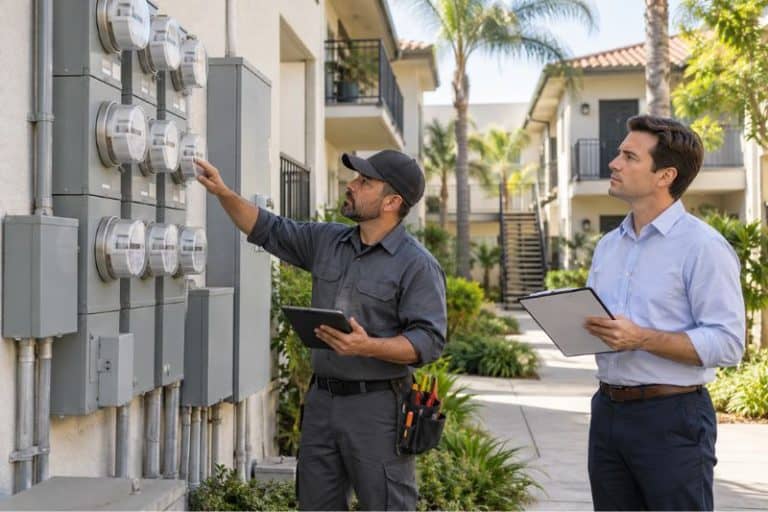
The most time-consuming part of most subpanel installations is running the feeder from the main service panel to the subpanel location. In occupied buildings, feeder routes often involve running conduit through walls, ceilings, or mechanical spaces that cannot be opened without planning and tenant notification. In buildings with concrete construction — common in mid-century apartment buildings throughout Koreatown, Sherman Oaks, and the Westside — feeder routing may require surface-mounted conduit where trenching through floors or casting into walls is not practical.
The feeder route also determines the wire size required, because conductor ampacity is affected by the length of the run and the conduit fill. A feeder route that is longer than the initial estimate anticipated may require a larger conductor than what was quoted, which affects both cost and material availability. Confirming the actual feeder route before the estimate is finalized prevents this from becoming a mid-project complication.
Power interruption planning
Connecting the subpanel feeder to the main service panel requires a brief interruption of power to the affected circuits. For a building where the main panel supplies all units, that means building-wide coordination with tenants. We provide advance notice templates and schedule power interruptions during low-impact windows — typically mid-morning on weekdays when most residents are away. For buildings with critical loads such as elevators, medical equipment, or refrigeration, we plan the interruption window to minimize exposure and verify that backup power is available where required.
The Inspection Stage Is Not Optional and Is Not Instant
After installation is complete, the work must be inspected by LADBS before the panel can be energized and circuits can be put into service. Inspection scheduling in Los Angeles typically runs three to seven business days from the request. The inspector reviews the feeder connections, the panel mounting and wiring, the circuit labeling, the grounding system, and compliance with any code requirements that apply to the project scope.
If the inspector identifies corrections, the work must be corrected and a reinspection requested. Reinspection scheduling adds additional days to the timeline. Installations that are done correctly the first time, with all required elements in place and properly documented, pass on the first inspection and avoid this compounding delay. Our pre-inspection checklist covers every element the inspector will review so that first-inspection approval is the expected outcome rather than the optimistic one.
The practical implication for property managers is that the subpanel should not be considered operational until the inspection sign-off is in hand. Energizing circuits before inspection approval is a code violation and creates documentation problems for the property record.
The Total Timeline and How to Work With It
Adding together the evaluation, permit application and review, material procurement, installation, and inspection stages, a subpanel project in Los Angeles realistically takes four to ten weeks from initial contact to final sign-off. Projects at the faster end of that range involve straightforward scopes, over-the-counter permit eligibility, available materials, and first-inspection approval. Projects at the longer end involve complex feeder routes, standard permit review queues, material lead times, or correction-and-reinspection cycles.
The consequence of not accounting for this timeline is predictable. A property manager who receives an insurance compliance notice with a 60-day deadline and initiates the subpanel project on day 30 is working against the process. A property manager who receives the same notice and initiates the project on day one has the timeline working for them rather than against them. The difference in outcome between those two scenarios is not the quality of the electrical work — it is the timing of the decision to begin.
What Property Managers Can Do to Compress the Timeline
The permit process and inspection scheduling are not compressible — those elements move at the pace they move. But several other variables that affect the total timeline are within the property manager’s control.
Have the load evaluation done before the pressure arrives
A building that is approaching its main panel capacity does not need to wait for an insurance notice or a tenant complaint to schedule an evaluation. Having a licensed electrician assess the current load and identify the available headroom gives the property manager accurate information about when a subpanel will be needed and what it will involve. That evaluation costs far less than the emergency timeline premium that comes with reactive scheduling.
Provide complete building information at the first call
The estimation process moves faster when the contractor has access to accurate information about the building’s existing electrical system — main panel ampacity and brand, existing subpanels and their locations, the intended location for the new subpanel, the loads it will serve, and any access constraints in the feeder route. Property managers who have this information ready at the first conversation can move from initial contact to a submitted permit application faster than those who require multiple site visits to gather it.
Approve the estimate promptly
The permit application cannot be submitted until the project scope is finalized and approved. Estimate approval is entirely within the property manager’s control, and each day between estimate delivery and approval is a day added to the front of the timeline before the permit clock even starts. For projects with compliance deadlines, prompt estimate approval is one of the most effective ways to protect the available schedule.
When the Subpanel Project Reveals a Larger Issue
The evaluation stage of a subpanel project sometimes reveals that the main panel cannot support the proposed subpanel without first being upgraded. This happens in older buildings where the main panel is at capacity, where the panel brand is on the recalled list, or where the service entrance conductors are undersized for the current load. When that is the case, the subpanel project cannot proceed as originally scoped — the main panel issue has to be resolved first.
Discovering this condition early is far better than discovering it mid-project, but it does change the scope and timeline. Our electrical panel services cover both main panel replacement and subpanel installation, so when a project requires both, we handle the full scope under a single coordinated project plan rather than treating them as sequential separate engagements. For multi-unit buildings where the scope spans multiple panels and subpanels, our commercial electrical services team manages the phasing and tenant coordination so the project proceeds without extended disruption.
The buildings that handle these situations best are the ones where the property manager had a current load evaluation on file and understood the electrical system’s condition before the pressure to act arrived. A surprise main panel replacement in response to an insurance deadline is a significantly more stressful project than one planned six months in advance with time to coordinate, permit, and execute properly.
For immediate assistance or to schedule a professional evaluation, call RG Electric directly at (323) 521-5131.
Electrical work is hazardous. Consult a licensed electrician like RG Electric before planning or performing any electrical distribution upgrades.