
 Call (323) 5215131
Sub-Panels for ADUs and Garage Conversions in Los Angeles
Why ADUs and Garage Conversions Need Dedicated Sub-Panels
Across Los Angeles, homeowners and property managers are transforming garages, basements, and backyard spaces into Accessory Dwelling Units (ADUs), small, fully equipped living spaces that increase property value and generate rental income. But while these projects can dramatically expand a property’s usability, many owners underestimate one critical aspect: the electrical system.
Every new living space, whether it’s a detached ADU, garage conversion, or guest suite, requires its own dedicated sub-panel. This secondary electrical panel safely distributes power to the new area while keeping the main service balanced and compliant with city codes. Without a properly sized and installed sub-panel, an ADU’s electrical system may become overloaded, unsafe, or fail inspection altogether.
The ADU Boom in Los Angeles
The City of Los Angeles has seen a major rise in ADU construction since California relaxed zoning restrictions in 2020. From Highland Park to Culver City, homeowners are converting existing structures to create rental units, home offices, and family suites. While these projects add living space and value, they also introduce entirely new electrical demands, HVAC systems, kitchens, lighting, and even EV chargers.
Most existing homes were never designed to handle these additional loads. Connecting new circuits directly to the main panel can easily exceed its rated capacity, leading to tripped breakers, voltage drops, or worse, fire hazards from overloaded wiring. Installing a properly configured sub-panel ensures that each area of the property has its own safe and manageable power distribution system.
How Sub-Panels Support Safe Power Distribution
A sub-panel functions as an extension of your main service panel. It receives power through feeder wires from the main panel, then distributes that power to individual circuits within the new structure. This allows each section of the property, main house, ADU, or converted garage, to operate independently, making future maintenance and load management much easier.
For instance, a detached ADU may include 8–12 dedicated circuits for outlets, lighting, appliances, and heating or cooling systems. Without a sub-panel, all of those circuits would have to be added to the main panel, which often lacks the capacity to accommodate them safely. By installing a sub-panel, the system remains organized, balanced, and ready for inspection.
Code Compliance and Permitting
The Los Angeles Department of Building and Safety (LADBS) requires a separate sub-panel for most ADU and garage conversion projects. This panel must be sized according to the total load demand, properly grounded, and connected through a protected conduit. Improper installations, such as running feeder wires without conduit, undersized breakers, or missing grounding electrodes, can result in failed inspections and costly rework.
RG Electric’s licensed electricians handle every step of the process, from load calculations and permit applications to panel installation and final LADBS approval. Their deep familiarity with Los Angeles electrical code ensures that every ADU project passes inspection the first time.
Power, Flexibility, and Safety for Your ADU
Beyond meeting code, a sub-panel adds long-term flexibility. It allows future upgrades like EV chargers, renewable energy inverters, or air conditioning units to be added without disturbing the main service. It also gives the new unit its own dedicated breaker set, so maintenance or repairs can be performed without affecting the rest of the property.
RG Electric specializes in designing and installing sub-panels that fit seamlessly into both new and converted structures, ensuring reliable power distribution that keeps your ADU safe and compliant for years to come.
Understanding the Role of a Sub-Panel
When you build or convert an additional living space such as an ADU or garage suite, the new structure needs its own electrical distribution point. This is where the sub-panel comes in. It acts as a secondary control center for the new area, ensuring balanced, reliable power without overloading your home’s main service panel.
What Is a Sub-Panel?
A sub-panel is an extension of your main electrical service panel. It receives power from the main panel through a feeder cable and redistributes it across multiple branch circuits, for outlets, lights, appliances, and heating or cooling equipment. Essentially, it gives your ADU or converted garage its own set of breakers that control power locally rather than depending entirely on the main panel.
For detached ADUs, sub-panels are typically installed within the new unit itself, giving tenants or occupants easy access to breakers. In garage conversions or attached suites, the sub-panel can be installed in a convenient location that keeps wiring runs efficient and code-compliant.
Why Sub-Panels Are Required
Most Los Angeles homes were originally designed to support 100–200 amps of total electrical capacity. Adding an ADU or garage conversion significantly increases demand, often enough to exceed the available circuit space or current rating of the main panel. Installing a sub-panel allows electricians to safely extend the electrical system while keeping overall load within safe limits.
The Los Angeles Department of Building and Safety (LADBS) requires that sub-panels be properly rated, grounded, and protected by conduit when fed from the main service. They must also include a clear labeling system and accessible disconnects for maintenance and safety.
Without a sub-panel, additional circuits may crowd or overload the main panel, creating unsafe conditions that can cause overheating or repeated breaker trips.
The Benefits of a Dedicated Sub-Panel
Sub-panels offer several advantages:
- Simplified circuit management: Each area of the property can be serviced independently.
- Improved safety: Overloads and faults in one structure do not affect the entire system.
- Easier maintenance: Localized breakers make troubleshooting and repairs faster.
- Expansion-ready: Allows new loads, like EV chargers or renewable energy systems, to be added later.
To learn more about proper panel design and installation, visit Electrical Panel Services in Los Angeles for expert information on sub-panel upgrades and main panel evaluations.
Electrical Load Planning for ADUs and Garage Conversions
Adding a new living space means adding new electrical loads, lighting, appliances, HVAC systems, and possibly EV chargers. Careful load calculation and distribution are essential to ensure your new sub-panel can handle these demands safely and efficiently.
What Electrical Load Means
Electrical load refers to the total power required to run all devices connected to the system. Every light, outlet, and appliance contributes to this total. Electricians use a load calculation, expressed in amperes, to determine how much power your ADU or conversion will require.
A properly sized sub-panel ensures enough capacity to meet both current and future needs. Installing one that’s undersized can result in breaker trips, dimming lights, or even damage to wiring and connected equipment.
Typical Loads in Los Angeles ADUs
Modern ADUs typically require:
- Dedicated circuits for major appliances such as refrigerators, microwaves, and washers.
- Separate breakers for HVAC systems like ductless mini-splits or heat pumps.
- Multiple lighting circuits for interior, exterior, and security lighting.
- GFCI-protected circuits for bathrooms, kitchens, and outdoor receptacles.
- Optional circuits for EV chargers or home office setups.
Depending on the design, most new ADUs require a sub-panel rated between 60 and 125 amps to provide stable, code-compliant service.
Avoiding Overload and Voltage Drop
Los Angeles homes often have main panels located far from detached ADUs. Long wire runs between the main panel and the sub-panel can lead to voltage drop, which reduces electrical efficiency and may affect appliance performance.
RG Electric’s electricians calculate the appropriate wire gauge and conduit type for every installation to prevent voltage loss and ensure efficient power delivery. They also verify that your main service panel has sufficient capacity to feed the new sub-panel safely, upgrading it if necessary to handle the additional load.
Load Planning for the Future
It’s wise to plan ahead. Many homeowners later add air conditioning units, electric cooktops, or EV chargers to their ADUs. RG Electric recommends building extra capacity into your sub-panel during installation. A slightly larger panel today saves the cost and disruption of another upgrade later.
To learn how to properly wire and distribute power for your new unit, visit Wiring Services in Los Angeles for professional guidance on safe circuit design and load management.
Permits and Code Requirements for Sub-Panel Installation in Los Angeles
Sub-panel installation for an ADU or garage conversion is not a simple add-on, it is a regulated process governed by the Los Angeles Department of Building and Safety (LADBS). To ensure electrical safety, code compliance, and insurance coverage, every installation must follow specific guidelines for wiring, conduit, grounding, and inspection.
LADBS Permitting Process
Before work begins, a licensed electrician must obtain an LADBS electrical permit for the sub-panel installation. This permit verifies that the planned work meets the California Electrical Code (CEC) and Los Angeles amendments, which regulate load capacity, conductor size, and grounding methods.
RG Electric handles the permitting process from start to finish, submitting load calculations, panel specifications, and site layouts directly to LADBS. This approach eliminates paperwork stress for homeowners and ensures that every detail aligns with inspection requirements.
Key Code Requirements
Several specific codes govern sub-panel installations in Los Angeles:
- Conduit and Feeder Wiring: Feeder cables connecting the main panel to the sub-panel must run through properly sized conduit, typically rigid metal or PVC, depending on the environment.
- Grounding and Bonding: Detached ADUs require a grounding electrode system (ground rods) and proper bonding of all metallic components to prevent shock hazards.
- Panel Accessibility: Panels must be installed in accessible locations, mounted securely, and labeled clearly with circuit identifications.
- Overcurrent Protection: The main panel breaker feeding the sub-panel must be correctly rated to prevent overloads and maintain coordination between circuits.
- Separation of Neutrals and Grounds: In sub-panels, neutral and ground conductors must remain isolated — a common inspection point that can lead to rejection if overlooked.
Each of these requirements exists to protect residents and property from electrical hazards such as arcing, shorts, or shock.
Common Issues Caught During Inspections
During final inspection, LADBS officials look for common mistakes such as missing ground rods, undersized conduit, unprotected feeder cables, or mislabeled breakers. Even minor errors can delay final approval or occupancy certification.
RG Electric’s electricians know exactly what inspectors expect. Their installations pass inspection the first time because every connection, label, and grounding system is completed to exact code standards.
Permits Protect Property Value and Safety
Beyond legal compliance, proper permits and documentation also protect property value. Unpermitted electrical work can create insurance complications and complicate future sales. With a permitted, inspected installation, homeowners gain peace of mind knowing their ADU or conversion is safe, insurable, and fully legal.
To learn more about professional, code-approved electrical services, visit Commercial Electrical Services in Los Angeles for information on inspections and permit coordination.
The Installation Process, Step by Step
Installing a sub-panel is a detailed process that requires precision, experience, and strict adherence to code. RG Electric follows a structured, step-by-step workflow that ensures every project is completed safely and efficiently.
Step One: Site Evaluation and Panel Sizing
The process begins with an on-site inspection. Electricians assess the main service panel’s capacity, measure distances to the new ADU or garage, and determine the appropriate sub-panel size. Load calculations are performed to confirm that both panels can safely handle the combined electrical demand.
If the main panel lacks capacity, RG Electric may recommend an electrical panel upgrade to support the additional load, ensuring long-term stability and compliance.
Step Two: Running Feeder Wires and Installing Conduit
Once sizing and layout are approved, electricians install the feeder conduit between the main panel and sub-panel. This conduit protects heavy-gauge feeder wires that carry power to the new structure. Underground conduit runs are common for detached ADUs, while overhead options may be used in limited cases.
Proper conduit selection and installation prevent physical damage, moisture intrusion, and voltage drop. RG Electric uses only UL-listed materials rated for Los Angeles’s outdoor conditions.
Step Three: Grounding, Bonding, and Panel Mounting
After conduit installation, electricians mount the sub-panel securely to a wall or framing structure. For detached ADUs, a separate grounding electrode system is installed, typically using two copper ground rods driven into the earth. Neutral and ground conductors are kept isolated within the sub-panel, ensuring compliance with CEC Section 250 grounding requirements.
All metallic raceways, boxes, and panel enclosures are bonded together to maintain a continuous grounding path throughout the system.
Step Four: Circuit Installation and Labeling
Once the sub-panel is energized, new branch circuits are run for lighting, outlets, and appliances. Each breaker is clearly labeled according to its location or load type, simplifying future maintenance and inspection.
For detached structures, weatherproof outlet boxes and GFCI protection are added where required. This labeling and protection work ensures both safety and accessibility for occupants or maintenance teams.
Step Five: Testing and Final Inspection
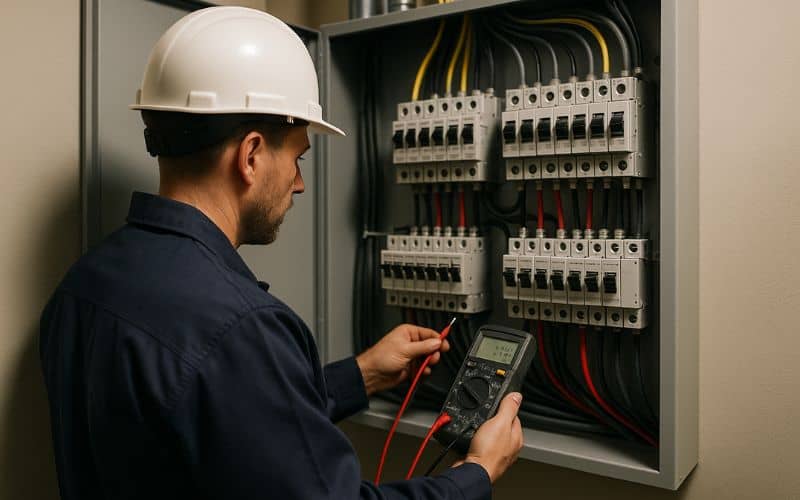
Finally, RG Electric performs comprehensive system testing. Electricians verify voltage, check breaker performance, and confirm proper grounding and polarity. Once testing is complete, an LADBS inspector reviews the installation to ensure compliance.
Because RG Electric follows city standards closely, most inspections are approved on the first visit, allowing homeowners to move forward with final occupancy permits and utility activation.
For expert installation of sub-panels and electrical distribution systems, visit Circuit Breakers Services in Los Angeles to explore safe, code-compliant solutions for new ADUs and conversions.
Future-Proofing Your Property With Smart Panels and Expansion Capacity
Installing a sub-panel for your ADU or garage conversion is the perfect opportunity to prepare for future energy needs. Los Angeles homeowners are increasingly adding EV chargers, renewable energy panels, and smart home systems, all of which require reliable power capacity and monitoring capabilities. A well-designed sub-panel ensures your property can adapt without costly retrofits later.
Building for Future Load Growth
When designing a sub-panel, it is wise to include additional breaker spaces beyond immediate needs. Even if your ADU currently uses only 60 amps of power, installing a 100- or 125-amp sub-panel provides room for future circuits such as a water heater, mini-split HVAC system, or EV charger.
RG Electric’s electricians calculate both current and anticipated loads, helping homeowners select the right sub-panel size to accommodate future growth while staying within the main panel’s safe limits. This proactive approach avoids the frustration of outgrowing your electrical system after only a few years.
Smart Sub-Panels for Modern Properties
Smart electrical panels are quickly becoming the new standard for energy-conscious Los Angeles properties. These panels feature built-in monitoring systems that track power consumption, detect faults, and allow remote control of circuits via smartphone or computer.
For ADUs and garage conversions, smart panels offer clear advantages:
- Real-time monitoring of tenant energy usage
- Alerts for breaker trips or power loss
- Integration with renewable energy inverters and battery systems
- Compatibility with EV chargers and energy storage systems
By installing a smart sub-panel, property owners gain greater visibility into power use while improving energy efficiency and tenant satisfaction.
Title 24 Compliance and Energy Efficiency
The California Title 24 Energy Code promotes efficient power distribution and control. Smart panels and energy monitoring systems can help meet these requirements by optimizing usage and reducing waste. Properties that follow Title 24 standards not only comply with local regulations but also benefit from lower electricity costs and improved sustainability scores.
EV-Ready Design and Expansion
With electric vehicles becoming more common, planning an EV-ready ADU is a valuable investment. RG Electric designs sub-panels with dedicated capacity for future EV chargers, ensuring easy integration when tenants or owners decide to add charging stations.
To learn about compatible installation options, visit EV Charger Installation Services in Los Angeles for details on load management and code-compliant configurations.
Long-Term ROI for Property Owners
Upgrading to a well-planned, expandable sub-panel adds long-term value. It reduces maintenance costs, enhances safety, and makes properties more appealing to buyers and tenants who value reliable, future-ready electrical systems. With Los Angeles continuing to expand its clean energy infrastructure, an upgraded sub-panel ensures your property is ready for whatever comes next.
Power Your ADU the Right Way, Partner With RG Electric
Whether you are building a backyard ADU, converting a detached garage, or modernizing a guest suite, powering it correctly is one of the most important steps. A dedicated sub-panel provides the foundation for safe, efficient, and future-proof electrical service.
RG Electric is Los Angeles’s trusted partner for sub-panel installations, ADU wiring, and electrical upgrades that pass inspection and perform reliably for years.
Why Los Angeles Homeowners Choose RG Electric
- Licensed and insured electricians with deep LADBS code expertise
- Complete service from load calculation to permit approval and inspection
- Specialized experience with ADUs, garage conversions, and multi-unit wiring
- Transparent pricing and clear project documentation
- Future-ready designs with expansion and smart system compatibility
Electrical Safety, Code Compliance, and Peace of Mind
Every RG Electric installation is completed with safety, compliance, and performance in mind. From conduit layout to grounding and labeling, each step meets or exceeds California Electrical Code standards. Property owners can trust that their new living spaces will operate safely, efficiently, and without costly rework or inspection delays.
Schedule Your Sub-Panel Consultation Today
A properly designed sub-panel ensures that your ADU or garage conversion is safe, efficient, and inspection-ready from day one. Don’t risk failed inspections or overloaded circuits, let the experts handle it.
Call RG Electric at (323) 521-5131 or request a free estimate at https://www.rgelectric.net/contact-us/ to schedule a sub-panel assessment and consultation with a licensed Los Angeles electrician.
Safety Disclaimer
Electrical work is hazardous. Consult a licensed electrician like RG Electric for inspections, permits, and code-compliant installations. Do not attempt electrical modifications without proper licensing and approval from the Los Angeles Department of Building and Safety.