
 Call (323) 5215131


Emergency Electrical Response Plans for Los Angeles Multi-Unit Buildings
Updated October 2026
The lights go out at 6 p.m. on the hottest day of the month. The elevator stops between floors, the stairwells go dark, the gate stays shut, and your phone starts lighting up with calls from tenants who want to know when the power is coming back. RG Electric is a licensed C10 #910807 electrical contractor serving apartment buildings and multi-unit properties throughout Los Angeles, and we see the same pattern every time. The managers who handle it well are not luckier. They wrote the plan down before it happened. This guide covers what an outage disables, what belongs in a written response plan, how generators and backup power fit in, and who to call first.
What an Outage Actually Disables in a Multi-Unit Building
An electrical failure in an apartment complex rarely stops at the lights. It can take out elevators, emergency and egress lighting, gate and access control, and fire alarm panels all at once, in a building where many households are affected at the same moment instead of one unit. Residents who rely on electrical medical equipment, or on air conditioning during a heat wave, can face a real health risk even from a short outage.
For the property manager, the exposure goes beyond annoyance. There are code questions, liability if a tenant is harmed, and insurance conversations if an adjuster later asks what reasonable steps were in place. A documented response plan is evidence of due diligence. It does not prevent the outage, but it strengthens your position afterward.
The conclusion
An outage is a building-wide event that touches safety systems, tenants, and your records. Planning for it is part of managing the property, not an extra.
Two Kinds of Emergencies, Two Different Calls
Not every electrical emergency starts inside the building, and the first call depends on where the problem is.
An internal failure is a tripped main breaker that will not hold a reset, a panel that is sparking or buzzing, or a burned outlet. These point to a problem in your own electrical system, and the right call is a licensed electrician. A utility-level outage, caused by grid demand during a heat wave, equipment failure, or a wildfire-related public safety power shutoff, can leave your wiring perfectly healthy while the whole block is dark. There, the job is backup lighting, tenant communication, and safe operation until power returns.
How to tell the difference quickly
Look outside. If neighboring buildings are dark too, the cause is probably the utility, and the utility is the first call. If only your building is affected, or only part of it, the problem is likely inside. When you cannot tell, call both. We would rather answer a call that turns out to be a utility problem than have you wait on a failing panel.
The conclusion
Knowing which type of emergency you have decides who you call first. A plan that answers that question in advance saves the most valuable minutes.
The First Hour of an Electrical Emergency
The first hour sets the course for everything after it.
Confirm safety first. If there is visible sparking, a burning smell, or smoke, evacuate the affected area and call the fire department before anything else. Electrical fires can move faster than they appear to. Once people are safe, work out whether the problem is internal or at the utility, and make the right call.
Then communicate. A realistic estimate, even an approximate one, cuts the number of individual complaint calls you have to field. Tenants who receive a prompt, clear notice file far fewer complaints than tenants left to guess. And write things down as you go. Note what you saw, when you called the electrician, and what was found. That timeline is the record that protects the building if an insurer or inspector ever reviews the incident.
The conclusion
Safety first, the right call second, communication third, and a written timeline throughout. Each step makes the next one easier.
What Belongs in the Written Plan
A plan that exists as a conversation someone remembers is not a plan. It should be a short written document, stored where whoever is on duty can find it, not in a filing cabinet or one manager’s inbox.
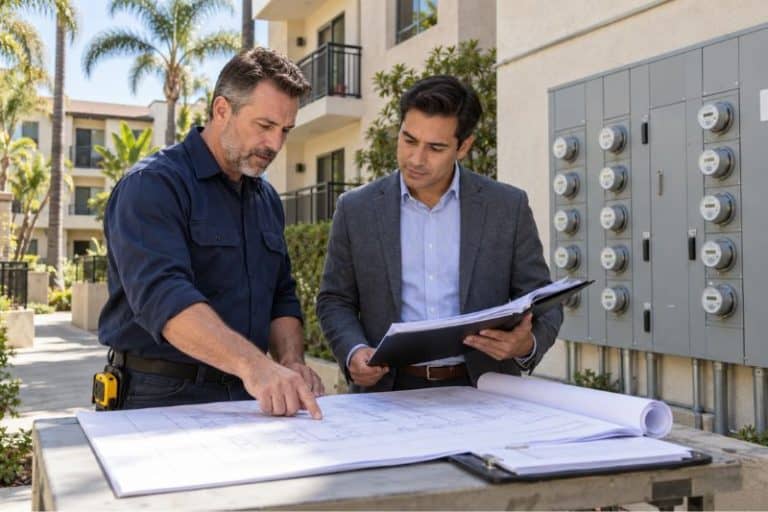
At minimum, include the following. The emergency contact for your licensed electrician, the location and labeling of the main panel and every subpanel, and an up-to-date circuit directory so a responding technician is not diagnosing blind. A list of which common area systems depend on electricity, including elevators, gates, lighting, and fire alarm panels. A named decision-maker for each type of incident, so nobody has to figure out who can approve emergency repair costs while the event is happening. And a simple tenant notice template that can go out in minutes.
Keep an incident log
Record every electrical incident, large or small, with the date, the location, what happened, and what was done. Patterns show up quickly in a log. Three tripped breakers in the same stairwell over a year is a finding, not a coincidence. The log also gives you the paper trail that makes a habitability dispute or an insurance review far easier to handle.
The conclusion
A good plan is short, current, and findable. If it cannot be used by someone who has never read it, it needs another pass.
What Causes Emergencies in Los Angeles Buildings
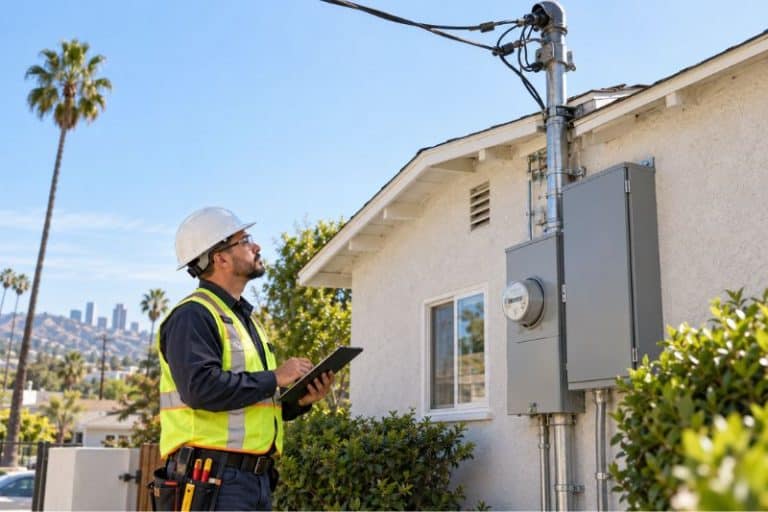
Most of the emergency calls we get trace back to a short list of causes. Aging panels and wiring top it, especially in older buildings in Koreatown, Echo Park, and Inglewood where original equipment is still in service. Water intrusion comes next, particularly after a rain event or a roof leak that reaches a junction box or a panel. Tenant modifications, such as added circuits or overloaded power strips, can strain wiring that was never meant to carry the load. And neglected maintenance lets small problems such as loose connections and failing breakers grow into larger ones.
Why prevention is cheaper
Regular inspection of panels, breakers, and common area systems catches deteriorating conditions before they fail. Surge protection reduces damage to equipment when power returns after an outage, and a panel that is overloaded or obsolete is far better replaced on your schedule than during an emergency. None of this is glamorous. All of it is cheaper than an emergency call at night.
The conclusion
Emergencies have causes, and the causes are mostly visible in advance. An inspection turns surprises into scheduled work.
Generators, Backup Power, and Emergency Lighting
Buildings with elevators, fire alarm systems, or emergency egress lighting depend on battery backup and sometimes on generators. In many configurations those systems are required, and they are exactly the ones tested by a real utility-level outage. A battery that has quietly degraded gives no warning until the day it is needed.
Put the testing schedule in the plan. Emergency lighting and exit signs should be checked on a regular schedule, and batteries replaced before they fail, not after.
Generators need planning, not improvisation
For longer outages, some property managers consider portable or permanent generator capacity for critical common area systems. That is a larger conversation involving load calculations and, in many cases, permits. It deserves attention in the same planning discussion instead of being treated as a separate project for later.
Unsafe generator use is the part that worries us most. A portable generator must never be plugged into a building outlet to feed the wiring, because that sends power back out through the service and can injure utility workers. Generators also produce carbon monoxide and must run outdoors and well away from windows, doors, and air intakes. A properly installed transfer switch or interlock is what lets a generator feed a building’s circuits safely. If a generator is part of your plan, a licensed electrician should design the connection.
The conclusion
Backup power only helps if it has been tested and installed correctly. A generator wired the wrong way is a hazard, not a safeguard.
After the Power Comes Back
Restoration brings its own risks. Voltage can fluctuate as service returns, and a surge can damage elevators, pumps, and tenant equipment. Partial restoration can overload circuits that are suddenly asked to start every motor at once. Before full power is restored, someone should confirm the system is safe, and that is a job for a licensed electrician when the cause was an internal failure.
Document the event too. Record what happened, what was done, and when. A dated record is valuable to your insurer, your owner, and any later review. Our emergency electrical repair services cover diagnosis and repair when a failure is active, including coordinated temporary power while the permanent fix is made.
The conclusion
The event is not over when the lights come on. Verification and records are the last two steps of the response.
Talking to Tenants During an Outage
Communication is the part of an emergency most managers underestimate. The electrical repair may be out of your hands, but the tenant experience is not. A short notice that says what is known, what is being done, and when the next update will arrive does more to lower the temperature than any technical fix.
Send the first message early, even if the only news is that you are aware of the problem and have called for help. Then keep to the schedule you promised. If you said an update would come at 8 p.m., send one at 8 p.m., even when nothing has changed. Silence is what produces the flood of individual calls.
Residents who need extra attention
Some residents depend on electrical medical equipment, and heat waves raise the stakes for older tenants and young children. Keep a way to identify who might need help, in line with your own policies and privacy obligations, and decide in advance who will check in on them. Building that list before an outage is far easier than assembling it in the dark.
The conclusion
Tenants forgive an outage faster than they forgive being ignored. Clear, scheduled updates are the cheapest tool you have.
Insurance and Documentation for Los Angeles Properties
Insurers care about documented maintenance and preparedness. We cannot tell you how a particular carrier will evaluate a claim, and we are electricians, not attorneys. What we can say is that a dated inspection record and a written response plan put you in a different position than a verbal account of what usually happens.
The same records help beyond insurance. A building facing repeated tenant complaints about slow response is more exposed in a habitability dispute when there is no record of what was done each time. A paper trail built before an emergency is better than a reconstruction from memory afterward.
The conclusion
Documentation is protection. It costs little to keep and is very expensive to lack.
Testing the Plan Once a Year
A plan that has never been tested tends to fall apart the first time it is needed. A phone number is out of date, a designated decision-maker has moved on, or nobody remembers where the plan is stored. A short annual review catches those gaps while nothing is at stake.
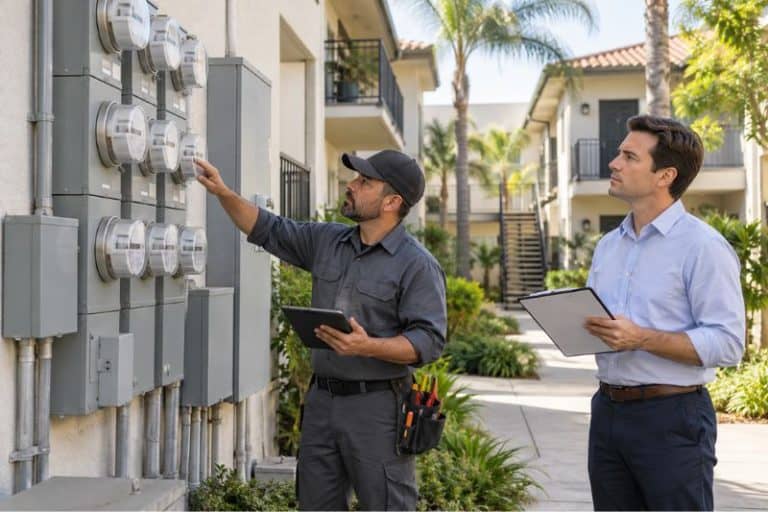
Walk through the contact list, confirm who holds each role, and verify that emergency lighting and backup systems still work. For a single building, it typically takes under an hour. For a portfolio, stagger the reviews across the year so no building goes more than twelve months without confirmation. Pairing the review with a scheduled maintenance visit is the simplest way to make sure it happens.
The conclusion
Testing is what turns a document into a plan. An hour a year is a small price for finding the gaps early.
What to Expect From RG Electric
When you call, you speak with someone on our team. An active electrical failure in a multi-unit building starts as a service call, because a technician has to find the cause before there is anything to price, and that visit carries a fee up front. The technician reports what was found to our supervising electrician, who writes the estimate, and someone on our team then calls to walk through each line and why it is there. We treat an active failure at a multi-unit property as a priority and aim to diagnose the same day.
Building a response plan is new work, and new work gets a free estimate. We do not bill by the hour. We inspect the panels and common area systems, document what we find, and give you a written scope with everything necessary in it. For planning work and larger upgrades, our commercial electrical services coordinate the inspection, the documentation, and any upgrades under one scope. We also stand behind our work for 12 months. If something we installed misbehaves in that window, you are already our customer, and we come back without charging another service call.
Questions Property Managers Ask About Emergency Electrical Planning
What qualifies as an electrical emergency?
Anything that threatens safety or takes out a building-wide system. Sparking, burning smells, smoke, a main breaker that will not reset, and the loss of elevators or egress lighting all qualify.
Who should I call first when the power goes out?
Look outside first. If the whole block is dark, call the utility. If only your building is affected, call a licensed electrician. If you cannot tell, call both.
Can I use a portable generator during an outage?
Only with a safe connection. Never plug a generator into a building outlet, run it indoors, or place it near windows. A transfer switch or interlock installed by a licensed electrician is the safe way to feed building circuits.
How often should the plan be reviewed?
At least once a year, and again after any real incident. A short review is enough if the plan is kept current.
What should I tell tenants first?
What you know, what you are doing about it, and when the next update will come. A short honest message early beats a polished one that arrives late.
Can preventive maintenance reduce emergencies?
Yes. Inspections catch deteriorating panels, loose connections, and overloaded circuits before they fail.
For immediate assistance or to schedule a professional evaluation, call RG Electric directly at (323) 521-5131.
Electrical work is hazardous. Always consult a licensed electrician like RG Electric before working on electrical systems.