
 Call (323) 5215131
Seasonal Electrical Maintenance for Los Angeles Property Managers
Updated May 2026
Los Angeles has a reputation for mild, forgiving weather, and that reputation leads a lot of property managers to treat electrical maintenance as something that can wait. The logic is understandable — if the system worked through last summer, it will probably work through this one. But electrical systems do not degrade on a visible schedule. They degrade quietly, under load, in ways that do not announce themselves until a breaker fails, a panel overheats, or a circuit goes down in the middle of a heat wave with tenants depending on air conditioning. RG Electric, licensed C-10 #910807, works with property managers throughout Los Angeles to build maintenance habits that catch those problems before they become emergencies. This guide covers what to address each season, why the timing matters, and what the consequences of deferral typically look like.
Why Seasonal Timing Matters for Electrical Maintenance
The case for seasonal electrical maintenance is not about the weather itself — it is about load patterns. Los Angeles electrical systems experience genuinely different demands in summer versus winter, and those shifts expose different vulnerabilities. A panel that holds steady under winter lighting loads may develop heat stress when summer air conditioning pushes every circuit to capacity. A GFCI device that passed a fall test may have degraded enough by spring that it no longer trips correctly. Maintenance timed to the season means evaluating the system when the relevant stresses are either at their peak or about to begin, which is when the findings are most actionable.
For multi-unit buildings, the stakes are higher than for single-family properties. A single failed circuit in a home is an inconvenience. In a twelve-unit building, a panel problem can affect every tenant simultaneously, generate liability exposure, and trigger a habitability complaint if the outage extends. Property managers who treat electrical maintenance as a recurring line item rather than a reactive expense are consistently in a better position when those situations arise.
Spring: Assessment Before the Load Increases
Spring is the best window for comprehensive electrical evaluation because the system has just come through winter holiday loads and space heater demand, and summer air conditioning has not yet begun. Whatever stress the system accumulated over the previous year is visible in spring — loose connections that developed under winter load, breakers that began to trip sluggishly, wiring that shows heat discoloration around termination points.
Panel and breaker inspection
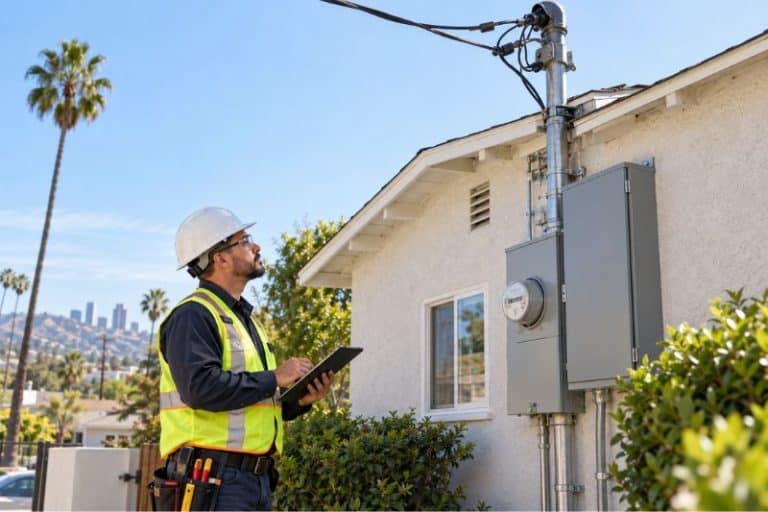
A spring panel inspection should look for heat discoloration inside the enclosure, breakers that feel loose in the bus or show signs of heat damage at the connection point, and any signs of moisture intrusion if the panel is in an exterior or semi-exposed location. Panels from recalled brands — Zinsco, Federal Pacific, Challenger, and Pushmatic — that are still in service on older properties are a priority finding. These panels have documented failure modes that make them unreliable regardless of apparent condition, and insurance carriers are increasingly flagging them as conditions of renewal. If a recalled panel is still in service on a property you manage, the spring inspection is the time to initiate the replacement conversation before a summer deadline creates a compressed timeline. Our electrical panel services cover the full replacement process, including permits and LADBS inspection coordination.
Wiring assessment in attics, crawlspaces, and junction boxes
Winter moisture, temperature cycling, and in some cases rodent activity can damage wiring in spaces that are not regularly accessed. Attics in older LA properties are particularly worth checking — knob-and-tube wiring that has been buried under added insulation, aluminum branch circuit wiring with deteriorating connections at outlets, and cloth-insulated wiring that has become brittle are all conditions that create fire risk before they create a visible symptom. A licensed electrician checking these spaces in spring can identify hazards that no surface inspection would catch.
Load evaluation before summer demand
Spring is the right time to add EV charging stations, upgrade subpanels, or add dedicated circuits for new equipment — not because those projects need to happen before summer, but because the permit and inspection timeline for significant electrical work in Los Angeles often runs four to eight weeks. A project initiated in March is likely to be complete before the first major heat event. A project initiated in July is likely to still be in permitting when the problem it was meant to solve is already creating disruptions.
Summer: Managing Heat and High Loads
Summer is when electrical systems in Los Angeles multi-unit buildings are under the most consistent stress. Air conditioning runs for extended periods, often on circuits that were never designed for that continuous load. The combination of high ambient temperature, high equipment operating temperature, and sustained current draw accelerates every wear mechanism in the system — insulation degradation, connection loosening, and breaker contact wear all happen faster under summer conditions than at any other time of year.
Air conditioning circuit capacity
Each air conditioning unit — whether window-mounted or central — should be on a dedicated circuit rated for its starting and running current. Window units shared with outlet circuits are a common source of summer breaker trips in older apartment buildings throughout the San Fernando Valley, Koreatown, and the Eastside. The trip is the system working as designed, but repeated trips under heat conditions accelerate breaker wear, and a breaker that trips frequently will eventually fail to trip when it should. If your building’s tenant complaints about tripping breakers spike every July, the cause is circuit capacity, and the solution is a dedicated circuit, not a larger breaker on the existing shared circuit.
Subpanel evaluation for high-load buildings
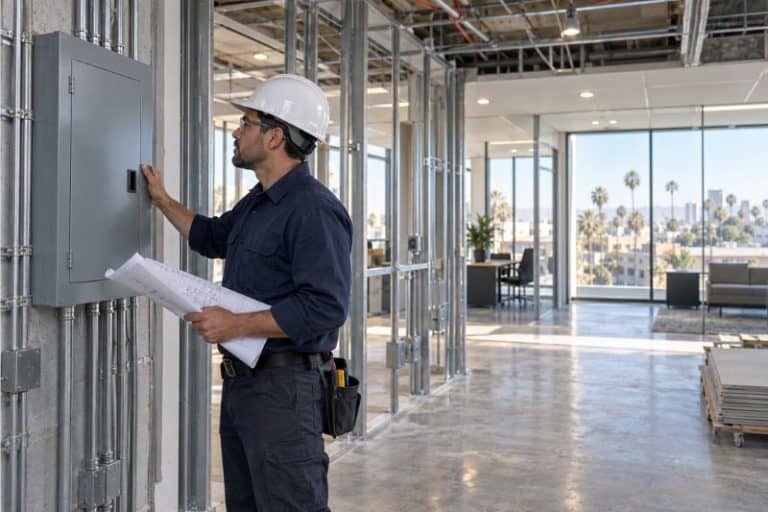
Buildings where the main panel is at or near capacity under summer air conditioning load should have a subpanel evaluation before the situation produces an outage. A subpanel adds distribution capacity without requiring a main service upgrade, and it allows load to be isolated by zone — so an HVAC circuit issue does not affect tenant unit power, and a unit-level problem does not cascade to building common areas. The evaluation involves a licensed electrician reviewing the current panel load, the available breaker capacity, and the feasibility of adding a subpanel in a location that supports the building’s distribution needs.
Emergency preparedness documentation
Summer is also the season when emergency electrical calls are most common, and the properties that handle those situations best are the ones that have current documentation in place before the emergency occurs. That means a labeled panel directory that correctly identifies every circuit, a clear record of which subpanels serve which areas of the building, and a contact protocol for reaching a licensed electrician quickly. Properties that call us during a summer emergency with accurate panel documentation get faster diagnosis and faster resolution than properties where the technician has to map the system from scratch while tenants are waiting for power.
Fall: Reset and Prepare Before Winter Load Shifts
Fall in Los Angeles is operationally significant for property managers even though the weather shift is modest. As air conditioning demand drops, other loads increase — heating systems cycle on, lighting runs longer as sunset arrives earlier, and tenant use of portable space heaters begins. The electrical consequences of summer’s sustained high-load operation also become visible in fall: breakers that weakened under heat stress, connections that loosened under thermal cycling, and wiring that shows heat damage at terminations that were marginal going into summer.
GFCI and AFCI device testing
GFCI and AFCI protective devices degrade over time and should be tested annually. A GFCI that does not trip within the specified response time when its test button is pressed is not providing the protection it appears to provide. For multi-unit buildings with GFCI devices in kitchens, bathrooms, laundry rooms, and outdoor areas, fall testing confirms that the protection is functional going into the wetter months when moisture exposure increases. Devices that fail the test should be replaced before they are needed — a GFCI that is not working when it matters is worse than no GFCI at all, because it creates a false sense of protection.
Exterior electrical inspection before rainy season
Los Angeles does not have a severe winter, but the rainy season — typically November through March — introduces moisture exposure to exterior electrical systems that spent the summer in dry conditions. Outdoor panel enclosures, conduit seals, junction boxes, and exterior outlet covers that have deteriorated or been damaged should be identified and corrected in fall before moisture gets in. A conduit seal that held all summer may not hold through a series of winter rain events if it has been degrading for months.
Smoke detector and emergency lighting verification
Fall is a reasonable time to test smoke detectors and verify that emergency lighting and exit signs are functional, because the increased lighting demand of shorter days reveals failures that may not be apparent during summer. Backup battery systems in emergency lighting should hold their charge for the required duration — devices that fail the backup test should be replaced, not noted for future action. A failed emergency light that is not replaced before winter is a code violation and a safety hazard that the next inspection will find.
Surge protection installation
Fall is the practical window for installing whole-building surge protection if the property does not already have it. Los Angeles’s grid is not immune to voltage fluctuations, and the events that produce surges — utility switching events, nearby faults, and power restoration after outages — happen year-round. A panel-mounted surge protector absorbs those spikes before they reach building circuits and tenant equipment. Plug-in surge strips at individual outlets provide no protection to the building’s wiring or HVAC systems, only to devices connected to that specific strip. For properties with aging equipment or significant electronics in common areas, whole-building surge protection is a reasonable protective investment.
Winter: Space Heaters, Holiday Loads, and Circuit Monitoring
Winter electrical management in Los Angeles apartment buildings is primarily a space heater problem. Portable space heaters are the single most common cause of winter circuit overloads in multi-unit residential buildings, and the pattern is consistent: a tenant adds a heater to a circuit that is already running a refrigerator, a television, and a phone charger, the circuit breaker trips, and if the breaker is old enough, it either fails to reset cleanly or begins to trip under progressively lower loads. Across a building with twenty or thirty units, that dynamic can produce a significant number of service calls between November and February.
Heater circuit adequacy
The solution to the space heater overload problem is circuit adequacy, not tenant policy. Telling tenants not to use space heaters is not enforceable and creates a different kind of liability if a tenant without heat makes a habitability complaint. The right approach is confirming that each unit has at least one circuit capable of supporting a space heater without tripping, which typically means a 20-amp circuit dedicated to that use or shared only with low-draw devices. For buildings where every unit circuit is shared and near capacity, that is a conversation worth having with a licensed electrician about what a targeted upgrade would involve.
Holiday and decorative lighting in common areas
Common area holiday lighting in lobbies, courtyards, and building exteriors adds load to circuits that may already be carrying signage, security cameras, and exterior lighting. Before installing seasonal decorative lighting, confirm which circuit the installation will connect to and what that circuit is already carrying. A timer or smart plug controlling the decorative load allows the additional draw to be managed during off-peak hours rather than running continuously on a circuit that is already stressed during evening hours when tenant demand is also at its peak.
Panel directory accuracy
Winter is a good reminder to verify that the panel directory is current and accurate. A panel directory that was labeled ten years ago may not correctly reflect circuits that have been modified, circuits that were mislabeled originally, or subpanels that were added. When a winter emergency occurs — a tenant reports no power in part of their unit, or a common area circuit trips — accurate panel documentation is the difference between a five-minute diagnostic and a thirty-minute process of elimination while tenants wait. If your building’s panel directory has not been verified by a licensed electrician in the last several years, that is a reasonable item to add to the winter maintenance list.
The Cost of Deferred Maintenance Versus Planned Maintenance
The financial argument for seasonal electrical maintenance is straightforward, even if the dollar figures vary by property. Planned maintenance involves scheduled visits, targeted inspections, and incremental corrections — each of which is performed under controlled conditions at a time that is convenient for the property and minimally disruptive to tenants. Emergency repairs involve diagnostic work under pressure, after-hours or weekend labor rates, disruption to tenants who are already unhappy, and sometimes secondary damage from a failure that went undetected until it became an outage or a fire.
Beyond direct repair costs, deferred maintenance creates secondary exposure. Insurance carriers that are already increasing scrutiny of older electrical systems in Los Angeles properties — particularly following the insurance market pressure that accelerated after the 2025 fire season — are less likely to renew coverage on properties that cannot demonstrate a maintenance history. A property with documented annual electrical inspections and a record of incremental upgrades is a better insurance risk than an identical property with no documentation. That distinction increasingly matters at renewal time.
For property managers with a portfolio of buildings, the practical approach is a rolling maintenance schedule that distributes inspections across the year rather than attempting to address every building in a single month. RG Electric works with multi-property managers to develop schedules that fit operational and budget constraints while ensuring that no building goes more than twelve months without a licensed electrician reviewing its panel, protective devices, and wiring condition.
What a Professional Seasonal Inspection Covers
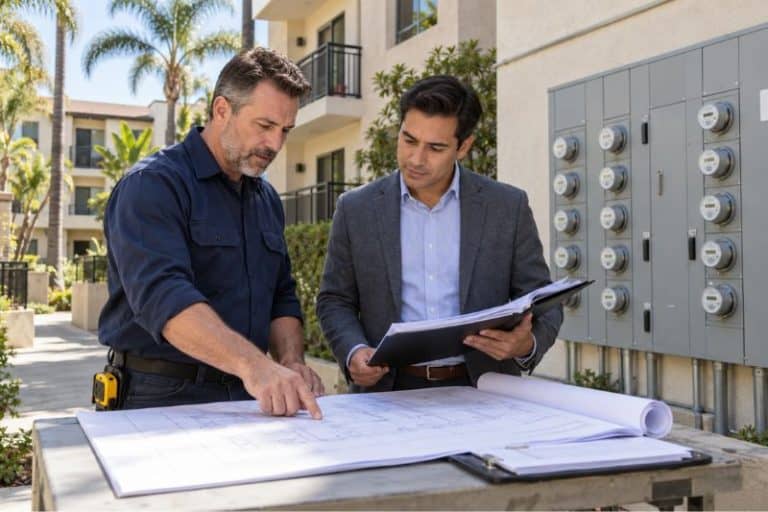
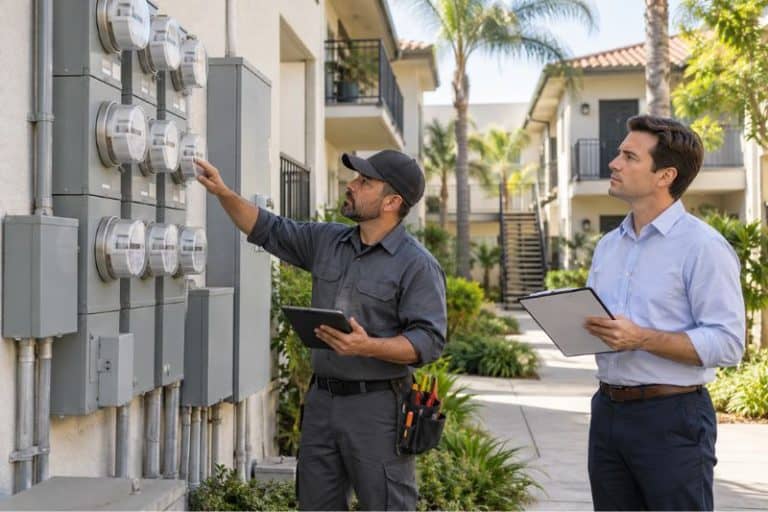
A seasonal electrical inspection performed by a licensed electrician is not the same as a walk-through. It includes a review of the main service panel and any subpanels, including breaker condition, bus bar connections, and enclosure integrity. It includes load testing to confirm that circuits are operating within their rated capacity and that load distribution is balanced across phases for three-phase services. It includes testing of GFCI and AFCI devices, verification of emergency lighting and exit sign battery backup, and inspection of accessible wiring in mechanical spaces, attics, and junction boxes.
The output of that inspection is a written report identifying what was found, what was corrected during the visit, and what is recommended for follow-up. That report is the documentation that matters for insurance purposes, for budget planning, and for demonstrating to a future buyer, lender, or insurer that the property has been maintained. Our commercial electrical services include seasonal inspection programs structured around the specific needs of multi-unit and commercial properties throughout Los Angeles.
When Seasonal Maintenance Reveals a Larger Problem
Seasonal inspections sometimes uncover conditions that go beyond what a maintenance visit can address — a recalled panel that needs full replacement, wiring that has degraded past the point where targeted repairs make sense, or a service capacity that is no longer adequate for the building’s actual load. When that happens, the finding from a maintenance inspection is far more manageable than the same finding after an emergency outage or a failed insurance inspection, because there is time to plan the response, get competitive estimates, schedule around tenant operations, and proceed through the permit process at a normal pace.
Properties where the electrical system has not been professionally evaluated in several years should treat the first inspection as a baseline assessment rather than a routine maintenance visit. The goal is to understand what the system’s actual condition is, what the realistic risk profile looks like, and what a phased improvement plan would involve — so that decisions about upgrades can be made deliberately rather than reactively.
For immediate assistance or to schedule a professional evaluation, call RG Electric directly at (323) 521-5131.
Electrical work is hazardous. Consult a licensed electrician like RG Electric for inspections, testing, and code-compliant maintenance work.