
 Call (323) 5215131
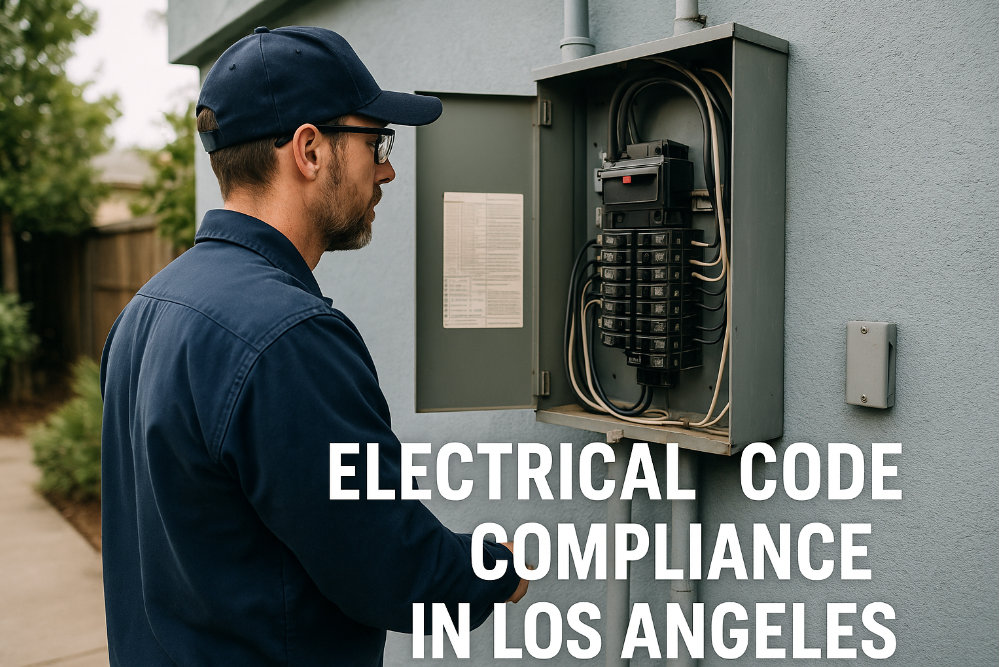
Electrical Code Compliance in Los Angeles: What Landlords and Property Managers Must Know
Updated March 2026
If you manage rental property in Los Angeles, electrical code compliance is one of those responsibilities that never goes away. Whether you own a duplex in Echo Park, a mid-sized apartment complex in Van Nuys, or a commercial building in Downtown LA, the electrical systems in your properties carry real legal, financial, and safety weight. Outdated panels, improper grounding, missing GFCI protection, and unpermitted work are not abstract risks. They show up as failed inspections, insurance cancellations, tenant complaints, and in the worst cases, electrical fires.
This guide covers what electrical code compliance actually requires for Los Angeles landlords and property managers, where older properties most commonly fall short, how LADBS inspections work, and what a structured upgrade plan looks like in practice. We hold License C10 #910807 and work with property owners across Los Angeles every day on exactly these issues.
Why Electrical Code Compliance Is a Property Management Priority
Electrical compliance is not just about satisfying a regulator. It is about managing real exposure that affects your ability to insure, rent, and sell your property. Here is what is actually at stake.
Legal Liability
If a tenant is injured or property is damaged because of an electrical failure you knew about or should have known about, the legal exposure is significant. A fire traced to a faulty panel in a building with a known non-compliant system puts the landlord in a difficult position regardless of how the lease is written. Los Angeles courts and insurance adjusters both look at whether the property was being maintained to code.
Tenant Safety
Outdated electrical systems create daily hazards for tenants: shock risk from ungrounded outlets, arc-fault fire risk from aging wiring, and power instability from undersized panels. These are not hypothetical. They are the most common complaints we hear from property managers inheriting older buildings in Sherman Oaks, Koreatown, and Inglewood. Bringing systems up to current standards directly reduces the likelihood of incidents.
Insurance Requirements
Many insurance carriers in California require proof of code-compliant electrical systems to issue or renew a policy. Properties with Federal Pacific or Zinsco panels, in particular, are frequently flagged for non-renewal or coverage denial. When a claim is filed after an electrical incident and the carrier discovers the system was non-compliant, the claim may be denied entirely. Compliance documentation is now a standard part of the insurance underwriting process for multi-unit properties in Los Angeles.
LADBS Inspections
Properties undergoing sales, major renovations, or tenant turnover disputes often trigger LADBS inspections. A non-compliant electrical system at that moment does not just mean a fine. It can delay a sale closing, pause a renovation permit, or complicate an eviction proceeding. The cost of addressing violations under inspection pressure is almost always higher than addressing them proactively.
Tenant Retention
Electrical problems are among the most common reasons tenants file complaints or choose not to renew leases. Flickering lights, tripping breakers, and outlets that do not work reliably are quality-of-life issues that tenants in competitive LA neighborhoods like West LA or Silver Lake have little patience for. A building with a modern, reliable electrical system is simply easier to rent and easier to keep rented.
Common Electrical Code Violations in LA Multi-Unit Properties
Older multi-unit properties in Los Angeles share a predictable set of electrical problems. Most of these buildings were wired decades ago, often before current NEC standards existed, and many have accumulated unpermitted modifications over the years. These are the violations we find most consistently during inspections.
Outdated panels are the most urgent issue. Federal Pacific, Zinsco, Pushmatic, and Challenger panels all have documented failure histories. The core problem is that their breakers do not trip reliably under overload conditions, which is the one job a breaker has to do. Insurance carriers and LADBS inspectors treat these panels as red flags, and for good reason.
Missing GFCI and AFCI protection is the second most common finding. Current NEC standards require GFCI protection in any wet area, including kitchens, bathrooms, laundry rooms, and garages, and AFCI protection in living and sleeping spaces. Many older LA properties have neither, particularly in units that have not been renovated.
Improper grounding and bonding is a chronic issue in earthquake-prone Los Angeles. Grounding to a water pipe or ground rod is required to protect against shock and system instability. Bonding across metal systems eliminates dangerous voltage differences. In many older buildings, especially those with original knob-and-tube or aluminum wiring, grounding was never installed to modern standards.
Overloaded panels are increasingly common as older buildings absorb new electrical loads they were never designed for. Central HVAC, EV chargers, modern kitchen appliances, and high-efficiency laundry equipment all draw significantly more power than what a 60-amp or 100-amp service was sized to handle. The result is chronic tripping, equipment damage, and fire risk.
Unpermitted modifications create compounding problems. DIY panel work or upgrades done without LADBS permits leave no paper trail, create inspection liability, and are often done to substandard workmanship. When these modifications are discovered during a sale inspection or a tenant dispute, they require correction before anything else can proceed.
Circuit labeling deficiencies are a maintenance and safety issue that gets overlooked because they seem minor. Unlabeled or mislabeled breakers slow down every subsequent electrical repair and create real risk during emergencies when a tenant or technician needs to quickly shut off a specific circuit.
Key NEC and LADBS Requirements for Multi-Unit Properties
The National Electrical Code sets the baseline standards that California and Los Angeles adopt and sometimes exceed. Here are the requirements that matter most for landlords managing multi-unit residential and mixed-use properties.
Service Capacity
Older LA buildings frequently have 60-amp or 100-amp service, which is insufficient for modern residential demands. NEC and LADBS standards generally require 200-amp service at minimum for multi-unit properties, with larger complexes requiring 400-amp service or higher to support shared amenities like laundry facilities, elevators, and common-area lighting. Any building adding EV charging infrastructure will need a capacity analysis and likely a service upgrade before installation can proceed.
Grounding and Bonding
Proper grounding to a water pipe or dedicated ground rod is required under both NEC and local seismic safety considerations. In a region with Los Angeles’s earthquake activity, grounding integrity is not a minor technical detail. Bonding across all metal systems, including plumbing, eliminates voltage differentials that can cause shock hazards and equipment damage.
Panel Access and Labeling
Electrical panels must be accessible at all times, not blocked by storage, appliances, or building modifications. All circuits must be clearly and accurately labeled. In the multi-unit buildings we work on across Downtown LA and Hollywood, mislabeled or unlabeled panels are one of the most consistent findings. It is a straightforward fix that has an outsized impact on ongoing maintenance efficiency.
GFCI and AFCI Protection
GFCI protection is required in all wet areas across every unit and common area. AFCI protection is required in living spaces and sleeping areas. For older properties that have never been retrofitted, installing GFCI and AFCI breakers is one of the most cost-effective compliance steps available. It addresses genuine safety risk, satisfies NEC requirements, and is something insurance carriers increasingly look for during renewal reviews.
Sub-Panel Requirements
Large complexes typically require sub-panels to distribute power to individual units or common areas without overloading the main service. Sub-panels must be correctly sized, properly grounded, and installed with permits. An undersized or improperly installed sub-panel is a common source of both code violations and chronic power reliability problems in larger buildings.
Energy Efficiency Standards
California sets energy efficiency standards through the California Energy Commission that affect electrical upgrades in residential and commercial properties. Modern panels and updated wiring improve overall system efficiency and can reduce utility costs for both landlords and tenants. Certain qualifying upgrades may also be eligible for utility rebate programs, which we can help identify during the planning phase.
How LADBS Inspections Work
LADBS inspections are the enforcement mechanism behind electrical code compliance in Los Angeles. Understanding what triggers them and what inspectors look for lets you prepare rather than react.
What Triggers an Inspection
Inspections are required any time a permit is pulled for electrical work, including panel replacements, service upgrades, and major renovations. They can also be triggered by tenant complaints filed with the city, unpermitted work discovered during a sale transaction, or code enforcement responses to reported hazards. Property managers who have inherited buildings without documentation of past electrical work should assume there are permit and inspection gaps that will surface at some point.
What Inspectors Examine
LADBS inspectors focus on panel condition, including whether the installed brand has a documented failure history. They verify grounding and bonding connections, confirm GFCI and AFCI protection is present in required locations, check service capacity against the building’s load requirements, review permit documentation for all work performed, and confirm circuit labeling is accurate and complete. Any deficiency generates a correction notice that must be resolved before a final approval is issued.
How to Prepare
We coordinate with LADBS throughout the permit and inspection process, from submitting permit applications and plans to being present on-site during inspections to address questions in real time. Landlords who have gone through this process with us find that having a licensed contractor manage the LADBS relationship directly removes most of the friction and uncertainty from what can otherwise be a stressful process.
Budgeting for Electrical Compliance Upgrades
Electrical compliance upgrades are an investment, but the cost of non-compliance, measured in fines, failed sales, insurance cancellations, and liability exposure, consistently exceeds the cost of proactive work. Here is a realistic picture of what landlords should budget for.
Panel Replacement
Replacing an outdated panel in a multi-unit property typically runs between $2,000 and $10,000 per panel, depending on amperage, the number of circuits, and the condition of existing wiring. Larger complexes requiring multiple panels or sub-panel installations will see costs scale accordingly. Our electrical panel services in Los Angeles include the full scope of work from permit application through final inspection sign-off.
Additional Code Upgrades
Installing GFCI and AFCI breakers, upgrading grounding systems, and rewiring individual units typically adds $500 to $5,000 per unit depending on the scope. Energy efficiency improvements like LED lighting upgrades may qualify for rebates from the California Energy Commission, which can offset a portion of the project cost.
Phased Upgrade Planning
For portfolio owners managing multiple properties, we develop phased upgrade plans that prioritize the highest-risk items first, typically outdated panels and grounding deficiencies, and spread remaining work across a multi-month or multi-year timeline. This approach lets landlords manage cash flow while systematically reducing their compliance exposure across the entire portfolio.
Long-Term Return
Compliant electrical systems reduce insurance premiums, prevent the repair costs that follow electrical failures, increase property value, and make buildings more attractive to quality tenants. In Los Angeles’s competitive rental market, a building with a modern, documented electrical system commands a real advantage over comparable properties that are still running on aging infrastructure.
What to Do If Your Property Is Not Up to Code
Discovering compliance gaps does not have to mean emergency spending. A structured response protects both the property and the landlord’s exposure while managing cost.
Start With a Comprehensive Inspection
A thorough electrical inspection establishes exactly what you are dealing with. We inspect panels, wiring, grounding, GFCI and AFCI protection, service capacity, and permit documentation across all units and common areas. The result is a prioritized list of issues ranked by safety risk, not a generic recommendation to upgrade everything at once.
Prioritize by Risk
Not every compliance issue carries the same urgency. A Federal Pacific panel with documented breaker failure risk is a different category of problem than mislabeled circuits. We work with property managers to prioritize upgrades based on actual risk level, budget constraints, and tenant impact, so resources go where they matter most first.
Handle Permitting from the Start
Every panel replacement and service upgrade requires an LADBS permit. We manage the entire permitting process, from submitting plans to scheduling inspections to obtaining final sign-off. Unpermitted work creates compounding problems, so getting the documentation right from the beginning is not optional. It is what protects the landlord long after the job is finished.
Secure Compliance Documentation
After each phase of work, we provide complete documentation including inspection reports, permit sign-offs, photos, and compliance letters. This documentation serves multiple purposes: it satisfies insurance carriers during renewal, supports the property’s value during a sale transaction, and creates a clear record for any future LADBS inquiry.
Build in Ongoing Maintenance
Compliance is not a one-time event. Electrical systems age, codes are updated, and buildings take on new loads over time. Annual inspections, particularly for older properties or those with high tenant turnover, catch emerging issues before they become violations. For property managers overseeing multiple buildings across areas like Encino, Culver City, and Torrance, a scheduled maintenance program is the most cost-efficient way to stay ahead of compliance exposure.
Real-World Compliance Scenarios
The following scenarios reflect the kinds of situations property managers and landlords across Los Angeles regularly face. They illustrate how compliance issues typically surface and what a structured response looks like.
Eviction Delay Caused by Unpermitted Panel Work
A landlord in West LA discovered during an eviction proceeding that an LADBS inspection had flagged an unpermitted Federal Pacific panel replacement. The eviction could not proceed until the electrical violation was resolved. We replaced the panel with a permitted 200-amp system, coordinated the inspection, and obtained final sign-off within 48 hours of being contacted. The eviction process resumed without further delay.
Insurance Non-Renewal Across a 50-Unit Complex in Van Nuys
A property manager received an insurance non-renewal notice citing Zinsco panels across a 50-unit complex. We conducted a full audit, replaced all panels in phases to minimize tenant disruption, installed GFCI and AFCI breakers throughout, and delivered a complete compliance documentation package to the insurer. Coverage was reinstated, and tenant complaints about power outages dropped significantly after the work was complete.
LADBS Violations at a Downtown LA High-Rise
A high-rise in Downtown LA received LADBS violation notices for improper grounding and insufficient service capacity. We upgraded the main service to 400 amps, added correctly sized sub-panels, corrected all grounding deficiencies, and coordinated with building management to schedule work around tenant occupancy. The property passed final inspection, and the landlord subsequently negotiated a lower insurance premium based on the documented upgrades.
Electrical Compliance Checklist for Los Angeles Landlords
Use this checklist as a starting point when evaluating your property’s compliance status. It covers the most common areas where older LA properties fall short.
- Verify panel brand. Replace Federal Pacific, Zinsco, Pushmatic, and Challenger panels immediately.
- Confirm GFCI protection in all kitchens, bathrooms, laundry rooms, and garages across every unit.
- Confirm AFCI protection in living spaces and sleeping areas.
- Verify proper grounding and bonding, especially in buildings with original or aluminum wiring.
- Check service capacity. Multi-unit properties should have 200-amp service at minimum.
- Confirm all electrical work has LADBS permits and final inspection sign-off on file.
- Verify all circuits are accurately labeled at the panel.
- Schedule annual electrical inspections to catch emerging issues before they become violations.
Frequently Asked Questions
What does electrical code compliance mean for a landlord in Los Angeles?
It means your property’s electrical systems meet the standards set by the National Electrical Code and the Los Angeles Department of Building and Safety. In practice, that includes having a properly rated panel, GFCI and AFCI protection in required locations, correct grounding and bonding, and permits on file for all electrical work that has been performed. Non-compliance exposes landlords to legal liability, insurance problems, and failed inspections.
How much does it cost to bring a rental property up to electrical code?
Costs vary significantly by property age, size, and the scope of work needed. Panel replacements typically run $2,000 to $10,000 per panel. GFCI and AFCI retrofits and grounding upgrades can add $500 to $5,000 per unit. For a realistic estimate specific to your property, contact us directly at (323) 521-5131.
Do electrical upgrades require LADBS permits?
Yes. Panel replacements, service upgrades, and most significant electrical work require LADBS permits. We handle the permitting process from start to finish, including submitting plans and scheduling inspections. Skipping permits creates legal liability and makes future sales or insurance renewals more complicated.
What happens if my property fails an LADBS electrical inspection?
A failed inspection generates a correction notice listing specific deficiencies. Those must be addressed and re-inspected before final approval is granted. Depending on the violations, this can delay a sale closing, pause a renovation, or hold up a permit for unrelated work. Addressing known compliance issues before an inspection is scheduled is almost always faster and less expensive than correcting them under deadline pressure.
Can electrical upgrades be done without disrupting tenants?
In most cases, yes. Panel replacements in individual units are typically completed in a single day with a planned outage window that we communicate to tenants in advance. For larger projects across multiple units, we sequence work to minimize the number of units affected at any given time. Tenant communication is part of how we manage every multi-unit project.
How often should a rental property’s electrical system be inspected?
Annual inspections are recommended for most rental properties, and more frequently for older buildings or those with high tenant turnover. Regular inspections catch deterioration, unauthorized modifications, and emerging code gaps before they become violations or safety incidents.
Protecting Your Property Starts With Knowing Where You Stand
Electrical code compliance in Los Angeles is a practical responsibility, not a bureaucratic one. The landlords and property managers who handle it proactively spend less time managing emergencies, have better relationships with their insurers, face fewer complications during sales and renovations, and provide safer buildings for their tenants. The ones who defer it tend to encounter these issues at the worst possible moments, during inspections, during disputes, or after an incident.
If you manage properties in the San Fernando Valley, on the Westside, in South LA, or anywhere across Los Angeles and you are not certain your electrical systems are current, the right first step is a thorough inspection. That gives you a clear picture of where you stand and a prioritized plan for addressing what needs to be fixed. Our commercial electrical services in Los Angeles cover the full range of multi-unit and mixed-use property work, from initial compliance audits through permitted upgrades and final inspection sign-off.
For immediate assistance or to schedule a professional evaluation, call RG Electric directly at (323) 521-5131.