
 Call (323) 5215131

Replacing Zinsco and Federal Pacific Panels in Los Angeles: LADBS Permits, Inspections, and Insurance Timelines
Updated October 2026
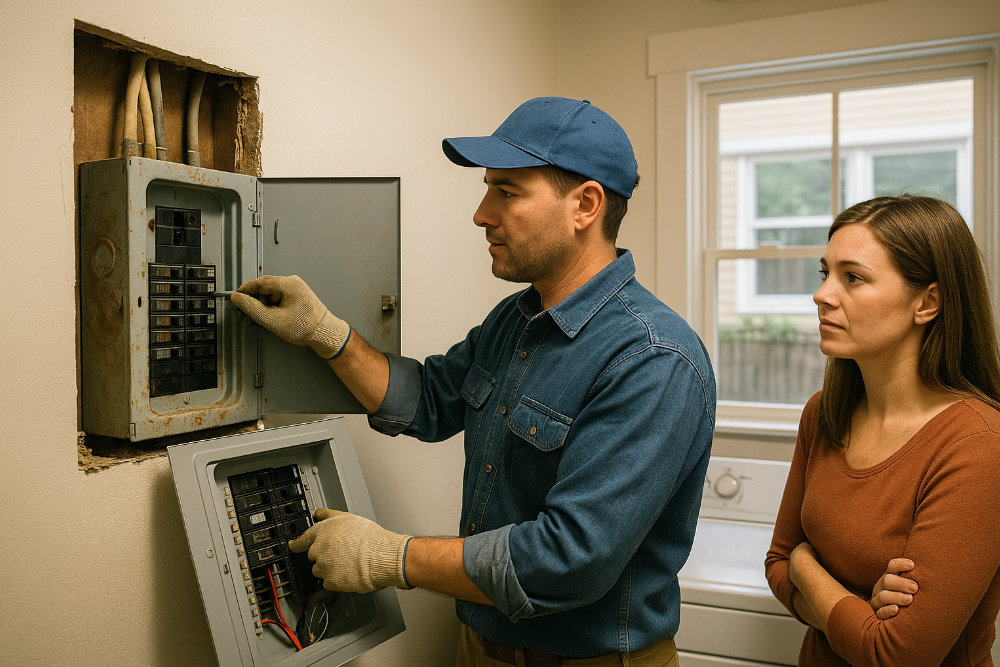
The letter from your insurer is short and the deadline in it is not. Maybe it names a Zinsco or Federal Pacific panel, maybe it just asks for proof that your electrical system has been updated, and either way you now have a limited window to find a contractor, pull a permit, and pass an inspection. RG Electric is a licensed C10 #910807 electrical contractor, and replacing outdated panels for homeowners from Echo Park and Los Feliz to Encino and Sherman Oaks is some of the work we do most. This guide walks through why these panels are a problem, what the permit and inspection sequence looks like in Los Angeles, and how to get ahead of the insurance clock instead of racing it.
Why Some Panels Fail Even When They Still Work
A panel has two jobs. It splits incoming power among your circuits, and it shuts a circuit off when the wiring behind it carries more current than it can safely handle. The second job is the one that matters in a fire, and it is where the older brands let homeowners down.
Federal Pacific panels with Stab-Lok breakers have a long documented record of breakers that do not trip under overload. Zinsco panels have a similar failure pattern, along with connections that loosen and bus bars that overheat. Pushmatic panels, recognizable by their push-button breakers, are obsolete and hard to service, and Challenger panels belong on the same watch list. These four are the brands we run into most often, and a panel from any of them can appear to work perfectly for decades. That is the trap. The house is fine until the one night a circuit overloads and the breaker stays on.
Age adds its own problems. Decades of heat cycling loosen terminations, corrosion builds on bus bars, and each added circuit or remodel layers another contractor’s choices onto the original work. Los Angeles homes built before the 1980s, which describes a large share of Echo Park, Los Feliz, Van Nuys, and Koreatown, tend to carry all of these conditions together. The panel was sized for the loads of its era, long before mini-split systems, home offices, and Level 2 EV chargers.
Signs that a panel needs attention
Some warning signs are easy to spot without tools. A breaker that trips repeatedly on the same circuit is not a nuisance to reset, it is the panel telling you the circuit is carrying more than it was built for. Lights that dim when a large appliance starts point to a system with no headroom. A burning smell near the panel, outlets that feel warm, or discolored outlet covers call for an electrician right away.
The brand itself is also a sign. Open the panel door and read the label. If it says Federal Pacific, Zinsco, GTE-Sylvania, Pushmatic, or Challenger, or the breakers are marked Stab-Lok, you have your answer without needing a symptom. These are not panels we judge on condition alone, because the design risk is there regardless of how the panel looks.
The Insurance Clock
Los Angeles homeowners did not invent the pressure around old panels. Insurance carriers across California have grown stricter about electrical risk, and a panel from one of the four brands above can mean a surcharge, a restriction, a request for proof of replacement, or a refusal to renew. The pattern we hear most often is a short deadline after a notice arrives.
Waiting for that notice is the expensive way to do this. A panel replacement involves a permit, an inspection, and sometimes the utility, and none of those run on your insurer’s schedule. Homeowners who replace before the letter arrives pick their own timeline, compare bids, and schedule around their own life. Homeowners who replace after it arrives get whatever the calendar allows. It is better to upgrade before your insurance reaches out.
Documentation matters as much as the hardware. A permitted replacement with a passed city inspection is a record an underwriter can read, and it answers questions that an old panel with no paper trail leaves open. If your insurer has flagged a specific panel, send them the permit and the final inspection sign-off once the work is done, because that closes the loop.
Selling a home with a high-risk panel
The same panel often surfaces during a sale. A buyer’s inspector who finds a Federal Pacific or Zinsco panel will usually flag it, and the buyer will usually ask for a credit or a repair before closing. Replacing it before you list turns a negotiating point into a completed improvement, and it lets you hand over the permit paperwork instead of an estimate.
How a Panel Replacement Works in Los Angeles
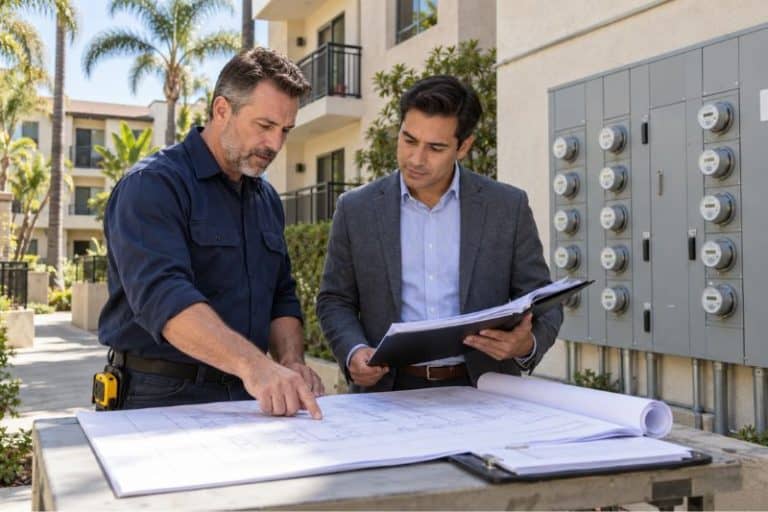
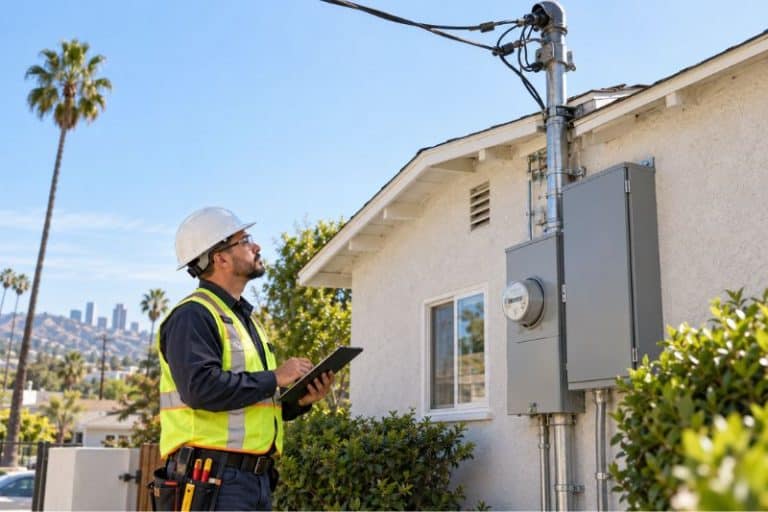
Replacing a panel is permitted work. In the City of Los Angeles that means a permit from LADBS, an inspection by a city inspector after the work is done, and a final sign-off that the installation meets the electrical code in force. Skipping any of those leaves you with a new panel and no record that it is legitimate, which is the exact gap insurers and buyers look for.
Step one: assessment and load calculation
The first visit is an evaluation of the existing panel and the home’s actual electrical load. That decides whether a like-for-like replacement is enough or whether the service should be upgraded, which matters in the many older Los Angeles homes still running 100-amp service. A visual look at the panel does not settle this. A load calculation does, and it should account for what you plan to add as well as what you run today, whether that is an EV charger, a heat pump, or an induction range.
Step two: permit and equipment
Once the scope is set, the permit application goes to LADBS. We use Siemens panels, and the replacement includes correctly rated breakers, a labeled circuit directory, and protection devices that current code expects. Arc-fault and ground-fault protection are part of what a modern panel makes possible, and they are often missing entirely in homes that have not had recent electrical work. A replacement is the natural moment to correct them.
Current code also expects a surge protective device when service equipment is replaced in a dwelling, so a surge device is normally part of the scope rather than an optional extra. If the service itself is being enlarged, the utility may need to be involved, and when that is the case we start the LADWP request alongside the LADBS permit instead of waiting for one to finish before the other begins.
Step three: installation day
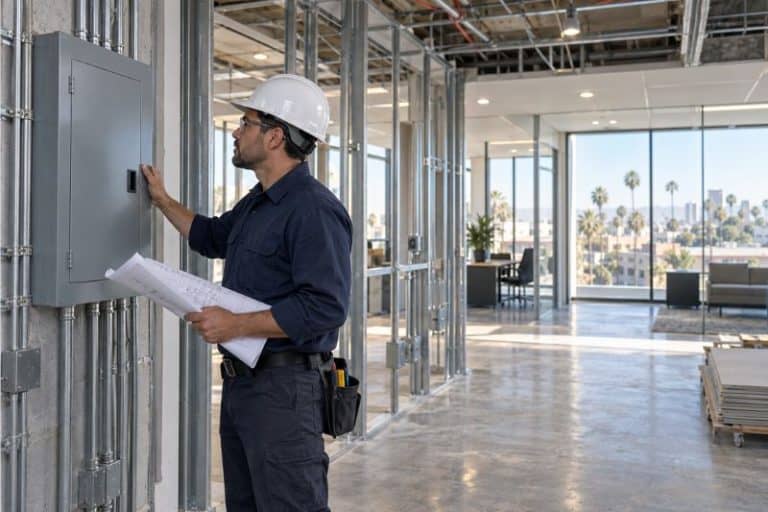
For a straightforward single-family home the installation usually takes one day. Power is shut off while the old panel comes out and the new one goes in, and that outage is scheduled in advance so you can plan around it. The old conductors are checked and terminated properly, the new circuits are labeled, and the panel is left ready for the inspector.
Step four: inspection
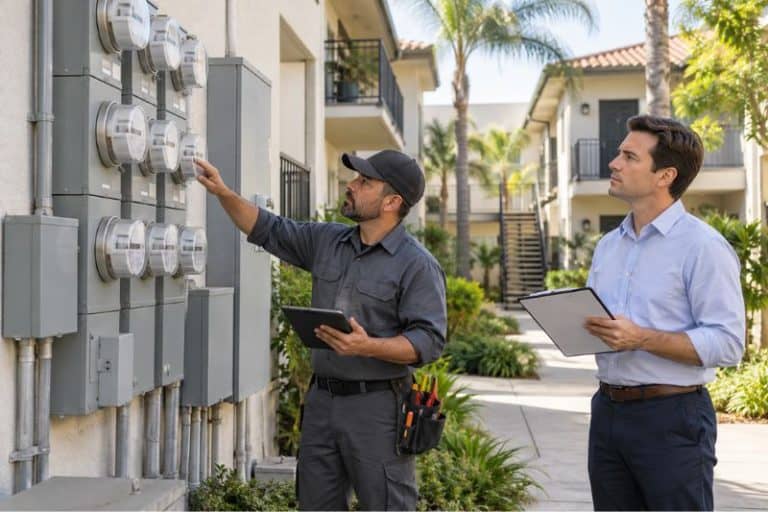
After installation, a city inspector reviews the work. Inspectors look at the panel mounting and clearances, the grounding and bonding, the breaker sizing against the wire it protects, the labeling, and the overall condition of what they can see. They can also flag problems nearby. If a panel is opened and the wiring around it is in poor shape, a correction can be required before approval, and that is one reason older homes sometimes take longer than the installation alone suggests. If an inspection does not pass, the fix is a correction and a re-inspection, not a restart.
What a Modern Panel Adds
The point of replacing a panel is not only to remove a hazard. A modern panel does things the old one cannot. Its breakers trip when they are supposed to, its bus bars are sized for the service, and it has room for the arc-fault and ground-fault protection that code asks for today.
Capacity is the other half. A home moving from 100 amps to 200 amps has headroom for the loads California is pushing toward, such as EV charging, heat pump HVAC, electric water heaters, and induction cooking. A panel running at its limit cannot absorb those, and the symptoms show up as the nuisance trips and dimming lights that homeowners often blame on the house. Replacing the panel with the right capacity solves the symptom and the safety issue together. Our electrical panel services cover the assessment, the load calculation, the permit, and the installation as a single scope.
Why this matters in older neighborhoods
In Echo Park, Los Feliz, Culver City, and Koreatown, the building stock is old enough that a panel was often the last thing anyone touched. Seismic movement over the years can also loosen connections that are not visible from the outside, and loose terminations are a common ignition point. That does not mean every older home is at risk. It does mean an older home with an original panel is worth having looked at before a notice forces the issue. The same logic applies to the postwar tracts in Inglewood, Torrance, and Van Nuys, where a Zinsco or Federal Pacific panel installed during a 1960s or 1970s build-out may never have been questioned by a single owner.
Mistakes That Slow a Panel Replacement
Most delays have the same few causes. The first is sizing the panel to today’s load and nothing else. A panel that is exactly adequate now is inadequate the day an EV charger goes in, so the load calculation should include what you plan to add. The second is treating the permit as optional. Unpermitted panel work produces no record for insurers, buyers, or lenders, and it can mean mandatory rework later. The third is poor coordination with the inspector, where missing paperwork or an unready panel costs a re-inspection.
A fourth cause is hidden wiring trouble. An inspector who opens a panel and finds double-tapped breakers or deteriorated conductors can hold up approval until they are corrected, even when the original work was fine. We tell customers about this possibility at the estimate stage, because it is much easier to hear before the project than during it.
When a breaker problem is not a panel problem
Not every trip means a new panel. A single breaker that has aged out, or a circuit that was overloaded by one appliance, can often be solved with a replacement breaker or a rebalanced circuit. Our circuit breaker services cover testing and replacement when the breaker is the part at fault. We would rather tell you that than sell you a bigger project than the situation calls for.
What to Expect From RG Electric
When you call, you reach someone on our team, not a call center. A panel question that starts as a symptom, such as repeated trips or a warm outlet, usually begins as a service call, because a technician has to find the cause before there is anything to price. That visit carries a fee up front. The technician reports what was found to our supervising electrician, who writes the estimate, and someone on our team then calls to walk through each line and why it is there.
Panel replacement itself is new work, and new work gets a free estimate. We do not bill by the hour. We look at the scope, give you a written estimate with everything necessary in it, and there are no hidden fees. We also stand behind our work for 12 months. If something we installed misbehaves in that window, you are already our customer, and we come back without charging another service call.
Questions Homeowners Ask Before Replacing a Panel
How do I tell whether my panel is one of the risky brands?
Open the door and read the label inside it. Federal Pacific breakers are often stamped Stab-Lok, Zinsco panels may carry the Zinsco or GTE-Sylvania name, and Pushmatic breakers use a push-button design instead of a toggle. If the label is missing or unreadable, a licensed electrician can identify it in a short visit.
Does the whole project need a permit?
Yes. A panel replacement in Los Angeles goes through LADBS and ends with a city inspection. We handle the application and meet the inspector, so you do not have to.
How long does it take?
The installation itself is usually a single day for a straightforward home. The permit and inspection add calendar time around it, and we run those steps alongside each other where we can so the whole project stays as short as possible.
Should I replace the panel before or after a remodel?
Before, if you can. Opening walls for a kitchen or addition is the cheapest moment to run new circuits, but the permit for that work will usually ask what the panel can carry. Settling the panel first means the remodel is designed around real capacity instead of a guess, and the inspector sees one coherent electrical system instead of two projects.
Can a new panel handle an EV charger?
Usually, if the capacity is sized for it. That is part of the load calculation before the work starts. If the existing service cannot carry a charger, a service upgrade can be included in the same project.
What happens if my insurer has already sent a notice?
Call us as soon as you get it. The deadline is the constraint, and the earlier we know it, the more options you have for scheduling the permit and the inspection around it. Send your insurer the permit and the final sign-off when the work is complete.
For immediate assistance or to schedule a professional evaluation, call RG Electric directly at (323) 521-5131.
Electrical work is hazardous. Always consult a licensed electrician like RG Electric before working on electrical systems.