
 Call (323) 5215131

Smoke Detector Services in Los Angeles
A smoke alarm that chirps at 3 a.m., a unit that expired years ago, or a corrections notice after an inspection usually arrives at the worst possible time, and usually for the same reason: nobody tracked the devices until something forced the issue. RG Electric, License C10 #910807, installs, replaces, and interconnects smoke and carbon monoxide alarms across Los Angeles, from Encino to Torrance, with the placement, documentation, and permits that inspectors, insurers, and property managers expect. Call (323) 521-5131 to schedule an assessment, or to talk through a detector problem with someone on our team.
Why Los Angeles Homes and Apartments Need Compliant Detectors
Fires and carbon monoxide incidents develop quietly and move fast, and the earliest warning is often an alarm in a hallway outside a bedroom. Modern detectors watch for slow, smoldering fires and fast, flaming ones, while CO alarms warn about a colorless, odorless gas that builds up from fuel-burning appliances or a vehicle in an attached garage. In a multi-unit building, properly placed and interconnected devices let one unit’s alarm be heard and acted on before smoke reaches the shared halls.
The rules behind this are more specific than most owners expect. California requires smoke alarms approved by the State Fire Marshal, and battery-operated units are held to a sealed ten-year battery standard. A dwelling unit with a fossil fuel appliance, a fireplace, or an attached garage also needs a carbon monoxide alarm. When electrical work opens the walls, the smoke alarm scope often becomes part of the job, and misplaced or missing devices found at inspection can bring a fine or a correction notice.
Detectors are not one-size-fits-all. There are battery-only units, hardwired units with battery backup, combination smoke and CO alarms, and specialty devices with strobes and low-frequency sounders for people with hearing loss. We match the equipment to the space and to local requirements, then install and label everything clearly so maintenance stays simple.
What We Install and Service
Hardwired smoke alarms with battery backup
The most reliable choice for long-term protection. We install listed units with solid terminations and a battery backup, so the devices still work when the power goes out.
10-year sealed battery alarms
Ideal where hardwiring is not practical. Sealed lithium batteries remove the annual swap and cut down on low-battery chirps. We date and label every unit so replacement is easy to track.
Combination smoke and CO alarms
One device that covers both hazards near sleeping areas, fuel-burning appliances, and garages, where CO monitoring is required.
Photoelectric and ionization technologies
Photoelectric sensors respond quickly to the smoldering fires common with upholstery and bedding. Ionization sensors respond quickly to flaming fires. Many modern alarms combine both methods for balanced protection.
Interconnection and smart features
We interconnect alarms so that when one sounds, all sound. Where running wire is difficult, we use listed wireless interconnect systems. If you want app notifications, we specify smart models that send alerts to your phone for an alarm or a low-battery event.
Specialty alarms for accessibility
Low-frequency sounders for bedrooms, bed shakers, and integrated strobe alarms help people with hearing loss wake up and get out. We place and test these according to the manufacturer’s guidance.
Proper Placement and Spacing
Placement matters as much as the device. In dwellings, smoke alarms belong inside each bedroom, outside sleeping areas such as hallways, and on every level, including basements and habitable attics. CO alarms typically go outside each sleeping area and on each level where fuel-burning equipment or a garage is present. We avoid dead-air zones near ceiling edges, keep devices away from supply registers that can blow particulate past them, and set them far enough from kitchens and bathrooms to reduce nuisance alarms without giving up protection.
On sloped ceilings we mount alarms on the high side, spaced away from the peak so they do not sit in stagnant air. In basements, they go on the ceiling near the bottom of the stairs, where they catch smoke rising from lower rooms. You receive a simple map of each device and its replacement date, so future maintenance is easy to schedule.
Replacement Cycles and Documentation
Smoke alarms should be tested monthly, gently vacuumed a few times a year to clear dust, and replaced ten years after their manufacture date. CO alarms typically need replacing every 7 to 10 years, depending on the model. We check manufacture dates, replace expired units, and test the interconnect. Where tenants are present, we coordinate access and leave a signed checklist for your files.
When an alarm chirps, we find out why. It might be a low battery, an end-of-life signal, or a wiring or interconnect fault. Detectors themselves are replaced, not repaired, so the fix is usually a new unit or a corrected connection, and the chirps stop for good.
If other electrical work is already planned, combine the detector replacement with a wiring improvement or a panel upgrade. We can pull new interconnect lines or add a circuit while the walls are open, which means less patching and a smoother inspection.
Code, Permits, and Inspection
Like-for-like detector swaps in the same location may not need a permit. Adding new locations, hardwiring devices that used to run on batteries, interconnecting several alarms, relocating boxes, or tying alarms into a new circuit often does. We review your scope case by case, and we handle the permit and the scheduling when one is needed.
Our work follows current requirements for device listing, location, interconnection, and power source, and we correct polarity and grounding and label the panel directory. At inspection we demonstrate the test functions, the interconnect, and the device dates. You receive labeled photos and a short service record for insurance or resale.
Apartments, HOAs, and Small Commercial Buildings
Property managers need consistent, documented installations that pass the first time. We standardize device models across buildings, give you unit-by-unit logs with installation dates and replacement timelines, and schedule the work to disturb residents as little as possible. In common areas we coordinate with your fire protection vendors so detector locations complement the sprinkler, stair, and alarm panel layouts. Managers of buildings in Koreatown, Downtown LA, and Van Nuys often ask first for permits and a certificate of insurance. We provide both on commercial projects. If the panel is overloaded or an outdated brand, we can add a subpanel or upgrade so life safety devices have dependable power.
Our Process, Step by Step
Assessment
Send photos of the panel with the door open, the existing detectors, and each hallway or bedroom. We confirm the device count and types, and whether an interconnect is present.
Proposal
You receive a clear layout showing device locations, recommended models, and whether hardwired, wireless interconnect, or battery-only makes the most sense for each area.
Installation
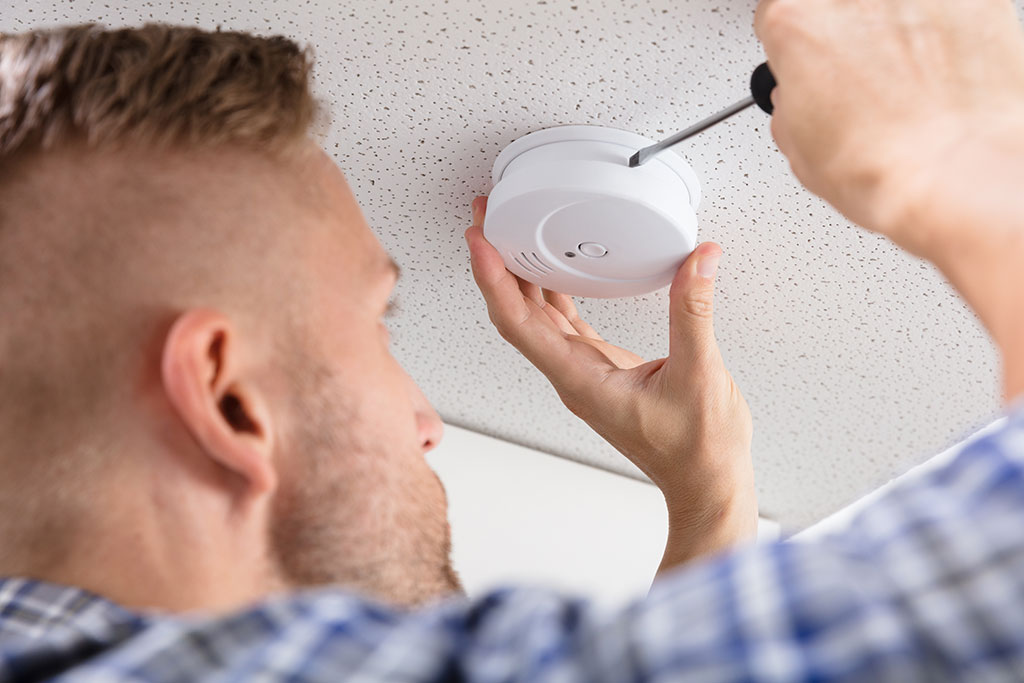
We protect finishes, install listed boxes where needed, pull new cable or interconnect links, and mount devices to the manufacturer’s spacing. Each unit gets a dated label and a place on your replacement schedule.
Testing and turnover
We test every unit, then confirm the interconnect works across the whole residence or floor. You get labeled photos, instructions for monthly tests, and guidance on annual battery checks where they apply.
Documentation
For permitted jobs, we meet the inspector and close out with a clean record. For multi-unit buildings, we provide a spreadsheet of device type and date by unit, which simplifies maintenance for years.
Service Calls, Estimates, and Our Guarantee
A chirp that will not quiet or a detector that will not test starts as a service call. A technician has to find the cause before there is anything to price, so there is an upfront diagnostic fee. Adding or replacing detectors across a home or building is new work, and new work gets a free estimate with every cost itemized. We do not bill by the hour. We scope the job and give you a written estimate, and everything necessary is in it.
We stand behind our work for 12 months. If something we installed misbehaves in that window, you are already our customer, and we come back without charging another service call.
Costs and Scheduling
Pricing depends on quantity, hardwired versus battery-only, access for interconnect wiring, specialty features such as strobes or low-frequency sounders, and whether a permit is required. Battery-only replacements are usually quick. Hardwired additions and whole-home interconnects take longer and may be phased. To speed up the estimate, tell us the number of bedrooms and levels, send photos of the existing devices, and say whether you want combination smoke and CO alarms.
Related Electrical Services
Alarms that keep chirping or lose power sometimes point to a larger problem on the circuit. See our circuit breaker services and our work on outlets and switches.
Frequently Asked Questions
How many detectors do I need?
At minimum, one inside every bedroom, one outside each sleeping area, and one on every level, basements included. CO alarms are typically required outside sleeping areas and on each level with fuel-burning equipment or a garage.
Do I need hardwired alarms?
Hardwired with battery backup is the most dependable, especially in multi-unit buildings. Where wiring is impractical, 10-year sealed battery alarms with a wireless interconnect make a good alternative.
Why does my alarm chirp?
Usually a low battery, an end-of-life signal, or a wiring or interconnect fault. We test the unit and correct the cause, so the chirp does not come back.
Can you connect alarms to smart home apps?
Yes. We install listed smart alarms that send phone notifications for an alarm, a CO event, or a low battery.
How often should detectors be replaced?
Smoke alarms need replacing ten years after manufacture, and CO alarms every 7 to 10 years depending on the model. We mark installation dates and give you a replacement schedule so nothing expires unnoticed.
For immediate assistance or to schedule a professional evaluation, call RG Electric directly at (323) 521-5131.
Electrical work is hazardous. Always consult a licensed electrician like RG Electric before working on electrical systems.