
 Call (323) 5215131
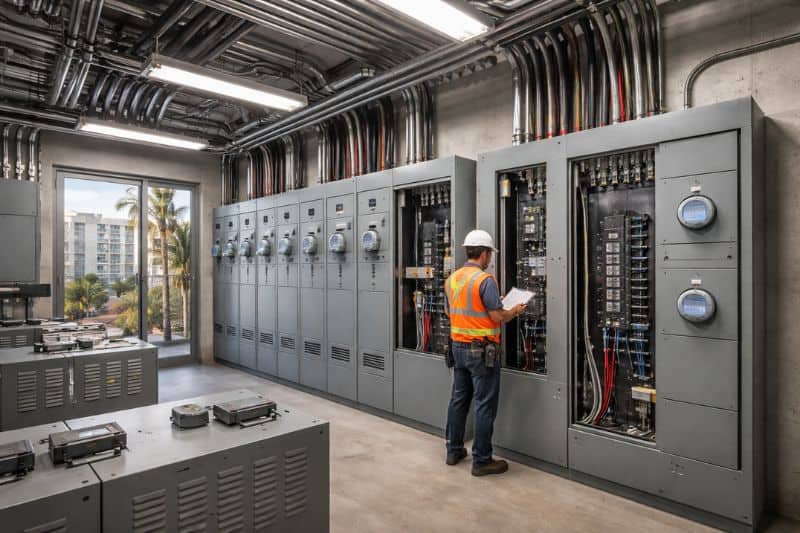
Load Growth Forecasting for Los Angeles Apartment Buildings: Building an Electrical Strategy for the Next 10 Years
Los Angeles apartment buildings are changing faster than their electrical systems were ever designed to handle.
Ten years ago, a typical multi-unit property in Koreatown, Encino, or Silver Lake operated on a predictable electrical diet. Lighting, standard kitchen appliances, basic air conditioning, and a modest collection of electronics. The panel handled it. The circuits held. Nobody thought about headroom.
That world is gone.
Today, tenants arrive with electric vehicles, induction cooktops, heat pumps, smart home systems, and home office setups drawing sustained loads that simply did not exist when most of these buildings were wired. And they are not asking permission before plugging in. They are assuming the infrastructure will support them — because it always has before.
For property managers and building owners, that assumption is becoming a liability.
The question is no longer whether your building is working today. The question is whether your electrical infrastructure is capable of supporting where the building is heading over the next decade. That is a very different question, and answering it requires a very different kind of thinking.
This is what load growth forecasting is designed to do. At RG Electric, we work with property managers and building owners across Los Angeles to assess current capacity, model future demand, and build phased upgrade strategies that protect property value without forcing unnecessary capital expenditure. We are a licensed C10 electrical contractor (License #910807), and we approach every multi-unit engagement as an advisory relationship, not just a job.
If you manage or own a multi-unit building in Los Angeles, this article will give you a strategic framework for thinking about electrical infrastructure over time.
Why “Working Today” Is Not the Right Standard
Most apartment buildings across Los Angeles were constructed between the 1950s and 1980s. Electrical codes at the time reflected a world where a household’s peak electrical demand might reach 50 to 100 amps on a heavy evening. Main services were sized accordingly. Distribution panels were configured for a load profile that no longer exists.
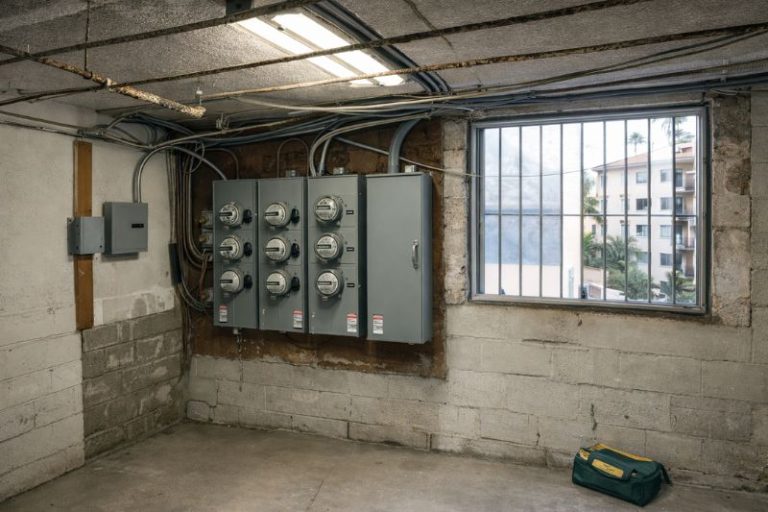
That original infrastructure is still in place in thousands of Los Angeles buildings. Some of it has been updated in pieces — a subpanel here, a replaced breaker there — but the underlying service capacity and distribution architecture frequently reflects decades-old thinking.
Meanwhile, the load profile of a modern tenant looks dramatically different. A single unit today may be running a heat pump HVAC system, an induction range, an electric dryer, a Level 2 EV charger in the garage, a home office with multiple monitors and networking equipment, and a full array of smart home devices — all simultaneously, all drawing sustained amperage that a 1970s panel design never anticipated.
Each of those additions is individually reasonable. Together, across 10, 20, or 40 units in the same building, the cumulative demand shift is dramatic. This is the fundamental problem of incremental electrification: it does not announce itself as a crisis. It accumulates quietly, circuit by circuit, until the infrastructure that once had plenty of headroom is operating near its rated limit every peak evening.
The danger is not just operational inconvenience. Electrical systems under chronic near-capacity stress generate heat. Connections loosen over time. Breakers that trip and reset repeatedly degrade faster. The building continues to function, but the margin of safety is shrinking in ways that are not visible from the outside.
That is the hidden risk in the statement “it’s working fine.” Fine today is not the same as safe and sustainable tomorrow. Load growth forecasting is the discipline that closes that gap.
How Electrical Load Actually Grows in a Multi-Unit Building
Load growth in apartment buildings is not a single event. It is a series of small decisions made by individual tenants, each perfectly reasonable in isolation, that collectively shift the building’s demand profile upward over time.
Consider a realistic scenario in a 24-unit building in the San Fernando Valley. In year one, two tenants request EV charging circuits. The panel can accommodate them. In year two, a kitchen renovation in three units adds induction cooktops and new dedicated appliance circuits. The next summer, the building owner replaces an aging rooftop HVAC system with a more efficient electric heat pump — increasing electrical load while reducing gas bills. A tenant in one wing converts to an electric dryer. Another installs a whole-home battery backup system.
None of these decisions is irresponsible. All of them make sense individually. But by year three or four, the building’s sustained peak load may have increased by 30 to 50 percent over what it was when the main service was last evaluated. That kind of growth, without a corresponding infrastructure assessment, is how buildings end up with overloaded systems that nobody planned for.
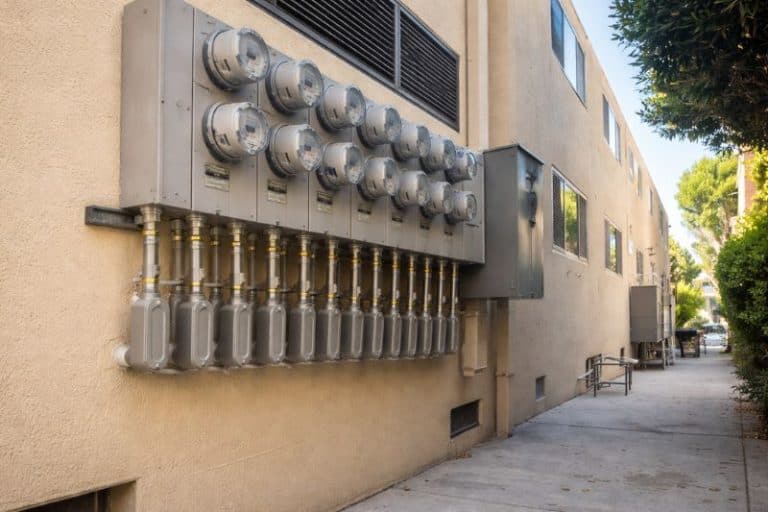
When we evaluate a multi-unit building, we are looking at the full picture: main service size and age, distribution panel ratings, subpanel capacity, current demand calculations based on actual usage rather than theoretical maximums, available breaker space, bus bar condition and temperature, and any transformer limitations imposed by the local utility. Each of these tells part of the story. Together, they reveal where the building actually stands — and how much runway it has before infrastructure becomes the limiting factor in what tenants can do.
The 10-Year Electrical Planning Framework for Property Managers
A responsible approach to long-term electrical planning is not about spending money you don’t need to spend. It is about understanding where your building is headed far enough in advance to make strategic decisions rather than reactive ones. Here is the framework we use when advising property managers across Los Angeles.
Step 1: Establish the Real Baseline
The first and most important step is understanding actual load versus theoretical capacity. A panel rated for 400 amps does not mean the building is safely operating well below that number. Rated capacity and sustained real-world demand are two different things, and the gap between them is often smaller than owners assume.
We assess peak demand patterns based on the building’s usage profile — not the theoretical maximum that panel ratings suggest. HVAC cycling behavior matters here, because heat pump systems draw significant startup amperage that flat demand calculations miss. Seasonal variation between summer cooling peaks and winter heating loads affects how much headroom actually exists on a typical day. We also account for diversity factors between units: in a well-loaded building, not every tenant reaches peak demand at exactly the same moment, and that natural diversity is part of what keeps the system stable. But as EV adoption increases and more tenants charge overnight simultaneously, that diversity factor can shrink.
Without a real baseline, everything downstream is guesswork. A load evaluation gives you a defensible starting point for every subsequent decision.
Step 2: Map the Electrification Trajectory
Los Angeles is undergoing a systematic transition away from gas. This is being driven simultaneously by regulation, by market forces, and by tenant preference — and it is accelerating. California’s Title 24 energy standards continue to push new construction and significant renovations toward all-electric configurations. Insurance carriers are increasingly hesitant about gas infrastructure in high-risk fire zones. And a growing segment of Los Angeles tenants simply prefers electric appliances, both for environmental reasons and because induction cooking and heat pump HVAC perform better than their gas equivalents.
For a building owner, this matters for one specific reason: every appliance that moves from gas to electric shifts load onto the electrical system. A building that relied on gas for heating, cooking, and hot water ten years ago may look very different electrically over the next decade as those systems are replaced. Planning for that transition before it happens — rather than scrambling to accommodate it unit by unit — is the difference between a managed upgrade and an emergency.
Step 3: Evaluate Panel Headroom Honestly
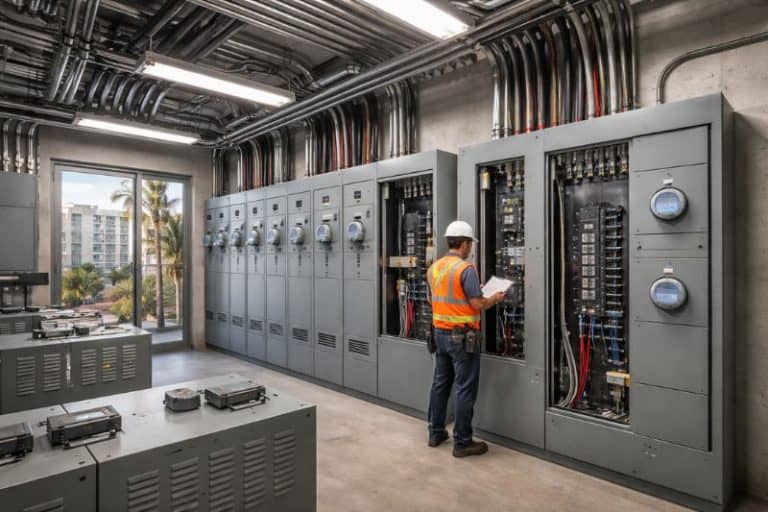
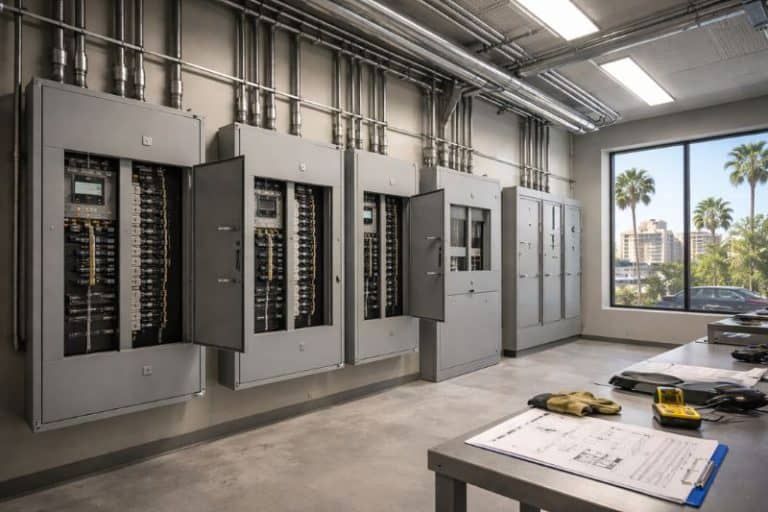
Panel headroom is not just about whether you have spare breaker slots. It is about how much of the rated bus bar capacity is already committed, whether the distribution between subpanels is balanced or significantly skewed, the age and condition of the equipment, and whether the existing breaker configuration reflects the actual load or was assembled incrementally without a coherent design.
In older Los Angeles apartment buildings, we frequently find subpanels that are overcrowded, circuits that are grouped in ways that create imbalanced loading between phases, and main panels where the available bus bar capacity is significantly smaller than the rated amperage implies because of how the existing circuits are laid out. These are not code violations — they are engineering inefficiencies that become problems when the building’s demand continues to grow.
If a headroom evaluation reveals that your panels are already near their practical limits, that information is valuable now — before a new EV charging request or a building-wide HVAC replacement forces an emergency decision. For a detailed look at upgrade pathways when forecasting reveals panel limitations, visit our Electrical Panel Services page.
When Subpanel Reconfiguration Is Enough — and When It Isn’t
One of the most common misunderstandings we encounter is the assumption that any capacity problem requires a main service upgrade. That is frequently not true, and recommending a full service upgrade when the real problem is a distribution issue is the kind of unnecessary expense that erodes trust between a contractor and a property owner.
Many Los Angeles apartment buildings have capacity problems that are actually distribution problems. The main service may have adequate amperage coming in, but the way that amperage is divided between subpanels — and the way individual circuits are grouped within those subpanels — creates artificial bottlenecks. One wing of the building may have a subpanel operating near its limit while another has significant unused capacity. Circuits that were added over the years may be poorly balanced between phases, creating a lopsided load that makes the system feel more constrained than it actually is.
In these cases, reconfiguring the distribution — rebalancing loads across phases, adding or upgrading subpanels in high-demand areas, rerouting circuits to equalize the load — can meaningfully extend the life of the existing main service without the cost and disruption of a full upgrade. The key is diagnosis before prescription. Replacing a main service without first evaluating the distribution architecture is like replacing a water main when the real problem is a clogged branch line.
That said, there are clear situations where subpanel reconfiguration cannot solve the problem. When the building’s total demand has genuinely grown beyond what the main service can safely supply, when multiple high-draw loads like EV chargers and electric HVAC are being added simultaneously, or when the main service equipment itself is aging and unreliable, a full service upgrade is the right answer. Forecasting helps identify which situation you are in — before you are forced to find out the hard way.
EV Charging: The Load Multiplier Most Buildings Are Not Ready For
Electric vehicle adoption is accelerating in Los Angeles faster than most building electrical systems were designed to accommodate. A single Level 2 EV charger typically draws between 30 and 50 amps on a dedicated circuit. That is a meaningful addition to any building’s load profile. Multiply it across a parking structure serving a 30-unit building where 40 percent of tenants drive electric vehicles within five years — a realistic projection given current adoption trends in urban Los Angeles — and the cumulative demand addition is substantial.
The strategic mistake many building owners make is thinking about EV charging as a single installation decision. A tenant asks for a charger, a charger gets installed, done. That approach works for the first one or two installations. It becomes expensive and disruptive when the fourth, fifth, and sixth tenants come forward — because the conduit runs aren’t in place, the panel doesn’t have room, and the work that should have been done once now has to be redone multiple times.
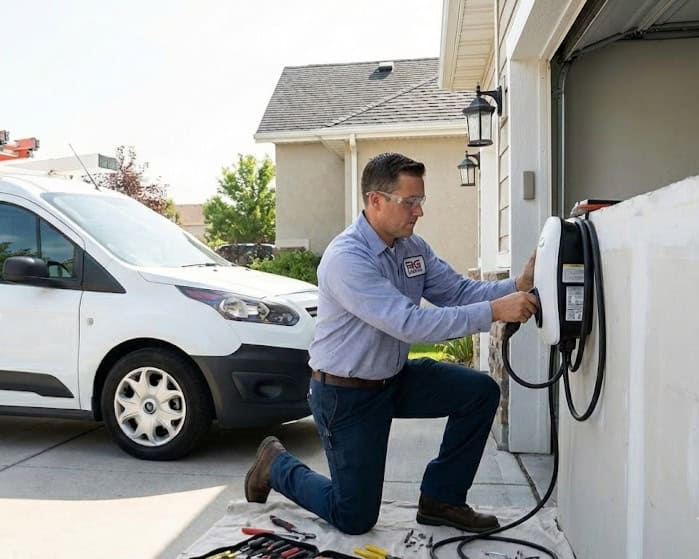
Forecasting means approaching EV infrastructure as a scalable design decision from the beginning. That means planning dedicated subpanel capacity in the parking structure, running conduit pathways that can accommodate future circuits without tearing up the garage again, evaluating load management systems that allow multiple chargers to share available amperage intelligently rather than each demanding full dedicated capacity simultaneously, and assessing whether transformer capacity can support where the building is heading. Done correctly, this approach reduces the total cost of EV infrastructure significantly compared to piecemeal installation over time.
California’s CALGreen code already requires EV-ready infrastructure in new construction and certain renovation projects. For existing multi-unit buildings, proactive planning now — even before tenant demand forces the issue — puts building owners in a much stronger position competitively, since EV-capable parking is an increasingly significant factor in tenant retention and rental pricing in Los Angeles. To learn more about how we approach EV infrastructure planning for multi-unit properties, visit our EV Charger Installation Services page.
When Main Service Upgrades Become Inevitable
There are situations where the math simply does not work without upgrading the main service. Recognizing these situations early — ideally years before they become urgent — is the primary value of forecasting as a discipline.
The most common triggers we see for inevitable main service upgrades in Los Angeles multi-unit buildings include: building-wide conversion from gas to electric HVAC, which significantly increases total electrical demand across all units at once; the installation of multiple EV chargers without an intelligent load management system to moderate simultaneous draw; the addition of rooftop amenity spaces with kitchens, entertainment systems, or commercial-grade equipment; large-scale kitchen renovations converting multiple units to induction cooking simultaneously; and the expansion of commercial or retail tenants in mixed-use buildings, whose equipment loads often dwarf residential demand per square foot.
The mistake owners make in these situations is waiting until breakers begin tripping consistently before taking action. At that point, you are not planning — you are reacting. Emergency upgrades happen under time pressure, which means less flexibility in scheduling, less ability to phase the work in ways that minimize tenant disruption, and less negotiating room on material and labor costs. Reactive infrastructure management is always more expensive than proactive management, and the disruption to tenants during an emergency upgrade creates real reputational and operational costs beyond the direct electrical expense.
For buildings that include mixed-use retail or commercial tenants, service scaling requires a different analytical approach than residential-only properties. Our Commercial Electrical Services page outlines how we approach higher-demand environments where tenant load profiles vary significantly.
Phased Implementation: Spreading Capital Cost Without Losing Strategic Position
One of the most important things we can offer a property manager is a phased upgrade roadmap. Not every building needs everything at once, and responsible advisory means recognizing that capital allocation decisions have real consequences for building owners. The goal is to sequence upgrades in a way that protects the building’s trajectory without forcing premature expenditure.
A typical phased approach for a Los Angeles apartment building with moderate load growth pressure might look like this. In the first phase, the focus is on distribution optimization and future-proofing: rebalancing subpanel loads to free up existing capacity, correcting circuit grouping inefficiencies, running conduit pathways for EV infrastructure in the parking structure even before chargers are installed, and freeing breaker space in the main panel through consolidation where possible. This phase is relatively low cost and high leverage — it buys time and positions the building correctly for the next wave of tenant demand without requiring a major service replacement.
In the second phase, the focus shifts to targeted subpanel upgrades in the highest-demand areas of the building. As load growth in specific wings or floors approaches practical limits, upgrading those subpanels extends the main service’s useful life while keeping pace with actual demand. This phase is triggered by the data established in the baseline evaluation, not by crisis.
In the third phase — which may be three to seven years out depending on adoption rates and building usage — main service capacity is increased to match the building’s fully electrified load profile. Because the groundwork was laid in phases one and two, this upgrade is cleaner, faster, and less disruptive than it would have been if forced under pressure. The building’s electrical infrastructure has grown with its tenants, rather than struggling to catch up with them.
This is what controlled investment looks like. The cause is proactive planning. The effect is predictable, manageable capital expenditure. The consequence is long-term infrastructure stability that protects property value and keeps tenants in buildings that work the way they expect them to.
Warning Signs Your Building May Already Be Under Stress
While forecasting is ideally implemented before problems appear, many buildings we evaluate in Los Angeles are already showing indicators of infrastructure stress. These signs are worth knowing, because they change the urgency of the conversation.
Frequent breaker trips in common areas — laundry rooms, parking structures, shared HVAC systems — are often the first indicator that aggregate load is approaching or exceeding what circuits were designed to carry. A breaker that trips occasionally is doing its job. A breaker that trips regularly under normal operating conditions is telling you that the circuit is undersized for current usage.
Tenant reports of voltage fluctuation or lights that dim when appliances start are often signs of a system under significant load. These phenomena occur when voltage drops across the distribution system under high demand — a physical indicator that the electrical infrastructure is straining.
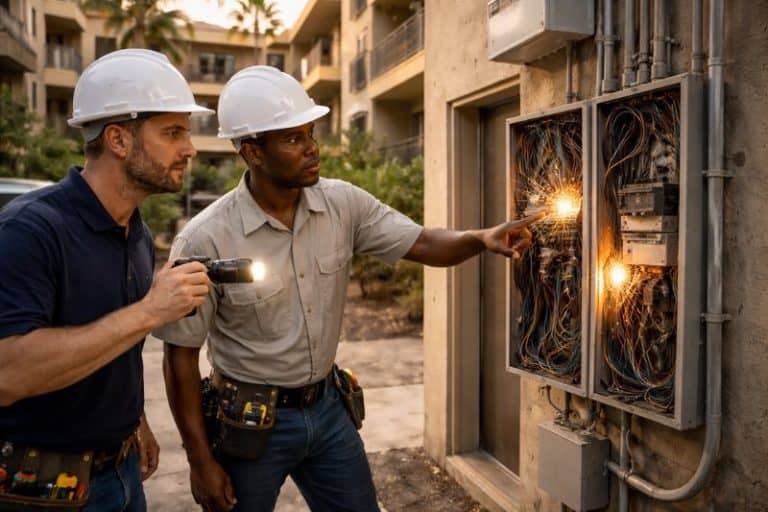
Panels that are warm to the touch, breakers that produce a faint buzzing sound, or junction boxes that run hot are more serious warning signs. Heat is the enemy of electrical connections. Sustained elevated temperature in a panel or breaker box accelerates the degradation of insulation and the loosening of connections — both of which increase resistance, which generates more heat, in a cycle that ends badly.
Difficulty accommodating new circuits or amenities — a situation where every request for an additional circuit is met with “we don’t have room” — is a clear administrative indicator that the electrical infrastructure has reached its practical limit. Buildings in this position are not just inconvenienced; they are constrained from making improvements that their tenants increasingly expect.
If any of these conditions exist in your building, do not defer the conversation. Electrical systems do not typically fail catastrophically without warning signs. They degrade under sustained stress, and the warning signs are exactly that — warnings, not outcomes. Engaging a licensed electrician while you still have options is always preferable to engaging one after a failure has occurred.
What a Professional Load Evaluation Actually Involves
When a property manager reaches out to RG Electric for a load evaluation and forecasting consultation, here is what that process looks like in practice.
We begin by reviewing available documentation — existing panel schedules, prior permit records, any known upgrade history for the building. This gives us a paper baseline before we set foot on the property. Many older Los Angeles buildings have incomplete records, which is itself useful information: it tells us that the electrical infrastructure has likely been modified informally over the years and that a physical inspection will need to establish ground truth independently of the records.
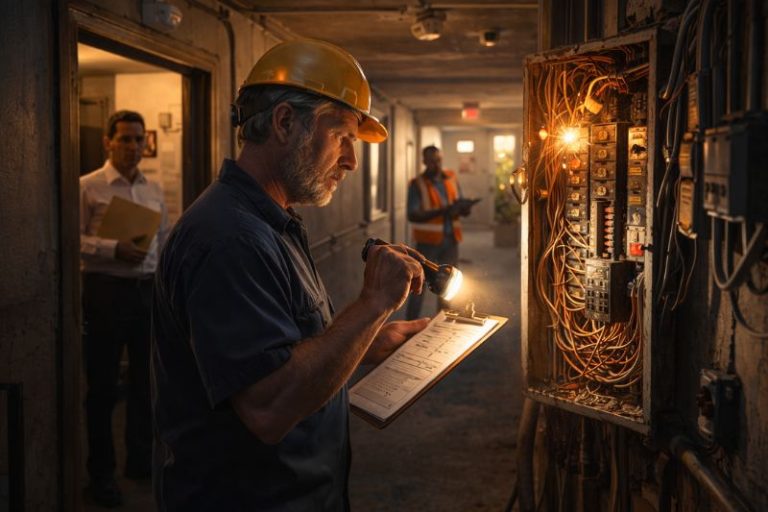
On-site, we walk the main service, distribution panels, and accessible subpanels to evaluate physical condition, actual configuration versus what the records show, breaker age and condition, bus bar condition, and available capacity. We are looking at both the technical ratings and the physical state of the equipment, because a panel rated for 200 amps that has been running near that limit for 30 years is a very different situation from a newer installation of the same rating.
We also review the building’s current load profile in the context of its unit mix, tenant usage patterns, and any planned improvements the owner has in mind. A building where the owner intends to install EV charging for all units within three years needs to be evaluated very differently from one where the current tenant mix is stable and electrification demand is modest.
The output of this evaluation is a clear advisory conversation — not a sales pitch, not a list of everything wrong with the building. We explain what we found, what the trajectory looks like based on current trends, where the real risks are, and what the options are in order of urgency and cost-effectiveness. We put everything in writing so you have documentation for your records and can reference it when making capital planning decisions.
We do not push unnecessary replacements. If the building has meaningful headroom and a manageable trajectory, we say so. If it does not, we say that too — clearly and with the data to back it up.
The Cost of Reactive Infrastructure Management
It is worth being direct about what happens to building owners who skip the forecasting step and manage electrical infrastructure reactively.
Emergency service calls cost more than scheduled work — both in direct cost and in the time pressure they create. Rushed permit applications create delays that leave tenants without power or with reduced electrical service longer than necessary. Contractors engaged under emergency conditions have less flexibility in scheduling, which often means premium pricing for expedited work. Temporary power solutions — when the building genuinely cannot wait for a full planned upgrade — add expense without adding permanence.
Beyond the direct costs, reactive infrastructure management creates reputational and liability exposure for property owners. Tenants who experience repeated electrical outages, voltage problems, or extended disruption during emergency upgrades are more likely to leave. In Los Angeles’s competitive rental market, turnover is expensive. A building’s reputation among tenants and in online reviews for reliability and management quality has real financial consequences.
There is also an insurance dimension that is increasingly relevant in California. Insurance carriers are paying close attention to electrical infrastructure in multi-unit buildings, particularly older panels and systems that show signs of deferred maintenance. A building that experiences an electrical fire or significant failure due to documented infrastructure stress is in a very different position with its insurer than one that has a clear history of proactive evaluation and maintenance. The cost of a load assessment and a phased upgrade plan is modest compared to the cost of a coverage dispute after an incident.
Building for the Next Decade, Not the Last One
The Los Angeles rental market is evolving. Tenant expectations around EV charging, energy efficiency, smart home capability, and electrical reliability are rising steadily. Buildings that can accommodate those expectations without disruption will command better tenants, stronger retention, and more stable rental income over time. Buildings that cannot will increasingly find themselves competing on price alone — the least defensible position in a competitive market.
Electrical infrastructure is not glamorous. It is not visible to tenants the way a kitchen renovation or a new lobby is. But it is foundational. It determines what is possible in your building. And in a decade where electrification is moving from trend to expectation, the buildings that have invested in understanding and planning their electrical capacity will have a significant operational advantage over those that have not.
Load growth forecasting is not about fear. It is about foresight. It is about understanding where your infrastructure is headed far enough in advance to make intelligent decisions — decisions that protect your tenants, protect your property value, and protect your ability to make the investments you want to make without being forced into the ones you did not plan for.
At RG Electric, we work with property managers and building owners across Los Angeles, from Santa Monica to Encino, from Beverly Hills to Van Nuys, to help them think clearly about their electrical infrastructure over time. We are licensed, bonded, and insured. We pull permits, coordinate inspections, and provide clear documentation so your records are complete. And we explain everything in plain language — because you should understand exactly where your building stands before you make any capital decision.
For immediate assistance or to schedule a professional evaluation, call RG Electric directly at (323) 521-5131.