
 Call (323) 5215131
Why Insurance Companies Are Forcing Electrical Panel Upgrades in Los Angeles
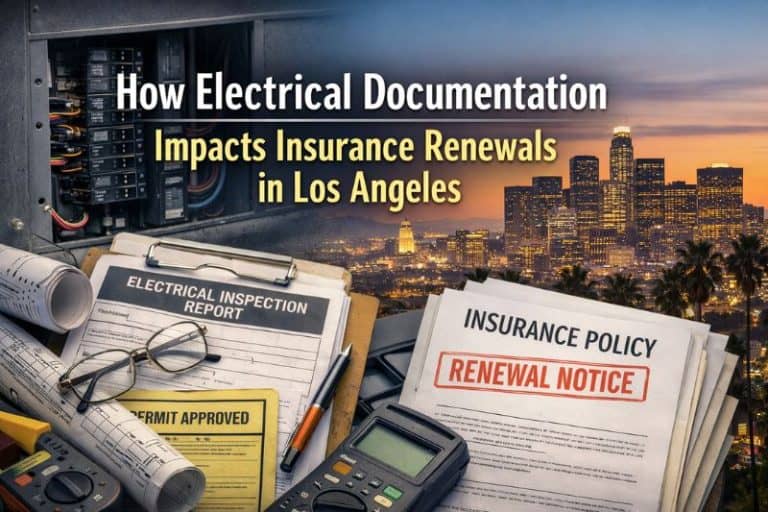
Across Los Angeles, insurance companies are taking a much closer look at electrical systems, especially in older homes and multi-unit buildings. What used to be a recommendation has increasingly become a requirement. Property owners are now receiving notices that outdated electrical panels must be replaced in order to maintain coverage.
For many homeowners and property managers, this comes as a surprise. The panel may still be working. There may be no visible issues. But from an insurance standpoint, age, design, and known failure history matter more than whether the lights are currently on.
This shift is happening quickly, and it is affecting apartment complexes, condominiums, rental properties, and single-family homes throughout Los Angeles. Insurance carriers are reducing risk wherever they can, and electrical panels are one of the first systems they evaluate.
For property managers and building owners, the stakes are even higher. Electrical panels directly impact tenant safety, liability exposure, and insurability. Waiting until an insurance company sets a deadline often leads to rushed decisions, higher costs, and unnecessary stress.
Understanding why insurance companies are forcing these upgrades, and which panels are most often targeted, helps property owners stay ahead of the issue instead of reacting to it at the last minute.
Why Insurance Companies Are Tightening Electrical Requirements in Los Angeles
Insurance companies are not randomly enforcing electrical upgrades. Their decisions are driven by risk, data, and recent loss trends across California.
One of the biggest factors is the age of Los Angeles housing. Many residential and multi-unit buildings were constructed decades ago, long before modern electrical safety standards were in place. Panels installed in the 1950s, 60s, and 70s were never designed to handle today’s electrical loads, nor were they built with the same safety features required by current codes.
At the same time, insurers are facing increased losses statewide. Wildfires, higher construction costs, and large claim payouts have made carriers far more cautious. When insurance companies evaluate risk, they focus heavily on systems that have a known history of failure or fire hazards. Electrical panels fall squarely into that category.
Another key factor is data. Insurance carriers rely on long-term performance records, not just visual inspections. Certain electrical panel brands have documented issues where breakers fail to trip, connections overheat, or internal components degrade over time. Even if a panel appears to be functioning, insurers view these designs as unpredictable and dangerous.
From an insurance perspective, the logic is simple. If a piece of equipment has a known track record of causing fires or contributing to losses, it becomes unacceptable to insure, regardless of whether it has failed yet.
Los Angeles adds another layer of complexity. The city has strict building and safety regulations, and inspectors are trained to flag outdated or non-compliant electrical equipment. When insurers know that a property is likely to face inspection issues or code violations, they are far more likely to demand upgrades before renewing or issuing a policy.
For property owners, this means insurance decisions are no longer based solely on whether the system is “working.” They are based on whether the electrical infrastructure meets modern safety expectations and reduces liability for everyone involved.
Electrical Panels Are One of the First Things Insurance Companies Flag
Insurance companies rarely start by looking at outlets, switches, or lighting. They start with the electrical panel, and there is a very specific reason for that.
The electrical panel represents concentrated risk
The panel is the control center for the entire electrical system. Every circuit, every load, and every safety device runs through it. From an insurance standpoint, that makes the panel a single point of failure.
If breakers fail to trip, connections overheat, or internal components deteriorate, the risk of an electrical fire increases significantly. A single panel failure can impact an entire home or, in the case of apartment buildings, multiple units at once.
Because of this, insurers view the panel as higher risk than individual electrical components.
“It still works” is no longer a valid standard
One of the most common responses property owners give is that the panel is still functioning. Lights turn on. Breakers reset. There have been no outages.
Insurance companies do not base decisions on day-to-day performance.
They rely on historical failure data, known design defects, and long-term loss trends. If a panel brand or design has a documented history of failing under load or contributing to fires, it is considered unacceptable, even if it has not failed yet.
From an insurance perspective, waiting for failure is not an option.
Panels are easy for insurers to identify and flag
Unlike hidden wiring, electrical panels are easy to document. An insurer often only needs to know:
- The panel brand
- The approximate age
- Whether it meets modern safety standards
In many cases, simply listing the panel type on an insurance questionnaire or inspection report is enough to trigger a replacement requirement. There is no need for visible damage or active problems.
This is why panel upgrade demands often appear suddenly during renewals or underwriting reviews.
Multi-unit buildings face higher scrutiny
For apartment buildings and other multi-unit properties, panel issues carry greater liability.
A panel failure does not affect just one tenant. It can impact multiple units, shared electrical systems, and common areas. That increases the potential size of a claim and the risk to the insurer.
This is one reason property managers are frequently required to address panel upgrades before coverage is approved or renewed, especially when dealing with older electrical infrastructure.
For these properties, insurers are not just evaluating safety. They are evaluating exposure.
Why insurers act before something goes wrong
Insurance companies are trying to reduce losses, not respond to them.
Once an electrical fire occurs, the cost is already locked in. Requiring a panel upgrade beforehand is a preventative measure designed to reduce claims altogether.
That is why insurers focus on panels early, enforce deadlines, and require documentation showing that the work was performed by a licensed electrician, often with permits and inspections to back it up.
Outdated Electrical Panels That Commonly Trigger Insurance Demands
When insurance companies require an electrical panel upgrade, it is rarely vague. In most cases, the requirement is tied to specific panel brands and designs that have a long history of safety issues.
In Los Angeles, these panels are still extremely common, especially in older homes and multi-unit buildings.
Why certain panel brands are flagged automatically
Insurance companies rely on loss data and documented failure patterns, not opinions. Over time, certain electrical panels have proven to be unreliable under normal operating conditions.
Common issues insurers look at include:
- Breakers that fail to trip during overloads
- Internal components that overheat
- Loose or degrading connections
- Designs that no longer meet modern safety standards
If a panel model is known for these issues, insurers often treat it as an unacceptable risk, regardless of its current condition.
Zinsco panels
Zinsco panels are widely found in Los Angeles buildings constructed from the 1950s through the 1970s.
Why insurers flag them:
- Breakers may appear “on” but fail to disconnect power
- Internal bus bars can overheat or melt
- Failures often happen without warning
Even when Zinsco panels are still functioning, insurance companies frequently require replacement because the risk is considered unpredictable.
Federal Pacific Electric (FPE) panels
Federal Pacific panels are one of the most commonly cited panels in insurance-related upgrade demands.
Why insurers flag them:
- Documented history of breakers failing to trip
- Increased risk of overheating and fire
- Poor performance under fault conditions
Many insurers will not write or renew a policy on a property with an FPE panel unless it has been replaced.
Challenger panels
Challenger panels are also commonly found in older residential and multi-unit properties.
Why insurers flag them:
- Breaker reliability concerns
- Compatibility issues with replacement breakers
- Aging components that no longer meet current standards
These panels may not fail immediately, but insurers view them as a long-term liability.
Pushmatic panels
Pushmatic panels operate differently than modern breaker panels, using push-button breakers instead of switches.
Why insurers flag them:
- Breakers can become stiff or fail internally
- Difficult to test or reset properly
- Replacement parts are limited and inconsistent
Because of these issues, Pushmatic panels are often included in insurance-mandated replacement lists.
Why “working condition” does not protect these panels
A key misunderstanding among property owners is assuming that visible problems must exist for an upgrade to be required.
Insurance companies do not wait for:
- Burn marks
- Tripped breakers
- Power outages
- Tenant complaints
If a panel model has a documented failure history, insurers often treat its continued use as unacceptable risk. That is why these panels are frequently flagged during renewals, underwriting reviews, or inspections, even when no immediate issues are present.
Los Angeles has a higher concentration of these panels
Because so much of Los Angeles housing stock was built decades ago, these outdated panels are still widely installed across the city.
Apartment complexes, duplexes, and older single-family homes are especially likely to have original electrical equipment. As insurance standards tighten, properties with these panels are far more likely to face upgrade requirements than newer construction.
For property owners, recognizing these panel types early allows for planned upgrades, rather than reacting to insurance deadlines under pressure.
Why Property Managers and Multi-Unit Owners Are Being Hit the Hardest
While insurance-driven panel upgrades affect homeowners, property managers and multi-unit building owners are facing the most pressure. Insurance companies evaluate these properties very differently than single-family homes.
Shared electrical systems increase liability
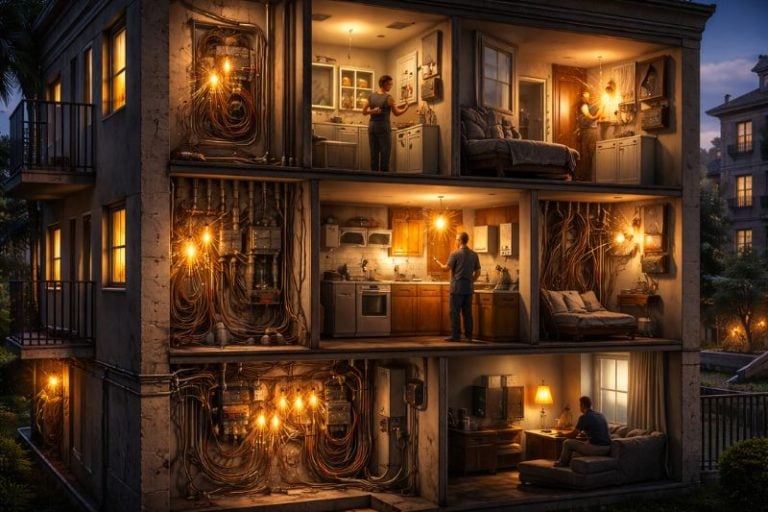
In an apartment building or multi-unit property, electrical panels often serve multiple units, common areas, or shared infrastructure. A failure does not impact just one tenant, it can affect dozens of residents at once.
From an insurance standpoint, that creates:
- Higher potential claim values
- Greater exposure to injury or property damage
- Increased legal and liability risk
This is why insurers are far less flexible when it comes to older panels in multi-unit buildings.
Insurance companies look beyond individual units
Property managers are often surprised to learn that insurance carriers evaluate the entire building’s electrical system, not just individual apartments.
Even if:
- Tenants are not complaining
- Breakers are not tripping
- There have been no outages
An outdated or unsafe panel can still trigger a requirement for replacement before a policy is renewed or issued.
This is especially common in older Los Angeles buildings where original electrical infrastructure is still in place.
Permits and documentation matter more for commercial properties
Unlike residential homes, multi-unit and commercial properties are expected to provide clear documentation showing that electrical work was done properly.
Insurance companies often require:
- Work performed by a licensed electrical contractor
- Permits pulled with the city
- Final inspections completed
- Certificates of insurance are available on request
This is where many property managers run into problems with unlicensed or shortcut work done in the past.
For these types of projects, working with a contractor experienced in commercial electrical services is critical.
Panel upgrades are rarely isolated in multi-unit buildings
In apartment buildings, a panel upgrade is often part of a larger electrical picture. Once a panel is opened or inspected, other issues may surface, such as:
- Double-tapped breakers
- Aging or undersized wiring
- Improper grounding
- Code violations that must be corrected before approval
This is why insurance-mandated panel replacements in multi-unit buildings should be handled by electricians who regularly perform electrical panel services in older properties and understand how inspections actually work in Los Angeles.
Delays can impact coverage and tenancy
For property managers, timing matters. Insurance deadlines are often firm, and delays can result in:
- Policy non-renewals
- Temporary coverage gaps
- Delayed inspections
- Increased stress dealing with carriers and tenants
Addressing panel upgrades proactively gives owners more flexibility and avoids being forced into last-minute decisions that cost more and disrupt tenants.
What Happens If You Ignore an Insurance-Mandated Panel Upgrade
When an insurance company requires an electrical panel upgrade, it is tying that requirement directly to coverage. Ignoring it, or pushing it off, often creates bigger problems than most property owners expect.
Insurance companies may refuse to renew coverage
One of the most common outcomes is simple and serious: policy non-renewal.
Insurance carriers may give a short compliance window, but if the upgrade is not completed in time, they can decline to renew the policy altogether. For older buildings, especially multi-unit properties, finding replacement coverage after a non-renewal can be difficult and expensive.
At that point, the issue is no longer just the panel. It becomes an insurance availability problem.
Electrical exclusions can quietly remove protection
In some cases, insurers do not cancel a policy immediately. Instead, they issue exclusions related to electrical systems.
This creates a dangerous gray area. The property appears insured on paper, but if an electrical fire or panel-related failure occurs, the claim may be denied. Many owners do not realize this until after an incident happens.
From a risk perspective, this is often worse than having no coverage at all, because it creates a false sense of security.
Waiting usually turns a planned upgrade into an emergency
When owners delay until insurance deadlines are close, panel upgrades become rushed.
Scheduling becomes tighter, costs increase, and there is little flexibility if complications arise. In multi-unit buildings, this pressure can quickly turn a planned project into an emergency situation, especially if power issues develop or tenants are affected.
This is how routine upgrades often turn into emergency electrical repairs, which are almost always more disruptive and more expensive than proactive work.
Inspections under pressure often uncover more issues
Older buildings rarely have just one electrical concern.
When a panel is replaced under time pressure, inspectors may uncover additional problems such as outdated wiring, grounding issues, or unsafe breaker configurations. If these are found late in the process, approvals can be delayed, and costs can rise quickly.
This is why insurance-driven panel upgrades frequently involve additional electrical repairs before final approval is granted.
The impact extends beyond the electrical room
For property managers, delaying an insurance-mandated upgrade often creates ripple effects. Tenants may experience disruptions, schedules become harder to coordinate, and communication with insurers becomes more stressful.
By addressing panel upgrades early, owners and managers retain control over timing, scope, and tenant coordination. Proactive upgrades protect not only insurance eligibility, but also the long-term stability and value of the property.
Working with electricians who regularly perform electrical panel services helps ensure these upgrades are handled correctly, with fewer surprises and smoother inspections.
Why Licensed, Permitted Panel Upgrades Matter for Insurance Approval
When insurance companies require an electrical panel upgrade, they are evaluating more than just the equipment being installed. They are assessing whether the work itself reduces risk in a way they can verify and trust. This is why who performs the work and how it is documented matters just as much as the new panel.
Insurance approval depends on verifiable compliance
Insurance companies do not operate on verbal assurances. They rely on documentation that shows the upgrade was completed according to current safety standards.
This typically includes confirmation that the work was performed by a licensed electrical contractor, that permits were pulled with the city, and that the installation passed inspection. Without these elements, insurers may still consider the property non-compliant, even if a new panel is physically in place.
For property owners, this is a critical distinction. A panel replacement that looks complete does not always satisfy insurance requirements if the proper process was not followed.
Unpermitted work often creates long-term problems
In an effort to save time or money, some property owners choose to move forward with panel upgrades that are not permitted or inspected. While this may seem like a shortcut, it frequently creates larger problems later.
When an insurance company requests proof of compliance, unpermitted work raises questions. Insurers may question whether the installation meets current code, whether grounding and bonding were addressed correctly, or whether hidden safety issues were overlooked.
In some cases, owners are forced to redo work they already paid for, simply to meet insurance documentation standards. What was intended as a cost-saving measure becomes an added expense.
Inspections protect owners, not just insurers
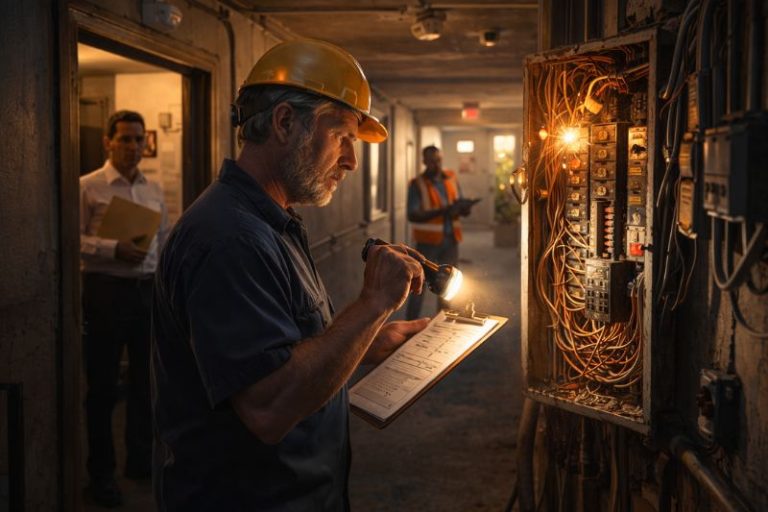
City inspections are often viewed as an inconvenience, but they serve an important role. Inspections verify that the panel upgrade was installed safely and that the surrounding electrical system meets current requirements.
In older Los Angeles buildings, inspections frequently uncover issues that are not immediately visible, such as grounding deficiencies or outdated wiring methods. While these discoveries can feel frustrating, they ultimately protect the property owner from future failures, denied claims, or liability exposure.
This is especially important in multi-unit buildings, where inspectors may evaluate the broader electrical system as part of the approval process.
Documentation is especially important for multi-unit properties
Property managers and building owners are often asked by insurance carriers to provide contractor credentials, license information, and proof of insurance. This is standard practice for apartment complexes, HOAs, and other multi-unit properties.
Experienced commercial contractors understand what insurers expect and how to avoid delays caused by missing or incomplete paperwork.
A panel upgrade is not just an equipment swap
A proper panel upgrade involves more than replacing a box on the wall. It requires evaluating load capacity, grounding, breaker configuration, and overall system safety.
This is why insurance-driven upgrades should be handled by electricians who specialize in electrical panel services and are familiar with how inspections work in Los Angeles.
Licensed, permitted work ensures that the upgrade is recognized by insurers, approved by inspectors, and completed in a way that protects both the property and the owner.
How RG Electric Helps Property Owners Stay Ahead of Insurance Issues
Insurance-driven electrical upgrades can feel sudden and frustrating, especially when deadlines are involved. For property owners and managers, the biggest challenge is not just replacing an electrical panel, but navigating the process correctly so coverage issues are actually resolved.
This is where working with the right electrical contractor makes a meaningful difference.
Experience with insurance-driven panel upgrades
RG Electric regularly works with property owners who are responding to insurance requirements, especially in older Los Angeles buildings. These projects are handled with an understanding that the goal is not just installing new equipment, but meeting insurance expectations and passing inspections without delays.
Because insurance companies often flag panels before a failure occurs, many of these upgrades are proactive rather than emergency-driven. That allows the work to be planned properly, with clear communication and realistic timelines.
Familiarity with Los Angeles codes and inspections
Electrical work in Los Angeles comes with strict local requirements. Panel upgrades often require permits, inspections, and compliance with current safety standards that older buildings were never designed to meet.
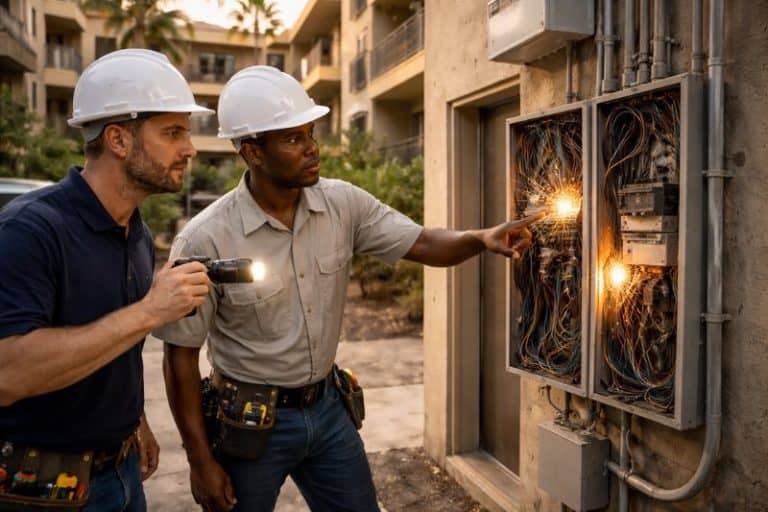
RG Electric is familiar with how these inspections work and what inspectors typically look for in both residential and multi-unit properties. This helps reduce surprises during approvals and avoids the need for repeat work caused by missed requirements.
For apartment buildings and other commercial properties, this experience is especially important. Insurance companies expect upgrades to be handled by contractors who understand how to work within the city’s regulatory framework and provide proper documentation.
Property owners needing this level of support often rely on RG Electric’s commercial electrical services for multi-unit and mixed-use buildings.
Clear communication throughout the process
One of the most common complaints property owners have during insurance-mandated upgrades is lack of communication. Confusing explanations, unclear estimates, and unanswered questions add stress to an already time-sensitive situation.
RG Electric focuses on clear, direct communication at every step. Property owners understand what needs to be done, why it matters, and how it affects insurance approval. This transparency helps owners make informed decisions instead of reacting under pressure.
Panel upgrades handled correctly the first time
Insurance-driven upgrades leave little room for error. If work fails inspection or does not meet documentation requirements, owners may still face coverage issues even after spending money on a new panel.
That is why these projects should be handled by electricians who specialize in electrical panel services and understand how to complete upgrades that meet both code and insurance standards.
Proper planning, permitting, and inspection help ensure the upgrade actually solves the insurance problem instead of creating a new one.
Don’t Wait Until Insurance Forces the Issue
Electrical panel upgrades are becoming a standard requirement for many Los Angeles properties, especially those with older electrical systems. Insurance companies are no longer waiting for failures. They are acting based on risk, history, and safety data.
For homeowners, waiting often means rushed decisions and higher costs. For property managers and multi-unit owners, delays can impact coverage, tenants, and long-term liability.
Addressing panel upgrades proactively gives property owners more control, fewer surprises, and a smoother path to insurance approval. It also improves safety and protects the long-term value of the property.
If you have been notified by your insurance company or suspect your electrical panel may be an issue, it is better to act early.
Contact RG Electric at (323) 521-5131 for your free consultation.