
 Call (323) 5215131
What Permits Are Required for Electrical Work in Los Angeles?
If you are planning electrical work on a property in Los Angeles, one of the first questions you should answer is whether that work requires a permit. It is a question that homeowners, property managers, and business owners ask constantly, and it is one where the wrong answer carries real consequences: failed inspections, voided insurance coverage, legal liability, and costly retroactive remediation when unpermitted work surfaces during a sale or renovation.
This post answers the question directly. It covers which types of electrical work require permits in Los Angeles, which do not, where the gray areas are, how the permit process works, and what happens when work is done without one. We hold License C10 #910807 and pull permits with the Los Angeles Department of Building and Safety on a regular basis. What follows reflects how the permitting requirement actually works in practice across residential, multi-unit, and commercial properties throughout Los Angeles.
Why the Permit Question Matters Before Work Begins
The permit requirement exists because electrical work directly affects the safety of everyone who occupies a building. A panel installed without a permit has never been inspected. A circuit added without a permit may have been wired incorrectly. Wiring that has never been reviewed by an inspector is wiring that no one with authority has confirmed is safe.
From a property owner’s perspective, the permit question matters for three specific reasons. First, unpermitted work creates liability. If an electrical failure causes a fire or injury and the work was done without a permit, the property owner’s exposure is significantly greater than if the work had been properly permitted and inspected. Second, unpermitted work affects insurability. Insurance carriers reviewing a property can discover permit history gaps, and in California, where insurers are increasingly scrutinizing electrical systems before issuing or renewing policies, that gap creates real coverage risk. Third, unpermitted work complicates sales. Buyers, lenders, and their inspectors routinely check permit records, and open or missing permits become negotiating leverage or transaction blockers.
Knowing what requires a permit before work begins is the simplest way to avoid all three problems.
The Permit Authority in Los Angeles: LADBS and the NEC
In Los Angeles, electrical permits are issued and inspections are conducted by the Los Angeles Department of Building and Safety, commonly referred to as LADBS. LADBS enforces the California Electrical Code, which is based on the National Electrical Code with California-specific amendments. For properties in unincorporated areas of Los Angeles County or in other incorporated cities within the county, the relevant authority may differ. Cities like Beverly Hills, Santa Monica, Burbank, and Pasadena have their own building departments. The information in this post applies specifically to properties within the City of Los Angeles jurisdiction.
A permit is not just a piece of paper. It is an authorization for work to proceed and a commitment to have that work inspected before it is closed up inside walls or energized permanently. The permit process creates a documented record that the work was performed to code, reviewed by an inspector, and signed off as compliant. That record follows the property and has value for every subsequent owner, insurer, and lender who touches it.
Electrical Work That Always Requires a Permit in Los Angeles
The following categories of electrical work require an LADBS permit without exception. If a contractor tells you otherwise for any of the items on this list, that is a significant warning sign.
Electrical Panel Replacements and Upgrades
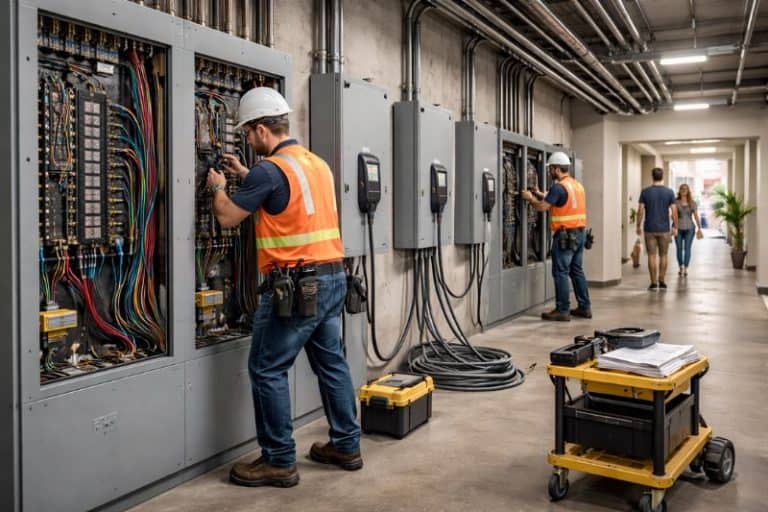
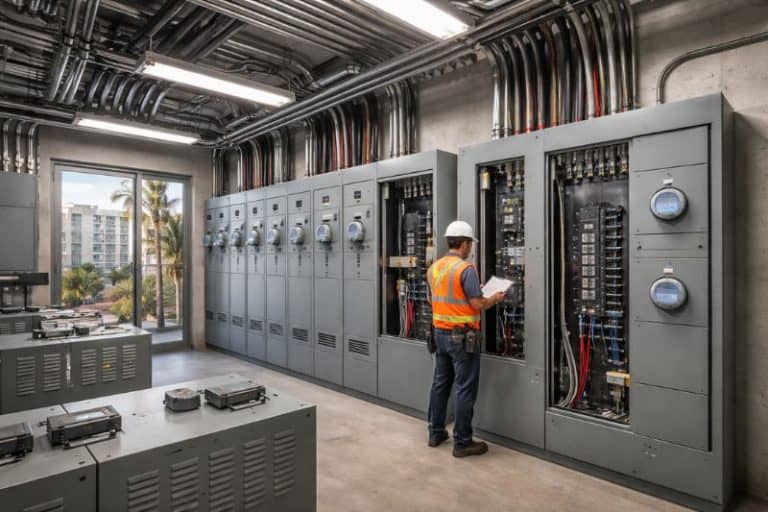
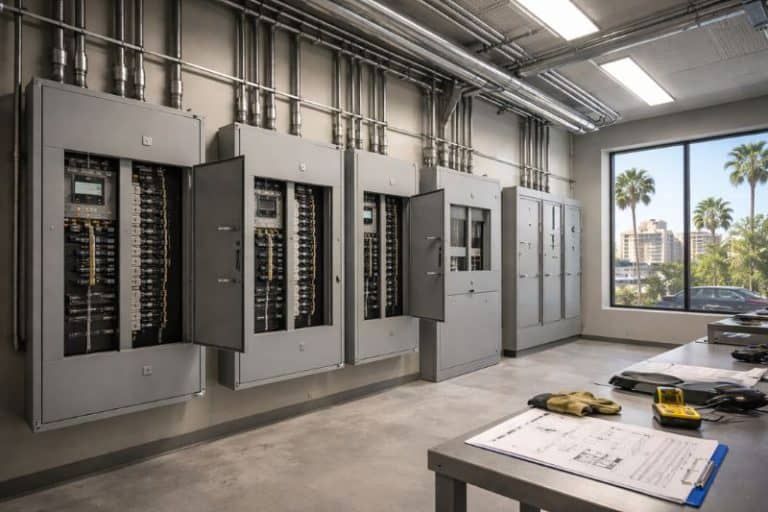
Replacing or upgrading an electrical panel is one of the most common electrical projects in Los Angeles, and it requires a permit every time without exception. This includes replacing a failed or outdated panel with a new panel of the same amperage, upgrading from a smaller panel to a larger one, and replacing panels with documented failure histories such as Federal Pacific, Zinsco, Pushmatic, and Challenger brands. The permit process for a panel replacement includes an LADBS inspection of the completed installation before the panel is energized and the permit is finaled.
The consequence of skipping this permit is that the panel has never been inspected. A panel that has never been inspected may have wiring errors, improper grounding, undersized conductors, or other deficiencies that create fire or shock risk. When that panel is eventually discovered during a sale or insurance review, the property owner faces retroactive permitting, possible exposure of the installation for inspection, and correction costs that are always higher than doing it right the first time.
Service Upgrades
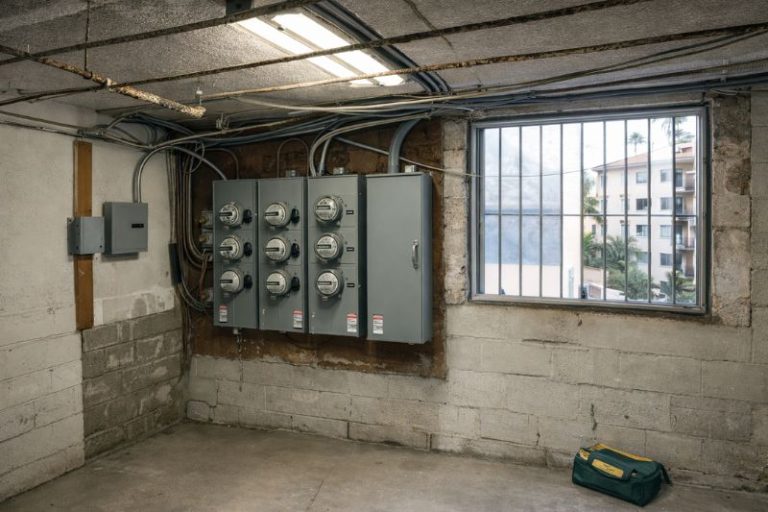
A service upgrade increases the amperage of electrical service coming into a building, typically from 100 amps to 200 amps, or from 200 amps to 400 amps for larger properties. Service upgrades require coordination with the utility, LADBS permitting, and a final inspection before the utility will authorize the new service connection. No utility in the Los Angeles area will connect upgraded service without a permit and inspection sign-off. The permit is not optional in any practical sense for this category of work.
New Circuit Installation
Adding a new circuit, whether for a kitchen appliance, a home office, a garage workshop, a laundry room, or any other purpose, requires a permit. A new circuit involves running wire from the panel to the point of use, connecting that wire to a breaker in the panel, and installing the outlet, switch, or fixture at the end of the run. Each of these steps has code requirements that an inspector verifies. The cause of most residential electrical fires is overloaded or improperly wired circuits. The permit and inspection requirement for new circuits exists precisely because this work, done incorrectly, creates direct fire risk.
Subpanel Installations
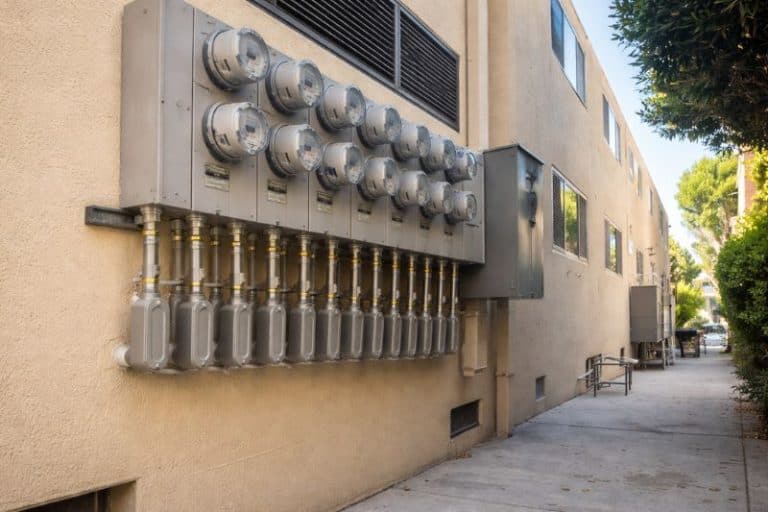
Installing a subpanel to distribute power to a detached structure, a specific area of a building, or individual units in a multi-unit property requires a permit. Subpanels must be correctly sized, properly grounded, and installed with conductors rated for the load they will carry. An improperly installed subpanel is a chronic source of electrical problems in older Los Angeles multi-unit buildings, precisely because subpanel work is among the most frequently skipped permits in residential construction.
EV Charger Installation
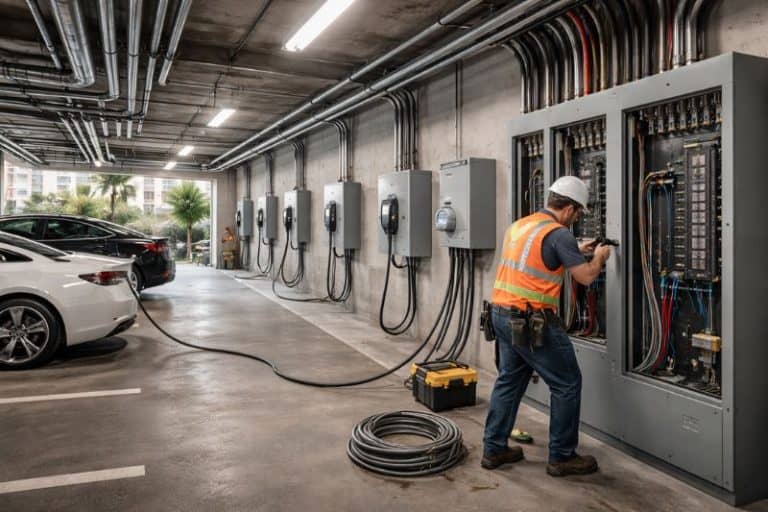
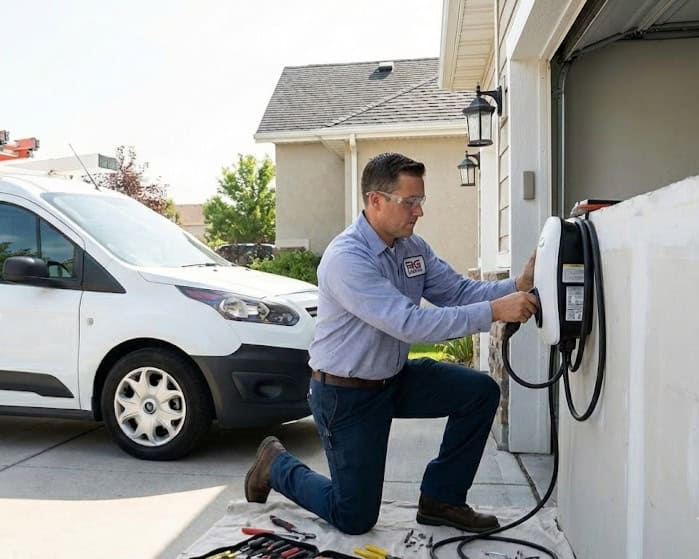
Installing a Level 2 EV charger requires a dedicated 240-volt circuit, which requires a permit. This applies whether the charger is being installed in a residential garage, a multi-unit property parking structure, or a commercial parking facility. Los Angeles has significant EV infrastructure goals, and LADBS has established a streamlined permit process for EV charger installations to support that policy direction. The permit is still required, and the inspection still happens, but the process is generally efficient for straightforward residential installations. For multi-unit and commercial properties, the electrical load implications of multiple EV chargers require a load calculation as part of the permit application.
Rewiring Projects
Replacing or extending wiring throughout a building or a significant portion of a building requires a permit. This includes full rewiring of older homes with original knob-and-tube or aluminum wiring, partial rewiring to correct hazardous conditions, and wiring added during renovation projects. Rewiring work is typically inspected before it is closed up inside walls, which means the inspection has to happen at the right point in the construction sequence. A permit pulled after the walls are closed is a permit that cannot be properly inspected without opening them back up.
New Construction Electrical
All electrical work associated with new construction, additions, accessory dwelling units, and tenant improvements in commercial spaces requires permits. This is typically coordinated as part of the broader construction permit process rather than as a standalone electrical permit, but the electrical work is inspected separately at multiple stages of construction: rough-in before walls close, and final inspection after all fixtures and devices are installed.
GFCI and AFCI Upgrades in Some Circumstances
Installing GFCI and AFCI breakers at the panel level as part of a broader upgrade project typically falls within the permit scope of that project. Replacing individual GFCI outlets on a like-for-like basis generally does not require a standalone permit. The distinction matters when the work is being done as part of a compliance remediation effort ordered by an insurer or following an LADBS notice. In those cases, documenting the work through the permit process provides the compliance record the insurer or agency is looking for.
Electrical Work That Generally Does Not Require a Permit
Not all electrical work requires a permit. Like-for-like replacements and minor repairs that do not change the electrical system’s configuration are generally exempt. Understanding this category helps property owners distinguish between work that can be done without a permit and work that cannot.
Replacing a light fixture with another light fixture on an existing circuit does not require a permit. Replacing an outlet or switch on an existing circuit with a new outlet or switch of the same type does not require a permit. Replacing a ceiling fan with another ceiling fan on an existing circuit does not require a permit. Replacing a failed circuit breaker with an identical breaker of the same amperage does not require a permit, though replacing it with a different type, such as swapping a standard breaker for an AFCI breaker, may require one depending on the scope of the project.
The common thread in the no-permit category is that the work does not change the electrical system. It restores something that existed to its prior condition. The moment work adds capacity, changes the configuration, or extends the system in any way, the permit requirement applies.
The Gray Areas: Where Unpermitted Work Most Often Happens
Most unpermitted electrical work in Los Angeles does not happen because property owners intentionally evade the requirement. It happens because contractors skip permits to reduce their administrative burden and price their work lower, because property owners did not know to ask, or because work was done by unlicensed individuals who do not have the ability to pull permits in the first place. Understanding where the gray areas are is useful for anyone evaluating a property or managing a portfolio that has changed hands multiple times.
Garage Conversions and ADU Work
Los Angeles has seen significant ADU and garage conversion activity over the past decade. Electrical work associated with these conversions, including new circuits, subpanels, and service upgrades to support the added load, consistently represents some of the most common unpermitted work we encounter during inspections. The consequence is that the conversion itself may be unpermitted, and the electrical work within it has never been inspected. For property owners trying to legalize these units, the electrical work is typically one of the first items that requires retroactive permitting and possible remediation.
Tenant Improvement Work in Older Commercial Buildings
Older commercial buildings in neighborhoods like Downtown LA, Koreatown, and Hollywood have frequently undergone multiple tenant improvement cycles over the decades, not all of them permitted. Electrical modifications made during previous tenancies, including added circuits, relocated panels, and modified lighting systems, may have no permit record. When a new tenant improvement permit is pulled, the unpermitted prior work surfaces and must be addressed before the new permit can be finaled.
Work Done by Unlicensed Contractors
Only licensed electrical contractors can pull permits for electrical work in Los Angeles. Homeowners can pull permits for work on their own primary residence under owner-builder provisions, but that provision does not extend to rental properties or commercial buildings. Work done by unlicensed individuals, regardless of how technically competent those individuals may be, cannot be permitted. The result is a permanent gap in the permit record that will surface eventually. Verifying contractor licensing through the California Contractors State License Board before any electrical work is authorized is a basic due diligence step that prevents this problem.
How the LADBS Electrical Permit Process Works
Understanding the permit process removes the mystery from it. For most standard electrical projects in Los Angeles, the process is more straightforward than property owners expect when they go in prepared.
Permit Application
The licensed electrical contractor submits a permit application to LADBS describing the scope of work, the property address, and the relevant code sections that apply. For straightforward projects like panel replacements, permits can often be issued over the counter or through LADBS’s online portal on the same day. More complex projects involving service upgrades, load calculations, or work on larger buildings may require plan check review before the permit is issued, which adds time to the front end of the process.
The Work Itself
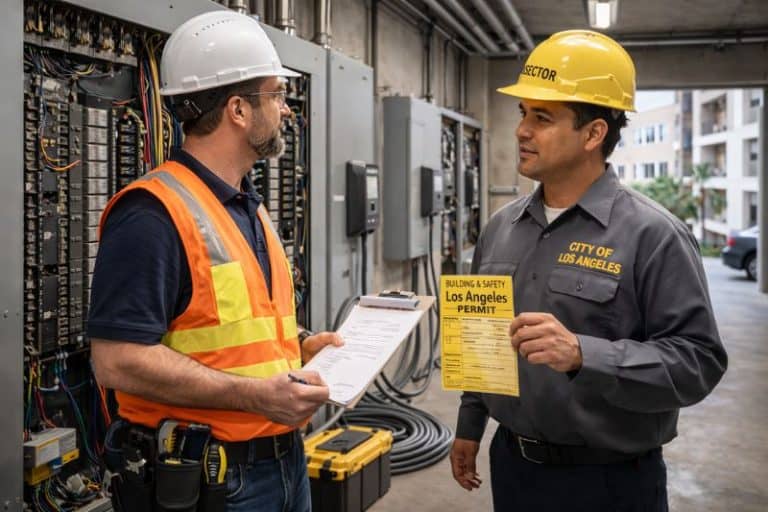
Once the permit is issued, the work proceeds. The permit number is typically posted at the job site. For work that will be concealed inside walls, the inspection must happen before the walls close. Scheduling inspections at the right point in the construction sequence is part of project management for any permitted electrical project. Calling for inspection too early, before the work is complete, or too late, after work has been covered, both create problems that add time and cost to the project.
The Inspection
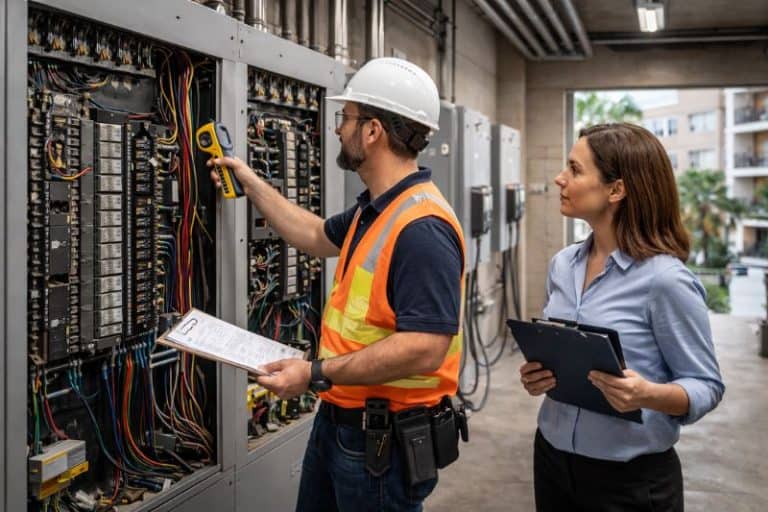
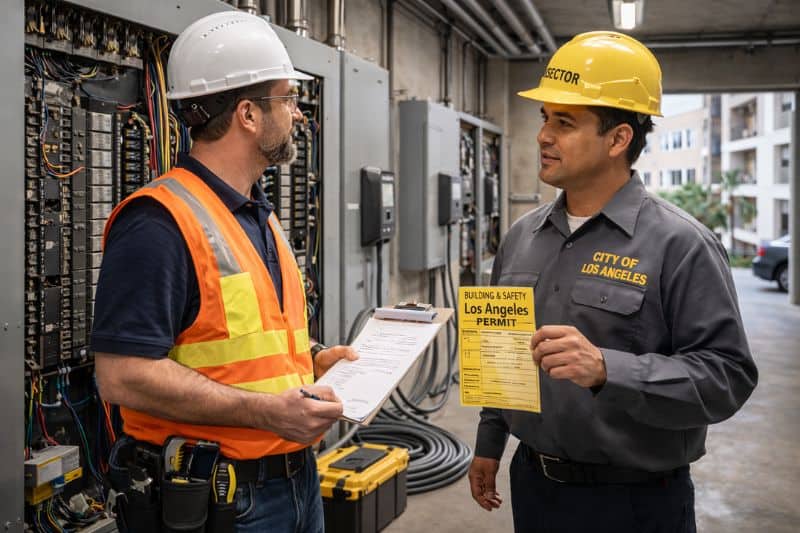
LADBS inspectors verify that the work meets code requirements. For a panel replacement, the inspector checks the panel installation, grounding and bonding, conductor sizing, breaker labeling, and clearances. For new circuits, the inspector verifies wire gauge, connection integrity, and proper protection. If the work passes, the inspector signs off on the permit card. If corrections are required, the inspector documents them and a re-inspection is scheduled after the corrections are made.
Final Sign-Off
When all inspections have been passed and any corrections have been made, the permit is finaled. The finaled permit is the documentation record that the work was completed and inspected. For panel replacements, the utility requires the finaled permit before authorizing the new service connection. For property owners, the finaled permit is the document that satisfies insurers, satisfies buyers and their lenders, and provides legal protection if the work is ever questioned in the future.
What Happens When Electrical Work Is Done Without a Permit
The consequences of unpermitted electrical work are not hypothetical. They show up in predictable ways at predictable moments, and they are consistently more expensive and disruptive than the original permit would have been.
Discovery During Sale Transactions
Buyers and their lenders check permit records. A permit search that reveals a panel replacement or service upgrade with no associated permit is a red flag that experienced buyers and their agents know how to use. The seller faces the choice of disclosing the unpermitted work, retroactively permitting it before close, or accepting a price reduction that reflects the buyer’s cost to address it. Retroactive permitting often requires exposing the work for inspection, which means opening walls or accessing concealed wiring. The cost of retroactive permitting consistently exceeds the cost of original permitting by a significant margin.
Insurance Complications
California insurance carriers are increasingly reviewing permit history as part of their underwriting process. A property with a documented panel replacement but no associated permit raises questions about the quality and safety of that work. When an electrical incident occurs at a property with unpermitted work, the carrier has grounds to investigate whether the unpermitted work contributed to the incident. Denied claims on the basis of unpermitted work are not uncommon. The permit, in this context, is part of what makes the insurance coverage meaningful.
Code Enforcement Notices
LADBS can issue code enforcement notices for unpermitted work when it is discovered during inspections of other projects, in response to tenant complaints, or through proactive code enforcement activity. A code enforcement notice requires the property owner to either permit the work retroactively, demonstrate that a permit was not required, or remove the unpermitted work entirely. For work that was done years ago and is now concealed inside walls, retroactive compliance is a significant undertaking. The notice does not go away until it is resolved, and unresolved notices create title issues that affect the property’s marketability.
Liability Exposure
If an electrical failure causes injury or property damage and the work involved was unpermitted, the property owner’s legal exposure is materially greater than it would be for properly permitted work. The absence of a permit is evidence that the work was not inspected and that the owner did not take the steps required by law to ensure it was done safely. In litigation, that is a difficult position to defend. The permit, and the inspection record it creates, is a legal protection as well as a compliance requirement.
How Permitted Work Protects Property Owners Long-Term
The permit record is a permanent part of the property’s history. Every finaled permit for electrical work is a documented statement that the work was performed by a licensed contractor, reviewed by a licensed inspector, and confirmed to meet code requirements at the time it was done. That documentation has compounding value over the life of the property.
For property managers overseeing multi-unit portfolios in areas like Sherman Oaks, Encino, Torrance, and Inglewood, a complete permit record for all electrical work done on each property is one of the most practical risk management tools available. It reduces insurance exposure, simplifies sales transactions, supports insurance renewals, and creates a baseline from which future maintenance and upgrades can be planned intelligently.
We provide complete permit documentation with every project we complete, including copies of the permit application, inspection records, and final sign-off. For property owners who have inherited buildings with incomplete permit histories, we also conduct permit history reviews and help identify gaps that should be addressed proactively rather than reactively.
Our commercial electrical services in Los Angeles include the full permit management scope for multi-unit and commercial properties, from application through final inspection sign-off.
Frequently Asked Questions
Do I need a permit to replace an outlet in Los Angeles?
Replacing an existing outlet with a new outlet of the same type on an existing circuit generally does not require a permit. This is a like-for-like replacement that does not change the electrical system. If you are replacing a standard outlet with a GFCI outlet as part of a broader upgrade project, or if the work involves any change to the circuit itself, the permit requirement may apply depending on the overall scope of work.
Can a homeowner pull their own electrical permit in Los Angeles?
Owner-builders can pull permits for electrical work on their own primary residence under California’s owner-builder provisions. This provision does not apply to rental properties, investment properties, or commercial buildings. For those property types, only a licensed electrical contractor can pull the permit. Attempting to use owner-builder provisions for a rental property is a misrepresentation on the permit application and creates additional legal exposure if the work is later scrutinized.
How long does it take to get an electrical permit in Los Angeles?
For standard projects like panel replacements, permits are often issued the same day through LADBS’s online permit portal or over the counter at a LADBS office. Projects requiring plan check review, such as service upgrades for larger buildings or complex tenant improvement work, typically take longer. When we manage the permitting process for a project, we build the permit timeline into the project schedule so that delays do not create pressure to proceed without a permit in place.
What if the previous owner did electrical work without a permit?
If you have purchased a property and discovered that prior electrical work was done without a permit, the responsibility for addressing it transfers with ownership. The practical options are to retroactively permit the work, which may require exposing it for inspection, or to document that the work was either not required to be permitted or has since been replaced with properly permitted work. Ignoring known unpermitted work creates liability exposure and will affect insurance renewals and future sales. A permit history review before purchasing a property is a straightforward step that prevents inheriting these problems.
Does adding an EV charger at a rental property require a permit?
Yes. A Level 2 EV charger requires a dedicated 240-volt circuit, which requires a permit regardless of whether the property is residential, multi-unit, or commercial. For multi-unit properties in Los Angeles, there are also load calculation requirements when multiple chargers are being added, and in some cases a service upgrade is required before the charger installations can proceed. California law also includes provisions governing landlord obligations related to EV charging infrastructure for tenants, which adds a compliance dimension beyond the permit requirement itself.
How do I check the permit history for a property in Los Angeles?
LADBS provides a public permit records search at the LADBS online services portal. You can search by property address to see all permits issued for that address, the scope of each permit, and whether each permit was finaled. This search is free and publicly accessible. For a thorough review that includes interpreting what the permit record means for the property’s compliance status, we conduct permit history reviews as part of our pre-inspection assessment process.
The Permit Is the Protection
Every electrical permit in Los Angeles exists for the same reason: to ensure that work affecting the safety of a building and the people in it has been done correctly and confirmed by someone with the authority to make that determination. The permit is not administrative friction. It is the mechanism that turns electrical work into documented, inspected, legally defensible fact.
For property owners and managers in Los Angeles, the permit record is one of the most practical tools available for managing risk across a portfolio. It reduces insurance exposure, supports sales transactions, satisfies regulatory requirements, and creates a clear baseline for ongoing maintenance and capital planning. The properties we work on across the San Fernando Valley, the Westside, South LA, and throughout the city carry complete permit documentation for every project we complete. That documentation is part of what we deliver, not an afterthought.
If you have questions about whether a specific project requires a permit, want to review the permit history for a property you manage, or are ready to schedule electrical work that needs to be done correctly and documented completely, our electrical panel services in Los Angeles and the full scope of our commercial work are available across all of Los Angeles.
For immediate assistance or to schedule a professional evaluation, call RG Electric directly at (323) 521-5131.