
 Call (323) 5215131
Why Electrical Capacity Planning Matters for Growing Apartment Buildings in Los Angeles
Growing Apartment Buildings Are Outpacing Their Electrical Infrastructure
Electrical Systems Were Designed for a Different Era
Los Angeles apartment buildings are not operating the way they did twenty or thirty years ago. What was once considered a fully adequate electrical system can quickly become undersized when tenant expectations change, amenities are added, and electrical demand steadily increases year after year.
Many multi-unit properties were originally designed around far lighter electrical loads. Fewer appliances, smaller air conditioning systems, no EV charging, and minimal shared-area technology meant panels and service equipment were sized for a different era.
Today, even modest upgrades like in-unit laundry, ductless HVAC systems, security camera networks, gated entry systems, and expanded exterior lighting can significantly increase electrical demand.
The infrastructure often stays the same. The load does not.
Modern Living Requires More Power
At first, the system may appear to handle the added demand. Lights still turn on. Breakers reset when tripped. Maintenance staff address minor complaints.
But gradually, subtle warning signs begin to surface:
- Circuits trip more frequently
- Tenants report flickering lights
- Maintenance calls increase
- Insurance inspections become more detailed
Electrical systems that once functioned quietly in the background begin to show strain.
This strain is not always dramatic. It is often incremental. But incremental stress reduces the margin of safety within the system.
Capacity Planning Is a Preventative Strategy, Not a Reaction
Electrical capacity planning is not about reacting to failures. It is about understanding whether a building’s infrastructure can safely support both current demand and future growth.
For property owners and managers in Los Angeles, this proactive approach can mean the difference between:
- Controlled, scheduled upgrades
and - Unexpected emergency work
In older buildings especially, service panels and distribution equipment were not designed for modern living standards. As demand increases, systems operate closer to their limits. When that happens, the margin for safety shrinks.
Overloaded circuits, overheated conductors, and panel stress are not always immediate crises. But they steadily increase liability exposure, operational disruption, and insurance scrutiny.
Growth Without Planning Creates Risk
For growing apartment buildings, electrical infrastructure must evolve alongside the property.
Without intentional planning, upgrades tend to happen reactively, triggered by:
- Tenant complaints
- Inspection failures
- Insurance requirements
- System breakdowns
A structured evaluation of system capacity allows building owners to stay ahead of those disruptions.
In Los Angeles, where many multi-unit properties were built decades ago, understanding whether a building has outgrown its electrical system is no longer optional.
It is a foundational part of responsible property management.
Clear Warning Signs Your Apartment Building Has Outgrown Its Electrical Capacity
Circuits That Trip More Frequently Than They Used To
One of the earliest indicators that a building’s electrical system is operating beyond its original design is frequent circuit breaker trips.
Breakers are designed to trip when circuits are overloaded or shorted. Occasional trips are normal. But when tenants report recurring outages in the same units or common areas, it may signal that the system is operating too close to its limits.
In older apartment buildings, additional appliances, air conditioning units, space heaters, or tenant-installed equipment can quietly increase demand beyond what the branch circuits were designed to handle.
If breaker trips are becoming more common across multiple units, the issue may not be isolated. It may indicate that the building’s overall electrical capacity needs evaluation.
Flickering Lights and Voltage Fluctuations
Flickering lights are often dismissed as minor annoyances. In reality, they can signal voltage instability caused by load imbalance or undersized service equipment.
When large loads cycle on and off, such as HVAC systems or shared laundry equipment, an undersized or aging electrical system may struggle to maintain consistent voltage.
Over time, this stress affects not just lighting, but sensitive electronics, security systems, and tenant-owned appliances. The problem is rarely dramatic at first. Instead, it reflects gradual strain within the distribution system.
Limited Panel Space for Additional Circuits
Another common warning sign appears when property owners attempt to add new amenities.
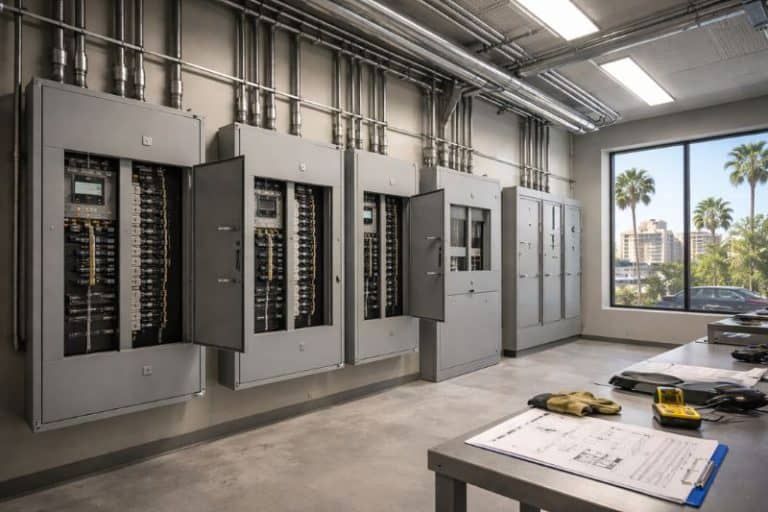
A contractor opens the panel and discovers there is no remaining breaker space.
This often leads to improvised solutions such as tandem breakers or overloaded circuits. While these measures may temporarily accommodate new loads, they do not increase overall service capacity.
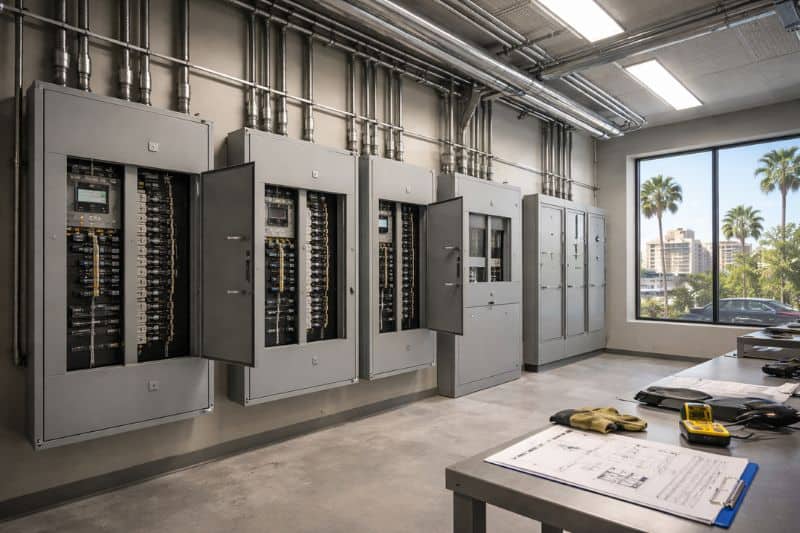
When panels lack physical space or amperage headroom, it is often a signal that the building’s infrastructure was never designed for its current demands. At that point, a professional evaluation through dedicated <a href=”https://www.rgelectric.net/electrical-panel-services-in-los-angeles/”>electrical panel services</a> can determine whether a service upgrade or panel replacement is necessary to safely support growth.
Shared Systems That Struggle Under Added Demand
Modern apartment buildings frequently add:
- Security camera systems
- Access control systems
- Exterior lighting upgrades
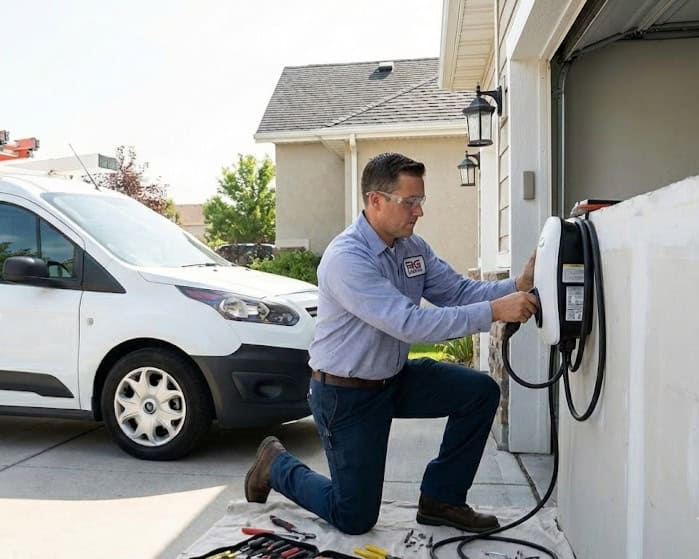
- EV charging infrastructure
- Expanded laundry facilities
Each of these improvements increases demand on shared electrical systems.
When common-area equipment begins to cause breaker trips or power inconsistencies in other parts of the building, the root issue is often insufficient service capacity, not defective equipment.
Increasing Maintenance Calls for Electrical Issues
If maintenance logs show a steady rise in electrical-related service requests, that pattern should not be ignored.
Repeated small issues, such as:
- Warm outlets
- Persistent breaker trips
- Partial power loss in units
- Intermittent lighting problems
Often reflect systemic limitations rather than isolated defects.
At a certain point, addressing individual symptoms becomes less effective than evaluating the system as a whole.
Why Older Los Angeles Buildings Face Unique Capacity Challenges
Original Service Sizes Were Much Smaller
Many apartment buildings in Los Angeles were constructed during periods when 100-amp or 125-amp service panels were standard for units. At the time, that capacity was more than sufficient.
Units often contained:
- Minimal kitchen appliances
- No central air conditioning
- No electric vehicle charging
- Limited electronics
- Few high-draw devices
Electrical systems were designed around predictable, modest demand.
Today, those assumptions no longer apply.
Modern tenants expect in-unit laundry, air conditioning, high-powered kitchen appliances, entertainment systems, charging stations, and sometimes even home office equipment running simultaneously. The cumulative impact of these additions pushes older systems far beyond their original design limits.
Distribution Systems Were Not Built for Load Growth
In addition to smaller service sizes, older buildings were often wired with distribution systems that left little room for expansion.
Common constraints include:
- Limited breaker space
- Undersized feeders
- Shared circuits between units
- Aging bus bars within panels
- Aluminum branch circuits in certain construction eras
Even when the main service technically has capacity remaining, distribution bottlenecks can create localized overload conditions.
This is where many property owners misunderstand the issue. The building may not experience total power failure, but it begins operating with reduced safety margins. That reduced margin increases wear on breakers, wiring, and panel components over time.
Code Evolution Has Increased Load Expectations
Electrical code standards have evolved significantly over the decades.
Modern code requires:
- Dedicated circuits for major appliances
- GFCI and AFCI protection in more locations
- Higher calculated load allowances
- Expanded grounding and bonding standards
Buildings that were fully compliant when constructed may not meet today’s expectations for safe load distribution.
While older systems are not automatically unsafe, they were not designed for today’s cumulative electrical demand. That distinction is critical when planning upgrades.
Shared Service Equipment Bears the Hidden Strain
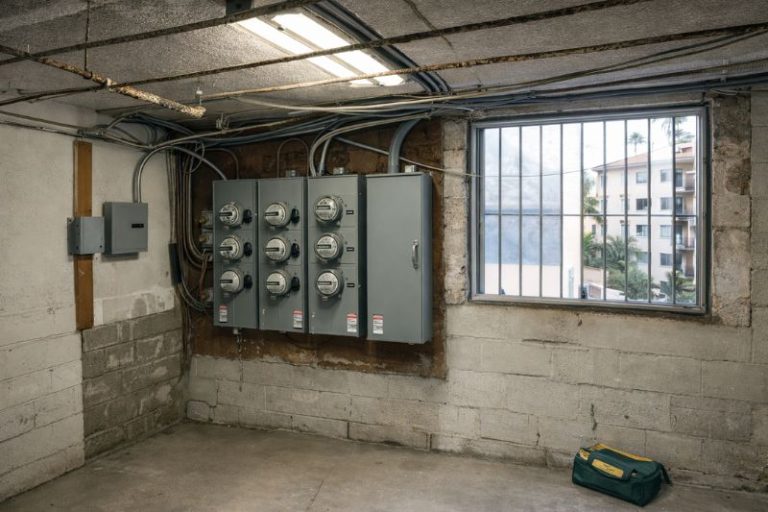
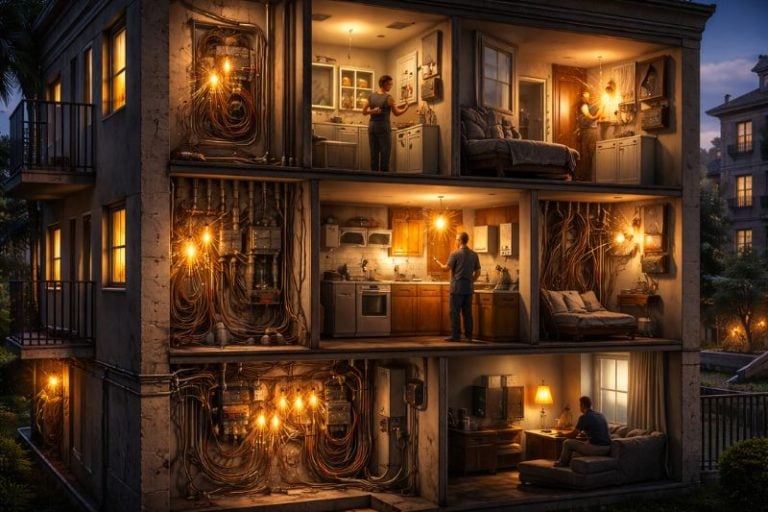
In multi-unit properties, strain is not always visible inside individual units. Often, the shared service equipment carries the load burden.
This includes:
- Main service panels
- Subpanels feeding multiple units
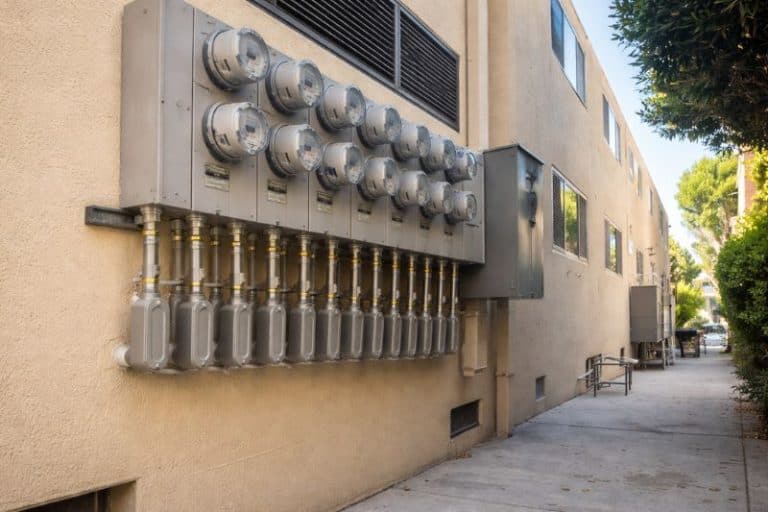
- Meter banks
- Common-area distribution panels
As electrical demand increases across the property, shared equipment absorbs the stress.
Without capacity evaluation, property managers may not realize that the building is operating near its threshold until a major upgrade becomes unavoidable.
Aging Components Reduce Safety Margins
Time itself becomes a factor.
Bus bars corrode. Breakers weaken. Connections loosen. Insulation degrades. Even when loads remain consistent, aging infrastructure reduces performance reliability.
When increased demand is layered on top of aging components, the result is accelerated wear and greater likelihood of failure.
Electrical systems rarely fail without warning. They show signs of strain first. Capacity planning identifies those signals early, before disruption occurs.
The Financial Impact of Reactive vs Planned Electrical Upgrades
Reactive Upgrades Are Almost Always More Expensive
When electrical capacity issues are addressed only after failures occur, costs increase in multiple ways.
Emergency service calls are rarely scheduled at convenient times. Power disruptions may affect multiple units. Temporary power solutions may be required. Tenants may need advance notice or accommodation. In some cases, inspectors or insurance representatives become involved once problems surface publicly.
Reactive upgrades also compress decision-making timelines. Instead of evaluating multiple upgrade options, comparing long-term solutions, and scheduling work strategically, property owners are forced to make rapid choices under pressure.
That pressure often leads to higher labor costs, accelerated permitting timelines, and more disruption than necessary.
In contrast, planned electrical upgrades allow building owners to align improvements with budget cycles, vacancy schedules, and capital improvement plans. Costs are more predictable. Disruption is minimized. Communication with tenants can be coordinated in advance.
Electrical infrastructure is one of the few systems in a building that becomes significantly more expensive when addressed reactively rather than proactively.
Deferred Capacity Issues Create Hidden Financial Exposure
Even when failures do not occur, operating near capacity limits introduces financial risk.
Repeated breaker trips, overloaded circuits, and stressed panels increase wear on components. That accelerated wear shortens equipment lifespan. It also increases the likelihood of nuisance outages that generate maintenance calls and tenant dissatisfaction.
Over time, the cumulative cost of repeated minor electrical service calls can approach the cost of a properly planned upgrade.
In multi-unit properties, tenant turnover is often influenced by reliability. Power disruptions, flickering lights, and recurring electrical complaints contribute to frustration. While these issues may seem small in isolation, they shape overall tenant experience.
Capacity planning shifts the focus from managing symptoms to strengthening infrastructure.
Insurance and Liability Considerations
Insurance providers increasingly evaluate electrical systems during renewals and underwriting reviews. While this article is not centered on insurance compliance, it is important to recognize that buildings operating near capacity limits are more likely to attract scrutiny.
When electrical systems show signs of strain, insurers may require documentation, system evaluations, or upgrades as a condition of continued coverage. If capacity limitations are discovered during inspections rather than through proactive planning, property owners lose control of the timeline.
Planned upgrades place control back in the hands of the building owner.
Long-Term Asset Value Protection
Electrical infrastructure is not simply an operational concern. It directly impacts property value.
Prospective buyers, lenders, and investors increasingly assess building systems as part of due diligence. Properties with undersized or outdated electrical service may face reduced valuation or negotiation pressure during transactions.
Conversely, buildings with documented electrical upgrades and sufficient service capacity demonstrate long-term viability. Modern infrastructure supports higher-end appliances, electric vehicle charging readiness, and expanded amenities, all of which increase competitive positioning in the Los Angeles rental market.
Electrical capacity planning, when done strategically, becomes part of asset management rather than a reactive repair expense.
Controlled Phasing Reduces Disruption
One of the greatest advantages of proactive capacity planning is the ability to phase improvements.
Instead of replacing entire systems in response to failure, upgrades can be structured over time. Main service equipment can be evaluated first. Unit panels can be upgraded during vacancy cycles. Shared systems can be strengthened before adding new amenities.
This phased approach reduces financial strain and minimizes tenant disruption. It allows property managers to maintain operational stability while strengthening infrastructure gradually.
For apartment buildings in Los Angeles, especially those constructed decades ago, this level of planning transforms electrical upgrades from emergencies into strategic improvements.
How Professional Capacity Evaluations Protect Growing Apartment Buildings
Load Calculations Reveal What the System Is Really Handling
Many property owners assume that if breakers are not constantly tripping, the building’s electrical system is sufficient.
That assumption can be misleading.
A professional capacity evaluation begins with formal load calculations. These calculations examine the actual electrical demand placed on the system, including common-area loads, unit loads, HVAC systems, and added amenities.
Rather than guessing, this process measures whether the building is operating within safe design limits or approaching capacity thresholds.
In older Los Angeles buildings, it is common to discover that incremental upgrades over the years have pushed demand well beyond what the original service equipment was designed to support.
A detailed assessment provides clarity.
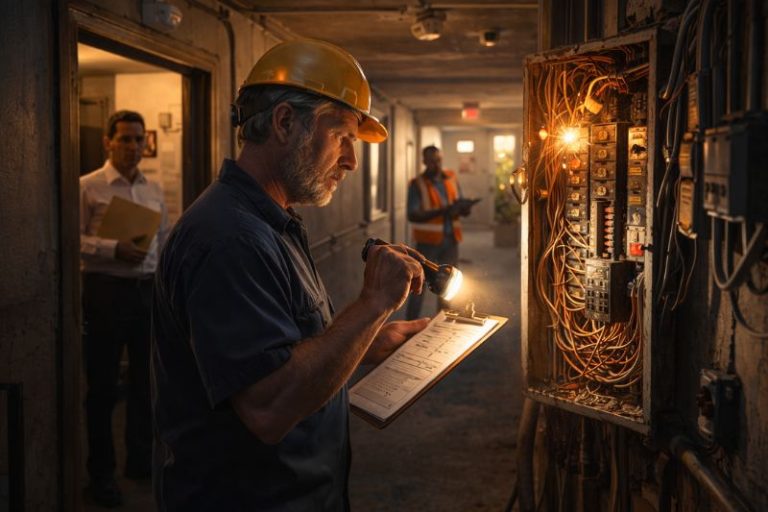
Panel and Service Equipment Assessment
Beyond load calculations, the physical condition of the electrical panels must be evaluated.
This includes:
- Available breaker space
- Amperage rating
- Condition of bus bars
- Integrity of breakers
- Proper grounding and bonding
Even if calculated load appears manageable, aging equipment may not reliably support increased demand.
When panel limitations are discovered, a structured upgrade plan can be developed through professional electrical panel services to ensure the building’s infrastructure aligns with current and future needs.
Upgrades are not always immediate or drastic. In many cases, phased improvements allow property owners to strengthen service capacity over time without disrupting occupancy.
Coordinating Upgrades in Occupied Properties
One of the biggest concerns property managers face is how to complete electrical improvements without creating tenant disruption.
This is where working with an experienced commercial electrical contractor becomes essential.
Capacity upgrades in multi-unit buildings require:
- Coordinated shutdown scheduling
- Clear tenant communication
- Permit management
- Inspection compliance
- Safe sequencing of service improvements
Proper planning transforms what could be a disruptive project into a controlled, predictable process.
Rather than reacting to failures, property managers can schedule improvements during lower-impact periods, coordinate access with tenants, and minimize inconvenience.
Planning for Future Growth, Not Just Current Demand
The most effective capacity planning looks forward.
It considers questions such as:
Will the property add EV charging in the next five years?
Will in-unit HVAC upgrades increase load?
Will future renovations require dedicated appliance circuits?
Designing upgrades solely around current usage risks repeating the same problem later.
Strategic electrical planning builds in reasonable headroom for future growth. It anticipates modernization rather than responding to it.
For Los Angeles apartment buildings, where tenant expectations continue to rise, this forward-thinking approach protects both operational stability and long-term asset value.
Turning Infrastructure into a Competitive Advantage
Electrical systems are rarely visible selling points, yet they quietly shape tenant experience.
Reliable power, stable voltage, support for modern appliances, and readiness for EV charging all contribute to property competitiveness.
When infrastructure supports growth rather than resisting it, property managers gain flexibility. They can upgrade amenities, modernize units, and respond to market trends without being constrained by outdated electrical capacity.
In this way, capacity planning becomes more than maintenance. It becomes part of a long-term property strategy.
Proactive Electrical Capacity Planning Protects Your Property’s Future
Apartment buildings in Los Angeles are evolving. Tenant expectations are higher. Amenities are expanding. Electrical demand continues to grow quietly year after year.
The question is not whether your building’s electrical system was sufficient when it was installed. The question is whether it is sufficient now — and whether it will remain sufficient five or ten years from today.
Capacity limitations rarely announce themselves with dramatic failure at first. They appear as recurring breaker trips, inconsistent voltage, panel congestion, or rising maintenance calls. Over time, these small indicators reflect a system operating too close to its limits.
Waiting for a major outage or inspection-triggered upgrade removes flexibility from the decision-making process. It compresses timelines, increases disruption, and often raises costs.
Proactive evaluation restores control.
By assessing load demand, panel capacity, and future growth plans, property owners can align electrical infrastructure with long-term asset strategy. Planned upgrades can be phased intelligently. Tenant disruption can be minimized. Budgeting becomes predictable rather than reactive.
For multi-unit properties especially, electrical capacity is not just a maintenance issue. It is foundational infrastructure. It supports modernization, tenant retention, EV readiness, and long-term property value.
If your apartment building has added new appliances, upgraded HVAC systems, expanded security equipment, or experienced rising electrical complaints, it may be time to evaluate whether the system has outgrown its original design.
Contact RG Electric at (323) 521-5131 to schedule a professional capacity evaluation for your apartment building. Working with a licensed, bonded, and insured contractor who understands Los Angeles electrical standards allows you to plan upgrades strategically — before limitations turn into emergencies.