
 Call (323) 5215131
The Real Dangers of Zinsco, Federal Pacific, Challenger, and Pushmatic Panels in Los Angeles Homes and Apartments
One of the most common things electricians hear in Los Angeles is, “The panel is old, but it’s still working fine.” From a homeowner or property manager’s perspective, that feels logical. The lights turn on, appliances run, and nothing appears broken.
The problem is that some of the most dangerous electrical panels ever installed continue to deliver power right up until the moment they fail. These failures are often silent. Circuit breakers that are supposed to shut off power during dangerous conditions don’t trip. Internal components overheat behind metal covers. Damage builds slowly, out of sight, until it becomes a fire hazard, an insurance issue, or both.
Across Los Angeles, thousands of homes and apartment buildings still rely on electrical panels that were installed decades ago. At the time, these panels met the standards of their era. Today, many of them are associated with well-documented design flaws that make them unacceptable by modern safety, inspection, and insurance standards.
This article focuses on four electrical panels that continue to cause serious problems in Los Angeles properties: Zinsco, Federal Pacific, Challenger, and Pushmatic. These panels are not just outdated. They are linked to known failure patterns that create real risk for homeowners, tenants, and property owners.
Understanding why these panels are dangerous, even when they appear to be working, is a critical step in protecting property value, safety, and insurance coverage.
Why Los Angeles Has So Many Dangerous Electrical Panels
Los Angeles did not end up with a high concentration of problematic electrical panels by accident. The city’s growth history plays a major role.
Large portions of Los Angeles were built or expanded rapidly during the mid-20th century. Post-war housing booms led to massive construction of single-family homes, apartment complexes, and mixed-use buildings. Electrical demand at the time was relatively low. There were no EV chargers, far fewer electronics, and significantly less overall load on electrical systems.
During that period, certain panel brands became widely installed because they were affordable, easy to source, and accepted by inspectors at the time. As a result, thousands of these panels were installed across neighborhoods throughout Los Angeles.
Decades later, electrical demand has increased dramatically. Modern homes and apartment buildings place far more stress on electrical systems. Unfortunately, many of these older panels were never designed to handle modern loads safely, and some have inherent design flaws that become more dangerous as systems age.
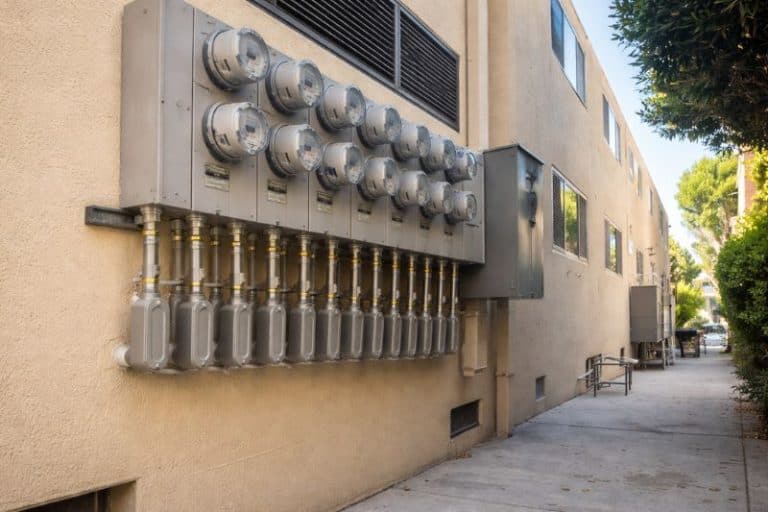
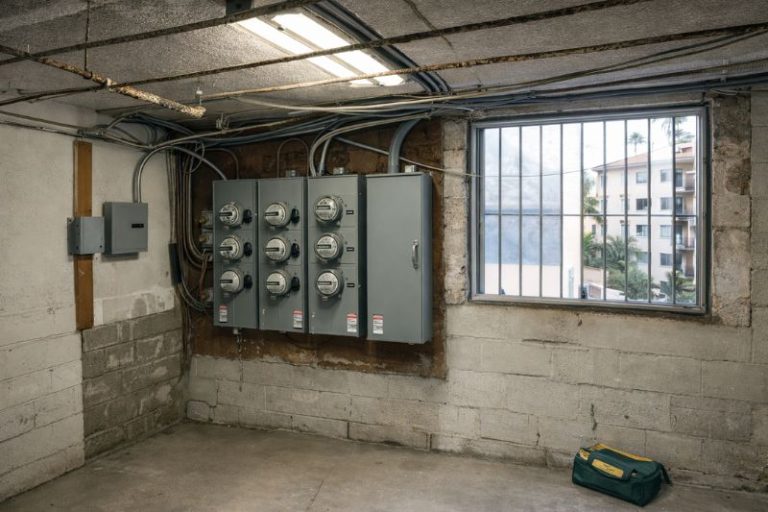
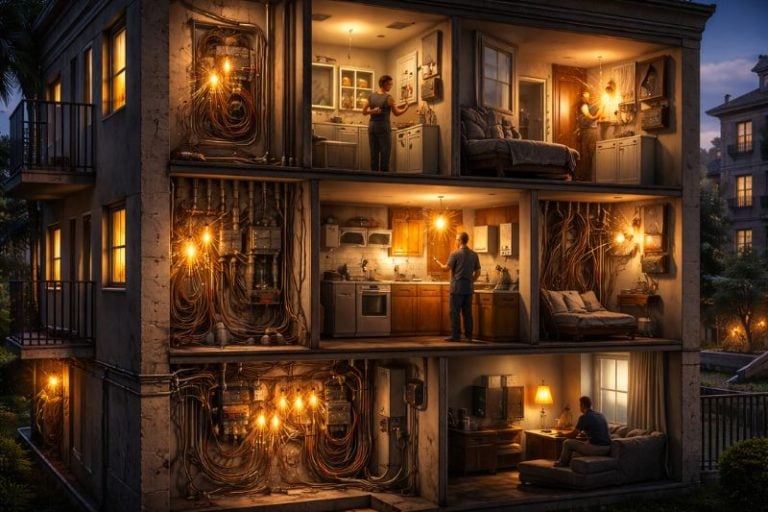
Los Angeles also has a large number of older multi-unit buildings. In these properties, one failing panel doesn’t just affect a single residence. It can place multiple tenants at risk and significantly increase liability for property managers and building owners. This is one reason insurers and inspectors scrutinize apartment buildings so closely.
For many property owners, addressing these issues now has become part of broader risk management, especially for those relying on professional commercial electrical services to keep multi-unit properties compliant and insurable.
Why Electrical Panel Brand Matters More Than Age Alone
When it comes to electrical safety, age alone is not the deciding factor. Two panels installed in the same decade can present very different levels of risk today, depending on how they were designed.
Electrical panels are safety devices. Their most important job is not delivering power, but stopping dangerous electrical conditions before they lead to fires or injuries. Circuit breakers are designed to trip during overloads and short circuits. When that function fails, risk increases dramatically.
Certain panel brands have documented histories of breaker failures, overheating, and internal damage. Over time, these patterns become clear to inspectors, insurance companies, and electrical professionals. Once a panel design is recognized as unreliable, outward appearance becomes irrelevant.
This is why a panel that looks clean and untouched from the outside can still be considered dangerous. Internal components degrade in ways that are invisible to property owners. Breakers may stop tripping correctly while continuing to allow electricity to flow.
Insurance companies and inspectors rely on historical performance, not assumptions. Panels associated with known design flaws are treated as unacceptable risks regardless of whether they have caused visible problems yet.
Why Panels Can Look Fine From the Outside
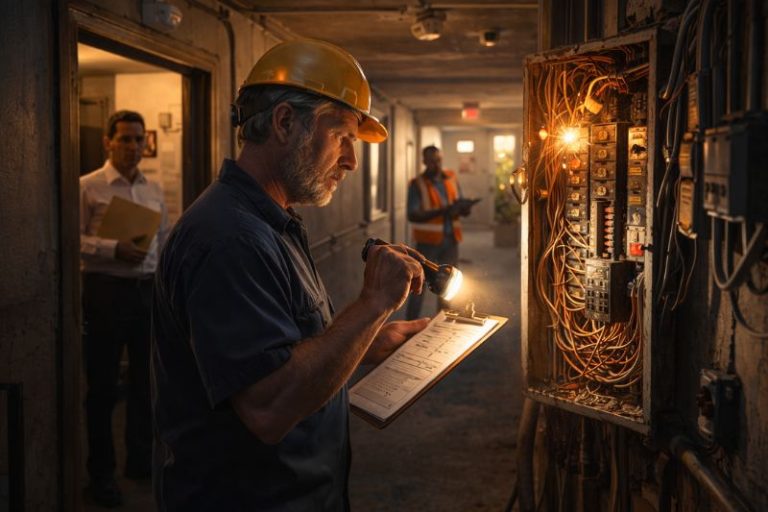
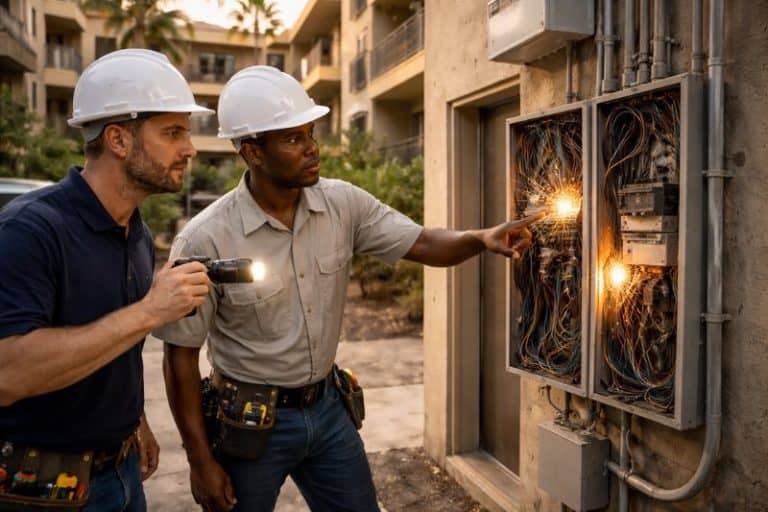
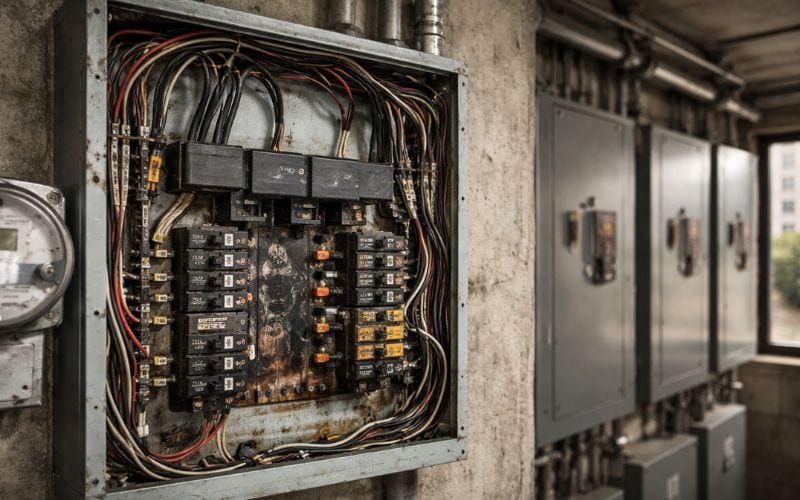
Most of the dangerous failure points in an electrical panel are hidden. Bus bars can overheat, breaker connections can loosen, and metal components can corrode internally. These issues are not visible without removing breakers and inspecting the panel in depth.
Even more concerning is that these failures often do not interrupt power. A breaker may fail to trip and still appear to work. From the occupant’s perspective, everything seems normal, while wiring behind walls may be overheating.
This unpredictability is why relying on appearance or past performance is risky. Panels with known failure histories are treated as liabilities because they can fail without warning.
Zinsco Electrical Panels: Why They’re Considered a Fire Hazard
Zinsco panels are among the most commonly flagged electrical panels in Los Angeles, particularly in homes and apartment buildings built during the mid-1900s.
The core issue with Zinsco panels lies in their internal design. These panels use aluminum bus bars, which are prone to corrosion and overheating over time. As connections degrade, breakers may fail to maintain proper contact or may fuse to the bus bar itself.
When this occurs, breakers may no longer trip during dangerous conditions. Instead of shutting off power, they allow electrical faults to continue, increasing fire risk. In some cases, breakers become physically stuck due to melting or fusing, making safe maintenance impossible.
Replacement breakers do not solve the underlying problem. Even new breakers installed into an old Zinsco panel may not function properly because the bus bar design itself is compromised. For this reason, insurers and inspectors often require full replacement rather than repairs.
Federal Pacific (FPE) Panels: The Breaker Failure Problem
Federal Pacific Electric panels, commonly identified by Stab-Lok breakers, are another major concern throughout Los Angeles.
The primary issue with FPE panels is documented failure to trip. Studies and field experience have shown that these breakers may not shut off power during overloads or short circuits. This defeats the entire purpose of having circuit breakers.
When breakers fail to trip, wiring can overheat, insulation can degrade, and fire risks increase without any warning signs. Because of this history, many insurance companies consider FPE panels unacceptable regardless of their outward condition.
In multi-unit buildings, the presence of FPE panels often complicates inspections and insurance renewals. One flagged panel can trigger broader system evaluations, increasing costs and delays for property managers.
Challenger Panels: Why They’re Still a Problem Today
Challenger panels are another brand that continues to raise concerns during inspections. While not always as notorious as Zinsco or Federal Pacific, Challenger panels are associated with overheating breaker connections and reliability issues.
Over time, breaker performance can degrade, increasing the risk of loose connections and heat buildup. In older installations, these issues are compounded by increased electrical demand.
Because of these risks, Challenger panels often fail modern inspections and are frequently flagged during insurance reviews, especially in older Los Angeles properties.
Pushmatic Panels: Old Technology That No Longer Meets Modern Standards
Pushmatic panels are sometimes defended as “built to last,” but longevity does not equal safety.
These panels rely on mechanical breaker designs that do not meet modern performance expectations. Breakers can become stiff, unreliable, or difficult to operate. Replacement parts are limited and often inconsistent in quality.
Insurance companies and inspectors frequently view Pushmatic panels as obsolete technology that no longer aligns with current safety standards, making replacement the safest and most reliable option.
Why Insurance Companies and Inspectors Treat These Panels Differently
Insurance companies are not guessing when they flag these panels. They rely on decades of data showing higher failure rates and increased claims associated with specific panel designs.
This is why many property owners are now learning that insurance companies are forcing electrical panel upgrades in Los Angeles, even when no problems have occurred yet.
/insurance-electrical-panel-upgrades-los-angeles/
For multi-unit buildings, one dangerous panel can affect the entire property’s insurability, increasing liability and risk across all units.
Why Repairs and Breaker Swaps Usually Aren’t Enough
For panels with inherent design flaws, repairs are rarely a true solution. Swapping breakers does not change the underlying bus bar design or correct known failure points.
From an insurance and inspection standpoint, partial fixes do not eliminate risk. Full replacement is often the only acceptable option.
What a Proper Panel Replacement Looks Like in Los Angeles
A proper panel replacement involves permits, inspections, and licensed electrical work. It ensures the system meets current code requirements and provides documentation that insurers and inspectors expect.
Working with professionals who specialize in electrical panel services in Los Angeles helps ensure upgrades are completed safely and correctly.
When Property Managers and Homeowners Should Act
The best time to act is before insurance or inspections force the issue. Upcoming policy renewals, renovations, or added electrical loads are ideal moments to evaluate panel safety.
Ignoring warning signs can lead to emergencies, often requiring emergency electrical repairs, which are almost always more stressful and expensive.
Conclusion: Replacing Dangerous Panels Is About Prevention, Not Panic
Zinsco, Federal Pacific, Challenger, and Pushmatic panels represent known risks in Los Angeles homes and apartment buildings. Replacing them is not about fear, it’s about prevention, safety, and long-term insurability.
Addressing these panels proactively protects tenants, preserves insurance coverage, and reduces liability. For property owners and managers, it’s one of the most important electrical upgrades you can make before problems arise. Call us today for mor information.