
 Call (323) 5215131
Why Circuit Breaker Problems in Older Los Angeles Apartments Keep Coming Back
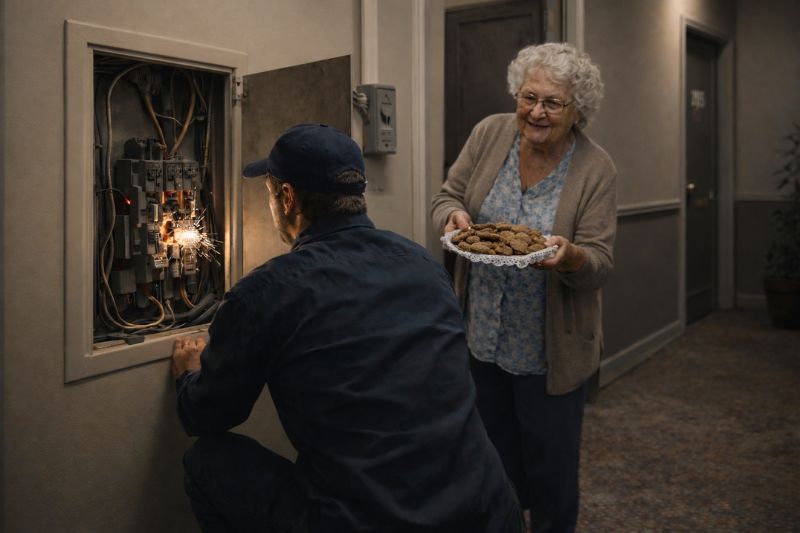
If you manage an apartment building in Los Angeles and the same electrical complaints keep coming from the same units, you already know the frustration of addressing the same problem repeatedly without it ever fully going away. A breaker gets reset, power is restored, and a few weeks later the same tenant calls again. Or a different unit on the same floor starts having the same issue. The repairs get done, the invoices get paid, and the underlying condition keeps producing new symptoms. As a licensed C10 electrical contractor, License #910807, RG Electric works with property managers throughout Los Angeles on exactly this pattern, and it almost always points to the same set of systemic causes that individual repairs can’t resolve.
Why Resetting a Breaker Is Not a Repair
The first thing worth establishing clearly is what a breaker reset actually accomplishes. Resetting a tripped breaker restores power to a circuit. It does not fix anything. It returns the circuit to the state it was in before the trip, which is the same state that caused the trip in the first place.
When a property manager or maintenance staff member resets a breaker in response to a tenant complaint, they’ve addressed the symptom without touching the cause. If the cause is an overloaded circuit, that overload is still present the moment power is restored. If the cause is a wiring fault, that fault is still in the wall. The breaker will trip again under the same conditions, and the tenant will call again.
This is why recurring breaker problems in apartment buildings are a sign that something systematic is happening, not a sign of tenant carelessness or bad luck. The system is telling you something, and what it’s telling you is worth paying attention to before it becomes an insurance problem, an inspection problem, or a safety incident.
The Four Systemic Causes Behind Recurring Breaker Problems
Circuits That Were Never Sized for Modern Loads
Los Angeles has a large inventory of apartment buildings constructed between the 1940s and 1970s. The electrical systems in these buildings were designed for the loads of their era, which typically meant lighting, a few outlets, and maybe a window air conditioner. The circuits feeding individual units in these buildings were commonly wired at 15 amps with limited branch circuits per unit.
Modern tenants bring modern loads. Space heaters, portable air conditioners, gaming systems, multiple computers, instant pot appliances, and hair tools all draw current that the original wiring was never intended to carry. A tenant doing nothing unusual by contemporary standards may be placing a load on a circuit that is operating at or above its rated capacity every day.
The breaker trips because it’s doing its job. The circuit is genuinely overloaded. Resetting it doesn’t change the load. The only solutions are reducing what runs on that circuit, adding circuits to distribute the load, or upgrading the subpanel serving the affected units to support the capacity the building actually needs. Of these, only the last two actually address the building’s condition rather than asking the tenant to live with inadequate electrical service.
Aging and Deteriorating Wiring
Wiring installed in apartment buildings during the mid-20th century is now 50 to 80 years old. Insulation that was adequate when installed has become brittle, cracked, or deteriorated over decades of thermal cycling, vibration, and exposure. Aluminum branch circuit wiring installed in many buildings during the 1960s and 70s has well-documented problems with connection loosening and oxidation that create intermittent faults and overheating at termination points.
Deteriorated wiring produces faults that are intermittent, which is part of why they’re so difficult to resolve through individual repairs. A loose connection in a wall that causes arcing under load may not be detectable when the circuit is at rest. The fault activates under the thermal and electrical stress of normal use and resolves when the circuit cools, making it appear to have gone away until the next time the circuit is loaded.
Repeated breaker trips caused by deteriorating wiring are a fire risk, not just an inconvenience. The arcing that triggers the breaker is also producing heat inside the wall. Our wiring services in Los Angeles cover the full evaluation and replacement of aging branch circuits in multi-unit buildings, giving property managers a clear picture of what the building’s wiring condition actually is rather than what it appears to be from a reset breaker.
Recalled and Obsolete Panel Equipment
Four panel brands appear consistently in Los Angeles apartment buildings built before 1990, and all four have failure modes that produce exactly the kind of recurring breaker problems property managers describe.
Zinsco panels have bus bar designs that overheat and breakers that can bond to the bus, creating intermittent connections that fail under load. Federal Pacific Electric panels have a documented history of breakers that fail to trip under overload conditions, which sounds like the opposite problem but produces the same result: a circuit that is overloaded repeatedly because the protection that should be limiting it isn’t functioning reliably. Challenger and Pushmatic panels carry similar histories of degraded breaker mechanisms that behave unpredictably after decades of use.
In each of these cases, replacing individual breakers within the panel doesn’t resolve the underlying problem. The panel design itself is the issue. Insurance companies in Los Angeles are increasingly aware of this, and property managers with these panels installed are finding that coverage is being conditioned on replacement or declined entirely. Our circuit breaker and panel services in Los Angeles include a full assessment of the panel type and condition alongside any breaker evaluation, so the recommendation reflects what the building actually needs.
Load Growth That Has Outpaced the Electrical System
Apart from the loads individual tenants bring, apartment buildings accumulate electrical demand over time in ways that the original electrical system wasn’t designed to handle. Central HVAC systems have been added to buildings that originally had through-wall units. Common area lighting has been upgraded and expanded. EV charging infrastructure is increasingly being requested or required. Laundry rooms have been added or expanded. Security and access control systems draw constant background loads that didn’t exist when the building was wired.
The subpanels and main panels in these buildings are often carrying total loads significantly above what they were originally sized for. Recurring breaker trips at the subpanel level are frequently a symptom of this load growth, not a failure of any individual circuit. The fix isn’t on the circuit side. It’s a subpanel upgrade that gives the building the capacity it actually needs to run what it’s currently running.
This load growth problem is compounding in Los Angeles as the city moves toward electrification. Buildings that may have been at 70 or 80 percent of their electrical capacity five years ago are increasingly being pushed toward their limits as gas appliances are replaced with electric alternatives and EV charging becomes an expectation rather than an amenity. Property managers who haven’t evaluated their building’s electrical capacity recently may be closer to a systemic problem than they realize.
What Property Managers Should Be Documenting
Recurring electrical problems in a building create a documentation trail that matters for several reasons, including insurance conversations, city inspections, and the ability to identify patterns that point to a systemic cause rather than isolated faults. In Los Angeles, where LADBS inspections and insurance carrier requirements are both becoming more stringent, property managers who can demonstrate a documented history of professional electrical maintenance are in a significantly stronger position than those who can only show a stack of repair invoices without context.
Keep a log of every electrical complaint and repair by unit and circuit. When you can see that three units on the same floor have had breaker trips over the past six months, and all three are served by the same subpanel, the pattern is visible. Without a log, you’re responding to individual complaints with no ability to see what they have in common.
Note the panel brand if you know it. If your building has Zinsco, Federal Pacific, Challenger, or Pushmatic panels, that context is relevant to every electrical complaint that involves a breaker. A licensed electrician needs to know what they’re working with before they can give you an accurate picture of what the repair actually addresses.
Document insurance correspondence about electrical conditions. If your insurer has sent notices about electrical equipment in the building, those notices have a timeline attached. Waiting until the deadline to act typically compresses your options and increases your costs. Acting early gives you time to plan and budget the work properly.
Track repair costs by electrical system over time. When the total cost of recurring electrical repairs over two or three years approaches the cost of addressing the underlying condition, the math for a more comprehensive solution changes significantly.
When Individual Repairs Stop Being the Answer
There’s a point in every building’s electrical history where the accumulation of individual repairs has stopped being cost-effective. That point is different for every building, but the signals are consistent: repairs are recurring faster than they used to, the same circuits keep producing problems, and the scope of each repair is creeping upward because the underlying condition has progressed.
When RG Electric evaluates a multi-unit building with a recurring breaker problem history, the assessment isn’t limited to the most recent complaint. We’re looking at the panel condition, the wiring type and age, the load profile of the building, and whether the electrical infrastructure is capable of supporting what the building is running. That broader picture is what tells us whether a circuit repair resolves the issue or whether the building needs a subpanel upgrade, a panel replacement, or a more comprehensive wiring evaluation.
Property managers who get ahead of that conversation rather than waiting for the next failure have more options and more time to plan. Those who wait until a failed inspection or an insurance non-renewal forces the issue have neither. The difference between a planned subpanel upgrade with permits and proper scheduling versus an emergency electrical response after a safety incident is significant, both in cost and in disruption to tenants and building operations.
The RG Electric Approach for Multi-Unit Buildings
We specialize in commercial and multi-unit electrical work throughout Los Angeles, including apartment complexes, mixed-use buildings, and older residential stock that has been converted or expanded over the years. Property managers who call us about a recurring breaker problem in one unit often find that the evaluation reveals building-wide conditions that explain what’s been happening across multiple units.
Our process is straightforward. We schedule a service call, the technician assesses the complaint and the surrounding system, findings go to Roy, and we develop a clear estimate that reflects what the job actually requires. If the issue is a single circuit fault, that’s what the estimate covers. If the evaluation reveals a subpanel that needs to be upgraded or a panel brand that needs to come out, we explain what we found, why it matters, and what addressing it involves. You decide how to proceed with full information rather than discovering the bigger problem after the smaller one has been addressed repeatedly.
We handle permits, pull certificates of insurance for commercial clients, and manage the inspection process through completion. Our commercial electrical services in Los Angeles are built around the specific needs of property managers, including the documentation and compliance requirements that come with multi-unit building work in Los Angeles.
If the building has a panel that needs replacing, our electrical panel services team handles the full process from assessment through permitted installation and city inspection, minimizing disruption to tenants and giving you a system that’s actually sized for what the building needs.
For immediate assistance or to schedule a professional evaluation, call RG Electric directly at (323) 521-5131.