
 Call (323) 5215131
How to Know When a Single Electrical Repair Isn’t Enough — Signs Your Home Needs More
Most electrical service calls start with a specific complaint. A breaker that won’t reset. An outlet that stopped working. A light that flickers for no obvious reason. The homeowner or property manager has a problem they want fixed, and fixing that problem is the goal. But in Los Angeles homes and apartment buildings, the single fault that triggers the call is sometimes the first visible sign of something that runs deeper. As a licensed C10 electrical contractor, License #910807, RG Electric encounters this pattern regularly, and knowing how to recognize it early is one of the most valuable things a property owner can understand about their electrical system.
The Difference Between a Fault and a Pattern
Electrical faults happen. A GFCI outlet trips, a breaker kicks off under a heavy load, a fixture connection works loose over time. These are isolated events with isolated causes, and a targeted repair resolves them completely. The fault is gone, the system is sound, and the job is done.
A pattern is different. A pattern is what you have when the same type of fault recurs, when multiple unrelated issues surface around the same time, or when a repair holds for a few months and then fails again in a slightly different location. Patterns are the electrical system communicating something about its overall condition, not just about the component that failed most recently.
The distinction matters because the right response to a fault is a repair, and the right response to a pattern is a broader evaluation. Treating a pattern like a fault, fixing each symptom as it appears without looking at the system behind it, is how repair costs accumulate without the underlying problem ever getting resolved.
Warning Signs That a Single Repair Won’t Be Enough
The Same Circuit Keeps Tripping
A breaker that trips once under an unusual load is doing exactly what it’s supposed to do. A breaker that trips repeatedly under normal conditions is telling you the circuit is overloaded, the breaker itself is failing, or there’s a wiring fault somewhere along the run that’s causing intermittent shorts.
Resetting the breaker addresses the symptom. Replacing the breaker addresses the component. Neither addresses the load or wiring condition that may be causing the problem. When a circuit trips more than once in a short period without an obvious cause, the diagnostic needs to look beyond the breaker itself. Our circuit breaker services in Los Angeles include this broader evaluation as part of the process, not as an add-on.
Multiple Outlets Failing in the Same Area
When a single outlet fails, it’s usually the outlet. When two or three outlets in the same room or adjacent rooms stop working around the same time, the common thread is almost always upstream of the outlets themselves. A shared circuit with a wiring fault, a GFCI outlet earlier in the chain that has tripped and cut power to downstream receptacles, or a deteriorating connection at a junction box can all present as multiple outlet failures simultaneously.
Replacing each outlet individually without tracing the circuit is the most expensive way to approach this problem. A licensed technician who traces the circuit identifies the actual source, which is usually a single point that, when corrected, restores everything downstream.
Lights That Dim When Appliances Run
Lights that dim noticeably when a large appliance starts, when the HVAC kicks on, or when kitchen equipment runs simultaneously are signaling a capacity issue. The panel or the circuits feeding the affected areas don’t have enough headroom for the loads being placed on them. This is common in older Los Angeles homes that were wired for the electrical demands of a different era and have since had appliances, HVAC systems, and electronics added without corresponding electrical upgrades.
No repair to an individual circuit fixes a capacity problem. The panel itself, or the service coming into the home, may need to be evaluated. Dimming lights are worth taking seriously, not because any single event is dangerous, but because a consistently overloaded system generates heat in ways that create fire risk over time.
Burning Smells or Discoloration Near Outlets and Panels
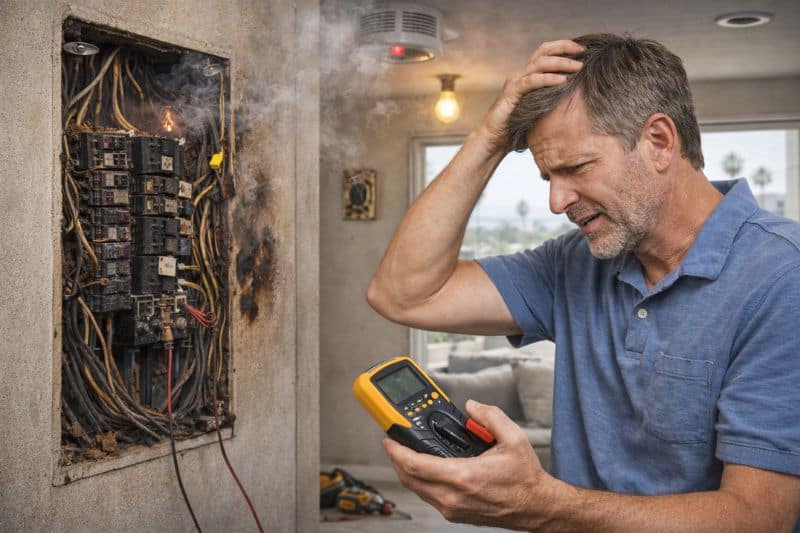
A burning smell near an outlet, switch, or panel, or visible discoloration on a faceplate or panel cover, is not a repair situation. It’s a safety situation. These are signs that arcing or overheating is occurring inside the wall or inside the enclosure, and the appropriate response is to stop using the affected circuit and call a licensed electrician immediately.
When RG Electric responds to these calls, the scope of the evaluation is always broader than the single point where the symptom appeared. Arcing at one location in a circuit is evidence that the circuit has a condition producing excess heat, and that condition may exist at more than one point along the run.
Repairs That Hold Briefly and Then Fail Again
If a repair was done correctly and the same problem returns in the same location within a few months, the repair addressed the symptom and not the cause. This is one of the clearest signals that the underlying system condition needs to be evaluated rather than the failed component replaced again.
Repeat failures at the same location are also worth documenting carefully, because they’re often relevant to insurance coverage conversations and to the city inspection process if the building is ever subject to a compliance review.
What a Technician Is Looking for Beyond the Original Complaint
When an RG Electric technician responds to a service call, the diagnostic isn’t limited to the specific item that was reported. A trained electrician working in a Los Angeles home or apartment building is reading the system as a whole, not just the failed component.
That means looking at the panel while accessing a circuit. Noting whether the wiring type in the wall is appropriate for the load and current code. Checking whether GFCIs are present where required by code. Observing whether the panel is one of the recalled brands. Identifying whether junction boxes are accessible and properly covered.
None of this extends the scope of the original service call without your knowledge or approval. But it does mean that when the technician reports findings to Roy and Roy develops the estimate, the estimate reflects the full picture of what was observed. If there are additional conditions that need attention, we’ll tell you what they are, why they matter, and what addressing them would involve. What you do with that information is your decision.
When a Service Call Leads to a Rewiring Conversation
In older Los Angeles neighborhoods, particularly in homes built before 1970, service calls sometimes reveal wiring conditions that can’t be resolved through targeted repair. Knob-and-tube wiring, aluminum branch circuits from the 1960s and 70s, and cloth-insulated wire that has become brittle with age are all materials that have reached the end of their safe service life.
When a technician finds these materials in the course of a service call, the recommendation isn’t always immediate full rewiring. It depends on the extent of the condition, the age and history of the building, and what the homeowner’s goals are for the property. But the conversation needs to happen, because repairing a fault in a circuit whose overall wiring is deteriorated doesn’t resolve the safety condition. It just removes the most visible symptom temporarily.
Our wiring services in Los Angeles cover everything from single-circuit replacements to full home rewires, and the right scope depends entirely on what the evaluation reveals. We don’t recommend more than what the situation requires, and we don’t recommend less than what will actually resolve it.
When a Service Call Leads to a Panel Conversation
The panel is the point where everything in the electrical system connects. When multiple circuits are showing problems, when capacity issues are causing visible symptoms, or when the panel brand is one of the recalled types, the panel becomes part of the conversation even if it wasn’t the original reason for the call.
A Zinsco, Federal Pacific, Challenger, or Pushmatic panel cannot be repaired into compliance. These panels are fire hazards with known failure modes, and insurance companies in Los Angeles are increasingly refusing coverage on properties that still have them installed. A breaker repair within one of these panels delays the real issue without addressing it.
When a service call reveals a panel that needs to come out, RG Electric handles the full process, including the permit, the installation, and the city inspection. Our electrical panel services in Los Angeles are built around making that transition as straightforward as possible for homeowners and property managers who didn’t expect a panel conversation when they called about something else.
What Property Managers Should Know About Systemic Electrical Issues
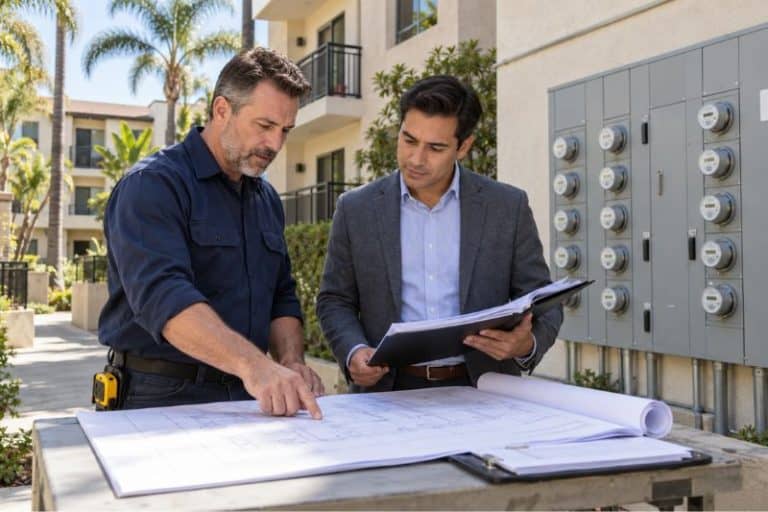
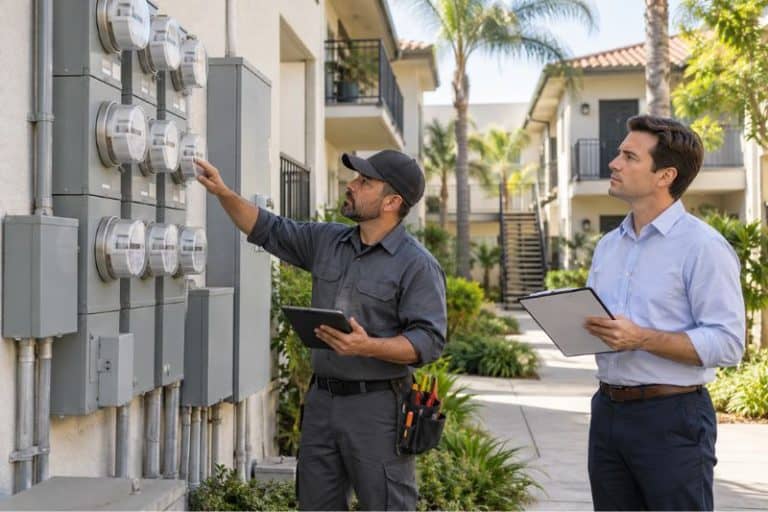
In multi-unit buildings, the same dynamics apply but at a larger scale. A single tenant complaint about a tripping breaker might be an isolated fault in one unit, or it might be the first visible symptom of an overloaded subpanel serving multiple units, aging wiring throughout a building wing, or a recalled panel that hasn’t been replaced yet.
Property managers who respond to each tenant complaint individually, without ever stepping back to assess the building’s electrical condition as a whole, tend to accumulate significant repair costs over time while the underlying condition continues to deteriorate. At some point, that pattern becomes an insurance problem, an inspection problem, or both.
The more cost-effective approach is to schedule a professional evaluation of the building’s electrical infrastructure periodically, not just after something fails. Our commercial electrical services in Los Angeles include this kind of proactive assessment for apartment buildings and multi-unit properties, giving property managers an accurate picture of what their buildings need before the next failure makes the decision for them.
How to Talk to Your Electrician About the Bigger Picture
If you’ve had multiple electrical repairs in the same home or building over the past few years, it’s worth asking your electrician directly whether the pattern suggests a systemic condition. A licensed contractor who is paying attention to your system should be able to give you an honest answer.
Ask what else was observed during the service call. A technician who has been in your panel and your walls has more information than just the fault they were called to fix. That information is relevant to your decisions about the property.
Ask whether the repair fully resolves the condition or addresses a symptom. There’s a meaningful difference, and a professional should be able to tell you which one applies.
Ask what a broader evaluation would involve. If the technician has flagged concerns beyond the original complaint, understanding the scope and cost of addressing those concerns lets you make an informed decision rather than finding out the hard way when the next failure occurs.
Ask about your panel brand. If you don’t know what panel you have, ask. The four recalled brands, Zinsco, Federal Pacific, Challenger, and Pushmatic, are worth knowing about before your insurance company raises the issue.
The Cost of Addressing It Early Versus the Cost of Waiting
Systemic electrical conditions don’t resolve themselves. They progress. Deteriorated wiring becomes more deteriorated. Overloaded panels accumulate heat damage over time. Recalled equipment continues to present the same failure modes that made it recalled in the first place.
The cost of identifying and addressing a systemic condition early is almost always lower than the cost of addressing it after it has caused a failure, triggered an insurance non-renewal, or been flagged during a sale inspection or city compliance review. The repair that revealed the bigger problem is an opportunity, not just an expense, if it prompts the right evaluation.
We stand behind our work for twelve months, and we follow code to the teeth. That means when RG Electric tells you a single repair isn’t the whole answer, it’s because the evaluation supports that conclusion, not because we’re looking to expand the job. Our goal is the same as yours: a system that works reliably, meets code, and doesn’t require us to come back for the same problem next year.
For immediate assistance or to schedule a professional evaluation, call RG Electric directly at (323) 521-5131.