
 Call (323) 5215131

Why Lights Flicker in Older Los Angeles Homes
Introduction: When Flickering Lights Aren’t Just Annoying
Almost every homeowner has seen it at some point. A ceiling light flickers for a second, dims when an appliance turns on, or pulses just enough to make you wonder if you imagined it. In many older Los Angeles homes, this kind of flickering becomes so common that people start to ignore it.
At first, it feels harmless. The light still works. The room isn’t dark. Everything else seems fine. So the flickering gets chalked up to an old house quirk or a cheap bulb.
The problem is that flickering lights are rarely just about the light itself. In older homes, flickering is often a symptom of stress somewhere in the electrical system. Loose connections, overloaded circuits, aging wiring, or struggling electrical panels can all cause lights to behave unpredictably. In some cases, flickering is one of the earliest warning signs that something behind the walls or inside the panel is no longer operating safely.
Los Angeles homes are especially prone to this issue because so many were built decades ago, long before modern electrical demand and safety standards existed. Over the years, electrical systems were expanded, modified, and patched together to keep up, sometimes without full upgrades to support the added load.
This article explains why lights flicker so often in older Los Angeles homes, what those flickers usually mean, and when they should be taken seriously rather than ignored.
What Flickering Lights Usually Mean
Flickering lights happen when the flow of electricity to a fixture becomes inconsistent. That inconsistency can be brief or frequent, subtle or dramatic, but it almost always points to a problem somewhere along the electrical path feeding the light.
In rare cases, flickering can be caused by external factors like utility fluctuations. However, when flickering happens repeatedly in a single home, especially in specific rooms or when appliances turn on, the cause is almost always internal.
In older homes, the most common reason for flickering is resistance. Resistance occurs when electricity encounters loose connections, aging wiring, or components that are no longer making solid contact. As electricity struggles to pass through these weak points, voltage fluctuates slightly. The result is lights that dim, brighten, or flicker.
Another common cause is uneven electrical load. When large appliances start up, they draw a surge of power. In systems that are already stretched thin, that surge can momentarily reduce power available to lighting circuits, causing visible flickering or dimming.
It’s important to understand that flickering is not the electrical system being temperamental. It’s the system reacting to stress. The light fixture is simply where that stress becomes visible.
In newer homes, modern wiring and panels are designed to absorb these changes smoothly. In older Los Angeles homes, where systems were never designed for today’s usage, flickering lights are often the first sign that the electrical infrastructure is struggling to keep up.
The Most Common Causes of Flickering Lights in Older Los Angeles Homes
When lights flicker in an older home, the issue is rarely random. In most cases, it can be traced back to predictable weaknesses in aging electrical systems that have been pushed beyond what they were originally designed to handle.
Loose Wiring or Electrical Connections
Loose connections are one of the most common and most overlooked causes of flickering lights.
Over time, electrical connections naturally loosen. Heat causes metal to expand and contract, vibrations occur from daily use, and older installation methods don’t always hold connections as securely as modern ones. When a connection becomes loose, electricity has to “jump” across a small gap, creating resistance.
That resistance causes brief drops or fluctuations in voltage, which show up as flickering or dimming lights. In some cases, the flicker is subtle. In others, it’s obvious enough to catch your attention.
Loose connections are especially concerning because they generate heat. While the light flickering itself may seem minor, the heat buildup at a loose connection can increase the risk of arcing and electrical fires if left unaddressed.
Overloaded Circuits
Another very common cause of flickering lights in older Los Angeles homes is overloaded circuits.
Many homes were built at a time when electrical demand was much lower. A single circuit might have been designed to power a few lights and outlets. Today, that same circuit may be supporting televisions, computers, chargers, kitchen appliances, and more.
When high-demand appliances turn on, they draw a surge of power. In an overloaded system, that surge temporarily pulls power away from lighting circuits, causing lights to dim or flicker. This often happens when air conditioners, microwaves, space heaters, or washing machines start up.
If flickering occurs consistently when certain appliances are used, it’s a strong sign that the circuit is being asked to do more than it safely can.
Failing Light Fixtures or Switches
Sometimes the issue is localized to the fixture or switch itself.
Older light fixtures can develop worn internal contacts. Switches can degrade over time, especially if they’ve been used heavily for decades. When these components wear out, they may no longer maintain consistent electrical contact, leading to flickering.
While replacing a fixture or switch may solve the problem in some cases, it’s important not to assume that’s always the full solution. In older homes, fixture problems can exist alongside deeper wiring or circuit issues, which is why repeated flickering should be evaluated carefully.
When Flickering Lights Point to a Bigger Electrical Issue
Occasional flickering in a single light fixture can sometimes be traced to a simple component issue. Flickering that affects multiple rooms, happens frequently, or coincides with other electrical problems usually points to something more serious.
If lights flicker throughout the house, or if flickering is accompanied by breaker trips, buzzing sounds, or partial power loss, the issue may involve the electrical panel or main service equipment. Inconsistent voltage delivery, aging breakers, or panels that are struggling under modern load can all cause widespread flickering.
In these situations, flickering lights aren’t the problem themselves. They’re a visible symptom of stress within the electrical system.
Ignoring these signs can allow conditions to worsen quietly. Electrical systems rarely fail all at once. They usually show warning signs first, and flickering lights are one of the most common early indicators.
Why Flickering Lights Are More Common in Older Los Angeles Homes
Flickering lights are far more common in older Los Angeles homes than in newer construction, and that’s not a coincidence. It’s the result of how these homes were built, how electrical demand has changed, and how systems were upgraded over time.
Many Los Angeles neighborhoods were developed decades ago, long before modern appliances, air conditioning everywhere, home offices, or electric vehicles were part of daily life. Electrical systems were sized for much lighter use, fewer circuits, and simpler loads.
As lifestyles changed, electrical systems were often modified incrementally. A kitchen remodel here, an added outlet there, a new fixture installed without updating the underlying wiring or increasing circuit capacity. Over time, these layered changes create systems that technically work but operate under constant strain.
Another factor is aging materials. Wiring insulation dries out. Connections loosen. Breakers and switches wear down. Even if nothing has failed outright, these gradual changes increase resistance in the system, making voltage fluctuations more likely. Lights are especially sensitive to those fluctuations, which is why flickering is often the first visible sign of trouble.
In short, older Los Angeles homes weren’t designed for today’s electrical demands, and flickering lights are one of the most common ways that mismatch reveals itself.
Why Flickering Lights Can Be a Safety Warning, Not Just an Annoyance
It’s easy to dismiss flickering lights as an annoyance, especially if they’ve been happening for a long time without obvious consequences. But from an electrical standpoint, flickering is often a warning.
When lights flicker, it usually means electricity is not flowing smoothly. That inconsistency is often caused by resistance at loose connections or stressed components. Resistance creates heat, and heat is one of the biggest risk factors in electrical failures.
In some cases, flickering can indicate arcing, where electricity jumps across small gaps in loose connections. Arcing generates intense heat and can damage wiring or nearby materials over time. These conditions often develop slowly and quietly, long before a breaker trips or a fuse blows.
Flickering lights can also signal that circuits are overloaded or that the electrical panel is struggling to regulate power evenly. When voltage fluctuates across the system, sensitive electronics can be damaged, and the risk of more serious electrical failures increases.
The key point is this: flickering lights are rarely the problem themselves. They are a visible symptom of stress somewhere in the electrical system. Treating them as a minor inconvenience can allow underlying issues to worsen until they become more disruptive, expensive, or dangerous.
Why Replacing Bulbs or Fixtures Isn’t Always the Fix
When lights flicker, the first instinct is often to replace the bulb or the fixture. Sometimes that works, especially if the bulb itself is loose or failing. But in older Los Angeles homes, flickering lights are often caused by issues that go far beyond the fixture.
If the underlying problem is a loose connection, overloaded circuit, or inconsistent power delivery, a new fixture may temporarily hide the symptom without fixing the cause. The flickering may stop for a while, only to return later, sometimes worse than before.
This is especially common in homes where fixtures or switches have been replaced multiple times over the years without evaluating the wiring behind them. In those cases, addressing flickering properly often requires professional electrical switches and outlets services in Los Angeles, not just swapping visible components.
https://www.rgelectric.net/electrical-switches-and-outlets-in-los-angeles/
Treating flickering as a surface-level issue can delay necessary repairs and allow hidden electrical stress to continue building inside walls or junction boxes.
When Flickering Lights Point to a Panel Problem
Flickering lights don’t always originate at the fixture or switch. In many older Los Angeles homes, the issue traces back to the electrical panel.
As panels age, breakers and internal connections can struggle to regulate power evenly. This can lead to small but noticeable voltage fluctuations throughout the home. Lights are often the first place these fluctuations become visible.
If flickering occurs in multiple rooms, happens throughout the house, or coincides with other issues like tripping breakers or partial power loss, the panel may be a contributing factor. Panels that were never designed for modern electrical demand are especially prone to this kind of system-wide instability.
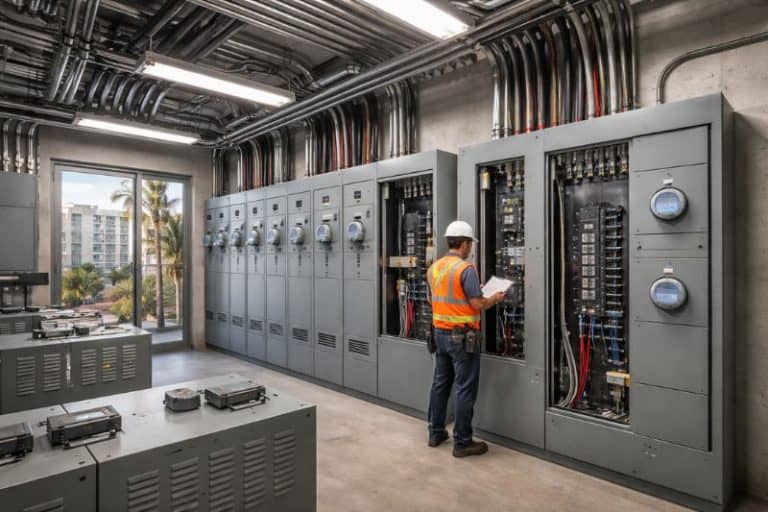
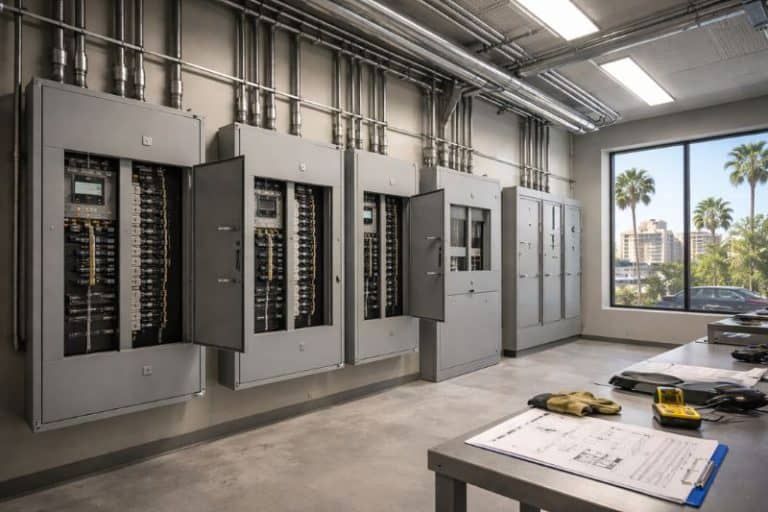
In these situations, evaluating the system through professional electrical panel services in Los Angeles can help determine whether the panel is still performing safely or if upgrades are needed to stabilize power delivery.
https://www.rgelectric.net/electrical-panel-services-in-los-angeles/
When to Call a Licensed Electrician
Some flickering issues are subtle. Others are clear signs that it’s time to bring in a professional.
You should call a licensed electrician if:
- Lights flicker in multiple rooms
- Flickering happens when appliances turn on
- Lights dim or pulse noticeably
- Flickering is accompanied by buzzing sounds
- Switches, outlets, or fixtures feel warm
These symptoms suggest conditions that shouldn’t be ignored. When electrical issues escalate unexpectedly, having access to emergency electrical repairs in Los Angeles can prevent a minor problem from turning into a serious safety concern.
https://www.rgelectric.net/emergency-electrical-repairs-in-los-angeles/
How Electricians Diagnose Flickering Lights Properly
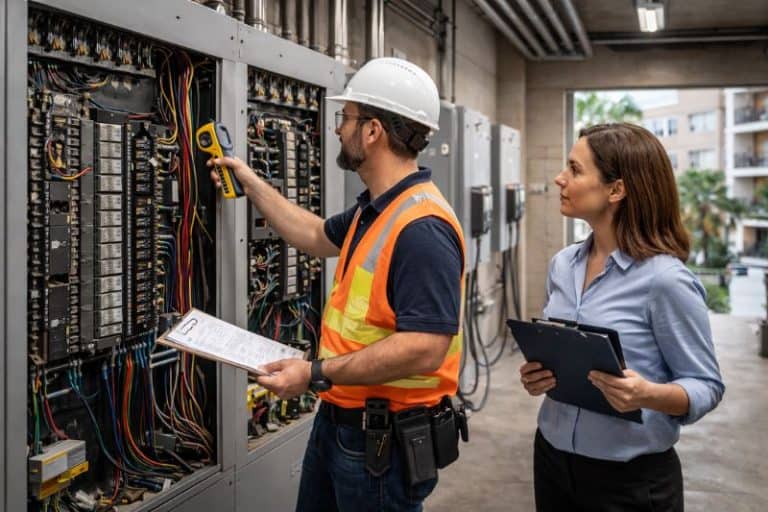
Licensed electricians diagnose flickering lights by looking at the entire electrical system, not just the fixture that’s acting up. This includes testing circuits for load issues, inspecting wiring and connections, and evaluating how power is being distributed from the panel.
In older homes, electricians also look for signs of outdated wiring methods, loose junctions, or past repairs that may no longer meet current safety standards. By identifying the root cause, electricians can correct the issue safely and permanently instead of relying on trial-and-error fixes.
In many cases, this process falls under comprehensive electrical repair services in Los Angeles, especially when flickering is tied to wiring or circuit problems rather than a single component.
https://www.rgelectric.net/electrical-repairs-services-in-los-angeles/
Flickering Lights Are Telling You Something
Flickering lights are easy to dismiss, especially in older Los Angeles homes where small electrical quirks can feel normal. But in most cases, flickering is not random and it’s not harmless. It’s the electrical system signaling that something is no longer operating as smoothly or safely as it should.
Whether the cause is loose wiring, overloaded circuits, aging fixtures, or a panel that’s struggling to keep up with modern demand, flickering lights are a visible symptom of stress somewhere behind the scenes. Ignoring that stress allows it to build quietly, often until it shows up as a larger and more disruptive problem.
The good news is that flickering issues are usually very fixable when addressed early. A proper evaluation can identify the root cause, stabilize power delivery, and restore confidence that your electrical system is operating safely and reliably.
If your lights are flickering regularly, dimming when appliances turn on, or behaving unpredictably, it’s worth having the system checked before the issue escalates. Contact RG Electric at (323) 521-5131 or visit https://www.rgelectric.net/ to schedule a professional electrical evaluation. Addressing the problem now is far safer, and far less stressful, than waiting for an emergency later.