
 Call (323) 5215131
What Property Managers in Los Angeles Should Know Before Scheduling an Electrical Inspection
Updated March 2026
Scheduling an electrical inspection sounds straightforward. You call a licensed electrician, they come out, they look at the panel and wiring, and you get a report. In practice, property managers who approach inspections without preparation tend to get one of two outcomes: a longer, more expensive visit than expected, or an inspection that misses important issues because the electrician did not have the context to look in the right places.
This is especially true in Los Angeles, where the building stock ranges from 1920s bungalows and mid-century apartment complexes to newer mixed-use construction, and where LADBS permitting history, prior unpermitted work, and decades of accumulated modifications all affect what an inspection needs to cover. Property managers who come prepared get more from the inspection, move through the process faster, and are less likely to face surprise findings that delay a sale, a renovation, or an insurance renewal.
This guide walks through everything you should have in hand, know about your property, and think through before an electrical inspection is scheduled. We hold License C10 #910807 and work with property managers across Los Angeles on inspections ranging from single-family rentals to large multi-unit complexes. What follows reflects what we see make the biggest difference in how smoothly these engagements go.
Understanding Why You Are Scheduling the Inspection
Before anything else, it helps to be clear about what is driving the inspection. The type of inspection determines what needs to be reviewed, what documentation is required, and how the findings will be used. Property managers in Los Angeles typically schedule electrical inspections for one of five reasons, and each has a different preparation profile.
Insurance Requirement or Renewal
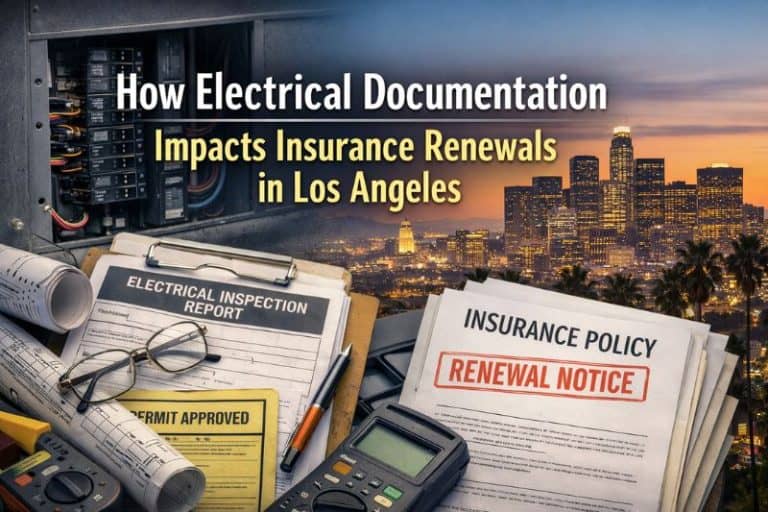
Insurance carriers increasingly require documented proof of electrical system condition before issuing or renewing policies on older properties. This is particularly common for buildings with known problem panel brands like Federal Pacific, Zinsco, or Pushmatic, or for properties that have not had a documented inspection in several years. For insurance-driven inspections, the carrier will typically specify what they need covered, and you should have that requirement in writing before the electrician arrives so the report addresses it directly.
Pre-Sale or Pre-Listing
Buyers and their lenders routinely request electrical inspections as part of due diligence on income-producing properties. An inspection ordered proactively before listing gives you time to address findings before they become negotiating leverage for the buyer. An inspection that happens after an offer is in place puts you in a reactive position. If you are approaching a sale, scheduling the inspection early and addressing any findings is almost always the better financial decision.
Tenant Complaints or Known Issues
Recurring breaker trips, flickering lights, outlets that stopped working, or a burning smell from a panel room are all situations that warrant an inspection, not a wait-and-see approach. When tenant complaints are driving the inspection, document them before the electrician arrives. A written log of complaints with dates, unit numbers, and descriptions of the problem gives the inspection a roadmap and creates a record that you responded promptly, which matters if the situation ever involves liability.
LADBS Permit Compliance
Any electrical work that required a permit, including panel replacements, service upgrades, subpanel installations, and major rewiring projects, needs a final inspection sign-off from LADBS before the permit closes. If prior work was done without a permit, or if a permit was pulled but never finaled, those open items will surface during any subsequent permitted work. LADBS compliance inspections have specific documentation requirements, and having permit records in hand when the inspector arrives prevents delays.
Routine Maintenance Assessment
Many property managers schedule periodic electrical assessments as part of a broader maintenance program, particularly for older buildings or large portfolios. A routine assessment is the most flexible type of inspection in terms of scope, but it benefits from the same preparation as any other type. The more context you can give the electrician about the building’s history and any areas of concern, the more useful the assessment will be as a planning document.
Gathering Your Documentation Before the Inspection
The single most useful thing a property manager can do before an electrical inspection is pull together whatever documentation exists on the property’s electrical history. Electricians work faster and more accurately when they know what they are walking into. Gaps in documentation are informative too: they tell you where unpermitted work may have occurred and where the inspection needs to look more carefully.
Permit Records
LADBS maintains records of all permits issued for a property. You can search permit history at the LADBS online portal using the property address. Print or save a summary of all electrical permits on record, noting which ones have final inspection sign-offs and which do not. Open permits without finals are a common finding that creates complications, and knowing about them in advance lets you address the situation proactively rather than having it surface during the inspection.
Prior Inspection Reports
If the property has had prior electrical inspections, whether from a previous sale, an insurance review, or a contractor assessment, pull those reports. They document the condition of the system at a prior point in time, identify issues that were flagged, and show whether recommended repairs were completed. An electrician reviewing a prior report can quickly assess what has changed and what may have been deferred.
Panel Information
Know your panel brand, amperage, and approximate installation date before the inspection. If you manage multiple buildings, keep a simple log. Panel brand is particularly important given the documented failure history of certain manufacturers. If you have Federal Pacific, Zinsco, Pushmatic, or Challenger equipment anywhere in your portfolio, that is information the electrician needs to know immediately, and it should factor into how urgently you schedule the inspection in the first place.
Tenant Complaint History
Compile any written records of electrical complaints from tenants, including maintenance requests, emails, and any formal notices. Organize them by unit and date. This serves two purposes: it gives the electrician a prioritized list of areas to examine, and it creates a documented record that complaints were received and acted upon. In a city like Los Angeles, where tenant protections are significant, that documentation record matters.
Renovation and Repair History
Any renovations or repairs that involved electrical work should be documented, even if the work was done by a previous owner or property manager. Kitchen remodels, bathroom renovations, unit additions, and HVAC installations all frequently involve electrical modifications. If those modifications were done without permits, or if you simply have no records of them, flag those areas for the electrician so they receive additional attention during the inspection.
Common Conditions That Complicate Inspections
Certain conditions consistently slow down electrical inspections, generate re-inspection requirements, or expand the scope of work beyond what was originally planned. Being aware of them in advance lets you either resolve them before the inspection or set realistic expectations about what the process will involve.
Inaccessible Panels or Electrical Rooms
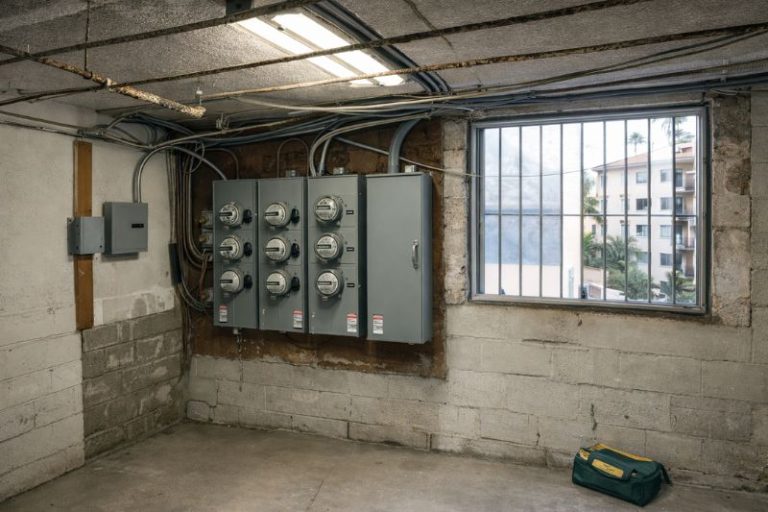
Panels that are blocked by stored items, locked rooms without readily available keys, or electrical closets that have been converted to storage are one of the most common causes of inspection delays. NEC and LADBS standards require panels to be accessible at all times with adequate clearance in front of them. Before the inspection, walk every panel location in the building and confirm clear access. This takes an hour at most and prevents a wasted trip.
Unlabeled or Mislabeled Circuits
Panels with incomplete, inaccurate, or illegible circuit labels slow the inspection process significantly. The electrician needs to trace circuits to verify what is actually connected to each breaker, which takes time. If your panels have labeling issues, having them corrected before the inspection is a straightforward step that saves time and avoids a labeling deficiency showing up on the inspection report. In multi-unit buildings across older neighborhoods like Koreatown or Hollywood, mislabeled panels are extremely common in buildings that have changed hands multiple times.
Unpermitted Modifications
Unpermitted electrical work is one of the most consequential findings an inspection can produce. When an inspector identifies work that was done without a permit, it typically requires the work to be exposed for inspection, brought up to current code standards, and permitted retroactively. This is more expensive and disruptive than doing the work correctly the first time. If you know or suspect unpermitted work exists in your building, disclose it to the electrician before the inspection begins. Getting ahead of it is always better than having it surface unexpectedly.
Deferred Maintenance
Visible signs of deferred maintenance, including corroded connections, burn marks around outlets, damaged conduit, or exposed wiring, expand the scope of any inspection. These findings do not disappear by ignoring them and they generate mandatory correction notices if they are present during a permitted inspection. If you are aware of specific areas in poor condition, factor that into your timeline and budget planning before the inspection is scheduled.
Absence of GFCI and AFCI Protection
Older Los Angeles properties frequently lack GFCI protection in kitchens, bathrooms, laundry areas, and garages, and AFCI protection in living and sleeping spaces. These are standard NEC requirements that have been in effect long enough that inspectors flag their absence routinely. If your property predates these requirements and has never been retrofitted, expect them to appear in any inspection report. Budgeting for GFCI and AFCI retrofits before the inspection, rather than after, puts you in a better planning position.
Coordinating With Tenants Before the Inspection
For multi-unit properties, tenant coordination is a logistical requirement that property managers sometimes underestimate. Electrical inspections that require access to individual units need adequate notice, and in Los Angeles, tenant notice requirements for entry are specific. Getting coordination wrong adds days or weeks to the inspection timeline and creates unnecessary friction with tenants.
Provide Proper Legal Notice
California law requires landlords to provide at least 24 hours written notice before entering an occupied unit for non-emergency purposes. For inspections that will require access to multiple units, build the notice period into your scheduling. Sending notice by email with a read receipt, or by written notice slipped under doors, creates documentation that the legal requirement was met. For large buildings with many units, stagger the inspection schedule across multiple days to make the coordination manageable.
Communicate What Tenants Should Expect
Tenants who do not know what to expect from an electrical inspection can be uncooperative or anxious about the process. A short written notice explaining that a licensed electrician will be checking the electrical systems in the building, that the visit is routine and required, and approximately how long access to each unit will take goes a long way toward making the process smooth. If planned outages are involved, the notice should include the expected duration so tenants can make arrangements.
Identify Vacant Units and Common Areas
Before the inspection, provide the electrician with a unit map showing which units are vacant, which are occupied, and which have reported specific issues. Common areas, laundry rooms, garage electrical, and rooftop equipment all need to be on the inspection scope, and having keys or access codes for those areas ready in advance keeps the process moving. In our experience working across buildings in Encino, Van Nuys, and Culver City, the inspections that run longest are typically the ones where the property manager had to track down access during the visit.
What to Expect on Inspection Day
Understanding the inspection process itself helps property managers set realistic expectations and be useful participants rather than bystanders. A well-prepared property manager on-site during an inspection is a real asset. They can answer questions about building history, provide access efficiently, and understand what the electrician is observing in real time.
The Electrician Will Start at the Main Panel
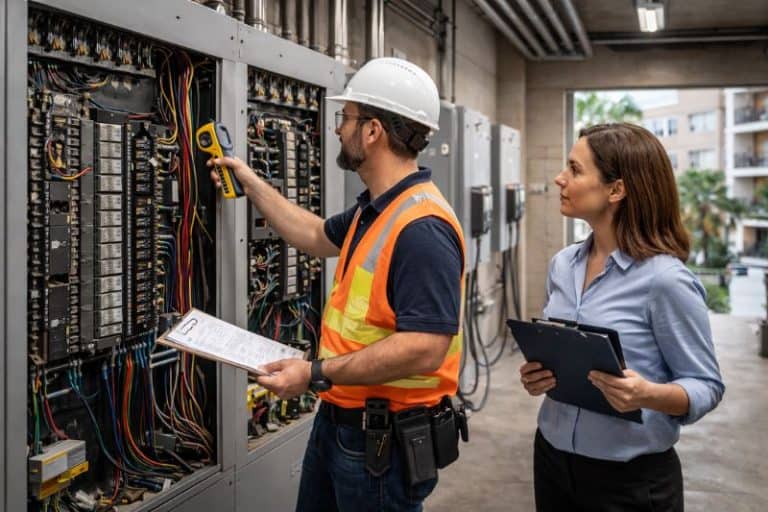
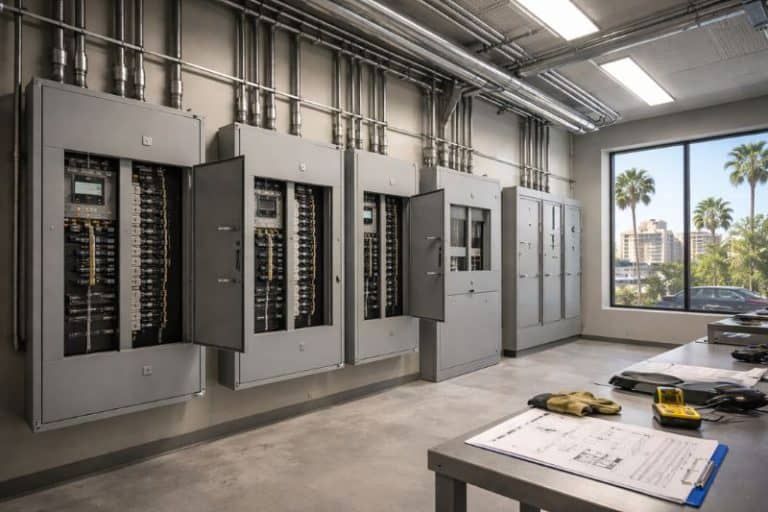
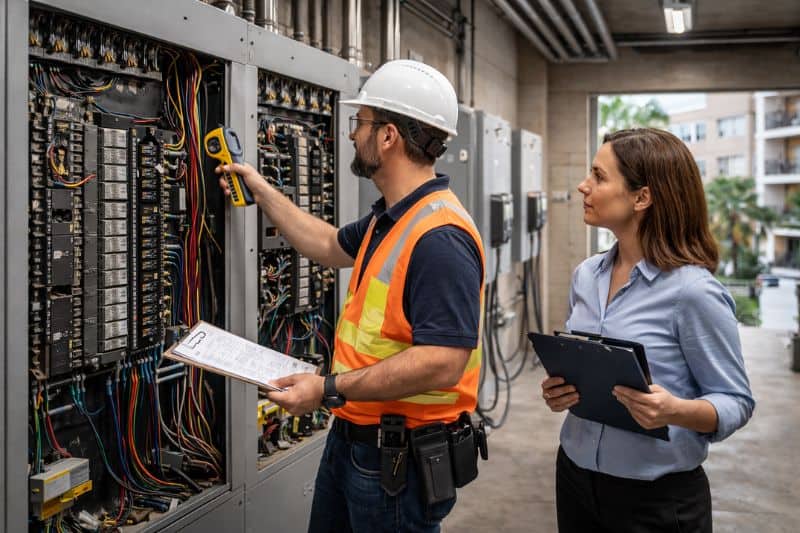
Every electrical inspection begins at the main service panel. The electrician will assess the panel brand and age, check for visible signs of damage or overheating, verify breaker labeling, evaluate the amperage against the building’s apparent load, and look for signs of prior modifications. This initial panel review sets the context for everything else in the inspection. If significant issues are found at the panel, the scope of the inspection will expand accordingly.
Unit-Level Inspection Points
Within individual units, the electrician will check outlet condition and grounding, verify GFCI protection in required locations, test for AFCI protection where required, inspect visible wiring for damage or improper installation, and assess the condition of any subpanels. They will note outlets that do not function, circuits that appear to be overloaded, and any modifications that look unpermitted. Taking notes of your own during this walkthrough is worthwhile, particularly for items the electrician flags verbally before the written report is produced.
Common Areas and Building Systems
Hallway lighting, garage electrical, laundry room circuits, elevator electrical, rooftop HVAC and mechanical equipment, and exterior lighting all fall within the inspection scope for multi-unit properties. These areas are sometimes overlooked in informal inspections but are consistently evaluated in formal assessments. Make sure access to all of these areas is arranged before the inspection begins, not during it.
Be Available for Questions
The most useful thing a property manager can do on inspection day is be present and available to answer questions. Questions about when specific work was done, whether a particular modification was permitted, or what a certain panel room was originally used for are the kinds of context questions that only the property manager can answer. If you cannot be present for the full inspection, designate someone who knows the building and has access to all areas and documentation.
How to Read and Act on an Inspection Report
An electrical inspection report is only useful if you know how to prioritize what it contains. Reports typically include a mix of findings at different severity levels, and not every finding requires immediate action. Understanding how to triage the report determines whether it becomes a useful planning document or an overwhelming list that gets filed and ignored.
Prioritize Safety Hazards First
Any finding that involves immediate safety risk, including fire hazard panels, exposed wiring, evidence of overheating, or shock risk from ungrounded outlets in wet areas, requires action before anything else. These are not items to schedule at convenience. A property manager who receives an inspection report with a safety hazard finding and defers the repair has created documented liability. Address these first, obtain permits where required, and keep the documentation.
Separate Code Compliance Items from Maintenance Items
Inspection reports typically distinguish between code violations that require correction and maintenance observations that are advisory. A missing AFCI breaker is a code compliance item. A panel that is aging but functional is a maintenance observation. Code compliance items carry legal and insurance implications and generally need to be resolved on a defined timeline. Maintenance observations can be incorporated into your capital planning process.
Get Repair Estimates Before You Respond to Stakeholders
If the inspection was ordered by an insurance carrier, a buyer, or a regulatory authority, get repair estimates for all flagged items before you respond to their requests. Understanding the scope and cost of corrections lets you respond with a concrete remediation plan rather than vague assurances. In our experience supporting property managers across the San Fernando Valley and the Westside, a well-organized response to an inspection report that includes a timeline and licensed contractor commitment is almost always received better than an open-ended acknowledgment.
Use the Report as a Capital Planning Tool
A thorough inspection report gives you a prioritized view of your electrical infrastructure across the building. The items that do not require immediate correction often represent the next wave of capital investment. Building those into your multi-year budget, rather than waiting for them to become urgent, is the difference between managing a property proactively and constantly reacting to the next problem. Our commercial electrical services in Los Angeles include post-inspection planning consultations specifically for property managers who want to turn inspection findings into a structured upgrade roadmap.
A Pre-Inspection Checklist for Property Managers
Use this checklist in the days before a scheduled electrical inspection to confirm you are prepared.
- Pull LADBS permit history for the property and note any open permits without final sign-off.
- Locate prior inspection reports and make them available to the electrician.
- Document panel brand, amperage, and approximate installation date for every panel in the building.
- Compile written tenant complaint records organized by unit and date.
- Walk every panel location and confirm clear, unobstructed access with adequate clearance.
- Verify circuit labeling at each panel and correct any missing or illegible labels.
- Provide tenants with written entry notice meeting California’s 24-hour minimum requirement.
- Prepare a unit map noting occupied units, vacant units, and units with known issues.
- Confirm access to all common areas, laundry, garage, rooftop equipment, and electrical rooms.
- Identify and flag any areas where unpermitted work may have occurred.
- Arrange to be present during the inspection or designate a knowledgeable on-site representative.
Frequently Asked Questions
How long does an electrical inspection take for a multi-unit property?
It depends on the size of the building, the number of units requiring access, and what the electrician finds along the way. A small four-unit building with good documentation and clear access can typically be inspected in two to three hours. A 20-unit or larger complex will generally require a full day, sometimes spread across multiple visits if occupied units cannot all be accessed on the same day. Having documentation ready and access confirmed in advance is the single biggest factor in keeping inspection time manageable.
Does every electrical inspection require an LADBS permit?
A routine assessment or insurance inspection performed by a licensed electrician does not require an LADBS permit. LADBS permits are required when actual work is being performed, such as a panel replacement, service upgrade, or significant rewiring. If the inspection identifies work that needs to be done, that work will require permits before it begins. We handle the full permitting process as part of any repair or upgrade engagement.
What if tenants refuse access for the inspection?
A tenant cannot legally refuse access for a properly noticed inspection related to health or safety, which electrical inspections generally qualify as. If a tenant refuses access after proper notice, document the refusal in writing, note the date and circumstances, and consult with your property management attorney about next steps. Attempting to force entry without following proper procedure creates more problems than it solves. In most cases, a second notice with a clear explanation of why the inspection is required resolves the situation.
How often should multi-unit properties in Los Angeles have electrical inspections?
Annual inspections are the standard recommendation for properties over 20 years old, or any building with a documented history of electrical complaints. For newer buildings in good condition, every two to three years is a reasonable maintenance schedule. Buildings with high tenant turnover, older wiring systems, or portfolios that have grown through acquisition should be inspected more frequently given the higher probability of undocumented modifications and deferred maintenance.
Can I schedule an inspection without knowing the full history of the property?
Yes, and in fact inspections are often the tool used to establish a baseline when history is incomplete. If you have recently acquired a property and do not have documentation of prior electrical work, say so when you schedule the inspection. The electrician will approach the assessment with that context in mind, pay closer attention to signs of unpermitted modifications, and produce a report that gives you a starting point for ongoing maintenance and compliance planning.
What is the difference between an electrical inspection and an electrical audit?
The terms are sometimes used interchangeably, but there is a useful distinction. An inspection typically focuses on code compliance and condition at a specific point in time, similar to what LADBS performs during a permitted work review. An audit is generally a broader assessment that evaluates not just current condition but future capacity needs, energy efficiency, and capital planning implications. For property managers managing large or aging portfolios, an audit provides more strategic value than a standard inspection alone.
Preparation Is the Work You Do Before the Work Begins
Property managers who treat an electrical inspection as something that happens to them tend to get less value from the process than those who treat it as something they actively prepare for. The documentation you gather, the access you confirm, the tenant coordination you complete, and the context you bring to the electrician on inspection day all directly affect the quality and efficiency of what follows.
In Los Angeles, where building ages, permitting histories, and tenant protections all add complexity to property management, electrical inspections are one of the clearer opportunities to get ahead of problems rather than respond to them. The property managers we work with across the San Fernando Valley, South LA, and the Westside who handle inspections proactively consistently face fewer emergency situations, maintain better relationships with their insurers, and have an easier time during sales and renovations.
If you manage properties in Los Angeles and want to schedule a comprehensive electrical inspection or discuss what a pre-inspection assessment would involve for your specific portfolio, our electrical panel services in Los Angeles include the full inspection and assessment scope for multi-unit and commercial properties.
For immediate assistance or to schedule a professional evaluation, call RG Electric directly at (323) 521-5131.