
 Call (323) 5215131
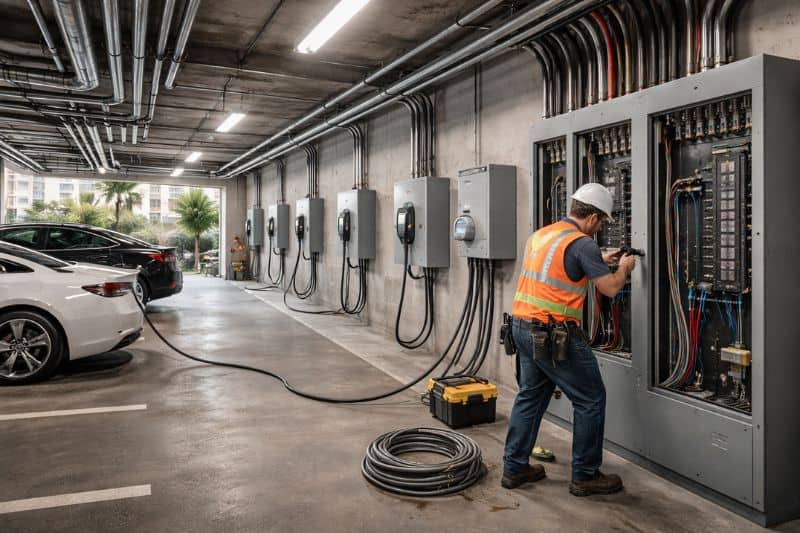
Electrical Infrastructure for EV-Heavy Parking Structures in Los Angeles Apartment Buildings
Electric vehicle adoption in Los Angeles is accelerating faster than most apartment building electrical systems were designed to handle. For property managers and building owners, EV charging is no longer a niche amenity request from one or two tenants. It is becoming a baseline expectation, and the gap between what tenants expect and what most parking structures can actually support is widening every year.
The problem is not installing a single charger. Most buildings can accommodate that with minimal disruption. The real challenge is what happens when tenant adoption reaches 20, 30, or 40 percent of the building, and the electrical infrastructure was never designed to support that kind of sustained, concentrated demand.
At RG Electric, we work with property managers and building owners across Los Angeles to plan EV infrastructure that is built to scale, not just to satisfy today’s request. This article explains the infrastructure decisions that separate buildings that are prepared from buildings that will be scrambling to catch up within a few years.
Why Parking Structures Create a Unique Infrastructure Problem
Parking garages concentrate electrical demand in a way that residential unit loads do not. Inside a building, tenant electricity usage is spread across dozens of separate circuits, in different locations, with natural variation in timing. One unit is cooking dinner while another is running laundry. The diversity of usage smooths the aggregate demand curve.
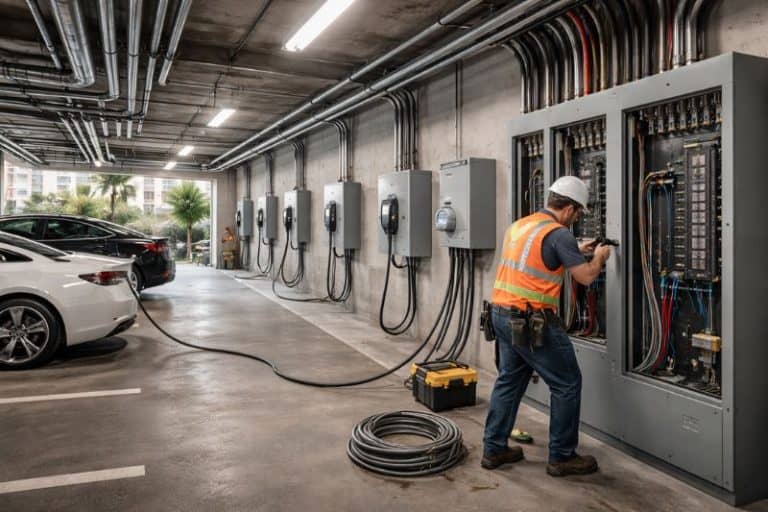
EV charging in a parking structure works differently. When tenants return home in the evening, multiple vehicles plug in at roughly the same time. Each Level 2 charger draws between 30 and 50 amps continuously, not in brief bursts, but for hours. That simultaneous, sustained demand creates what engineers call peak stacking, and peak stacking is what exposes a building’s service limitations far faster than any other load type.
Compounding this is the physical reality of parking structures themselves. Long conduit runs from the electrical room to individual stalls are expensive to install and difficult to reroute later. Electrical room space in older garages is often limited, making panel expansion physically constrained even when electrical capacity might otherwise allow it. Concrete cutting for new conduit pathways is disruptive and costly, work that, if planned poorly the first time, has to be repeated as charging demand grows.
These physical and electrical constraints are why EV infrastructure in parking structures requires a fundamentally different planning approach than a standard residential installation.
Main Service Headroom: The First Gate Every Building Must Pass
Before any EV infrastructure planning can proceed meaningfully, the building’s main service headroom must be evaluated honestly. This is the first and most important gate, and it is one that many building owners skip in favor of jumping straight to charger selection.
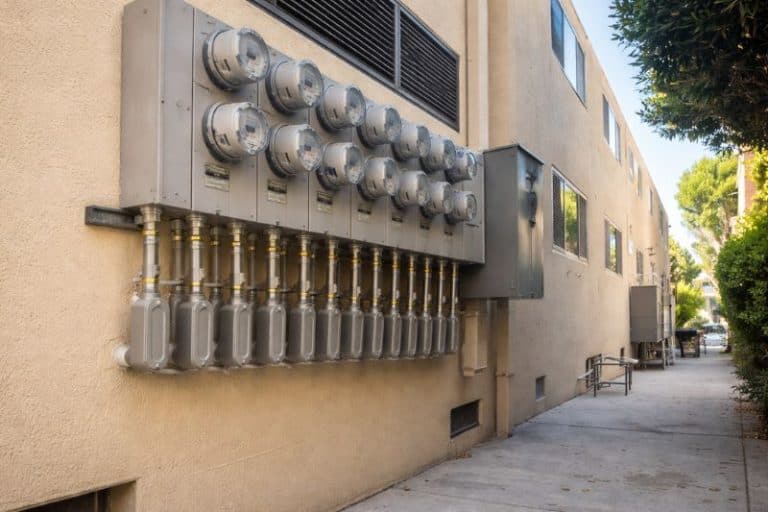
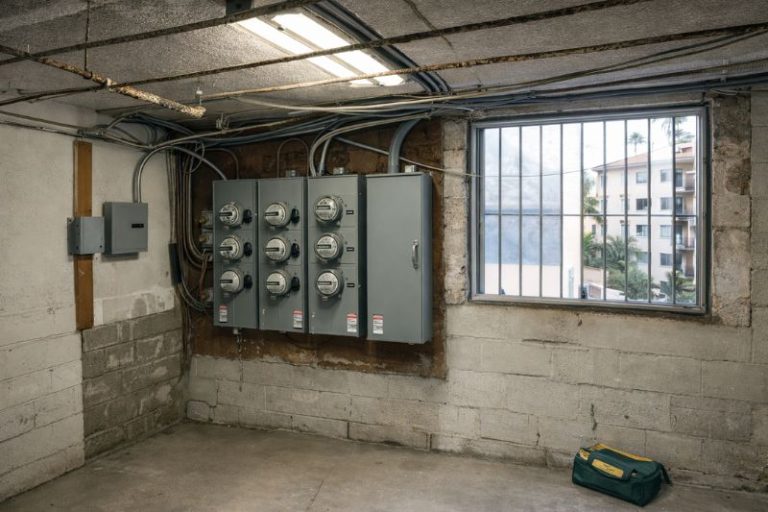
Breaker space is not the same as service capacity. A panel with open breaker slots may still have a bus bar that is operating near its rated limit under current load conditions. A 400-amp or 800-amp main service that is already supporting upgraded HVAC systems, modern appliances across multiple units, and common area equipment may have far less actual headroom than its nameplate rating implies.
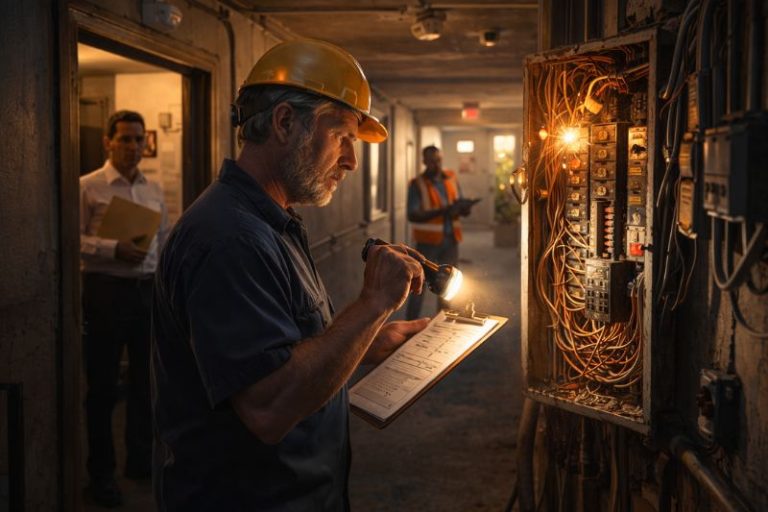
When we evaluate a building for EV readiness, we assess sustained peak demand under realistic operating conditions — not theoretical maximums. We look at seasonal variation, HVAC cycling behavior, existing EV loads if any are present, and the diversity factor across units. The result is a clear picture of how much capacity actually remains, and how much of that capacity can be allocated to EV charging without creating stress on the system.
When forecasting reveals limited headroom, the path forward may involve load redistribution, subpanel restructuring, or a phased main service upgrade. For a detailed look at panel upgrade options when capacity constraints are identified, visit our Electrical Panel Services page.
Designing for Scalability: The Infrastructure Decisions That Matter
Installing chargers one at a time, reacting to each tenant request individually, is the most expensive way to build EV infrastructure over time. The better approach is to make a small number of high-leverage design decisions early that allow the system to grow without expensive rework. Here are the three that matter most.
Dedicated EV Distribution Panels
Rather than tapping individual chargers into existing building panels in an ad hoc fashion, a centralized EV distribution subpanel consolidates all EV load into a single managed location. This approach keeps the EV electrical system organized, makes load management integration cleaner, simplifies future capacity expansion, and prevents the fragmented circuit configuration that makes older piecemeal installations difficult to inspect and service. A dedicated EV panel is also the foundation for adding load management technology, which we will cover below.
Conduit Pathways Designed for Future Expansion
The single most cost-effective investment a building can make in EV infrastructure is running conduit pathways to future charging stalls before those stalls are needed. The conduit itself is inexpensive. Running it through a parking structure, especially one with concrete construction, requires opening surfaces, coordinating around vehicles and tenants, and restoring finishes afterward. Doing that work once, during a planned infrastructure installation, costs a fraction of what it costs to do it three or four times as tenant demand grows stall by stall.
A well-designed conduit plan anticipates where charging demand will likely concentrate, typically covered stalls, assigned parking near building entrances, and accessible stalls that may have ADA requirements, and runs pathways to those areas in advance. The conduit sits empty until demand justifies pulling wire and installing chargers. The labor and disruption cost of those future installations drops dramatically because the hard work was already done.
Physical Space Planning in Electrical Rooms
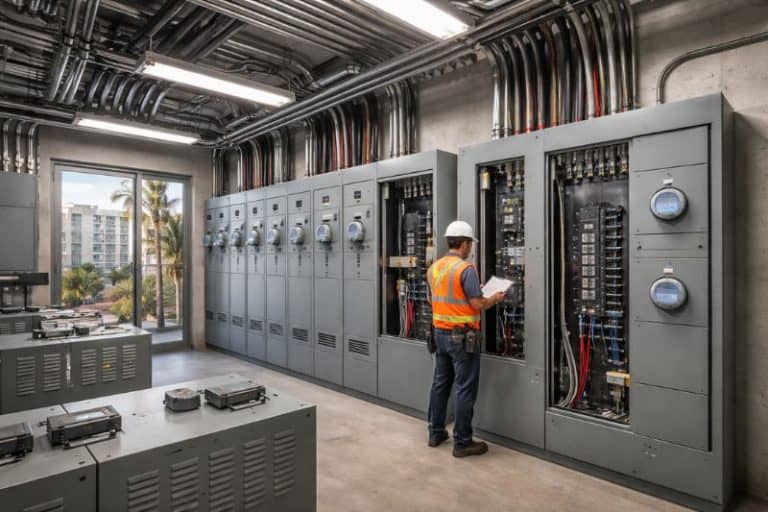
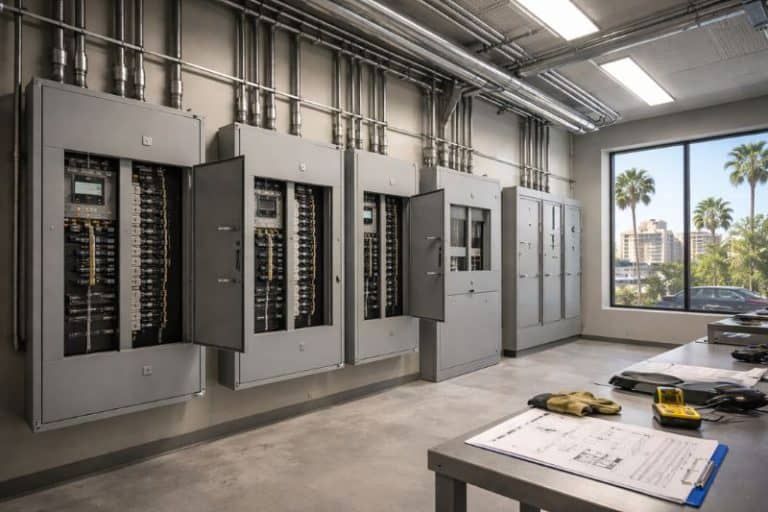
One of the most common points of failure in parking structure EV retrofits is underestimating physical space constraints. Electrical rooms in older Los Angeles garages were sized for the equipment that existed when the building was constructed. Adding EV distribution panels, load management hardware, and the conduit infrastructure to support them requires physical room that may not exist without modification.
Infrastructure design must account for physical constraints alongside electrical capacity from the beginning. A plan that works on paper but cannot be executed in the available electrical room space is not a plan, it is a problem waiting to be discovered during installation.
Load Management Systems vs. Main Service Upgrades: Understanding the Trade-Off
One of the most common decisions building owners face when planning EV infrastructure is whether to invest in a load management system, upgrade the main service, or both. Understanding the difference, and the limitations of each is essential to making the right call for your specific building.
Load management systems dynamically allocate available charging power across multiple chargers based on real-time demand. Instead of each charger drawing its full rated amperage simultaneously, the system distributes available capacity intelligently, slowing down charging on some vehicles to allow others to charge, ensuring that total demand stays within the building’s available service headroom. This allows a building to support more charging stalls than its raw service capacity would suggest, because not every vehicle needs to charge at full speed simultaneously.
The limitation is that load management systems work within a fixed capacity ceiling. They cannot create capacity that does not exist. In a building where total electrical demand, from HVAC, appliances, common areas, and EV charging combined, genuinely exceeds what the main service can safely supply, load management buys time but does not solve the underlying problem. As tenant adoption of both electric vehicles and electric appliances continues to grow, a building that relies solely on load management without evaluating its overall capacity trajectory will eventually hit a ceiling that technology cannot work around.
For most Los Angeles apartment buildings, the right approach is to implement load management as part of the initial EV infrastructure design while simultaneously modeling the building’s full electrification trajectory. If that model shows that the main service will become a constraint within five to seven years, a phased upgrade plan is the more cost-effective path than waiting for the constraint to become a crisis.
For properties that include retail or mixed-use commercial tenants, where equipment loads can vary significantly and demand profiles are harder to predict, coordinating EV infrastructure with broader building load planning requires additional expertise. Our Commercial Electrical Services page explains how we approach service scaling for these more complex environments.
Transformer and Utility Coordination: The Constraint Most Owners Don’t See Coming
Even when a building’s internal panels appear to have adequate capacity for EV expansion, the utility transformer serving the building may not. This is one of the most frequently overlooked constraints in EV infrastructure planning, and it is one of the most disruptive to discover late in the process.
The utility transformer converts high-voltage power from the distribution grid to the voltage your building uses. Each transformer has a rated capacity, and buildings share transformer capacity with neighboring properties in ways that are not always transparent. A building that adds significant EV charging demand may find that the transformer serving it cannot support the additional load — requiring an upgrade that involves the utility company, not just the building’s electrical contractor.
Utility-side upgrades can involve transformer replacements, service lateral adjustments, and metering modifications. These processes move on the utility’s timeline, not the building owner’s, and lead times for transformer upgrades in Los Angeles can run from several months to over a year depending on equipment availability and scheduling. A building that discovers a transformer constraint after tenant demand for EV charging is already urgent has very few good options.
Early infrastructure evaluation identifies transformer constraints before they become scheduling problems, allowing utility coordination to proceed in parallel with building-side planning rather than creating a bottleneck at the end of the process.
A Phased EV Infrastructure Strategy That Protects Capital
No property manager wants to spend capital on infrastructure before it is needed. A well-designed phased strategy respects that reality while ensuring that the decisions made today do not create expensive constraints tomorrow. Here is how we typically structure that approach for Los Angeles apartment buildings.
Stage one focuses on evaluation and foundation. This means completing a full assessment of main service headroom, transformer capacity, and physical electrical room constraints. It also means running conduit pathways to future charging stalls and establishing a dedicated EV distribution panel — even if only a small number of chargers are installed initially. The cost of this foundational work is modest relative to the cost of rework later, and it positions the building to expand charging access quickly and inexpensively as tenant demand grows.
Stage two focuses on managed expansion. As EV adoption among tenants increases, additional chargers are pulled through the existing conduit pathways and connected to the EV distribution panel. A load management system is activated or expanded to keep total demand within available service capacity. This stage can happen incrementally, stall by stall, without any additional disruption to the parking structure because the infrastructure was already in place.
Stage three addresses capacity scaling. When the building’s EV adoption reaches a level where total demand — EV plus full building load — approaches the main service limit, a targeted service upgrade is executed. Because the groundwork was laid in stages one and two, this upgrade is clean, predictable, and planned on the building owner’s timeline rather than forced by a crisis.
This approach protects capital at every stage while preserving long-term flexibility. The alternative — reactive installation with no plan — consistently produces the outcome described below.
The Real Cost of Reactive EV Installation
Buildings that install EV chargers reactively — responding to individual tenant requests without a coordinated infrastructure plan — consistently encounter the same three problems.
Escalating costs from repeated work. Each reactive installation requires its own conduit run, its own circuit, its own connection to whatever panel space happens to be available. When the fourth and fifth tenants request chargers and the available panel space is gone, the work required to accommodate them costs significantly more than it would have if the infrastructure had been planned from the start. Concrete cutting that could have been done once gets done multiple times. Panels that could have been upgraded as part of a coordinated project get upgraded reactively at emergency pricing.
Tenant dissatisfaction from delays and denials. When the infrastructure is not in place to accommodate new charger requests quickly, building owners face the uncomfortable position of telling tenants that EV charging — increasingly a non-negotiable for a significant segment of the Los Angeles rental market — is not available or involves a lengthy wait. In a competitive rental environment, that conversation has retention consequences.
Silent infrastructure strain that surfaces as a crisis. Reactive installations, tapped into whatever available capacity exists across multiple panels, create fragmented electrical systems that are difficult to inspect, hard to balance, and prone to the kind of sustained near-capacity stress that degrades equipment over time. By the time the system fails or requires a major emergency upgrade, the building owner has already spent more on piecemeal work than a planned approach would have cost from the beginning.
Warning Signs Your Parking Structure Is Already Under Electrical Stress
If your building already has EV chargers installed and you are seeing any of the following, your infrastructure may already be approaching its limits.
Breakers That Trip Repeatedly on EV Circuits
An occasional breaker trip is a protection mechanism working as intended. A breaker that trips regularly under normal EV charging conditions is a capacity signal — the circuit is operating at or near its design limit on a sustained basis. This is not a nuisance to be reset. It is a warning that the circuit is undersized for its actual usage, and repeated thermal cycling of a breaker under these conditions accelerates its degradation.
Voltage Fluctuations or Dimming Lights When Chargers Activate
When chargers activate and lights visibly dim or HVAC systems behave inconsistently, the distribution system is experiencing a voltage drop under load. This is a physical indicator of a system under significant stress. It typically appears before any major failure occurs — which makes it a valuable early warning that should prompt an infrastructure evaluation, not a shrug.
Panels That Are Warm to the Touch or Produce a Buzzing Sound
Heat is the enemy of electrical infrastructure. A panel that is warm under normal operating conditions is dissipating more energy as heat than it should, which means resistance is elevated somewhere in the system. Buzzing from breakers or panels can indicate loose connections, overloaded breakers, or components that are operating beyond their comfortable range. Neither of these conditions should be ignored or normalized. Electrical systems degrade under chronic thermal stress in ways that are not visible until something fails.
No Room to Add New Circuits
When every tenant EV charging request is met with “there’s no room in the panel,” the building has reached a practical infrastructure limit. This is both an operational problem — you cannot accommodate reasonable tenant requests — and a financial signal that the infrastructure decisions deferred from earlier installations now need to be addressed, likely at higher cost and under more pressure than if they had been planned proactively.
If any of these conditions exist in your building, consult a licensed electrician before the situation escalates. A structured evaluation can determine whether the issue requires simple load rebalancing, a subpanel upgrade, or a broader capacity plan. Always engage a licensed C10 contractor like RG Electric before making any modifications to building electrical systems.
EV Charging as a Long-Term Infrastructure Investment
EV charging is not just an amenity. It is a structural evolution in how apartment buildings consume electricity, and it is happening on a timeline that is compressing faster than most building owners anticipated. Los Angeles is moving toward broad electrification at every level — through regulation, through tenant preference, and through market forces that make EV-capable buildings increasingly more competitive than those without.
Buildings that invest in understanding their electrical capacity and building scalable EV infrastructure now will retain tenant appeal, command stronger rental pricing, and avoid the expensive reactive upgrades that follow from deferred planning. Buildings that install chargers without a coordinated infrastructure strategy will find themselves facing those reactive costs sooner than they expect.
The decision is not whether to support EV charging. That question has already been answered by the market. The decision is whether to support it strategically or reactively. One of those options is significantly less expensive over time.
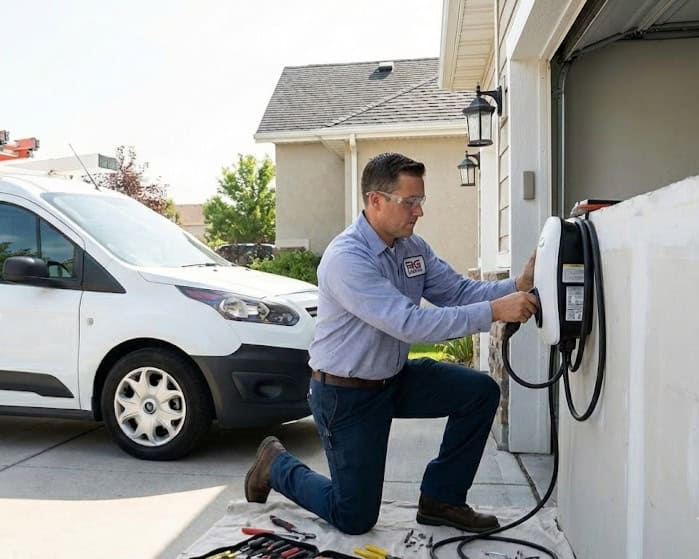
To learn more about how we plan and install EV charging systems for multi-unit buildings across Los Angeles, visit our EV Charger Installation Services page.
Plan the System, Not Just the Charger
If you manage or own an apartment building in Los Angeles and are thinking about expanding EV access, the starting point is not hardware selection. It is infrastructure evaluation. Understanding what your building can support today, and what it will need to support over the next decade, is the only basis for making decisions that hold up over time.
At RG Electric, we are a licensed C10 electrical contractor (License #910807) serving property managers and building owners across Los Angeles — from Santa Monica to Encino, from Koreatown to the San Fernando Valley. We pull permits, coordinate inspections, and provide clear documentation throughout every project. When you call us, you speak directly with someone who understands your building’s electrical system, not a call center.
For immediate assistance or to schedule a professional evaluation, call RG Electric directly at (323) 521-5131.