
 Call (323) 5215131
Electrical Panel Upgrades in Los Angeles
Updated March 2026
Your electrical panel is the foundation of every circuit in your building. When it is outdated, undersized, or failing, the consequences range from nuisance breaker trips to overheating, fire risk, and insurance complications. RG Electric replaces unsafe and undersized panels with modern, code-compliant equipment throughout the greater Los Angeles area. We handle permits, utility coordination, and inspections so you do not have to manage any of it.
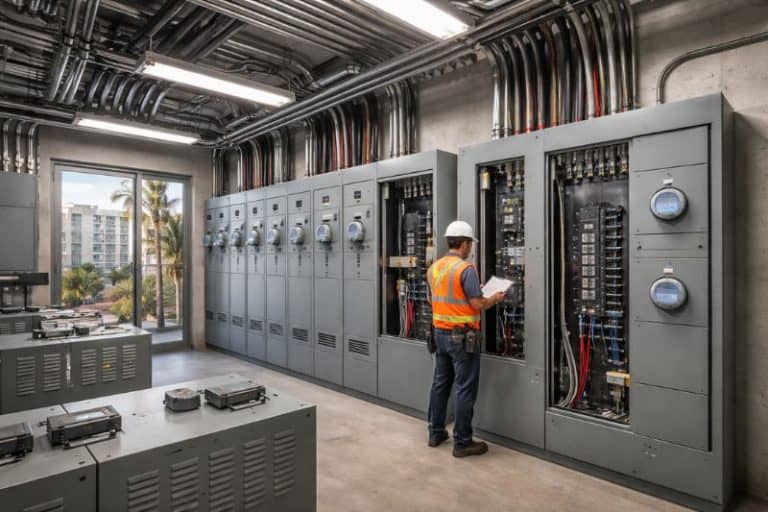
Typical projects include main panel replacements and upgrades, service size increases from 100A to 200A and beyond, subpanel installations for garages and ADUs, panel relocation to meet clearance requirements, and replacement of legacy brands including Zinsco, Federal Pacific, Pushmatic, and Challenger. For multi-unit properties and commercial buildings, we plan phased work to minimize downtime and provide complete documentation for property managers and insurers.
Licensed C-10 #910807, insured, serving the greater Los Angeles metro. Free on-site estimates for homeowners and property managers.
Do You Need a Panel Upgrade?
Los Angeles has some of the most diverse housing stock in the country, and the electrical systems inside those buildings reflect it. A mid-century home in Sherman Oaks, a 1970s apartment building in Koreatown, and a commercial property in Culver City can all be running panels that were never designed to carry the loads they carry today. EV chargers, central HVAC systems, induction ranges, home offices, and smart home equipment add meaningful demand to circuits that were sized for a fraction of that draw.
Warning signs that a panel assessment is overdue
Frequent breaker trips are the most common signal, but they are not the only one. Lights that dim when a large appliance starts, warm or discolored breakers, scorch marks or burning odors near the panel, and a panel that has no available spaces for new circuits all point to a system under stress. If your electrician or inspector has flagged tandem breakers doubled into slots that were never designed for them, that is a capacity problem that does not resolve itself over time.
Legacy panels carry specific risks
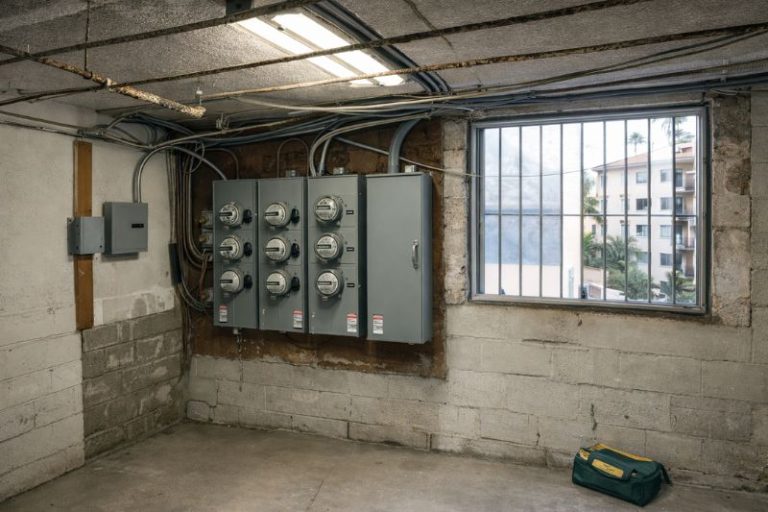
Zinsco and Federal Pacific (FPE) panels are known for bus bar and breaker issues that can allow overheating even when a breaker appears to trip normally. Pushmatic and Challenger equipment develops age-related mechanical failures that affect reliability in ways that are not always visible until there is a problem. Many insurers in California now flag these brands during underwriting and require replacement as a condition of coverage. If your building in Van Nuys, Encino, or elsewhere in the San Fernando Valley still runs one of these panels, the question is not whether to replace it but when.
Panel Upgrades for Apartment Buildings and Commercial Properties
Multi-unit residential and commercial panel work operates under different constraints than a straightforward residential swap. Tenants cannot be without power for extended periods. Property managers need clear scheduling, advance notice, and documentation that satisfies their insurance carrier and any compliance requirements from LADBS or a lender. Work that runs long, creates unexpected disruptions, or produces incomplete paperwork creates real operational and liability exposure.
How we approach multi-unit panel work
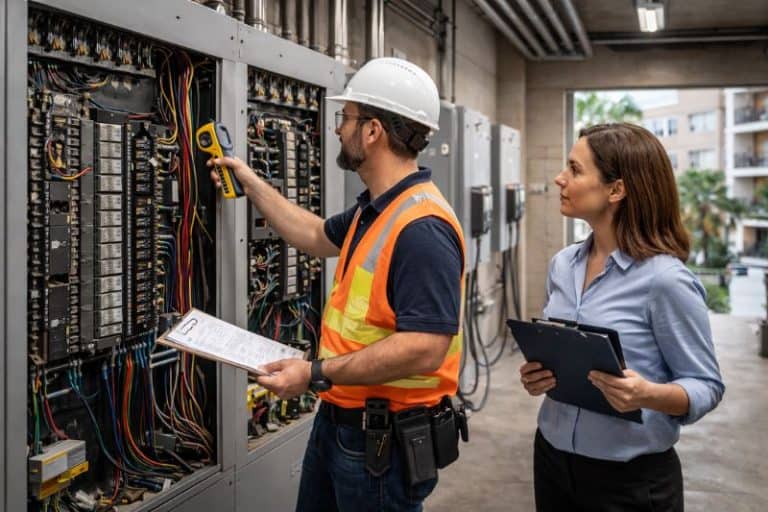
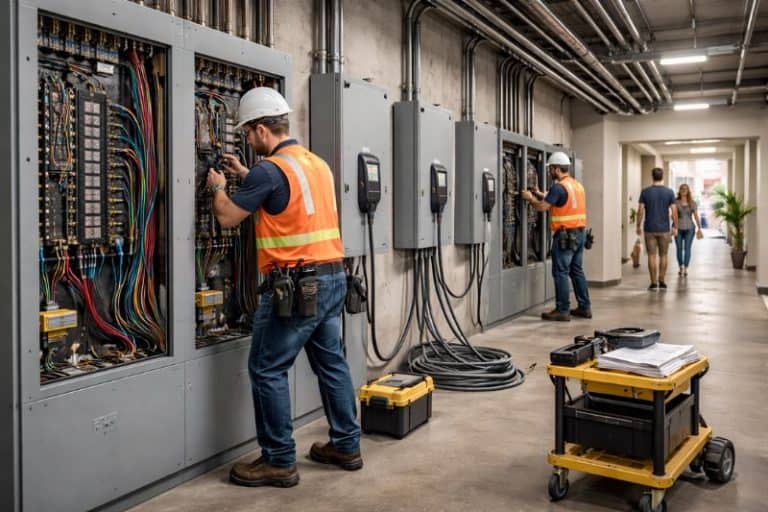
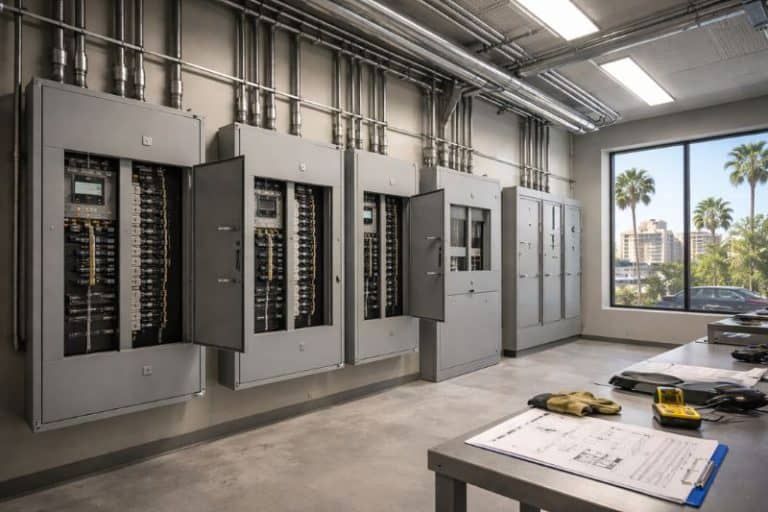
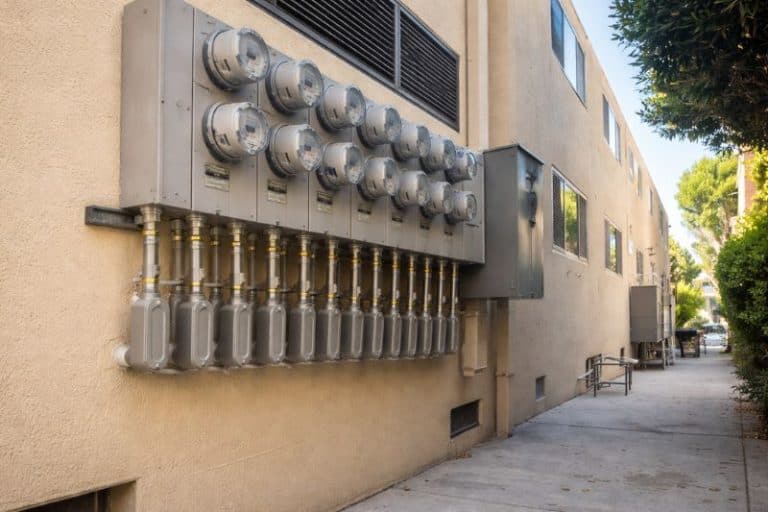
We begin with a site review that maps existing circuits, identifies house panels, meter mains, unit subpanels, and common area distribution equipment, and flags any immediate safety concerns. From there we build a phased schedule that structures shutoffs by building section or unit stack so that no single tenant group is without power longer than necessary. For large apartment complexes in areas like Downtown LA, Inglewood, or the Wilshire corridor, this kind of pre-planning is the difference between a smooth project and a tenant relations problem.
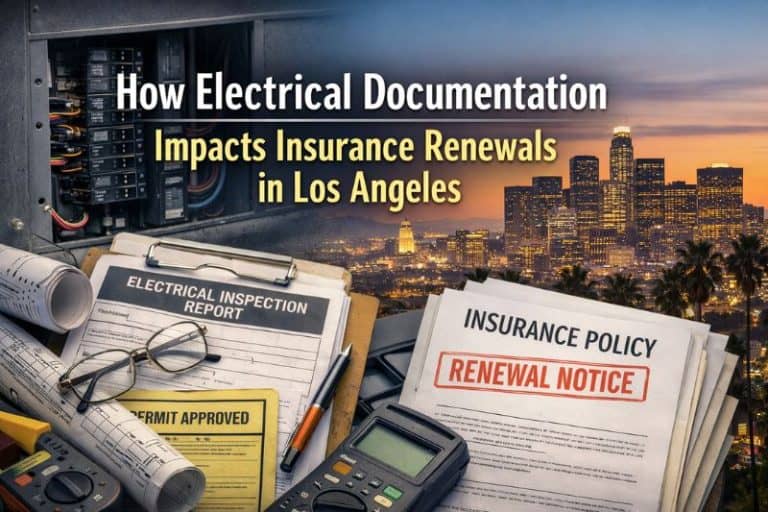
Throughout the project we provide torque records, circuit directory updates with clear labeling, and photo documentation at each stage. At closeout you receive a complete packet suitable for your insurer, any HOA oversight, lender requirements, or future LADBS review. For larger commercial scopes involving service upgrades, lighting systems, or full electrical infrastructure work, see our commercial electrical services in Los Angeles.
Panel capacity and EV charging infrastructure
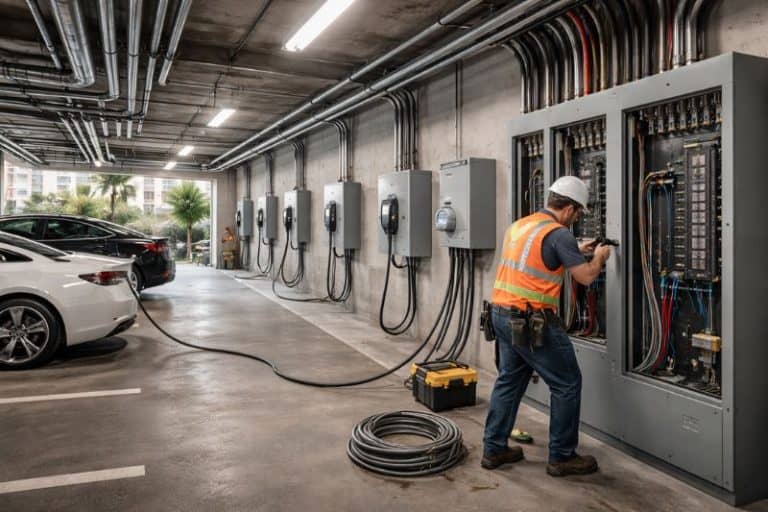
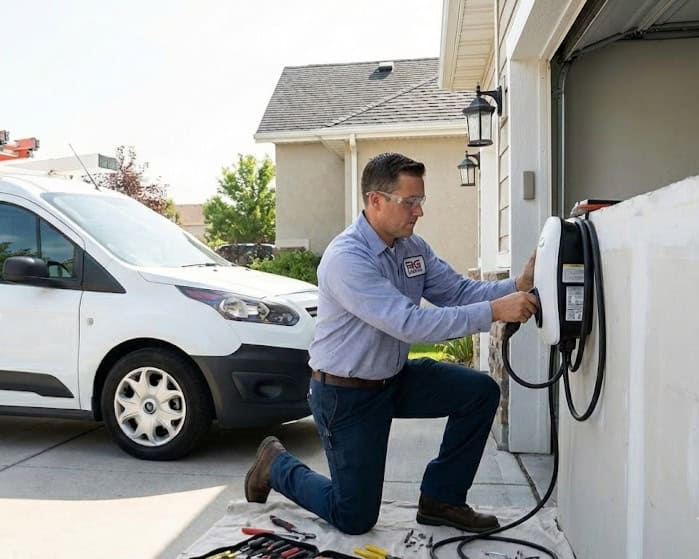
One of the most consistent questions property managers are now fielding from tenants involves EV charging access. California’s adoption rates mean that buildings in Torrance, Beverly Hills, Santa Monica, and throughout the basin are receiving these requests regularly. A panel upgrade is often the right moment to evaluate whether the building’s service capacity can support dedicated EV circuits now or in the near future, and to run conduit or reserve breaker space while the panel is already open. Coordinating the two projects together saves significant labor and reduces disruption compared to returning for a second round of work. For properties planning an EV charging buildout, see our EV charger installation services for details on how we plan and size these systems.
Permits and Inspections in Los Angeles
Panel replacements in Los Angeles require a permit from LADBS and a final inspection before the work is considered closed. This is not optional, and it is not a formality. Unpermitted panel work creates real problems at the point of sale, during refinancing, and when an insurance claim is filed. Lenders and insurers routinely ask for documentation, and a panel that was swapped without a permit can require costly remediation to bring into compliance after the fact.
What we handle on your behalf
Our team pulls the permit, prepares any required documentation for LADBS review, and coordinates any necessary utility shutoff with LADWP. During the installation we verify grounding and bonding, install new service equipment with proper working clearances, and confirm that GFCI and AFCI protection meets current code where required. We schedule the final inspection and meet the inspector on site. You receive a complete documentation packet, including the permit, inspection sign-off, and a labeled circuit directory, for your records.
What to Expect on Upgrade Day
A well-run panel upgrade follows a predictable sequence. Knowing what happens and in what order helps you prepare the space, communicate with tenants if needed, and understand what you are paying for.
Pre-work and site preparation
Before any work begins we protect adjacent areas, photograph the existing panel and its labeling, and confirm the shutoff window with you. For properties in areas like Encino or the West Side where LADWP coordination adds a scheduling variable, we manage that communication directly so there are no surprises on the day of work.
The installation sequence
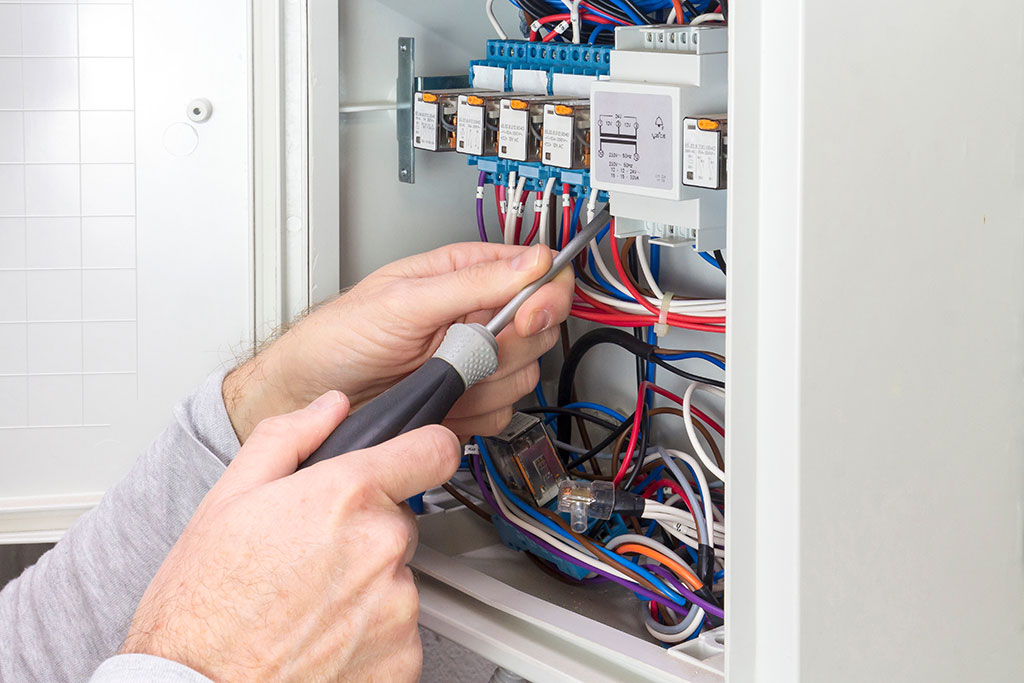
Power is shut off at the scheduled time. The legacy panel is removed, the new enclosure is set, and all circuits are landed with proper torque to listed specifications. Grounding and bonding are corrected, the neutral is properly isolated in subpanels, and GFCI and AFCI protection is verified at locations required by current code. We perform safety tests before restoring power and review the completed circuit directory with you before we leave.
Inspection and closeout
If the inspection is scheduled for the same day, we remain on site to meet the inspector. For inspections scheduled after the installation, we return to handle the final. You receive the full documentation packet once the permit is closed, including photos and the labeled directory, formatted for easy filing with your insurance or HOA records.
Grounding, Bonding, and Surge Protection
Outdated panels are frequently paired with grounding and bonding systems that no longer meet current code. A panel replacement is the natural time to correct water pipe and ground rod connections, properly bond the enclosure, and ensure neutral isolation in subpanels. These corrections improve fault clearing speed, reduce shock exposure risk, and are often required by the inspector before final sign-off.
It is also the most efficient time to add a Type 2 surge protective device to the new panel. A whole-house SPD protects HVAC control boards, appliances, and sensitive electronics from voltage transients that utility events and nearby lightning can introduce into the system. Learn more about our whole house surge protector installation.
Subpanels and Future Expansion
Garage conversions, ADUs, and new equipment additions often justify a dedicated subpanel rather than running individual circuits back to the main. During a main panel upgrade we can install a subpanel sized for future loads, run conduit for a second EV charger, or provide dedicated circuits for HVAC and cooking appliances. Proper labeling and planned spare capacity make future projects faster, cleaner, and less disruptive, particularly in occupied buildings where return visits mean coordinating with tenants again.
Costs and Timeline
Pricing depends on service size, whether grounding upgrades are needed, panel relocation to meet clearance requirements, repairs to damaged conductors discovered during the swap, and permit fees. Most residential main panel upgrades are completed in a single day once work begins, with the inspection scheduled shortly after. Multi-unit and commercial projects are scoped individually based on the number of panels, phasing requirements, and the extent of documentation needed at closeout.
For an accurate quote, request a free on-site estimate. When you reach out, a clear photo of your existing panel with the door open, the meter, and the main disconnect helps us prepare before the visit and give you a more precise range upfront.
Related Electrical Services
Panel upgrades are a practical time to address other reliability issues while access is open and the permit is active. Explore our wiring repairs and rewiring, circuit breaker services, emergency electrical repairs, and commercial electrical upgrades.
Frequently Asked Questions
Do I need a permit for a panel replacement in Los Angeles?
Yes. Panel replacements require a permit from LADBS and a final inspection. We pull the permit, coordinate any utility shutoff with LADWP, and schedule the inspection. You receive the closed permit and documentation at the end of the project.
What panel size do I need, 100A or 200A?
We calculate load based on your existing appliances, HVAC equipment, and any planned additions such as EV charging. Most homes and multi-unit buildings benefit from 200A service to accommodate current and future demand without running short on capacity.
How long will the power be off?
For most residential panel swaps, the shutoff window is a portion of the workday. We plan and confirm that window with you in advance and restore power as soon as the installation and safety checks are complete.
Can you add a subpanel at the same time?
Yes. Garages, ADUs, and dedicated equipment areas often benefit from a subpanel. Adding it during the main panel upgrade is more efficient and avoids a second mobilization and additional permit coordination later.
My insurer flagged my panel. What does that mean?
Insurers in California regularly flag Zinsco, Federal Pacific, Pushmatic, and Challenger panels as conditions requiring replacement. In many cases coverage is conditioned on completing the upgrade within a set timeframe. We can prioritize scheduling for insurance-driven replacements and provide the documentation your carrier needs.
Will you label the new panel?
Yes. Every project includes a clear, accurate circuit directory. We also provide photos of the completed installation for your records, which is useful for future inspections, resale, or insurance underwriting.
For immediate assistance or to schedule a professional evaluation, call RG Electric directly at (323) 521-5131.
Electrical work is hazardous. Consult a licensed electrician like RG Electric for inspections, permits, and code-compliant installations.