
 Call (323) 5215131
How Electrical Documentation Impacts Insurance Renewals in Los Angeles
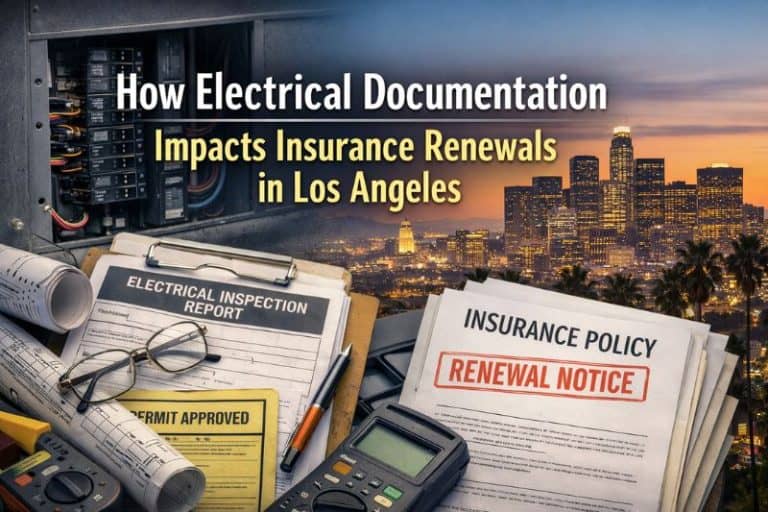
For many property owners in Los Angeles, insurance renewals feel increasingly unpredictable. Premiums rise, requirements change, and coverage decisions sometimes hinge on details that were never mentioned in prior years.
One of the most overlooked factors in this process is electrical documentation.
Insurance companies are no longer evaluating properties based solely on visual inspections or self-reported conditions. They are relying more heavily on written records that show what electrical work has been done, when it was performed, and whether it was completed properly. When documentation is missing, incomplete, or inconsistent, even a safe electrical system can become an insurance problem.
This issue affects homeowners, but it is especially impactful for property managers and owners of multi-unit buildings. In these cases, a single documentation gap can affect an entire policy, not just one unit.
Understanding how electrical documentation influences insurance renewals helps property owners avoid surprises, reduce delays, and maintain coverage without unnecessary stress.
Why Insurance Companies Care About Electrical Documentation
Insurance companies operate on risk assessment. While inspections and photographs still matter, documentation provides verifiable proof that electrical systems have been maintained, upgraded, and inspected according to current standards.
From an insurer’s perspective, undocumented electrical work introduces uncertainty. They cannot confirm whether work was permitted, inspected, or completed by a licensed contractor. That uncertainty translates directly into higher risk.
As insurance standards tighten across California, underwriters are increasingly using documentation as a decision-making tool. When records are clear and complete, renewals tend to move more smoothly. When records are missing, insurers often respond with additional requirements, exclusions, or non-renewal notices.
This shift has caught many property owners off guard, especially those who have relied on long-standing electrical systems that appeared to function without issue.
What Counts as Electrical Documentation for Insurance Purposes
Electrical documentation is more than a receipt or invoice. Insurance companies typically look for records that demonstrate compliance, professionalism, and accountability.
This may include permits pulled with the city, inspection approvals, records of panel replacements or major repairs, and confirmation that work was performed by a licensed electrical contractor. In multi-unit buildings, insurers may also request documentation that applies to common areas or shared electrical systems.
When documentation clearly shows that electrical work was permitted and inspected, it reassures insurers that the system meets current safety expectations. When those records are missing, insurers often assume that risks may be present, even if no failures have occurred.
This is one reason why properties with a history of informal or undocumented repairs are more likely to face scrutiny during renewals.
How Missing Documentation Can Delay or Complicate Renewals
Many property owners only discover documentation issues when an insurance renewal is already underway. At that point, timelines are tight and options are limited.
When insurers request proof of electrical upgrades or repairs and records cannot be produced, they may pause the renewal process while additional information is gathered. In some cases, they issue temporary extensions or conditional approvals that require corrective action within a short timeframe.
For property managers, this can create operational headaches. Coordinating electricians, permits, and inspections under insurance deadlines is far more difficult than planning upgrades proactively.
These situations often lead to last-minute electrical work that could have been avoided with proper documentation from the beginning.
Why Permits and Inspections Matter More Than Ever
One of the most common documentation gaps involves permits and inspections.
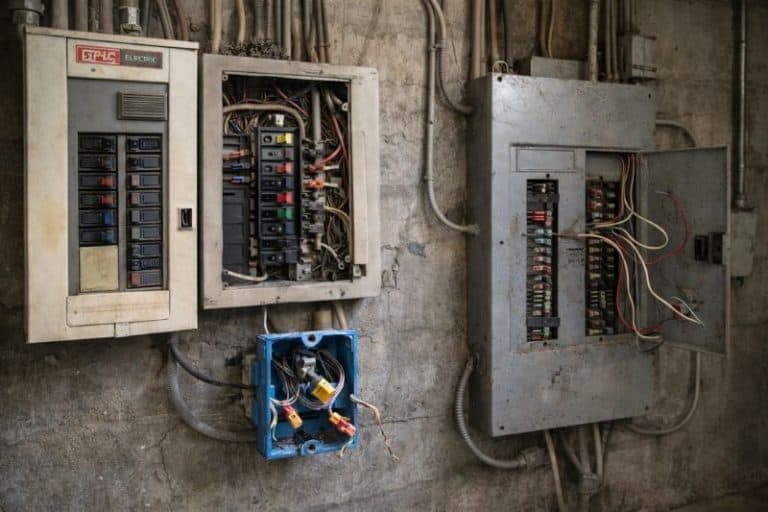
In older Los Angeles buildings, it is not unusual to find electrical work that was completed years ago without permits. While the system may have functioned without problems, insurance companies increasingly view unpermitted work as a red flag.
Permits and inspections provide third-party verification that work met code at the time it was completed. Without that verification, insurers may question the safety of the installation and require upgrades or corrections before renewing coverage.
This is especially common when properties undergo panel replacements or other major electrical changes. Insurers often request documentation showing that these upgrades were properly approved and inspected.
Property owners who rely on licensed electricians experienced in electrical panel services are more likely to have the documentation insurers expect during renewals.
https://www.rgelectric.net/electrical-panel-services-in-los-angeles/
Documentation Challenges in Multi-Unit Properties
Multi-unit buildings face additional complexity when it comes to electrical documentation.
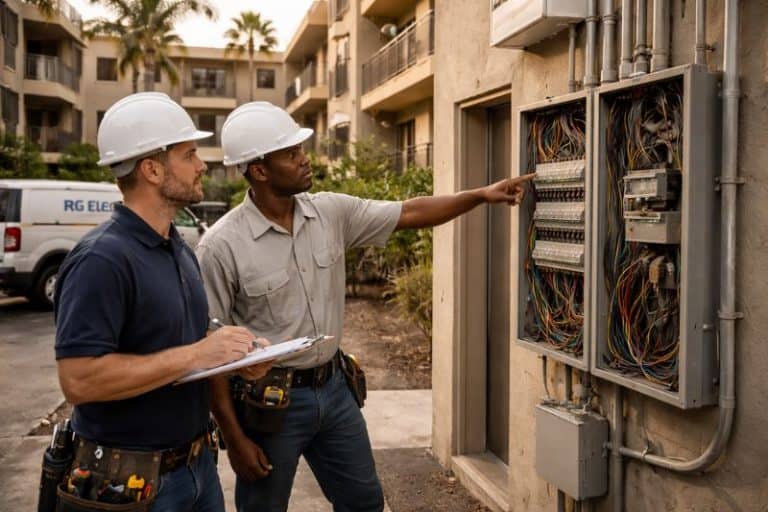
Over time, electrical work may have been performed in individual units, common areas, or shared systems by different contractors. Records may be scattered, incomplete, or missing altogether. When insurers review these properties, they often request comprehensive documentation that covers the entire building, not just recent upgrades.
This is one reason insurance companies treat apartment buildings differently than single-family homes. The potential impact of an electrical failure is greater, and insurers want clear proof that systems have been maintained responsibly.
Property managers who work with electricians familiar with commercial electrical services are often better positioned to provide the documentation insurers require.
https://www.rgelectric.net/commercial-electrical-services-in-los-angeles/
How Undocumented Electrical Repairs Can Trigger Insurance Requirements
One of the most frustrating situations property owners face during insurance renewals is being asked to address electrical issues tied to work that was completed years ago. From the owner’s perspective, the system has worked fine. From the insurer’s perspective, the lack of documentation creates uncertainty they are no longer willing to accept.
Insurance companies are increasingly cautious about undocumented electrical repairs, even when no problems have been reported.
Why undocumented work raises red flags for insurers
When electrical work is performed without permits or inspections, there is no independent verification that it met code at the time of installation. Insurers cannot confirm whether safety issues were addressed correctly or whether shortcuts were taken.
As underwriting standards tighten, insurance companies are less willing to assume that undocumented work is safe. Instead, they may require additional inspections, corrective work, or full upgrades before renewing coverage.
This shift is not about punishing property owners. It is about reducing unknown risk.
“It’s always worked” is no longer enough
Many property owners rely on the fact that their electrical system has functioned without incident. While this may be true, insurance decisions are not based on past performance alone.
Insurers evaluate whether a system meets current expectations for safety and reliability, not whether it has failed yet. Undocumented repairs introduce doubt, especially when combined with older wiring, outdated panels, or prior claims.
During renewals, this doubt often leads insurers to request documentation that simply does not exist. When records cannot be produced, they may impose requirements to bring the system up to a documented, verifiable standard.
Repairs performed years ago still matter today
Electrical work does not expire in the eyes of insurers. If a repair or upgrade affects the safety of the system, insurers may ask when it was performed and whether it was inspected, regardless of how long ago it occurred.
This commonly happens with past panel replacements, subpanel additions, or major circuit changes. Without permits and inspection records, insurers may require the work to be evaluated or redone to meet current standards.
In these situations, property owners often need professional electrical repairs to correct or document existing installations before insurance approval is granted.
https://www.rgelectric.net/electrical-repairs-services-in-los-angeles/
Why Documentation Gaps Are More Common Than Owners Realize
Many documentation issues are not the result of neglect. They are the result of how older properties were maintained over time.
Informal repairs were common in older buildings
In the past, electrical repairs were often handled informally, especially in rental properties. Handymen or general contractors may have performed work that addressed immediate problems without pulling permits or providing detailed records.
While these repairs may have resolved short-term issues, they often left no paper trail. Decades later, when insurance companies request documentation, property owners discover that records are missing or incomplete.
Ownership changes complicate recordkeeping
Documentation gaps are also common when properties change hands. New owners may inherit buildings without complete maintenance records, especially if previous owners managed repairs informally.
For property managers who take over older buildings, it is not unusual to discover that electrical documentation is fragmented or nonexistent. This becomes a problem when insurers expect a clear history of upgrades and inspections.
Renovations often expose missing records
Electrical documentation issues frequently surface during renovations, panel upgrades, or inspections tied to insurance or sales. Once permits are pulled and inspectors are involved, undocumented work from the past can come to light.
At that point, owners may be required to correct or document existing conditions before approvals are granted. This is one reason why proactive evaluations are often more cost-effective than reactive fixes under pressure.
How Proper Documentation Supports Smoother Renewals
When electrical documentation is clear and complete, insurance renewals tend to move faster and with fewer complications.
Permits, inspection approvals, and contractor records provide insurers with confidence that systems meet safety expectations. This reduces the likelihood of last-minute requirements, exclusions, or non-renewals.
Property owners who work with licensed electricians experienced in commercial electrical services are often better prepared to provide the documentation insurers request, especially in multi-unit buildings where shared systems are involved.
https://www.rgelectric.net/commercial-electrical-services-in-los-angeles/
What Property Owners Can Do to Strengthen Electrical Documentation
Even when electrical records are incomplete or missing, property owners are not stuck. There are practical steps that can be taken to improve documentation and reduce insurance risk moving forward.
The key is shifting from a reactive mindset to a documentation-first approach.
Start with a professional electrical evaluation
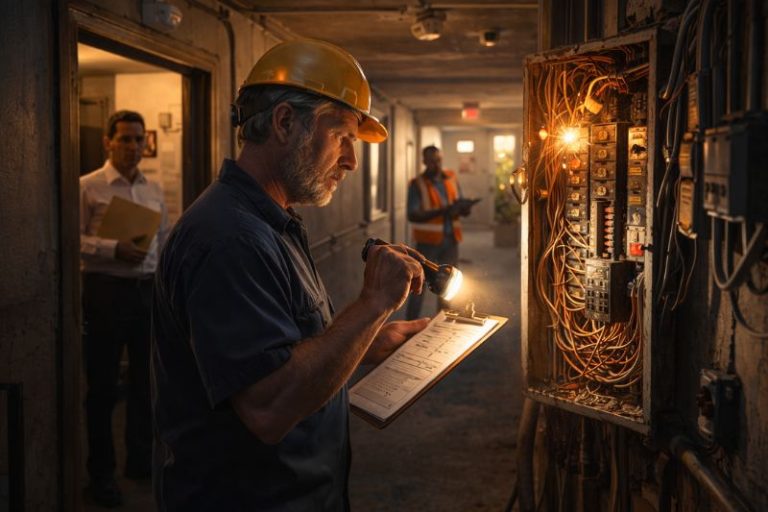
When documentation is unclear, the most effective first step is a professional evaluation by a licensed electrician. This allows the current condition of the electrical system to be assessed and documented, regardless of what records exist from the past.
An evaluation can identify whether past work meets current safety expectations or whether corrective action is likely to be required. For insurance purposes, having a recent, professional assessment on record often helps clarify next steps and avoid assumptions.
This is especially valuable for older properties where multiple undocumented repairs may have occurred over time.
Bring future work under permit and inspection
While it is not always possible to retroactively permit old work, moving forward with permitted and inspected electrical projects creates a clean documentation trail.
When upgrades or repairs are completed with permits and final inspections, property owners gain records that insurers recognize and trust. Over time, this reduces the impact of older documentation gaps and demonstrates responsible system management.
Property owners who prioritize permitted electrical repairs and upgrades are often better positioned during renewals.
https://www.rgelectric.net/electrical-repairs-services-in-los-angeles/
Centralize and organize existing records
Many documentation issues stem from disorganization rather than absence. Invoices, inspection tags, and contractor information may exist but be scattered across files, emails, or previous management records.
Centralizing these documents into a single, accessible system makes it easier to respond to insurance requests quickly. For property managers, this step alone can significantly reduce stress during renewal periods.
Even partial documentation can be helpful when presented clearly and consistently.
Address known gaps proactively
If an evaluation reveals areas where documentation is missing or work may not meet current standards, addressing those issues proactively is often less costly than waiting for an insurance company to demand corrections.
This approach allows owners to schedule work on their terms, rather than under the pressure of insurance deadlines. It also helps prevent emergency situations that disrupt tenants and operations.
For larger buildings, addressing these issues through planned commercial electrical services often leads to smoother coordination and fewer surprises.
https://www.rgelectric.net/commercial-electrical-services-in-los-angeles/
Why Documentation Is Becoming a Long-Term Insurance Requirement
Insurance standards are not likely to loosen in the near future. As claims data grows and risk models evolve, documentation is becoming a permanent part of how properties are evaluated.
Electrical systems that are well-documented are easier to insure, easier to inspect, and easier to manage. Systems with unclear histories are increasingly viewed as liabilities, regardless of whether failures have occurred.
For property owners, this means documentation is no longer optional. It is part of long-term risk management.
Documentation supports future upgrades and planning
Clear electrical records do more than support insurance renewals. They also make future upgrades easier.
When load calculations, panel capacities, and prior work are documented, electricians can plan improvements more efficiently. This is particularly important as properties add new electrical demands such as EV chargers, upgraded HVAC systems, or additional units.
Good documentation reduces guesswork and supports safer, more cost-effective upgrades.
Property managers benefit most from documentation clarity
For property managers, documentation reduces uncertainty. It simplifies communication with owners, insurers, and contractors, and it helps prevent disputes when electrical work becomes necessary.
In multi-unit buildings, documentation also supports consistent maintenance across units, rather than reactive repairs that vary by tenant or situation.
Final Thoughts on Electrical Documentation and Insurance Renewals
Electrical documentation has become one of the quiet drivers of insurance decisions in Los Angeles. Properties with clear records tend to experience smoother renewals, fewer surprises, and less pressure from insurers.
Properties with missing or inconsistent documentation are more likely to face additional requirements, delays, or coverage limitations, even when systems appear to be functioning properly.
By taking proactive steps to evaluate, document, and properly permit electrical work, property owners can regain control of the renewal process and reduce long-term risk.
If you own or manage a property in Los Angeles and are unsure whether your electrical documentation meets current insurance expectations, addressing the issue early is far easier than reacting under a deadline.
Contact RG Electric at (323) 521-5131 or request an evaluation at:
https://www.rgelectric.net/contact-us/