
 Call (323) 5215131
Does Your House Need a 200-Amp Panel Upgrade? What Los Angeles Homeowners and Property Managers Should Know
Updated March 2026
Most electrical panels installed in Los Angeles homes and apartment buildings before the 1990s were designed for a world that no longer exists. A world without EV chargers, heat pump HVAC systems, multiple home offices, and high-draw kitchen appliances running simultaneously. A 100-amp panel made perfect sense in 1975. In 2026, that same panel is often the reason tenants complain about tripping breakers, why an insurance carrier flags your property at renewal, and why a planned renovation hits a wall before the first permit is pulled.
The question of whether your property needs a 200-amp panel upgrade isn’t just a technical one. It’s a safety question, a compliance question, and increasingly, a financial one. Understanding what drives that decision, and what the upgrade actually involves, helps homeowners and property managers move forward with confidence rather than reacting to the next failure.
This guide covers everything you need to make that call clearly, from how panels work and what the warning signs look like, to what the upgrade process involves in Los Angeles and who it matters most for.
What an Electrical Panel Actually Does
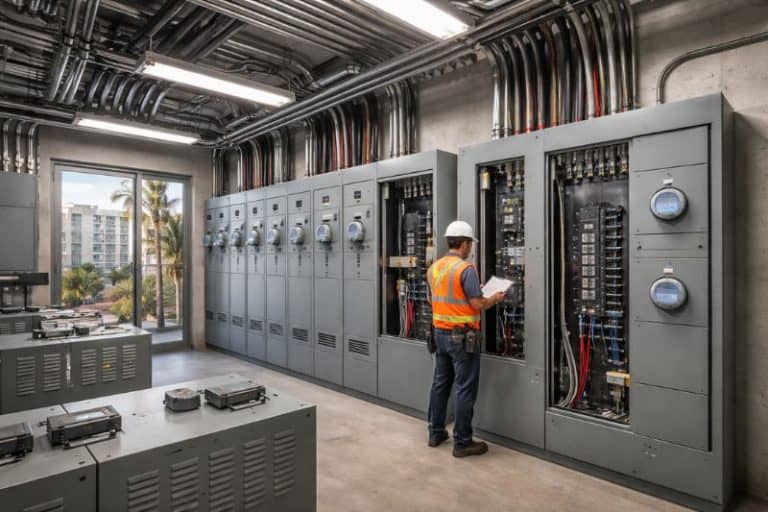
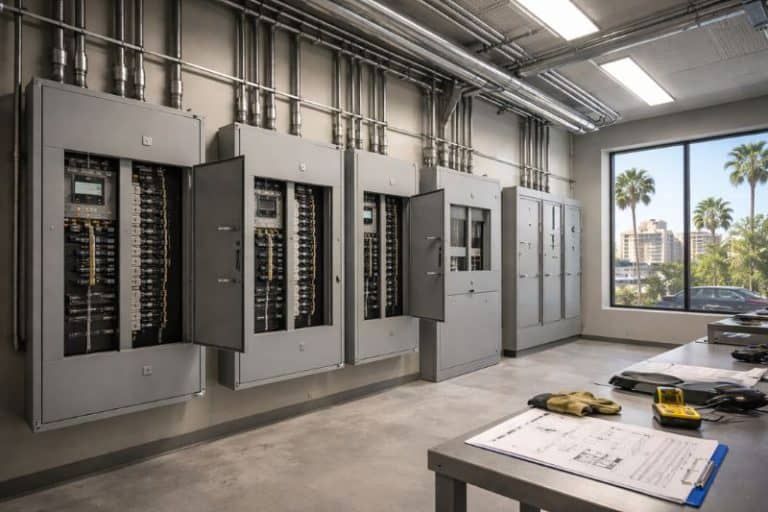
The electrical panel, also called the service panel, load center, or breaker box, is the distribution hub for all the electricity entering your property from the utility. Power comes in from the street through the utility service, enters the main panel, and gets divided across individual circuit breakers that protect separate areas or devices throughout the building.
Each circuit breaker is rated for a specific amperage. When a circuit draws more current than the breaker is rated for, the breaker trips and cuts power to that circuit. That’s the protection mechanism working correctly. The problem occurs when a panel is routinely asked to supply more power than it was designed to handle, or when the breakers themselves are aging, undersized, or from a discontinued product line that no longer meets current safety expectations.
A 100-amp panel provides enough capacity for a modest home with basic appliances and standard lighting. A 200-amp panel doubles that capacity, supports more circuits, and provides the headroom modern properties need to operate safely, pass inspections, and accommodate future additions without overloading the system.
Why 200 Amps Has Become the Standard
The shift toward 200-amp service as the baseline for residential properties reflects how dramatically electricity consumption has grown. The average home today uses roughly three times the electricity it did in the 1970s, when many of the panels still in service across Los Angeles were installed. Air conditioning, which was once a luxury, is now standard. EV chargers require dedicated 240-volt circuits drawing 30 to 50 amps on their own. Heat pumps, induction ranges, and electric water heaters each place demands on a system that older panels were never built to meet.
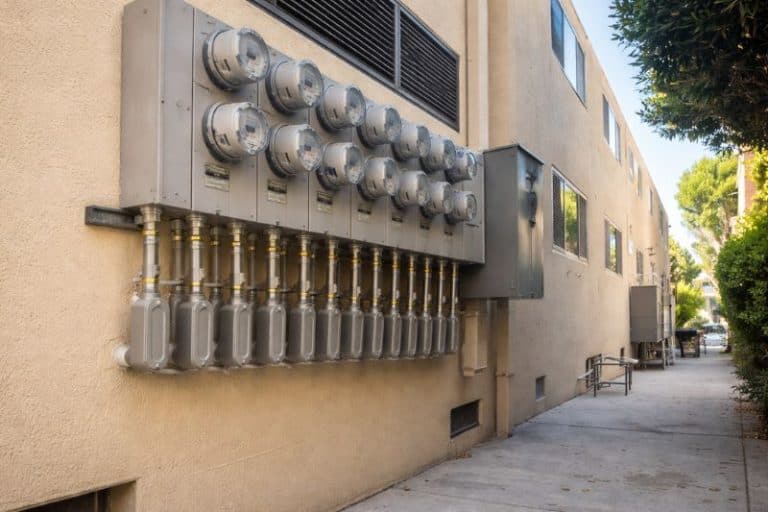
For multi-unit buildings and commercial properties, the calculation compounds quickly. A 10-unit apartment building where multiple tenants are running window AC units, charging vehicles, and using high-draw appliances simultaneously creates a load profile that may far exceed what older main service infrastructure can safely handle.
Upgrading to 200-amp service isn’t about more power for its own sake. It’s about having the capacity to distribute power safely, without overtaxing circuits, without generating heat at the panel, and without creating the conditions that lead to electrical fires or failed inspections.
Warning Signs Your Panel Needs to Be Upgraded
Panels don’t usually fail all at once. They degrade, struggle, and signal distress before a serious problem develops. Knowing what to look for helps property owners and managers get ahead of the failure rather than respond to it.
Frequent Breaker Trips
If breakers in your panel trip regularly, especially when using appliances that aren’t particularly unusual, the panel is telling you something. An occasional trip after plugging in too many devices is normal. Breakers tripping weekly or repeatedly on the same circuits is not. It usually means that circuit is consistently overloaded, that the breaker itself is aging and tripping at lower thresholds than it should, or that the overall panel capacity is being exceeded.
In a rental property, repeated breaker trips also generate tenant complaints and maintenance calls that add up in time and cost. The underlying cause is rarely solved by resetting the breaker.
Flickering or Dimming Lights
Lights that flicker when appliances turn on, or that dim noticeably when a large load activates elsewhere in the building, typically indicate that the panel is struggling to maintain consistent voltage distribution. This is a load capacity problem. The panel doesn’t have the bandwidth to supply steady power to all circuits simultaneously, so high-draw devices pull voltage down elsewhere in the system when they activate.
Flickering can also indicate loose connections inside the panel or at the service entrance, which is a more immediate safety concern that a licensed electrician should evaluate without delay.
Burning Smell, Heat, or Discoloration Around the Panel
Any burning odor coming from the panel, any visible discoloration or scorching around breakers, or any warmth felt on the panel door should be treated as a serious warning. These are signs that components inside are overheating, which in an electrical panel can lead to arc faults or fire. This is not a wait-and-see situation. It warrants an immediate call to a licensed electrician.
The Panel Is Older Than 30 to 40 Years
Age alone is a meaningful risk factor for electrical panels. Components wear, breaker mechanisms weaken, and insulation degrades over decades of service. More critically, several panel brands that were common in Los Angeles homes from the 1950s through the 1980s have been identified as fire hazards and are no longer considered safe under current standards.
Federal Pacific Electric panels with Stab-Lok breakers, Zinsco panels, Pushmatic panels, and certain Bryant models are all on the radar of insurance carriers and fire investigators. If your property has one of these, the upgrade question is less a matter of whether and more a matter of when. Many insurance companies will now decline to renew policies, or will increase premiums significantly, for properties with these panels still in service.
You’re Adding EV Charging, an ADU, or High-Draw Appliances
Any major addition to a property’s electrical load should trigger a panel evaluation before installation begins. EV chargers typically require a dedicated 240-volt, 40 to 50-amp circuit. An accessory dwelling unit adds the equivalent of an entire home’s electrical load. Converting to an electric range, heat pump water heater, or HVAC system adds significant continuous draw.
If a panel is already operating near its capacity, adding any of these loads without upgrading the service is unsafe. A licensed electrician will perform a load calculation to determine whether the existing panel can support the addition or whether a panel upgrade, or a new subpanel, is required first.
Your Appliances Underperform
When electrical devices in a home or unit consistently fail to perform at their rated capacity, when a dryer takes longer than it should, when an air conditioner cycles unevenly, when a refrigerator compressor sounds labored, it can reflect inadequate voltage delivery from an overtaxed panel. These symptoms are easy to misattribute to the appliance itself, but the panel is often the root cause.
What the Upgrade Process Looks Like in Los Angeles
A 200-amp panel upgrade is a permitted electrical project in Los Angeles. It involves coordination between the electrician, the Los Angeles Department of Building and Safety, and the utility provider. Understanding the sequence helps set expectations for timeline, access requirements, and the brief period during which power to the property will be off.
Load Evaluation and Scope Determination
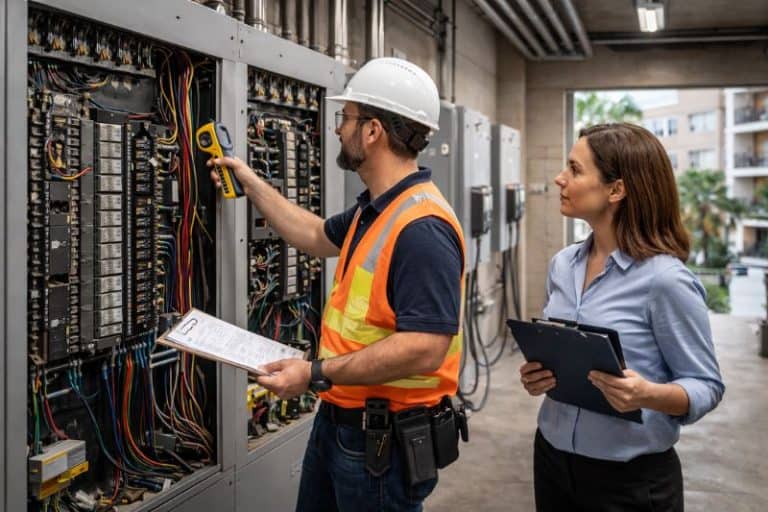
Before any work begins, a licensed electrician evaluates the existing service, panel, and load. This involves reviewing the current amperage of the service entrance, assessing the condition of the meter base and main disconnect, calculating existing load against current and anticipated usage, and identifying any wiring or grounding issues that need to be corrected as part of the upgrade.
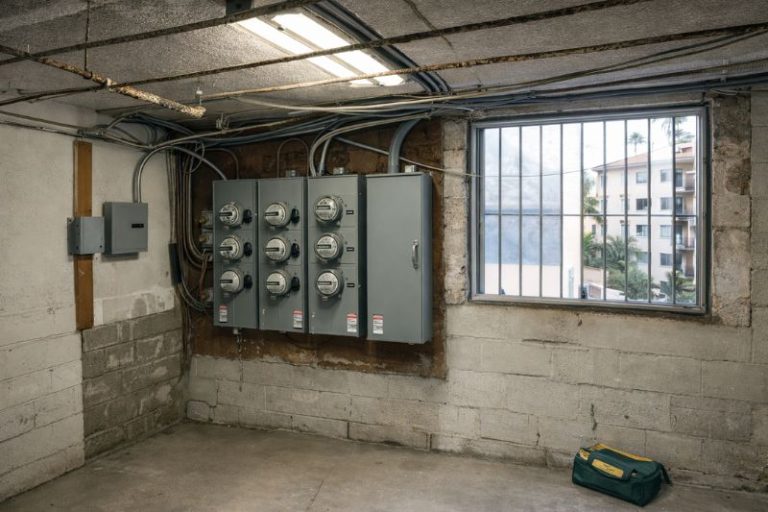
In older Los Angeles properties, especially those built before 1970, the evaluation sometimes reveals that the service entrance conductors, the wires running from the street to the meter, are also undersized and need to be replaced. This adds scope but is required to safely deliver 200-amp service to the panel.
Permitting Through LADBS
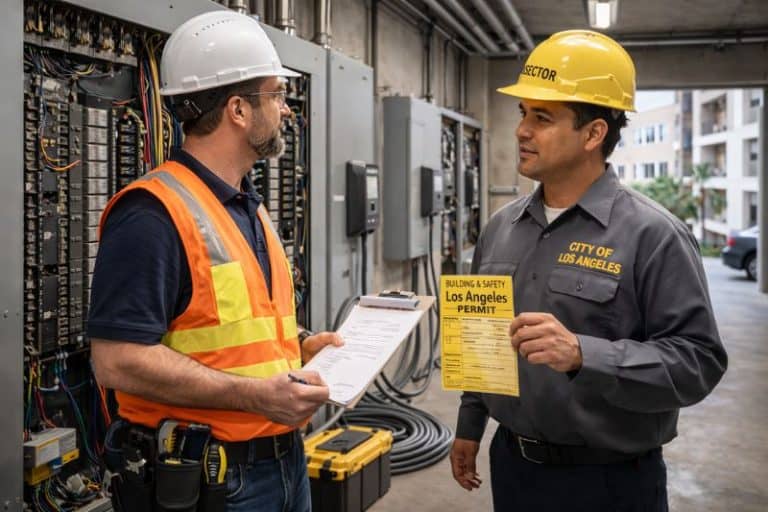
Panel upgrades in Los Angeles require a permit through the Los Angeles Department of Building and Safety. The permit process ensures the work will be inspected by a city inspector before the utility restores permanent power. Skipping the permit process creates liability, creates problems at future inspections, and may trigger complications during insurance renewals or property transactions.
A licensed electrical contractor handles permit applications as part of the job. This is one of the clearest reasons to work with a C10-licensed electrician rather than an unlicensed individual offering a lower price. The permit trail is the documentation that proves the work was done legally and to code.
Utility Coordination and Meter Base Work
Because the utility controls the service entrance, the electrician must coordinate with Southern California Edison or the relevant utility provider to schedule a brief disconnection so the meter base and service entrance work can be completed safely. This coordination adds a scheduling element to the project, but an experienced electrician manages this as a standard part of the upgrade process.
Once the new panel is installed, the city inspector reviews the work before the utility reconnects permanent service. The window from start to power restoration is typically one to two days for a straightforward residential upgrade, though larger or more complex properties may require additional time.
What’s Included in a Modern Panel Upgrade
A complete panel upgrade typically includes removal of the old panel, installation of a new 200-amp load center with properly rated breakers, verification of grounding and bonding, labeling of all circuits, and correction of any immediately apparent wiring deficiencies identified during the work. Where applicable, AFCI or GFCI breakers are installed per current NEC and California code requirements.
The result is a panel that is safe, code-compliant, inspected, and documented, one that supports the property’s current load and provides meaningful capacity for future additions.
Why This Matters More for Property Managers and Building Owners
For homeowners, a panel upgrade is primarily about safety and functionality. For property managers and multi-unit building owners in Los Angeles, the stakes extend to liability, insurance coverage, code compliance, and tenant retention, making it a more urgent and more consequential decision.
Insurance Carrier Requirements
California insurance carriers have become significantly more aggressive about electrical risk in the past several years. Properties with Federal Pacific, Zinsco, or Pushmatic panels increasingly trigger mid-term cancellations or non-renewals. Even properties with older but less notorious panels may face premium increases or coverage requirements tied to an electrical inspection or upgrade.
Property managers who receive an insurance notice related to the electrical panel should treat it as a near-term action item, not a future consideration. Losing coverage on a rental property creates immediate legal and financial exposure. Addressing the panel proactively, before the renewal deadline, avoids gaps and demonstrates due diligence.
Code Compliance and LADBS Inspections
Electrical work that was legal at the time it was installed may not meet today’s code requirements. While properties aren’t generally required to continuously upgrade to current code unless work is being performed or a change of use occurs, inspection-triggering events, such as permit applications for renovations, ADU conversions, or new utility connections, often surface code deficiencies that must be corrected.
A 100-amp panel in a building undergoing ADU conversion, for example, will almost certainly require an upgrade as part of the permitting process. Getting ahead of that requirement, rather than discovering it mid-project, keeps timelines intact and avoids the disruption of halted construction.
Tenant Demand and Competitive Positioning
The Los Angeles rental market has shifted. Tenants increasingly expect access to EV charging, are adopting electric vehicles, and want apartments that can support modern appliance loads without constant breaker trips. A building with outdated electrical infrastructure is at a competitive disadvantage compared to properties that have addressed these upgrades.
Property managers who have completed panel upgrades and added EV infrastructure report fewer maintenance calls related to electrical complaints, higher tenant satisfaction, and stronger retention among the demographics most likely to stay long-term. The investment in the panel upgrade pays dividends in reduced friction and improved occupancy.
Our commercial electrical services for multi-unit and commercial properties include panel evaluations, capacity planning, and phased upgrade strategies designed to work within the operational realities of occupied buildings.
100-Amp vs. 200-Amp: Understanding the Difference
The distinction between 100-amp and 200-amp service is straightforward in theory but has real implications for what a property can safely support.
A 100-amp panel can reliably power a modest single-family home with standard lighting, a central HVAC unit, a refrigerator, a washer and dryer, and a few other common appliances, provided they’re not all running at peak draw simultaneously. It provides roughly 24,000 watts of capacity, which sounds like a lot until you start calculating the load from a 240-volt EV charger (7,200 watts), a central air conditioner (3,500 to 5,000 watts), an electric water heater (4,500 watts), and an electric range (5,000 to 8,000 watts) operating at the same time.
A 200-amp panel doubles the capacity to roughly 48,000 watts and typically provides more circuit slots, allowing loads to be distributed more safely across more dedicated circuits rather than shared circuits that approach their limits under normal conditions.
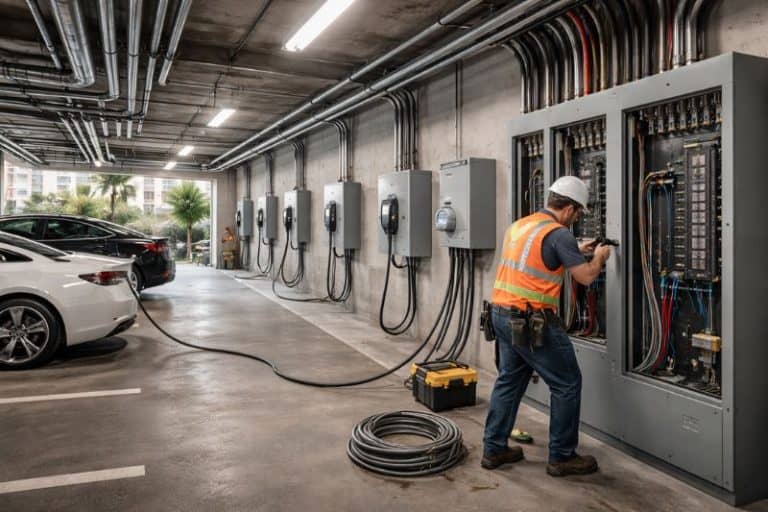
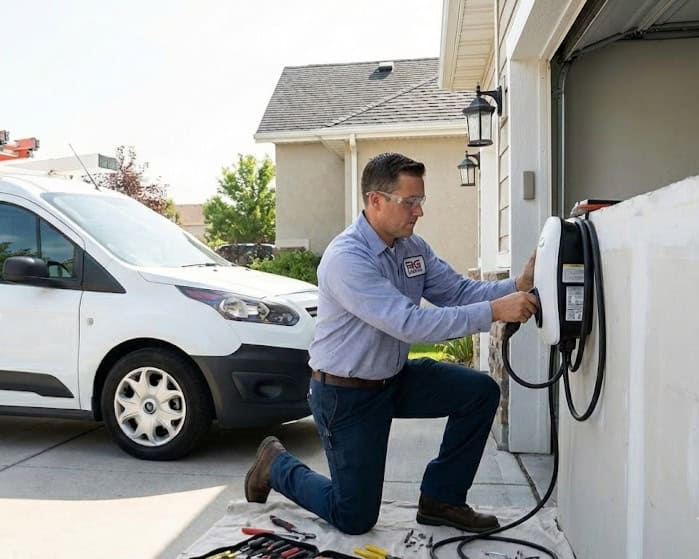
For properties adding EV charging infrastructure, the panel upgrade is often a prerequisite rather than an option. Level 2 EV chargers require a dedicated circuit that a 100-amp panel at or near capacity simply cannot safely accommodate. RG Electric evaluates both the charger installation requirements and the panel capacity as part of a single assessment, ensuring the electrical system is upgraded and configured correctly from the start. Learn more about our approach to EV charger installation services for residential and multi-unit properties.
Planning the Upgrade: Practical Considerations for Los Angeles Properties
A panel upgrade is a meaningful project, but it’s also a manageable one when planned correctly. Several practical factors shape the experience.
Timing and Access
For occupied rental properties, the brief power interruption during the upgrade requires coordination with tenants. Most residential panel upgrades are completed within a single day, and the power-off window is typically a few hours in the morning while the new panel is connected and the inspector reviews the work. For multi-unit buildings where the main service feeds multiple units, communication and scheduling require more planning, but the work itself follows the same sequence.
The cooler months in Los Angeles, roughly October through April, tend to offer scheduling advantages because demand on electricians is somewhat lower than during peak summer months, when emergency calls related to overloaded panels and cooling-related electrical issues spike significantly.
Combining the Panel Upgrade with Other Electrical Work
Property owners and managers often find it efficient to address multiple electrical items during the same project window. Adding circuits for EV chargers, correcting outdated wiring, installing whole-building surge protection, or upgrading subpanels serving garages or accessory structures can frequently be combined with the main panel upgrade under a single permit. This reduces the number of utility coordination events, minimizes tenant disruption, and often results in lower overall project cost compared to scheduling each item separately.
Cost Factors for Los Angeles Panel Upgrades
Panel upgrade costs in Los Angeles vary based on the scope of work, the condition of the existing service entrance, the distance from the meter to the panel location, permit fees, and whether any supplemental work, such as grounding improvements or service entrance replacement, is required. Properties with easy access to the existing panel and a relatively straightforward service entrance will fall on the lower end of the range. Older buildings with complex wiring or panels located in difficult access points will require more labor.
RG Electric provides clear written estimates before work begins, with no hidden fees and a direct explanation of what the project involves and why. Homeowners and property managers are not expected to approve work they don’t understand.
Neighborhoods RG Electric Serves Across Los Angeles
RG Electric provides panel upgrades and electrical services throughout Los Angeles County. We work regularly in Sherman Oaks, Encino, Van Nuys, and across the broader San Fernando Valley, where a significant share of the housing stock dates from the 1950s through the 1970s and commonly runs on 100-amp or older service. We also serve Beverly Hills, Santa Monica, Culver City, Inglewood, Torrance, Koreatown, and Downtown Los Angeles, where older multi-unit buildings and commercial properties frequently require panel upgrades tied to renovation projects, insurance requirements, or EV infrastructure additions.
Our familiarity with Los Angeles permitting, utility coordination through Southern California Edison, and LADBS inspection processes means projects move efficiently through each stage without unnecessary delays.
How RG Electric Approaches Panel Upgrades
RG Electric is a licensed C10 electrical contractor serving Los Angeles, License #910807. Panel upgrades are one of the most common and consequential projects we handle for both residential and commercial clients. Our approach is direct: we evaluate the existing system honestly, explain the findings clearly, and complete the work to code with permits, inspection, and documentation.
When you call, you speak with someone who understands electrical systems, not a call center representative reading from a script. That conversation is where the evaluation begins. We ask about the property, the symptoms, and the planned additions, and we give you a clear picture of what the panel evaluation involves and what the likely path forward looks like.
For property managers overseeing multi-unit buildings, we understand the operational constraints and work within them. For homeowners preparing for an EV charger, a renovation, or an insurance-required upgrade, we handle the technical and permitting complexity so you don’t have to.
Learn more about our full range of electrical panel services in Los Angeles, including panel evaluations, upgrades, replacements, and subpanel installations.
For immediate assistance or to schedule a professional evaluation, call RG Electric directly at (323) 521-5131.