
 Call (323) 5215131
What Should a Property Manager Do After a Failed Electrical Inspection in Los Angeles?
Updated August 2026
A failed electrical inspection is not the end of the process. It is a defined moment in that process, one that comes with specific documentation requirements, a correction timeline, and a clear path to re-inspection and approval. Property managers who understand what a failure actually means, and what it requires, are far better positioned to resolve it efficiently than those who treat it as a crisis without a roadmap. RG Electric, a licensed C10 electrical contractor serving Los Angeles under License #910807, works with property managers and building owners through exactly this situation, from the day the inspection fails through the day the final approval is issued.
This post covers what a failed inspection means in practical terms, the most common reasons inspections fail in Los Angeles multi-unit buildings, the documentation and timeline requirements that follow, how to prepare for re-inspection, and what happens when the failure is left unaddressed. The goal is to give property managers a clear picture of the path forward rather than leaving them to piece it together under pressure.
What a Failed Electrical Inspection Actually Means
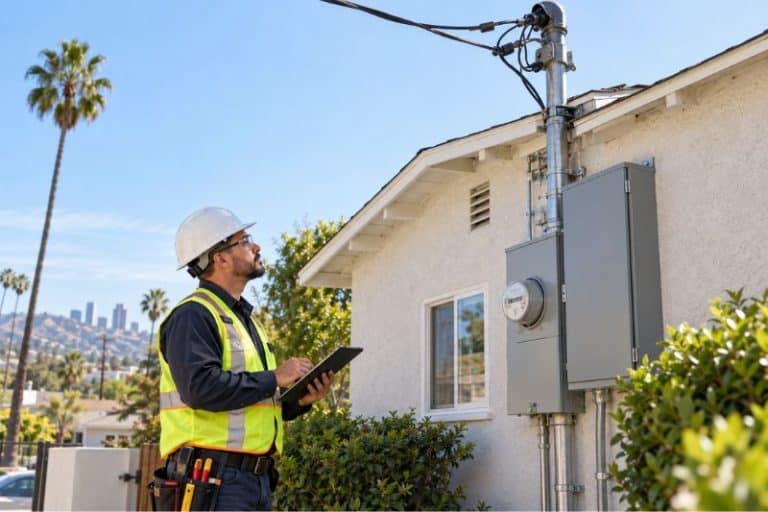
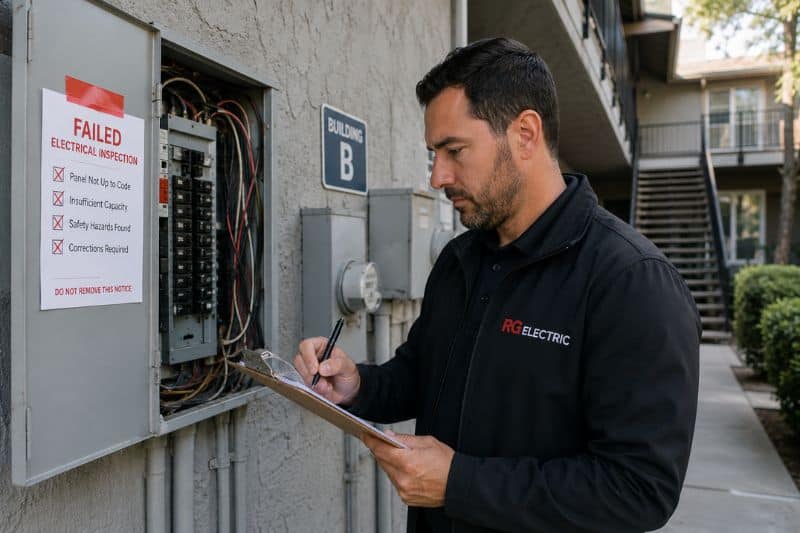
LADBS, the Los Angeles Department of Building and Safety, conducts electrical inspections as part of the permit process for any work that requires one. When an inspector visits a property and finds conditions that do not meet current code requirements, the inspection fails. The inspector documents the specific items that did not pass, issues a correction notice, and the permit remains open until those items are corrected and a re-inspection is completed and approved.
A failed inspection does not mean the work was done badly in every respect. It means that specific items, as documented on the correction notice, do not meet the code standard the inspector is required to enforce. Some failures involve the work that was actually permitted. Others involve conditions the inspector observed elsewhere on the property that are unrelated to the original scope of work. Both carry the same weight: the permit cannot be closed and the work cannot be considered complete until every item on the correction notice is resolved.
For property managers, a failed inspection has immediate practical consequences. The work that triggered the permit cannot be placed in service in some cases until the permit is closed. Insurance carriers that are monitoring compliance status may be notified of an open failed inspection. And the clock starts running on a correction timeline that, if ignored, can escalate into additional enforcement actions. Understanding this clearly at the outset prevents the failure from compounding into a larger problem.
The Most Common Reasons Electrical Inspections Fail in Los Angeles Multi-Unit Buildings
Inspection failures in multi-unit buildings in Los Angeles follow recognizable patterns. The age of the building stock, the history of work performed over decades, and the complexity of systems serving multiple units simultaneously all contribute to the types of issues inspectors most commonly find.
Outdated or Recalled Panel Equipment
The four panel brands that appear most frequently in pre-1990 Los Angeles apartment buildings are Zinsco, Federal Pacific Electric, Challenger, and Pushmatic. All four are known fire hazards. All four can trigger an inspection failure when an inspector opens a panel and finds one of these brands still in service, even if that panel was not part of the permitted scope. Inspectors are required to flag unsafe conditions they observe during a site visit, regardless of whether those conditions were the reason for the inspection. A property manager who brings in a contractor for panel work on one unit and has three other panels in the building with recalled equipment is exposed to exactly this outcome.
Missing GFCI Protection
GFCI protection is required by code in any location near water, including kitchens, bathrooms, laundry areas, and all outdoor outlets. In older multi-unit buildings, GFCI protection is frequently absent in some or all of these locations, either because it was never installed or because outlets were replaced at some point with standard devices rather than GFCI-rated ones. This is one of the most consistent findings in inspection failures for buildings constructed before the 1980s, and it is also one of the most straightforward corrections once identified.
Grounding Deficiencies
Older buildings were often wired without grounding, or with grounding that does not meet current standards. Three-prong outlets in ungrounded systems create a false sense of safety, because the outlet accepts a grounded plug but provides no actual ground path. When an inspector finds ungrounded circuits feeding outlets that appear to be grounded, it is a code violation that requires correction. In larger buildings, grounding deficiencies can involve significant rewiring work depending on how the original system was installed.
Double-Tapped Breakers and Panel Deficiencies
A double-tapped breaker occurs when two conductors are connected to a single breaker terminal that is designed and rated for only one. This is a common finding in older panels where circuits were added over time without proper expansion of the panel itself. Double-tapping creates a connection that can loosen, arc, and generate heat at the breaker terminal. It is a fire risk and a code violation. Inspectors flag it consistently, and it requires either rewiring to a properly sized breaker or replacing the panel with one that has adequate capacity for all circuits.
Permit and Documentation Gaps
Work performed without permits, or work where the permit was pulled but never closed out with a final inspection, creates open permit issues that surface during subsequent inspections. A building with a history of unpermitted electrical work may have conditions that were never inspected and never corrected. When a new permit triggers an inspection and the inspector finds evidence of prior work without permits, those items become part of the correction requirement. For property managers inheriting buildings with long ownership histories, this is not an unusual situation.
The pattern across all of these failure types is consistent: they are identifiable, correctable, and manageable when addressed systematically by a licensed contractor who understands the LADBS correction process.
When the Inspector Flags Work You Didn’t Do
One of the most disorienting inspection outcomes for property managers is receiving a correction notice that includes items the contractor never touched. This is not unusual, and understanding why it happens prevents it from becoming a point of conflict that delays the resolution.
LADBS inspectors are required to flag unsafe conditions they observe during a site visit, even if those conditions are entirely unrelated to the work that triggered the permit. This is how the code is designed to work. The inspector’s job is not limited to reviewing the permitted scope. It extends to any condition that poses a safety risk or violates current code, within the areas accessed during the inspection.
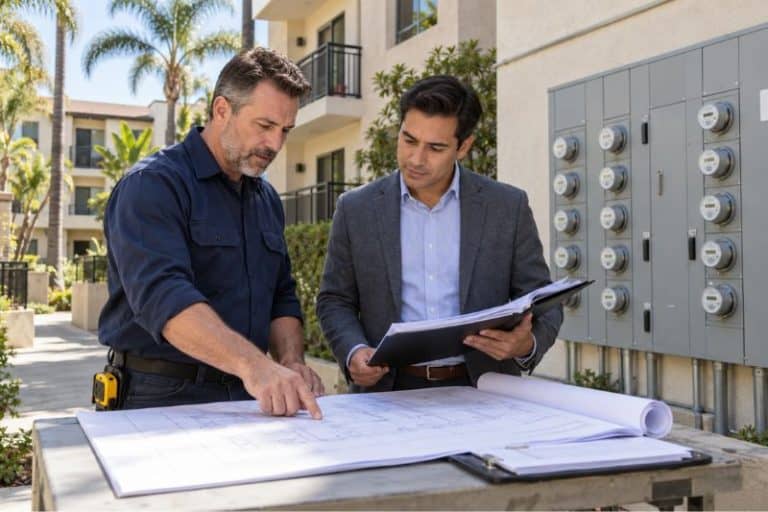
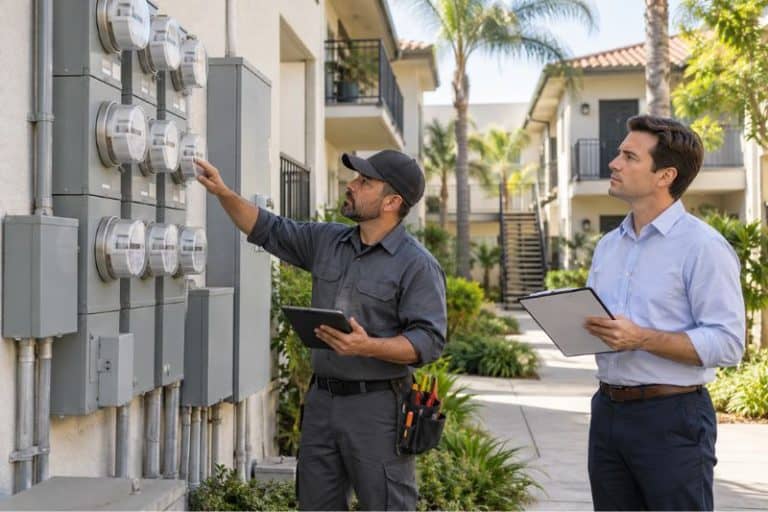
RG Electric encountered this directly during a panel replacement project at an apartment complex in Los Angeles. The crew replaced three panels. The inspector reviewed all three, approved the work, and then opened a fourth panel that RG Electric had not touched. That panel had double-tapped breakers throughout. The inspector’s position was straightforward: the building would not receive final approval until that fourth panel was corrected, regardless of who installed it or when. The property manager was informed, RG Electric corrected the fourth panel, and the project moved to final approval.
This scenario plays out regularly in older multi-unit buildings. The correction notice items that cover untouched areas of the building are not a penalty. They are the inspection process functioning as intended, catching conditions that were already there and needed to be addressed. The correct response is to treat those items the same way as the items directly related to the permitted work: document them, assign them to the licensed contractor, correct them, and request re-inspection.
Property managers who try to dispute these items rather than correct them extend the timeline without changing the outcome. The items stay on the correction notice until they are resolved.
Timeline and Documentation Requirements After a Failed Inspection
The correction notice issued after a failed inspection is the controlling document for everything that follows. It lists each item that failed, the code section that applies, and in most cases a description of what correction is required. The property manager’s first responsibility is to read that document carefully and ensure the licensed contractor receives a complete copy before any correction work begins.
Correction Timelines
LADBS does not impose a single fixed deadline for all corrections, but permits have expiration timelines, and a permit that lapses without a completed re-inspection creates additional complications. The practical guidance is to treat the correction work as time-sensitive and begin scheduling it within days of receiving the correction notice, not weeks. For multi-unit buildings where insurance renewal dates are proximate to the inspection timeline, the urgency is even higher. A failed inspection that is still open when an insurance renewal review occurs can affect coverage status.
Documentation to Maintain
Property managers should retain the original correction notice, all correspondence with the contractor about the correction scope, the contractor’s license and insurance documentation, any photos taken before and after corrections, and the permit documentation associated with the work. When the re-inspection is passed and the permit is closed, the final inspection approval document should be added to the building’s permanent file. This documentation package is what an insurance carrier, a future buyer, or a subsequent inspector will request if the property’s electrical history is ever reviewed.
Communication With Tenants
Depending on the nature of the corrections required, tenants may need advance notice of work being performed in common areas or individual units. California tenant notification requirements for repair work in occupied units apply regardless of whether the work is being done to correct an inspection failure. Property managers should confirm notification timelines with their property management counsel before scheduling work in occupied spaces. Coordinating this in advance prevents delays caused by access issues on the day the contractor arrives.
The documentation and communication work that follows a failed inspection is not bureaucratic overhead. It is the record that demonstrates the building was managed responsibly and brought into compliance correctly. That record has value well beyond the immediate correction project.
Steps to Prepare for Re-Inspection
Re-inspection is not automatic. It requires a request through LADBS, and scheduling timelines vary. Getting this right the first time, meaning passing the re-inspection on the first attempt, is worth the additional preparation it requires.
Verify Every Item on the Correction Notice Is Addressed
Before requesting re-inspection, go through the correction notice line by line with the contractor and confirm that every item has been corrected. Do not assume. Ask the contractor to walk through each item explicitly and confirm in writing if possible. A re-inspection that fails because one item on the original correction notice was overlooked resets the timeline and adds another scheduling cycle. The cost of that delay, in time and in the continued exposure it represents, is higher than the cost of the verification conversation.
Confirm the Contractor Will Be Present
Having the licensed contractor present during re-inspection is not always required, but it is consistently valuable. When an inspector has questions about how a correction was made, or wants to verify a specific detail, having the contractor available to answer directly resolves those questions on the spot rather than leaving them open for follow-up. RG Electric attends re-inspections for all projects where the firm performed the correction work.
Ensure Access to All Areas Listed on the Correction Notice
If the corrections involved work in individual units, common areas, or mechanical spaces, all of those areas need to be accessible to the inspector on the scheduled date. Coordinating tenant access in advance, confirming that keys or access codes are available for all spaces, and having a building representative present to accompany the inspector prevents access delays that can result in a missed inspection and a rescheduling requirement.
Have Documentation Ready
The original permit, the correction notice, and any documentation related to materials used in the corrections should be on hand at the re-inspection. Inspectors occasionally ask for product specifications on panels, breakers, or other components to confirm that what was installed meets the required standard. Having that information available eliminates a potential delay.
A well-prepared re-inspection passes the first time. A re-inspection that is scheduled before the corrections are fully verified, or where access is not coordinated, frequently does not. The preparation investment is small relative to the cost of another failed cycle.
Why a Licensed C10 Contractor Protects Against Secondary Violations
The choice of contractor for correction work after a failed inspection matters in a specific way that is different from the choice for routine maintenance or new installation work. A contractor performing corrections on a property that is already under active inspection scrutiny needs to be operating at a standard that will hold up to exactly that scrutiny. Any new work performed during the correction process that itself introduces a code violation creates a secondary failure, extending the timeline and potentially expanding the scope of required corrections.
Licensed C10 electrical contractors in California are required to carry a current license, maintain active insurance, pull permits for work that requires them, and perform work that meets the California Electrical Code. These are not suggestions. They are conditions of operating legally in the state. A contractor who performs correction work without a C10 license, or who performs work that should be permitted without pulling permits, is creating liability for the property manager, not resolving it.
RG Electric’s approach to correction work is the same as its approach to any project: assess the full scope of what is required, estimate honestly, permit where required, and perform the work to a standard that passes inspection. The company has held its C10 license for over 20 years and has not compromised that position for any project. For property managers working through an active inspection failure, that consistency is not a minor detail. It is the reason the correction work resolves the problem rather than extending it.
RG Electric’s commercial electrical services in Los Angeles are designed specifically for the multi-unit building environment, where compliance documentation, permit management, and inspector coordination are part of every project.
The Consequence of Inaction After a Failed Inspection
A failed inspection that is not addressed does not become less significant over time. It becomes more significant, as the open permit accumulates additional compliance exposure and the underlying conditions it identified continue to pose whatever risk caused the failure in the first place.
Failed Re-Inspection and Permit Lapse
A permit that remains open without a completed re-inspection will eventually lapse. A lapsed permit requires a renewal process that may involve additional fees, resubmission of documentation, and in some cases a fresh inspection of the original scope of work. The cost and time involved in resolving a lapsed permit situation is consistently higher than the cost of addressing the correction notice promptly when it was issued.
Insurance Coverage Gap
Insurance carriers in California are increasingly conducting electrical compliance reviews as part of their underwriting and renewal process. A property with an open failed inspection on record is a property with a documented, unresolved electrical safety issue. Carriers who discover this during a renewal review have grounds to condition or deny coverage. For a multi-unit building where the insurance policy covers both the structure and the liability exposure to tenants, a coverage gap created by an unresolved inspection failure is a serious financial and legal risk for the building owner.
Tenant Safety Exposure
The conditions that caused the inspection failure are still present in the building until they are corrected. If those conditions include fire hazards, such as recalled panel equipment, double-tapped breakers, or deteriorating wiring, the tenants occupying the building remain exposed to those hazards for as long as the corrections are deferred. A fire or injury that occurs in a building where a failed inspection identified a hazard that was not corrected creates a liability situation for the property owner that goes well beyond the cost of the electrical work itself. The correction is not just a compliance requirement. It is the action that removes the documented hazard from the building.
The failed inspection is the notification. The correction is the response. Treating the notification as optional does not make the hazard optional. It makes the property manager’s position in any subsequent liability conversation significantly worse.
How RG Electric Handles Post-Inspection Corrections in Los Angeles
RG Electric works with property managers in multi-unit buildings throughout Los Angeles, including Koreatown, Downtown LA, North Hollywood, Van Nuys, Inglewood, Culver City, and across the San Fernando Valley. When a property manager contacts RG Electric after a failed inspection, the process is straightforward.
The correction notice is reviewed in full. Roy, RG Electric’s supervising master electrician, assesses the scope of corrections required and builds an estimate that covers every item on the notice. Our customer care coordinator walks the property manager through the estimate, explains the reason for each correction, and confirms the timeline. There are no vague line items, no charges that appear after work begins, and no scope that expands without the property manager’s knowledge and approval.
RG Electric handles all permit requirements associated with the correction work, coordinates with LADBS on scheduling, and is present at re-inspection. For property managers who need to document the correction process for insurance carriers or building ownership, RG Electric provides the license documentation, certificate of insurance, and permit records that carriers typically request.
The goal is a closed permit and a building that is in better condition than it was before the inspection triggered the process. That outcome is achievable in every case where the corrections are addressed promptly and performed by a contractor operating to the standard that LADBS requires. For property managers in Los Angeles working through a failed electrical inspection, that is the path forward. For situations where a safety hazard identified in the correction notice requires immediate attention rather than scheduled correction, RG Electric also provides emergency electrical repairs in Los Angeles.
For immediate assistance or to schedule a professional evaluation, call RG Electric directly at (323) 521-5131.