
 Call (323) 5215131
Rewiring an Older Home in Los Angeles: Costs, Triggers, and What to Expect
Updated August 2026
Most homeowners in Los Angeles do not think about their home’s wiring until something goes wrong. A breaker trips repeatedly. An outlet stops working. An insurance renewal letter arrives with a condition attached. By the time any of those things happen, the wiring inside the walls has often been there for decades, doing its job quietly until it can’t anymore. RG Electric, a licensed C10 electrical contractor serving Los Angeles under License #910807, works with homeowners across the city who find themselves at exactly that point, facing a rewire they didn’t plan for and trying to understand what it involves, what it costs, and why it can’t wait.
This post answers those questions directly. It covers the conditions that make rewiring necessary rather than optional, the wiring types most commonly found in older LA homes, the factors that drive cost, and what the process looks like from the first call through final inspection. Cost ranges here are framed as variables, not fixed numbers, because no two homes are identical and any quote that doesn’t account for site conditions isn’t a real quote.
Why Older Los Angeles Homes Eventually Require Rewiring
Los Angeles has an unusually large share of older housing stock. Homes built before 1980 make up a significant portion of the city’s residential inventory, and many of them were wired to the standards of their era, not to the demands of modern electrical loads. A home built in 1955 was designed for a fraction of the appliances, devices, and high-draw equipment that occupies the average household today. EV chargers, HVAC systems, induction ranges, home offices, and smart home infrastructure place demands on electrical systems that simply weren’t part of the calculation when that wiring was installed.
Wiring does not last forever. Insulation becomes brittle over time. Connections loosen. Materials that were considered safe in one era are later found to carry risks that weren’t understood when they were installed. Code requirements advance to reflect what the industry has learned about fire risk, shock protection, and load management. A home that passed inspection in 1962 would fail inspection today on multiple points, and that gap between then and now is what eventually forces the rewiring conversation.
The conclusion here is straightforward: age alone does not require a rewire, but age combined with any of the trigger conditions below usually does. Understanding those triggers is the first step toward making an informed decision rather than a reactive one.
The Four Conditions That Make Rewiring Required Rather Than Optional
Rewiring rarely comes out of nowhere. It is almost always preceded by one of four situations, each of which escalates from a manageable concern to a hard requirement if left unaddressed.
Insurance Mandate
California’s insurance market has changed significantly in the past several years. Carriers that once renewed policies without asking questions are now conducting electrical reviews as a condition of coverage, particularly for homes with older wiring types. A homeowner who receives a letter stating that their policy will not be renewed unless certain electrical conditions are corrected is facing a hard deadline, not a suggestion. The most common triggers for insurance-mandated rewiring include knob-and-tube wiring, aluminum branch circuits, and cloth-insulated wiring, all of which are discussed in detail below. Acting before the insurer contacts you eliminates the time pressure and gives you the ability to plan the work on your terms.
Permit-Triggered Inspection
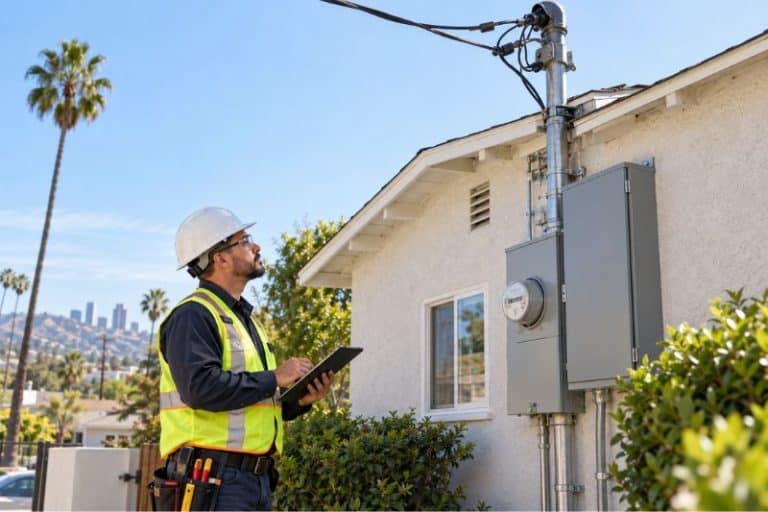
Any permitted work on a home in Los Angeles invites an LADBS inspector onto the property. Inspectors are required to flag code violations they observe, even if those violations are unrelated to the work that triggered the permit. A homeowner who pulls a permit for a panel upgrade or an EV charger installation may find that the inspector’s approval is conditioned on correcting wiring issues discovered in the process. This is not unusual in older homes, and it is not the inspector acting in bad faith. It is the code doing what it is designed to do: prevent hazards from being overlooked because they weren’t the original subject of the work order.
Panel Replacement Exposing Old Wiring
Replacing an electrical panel is one of the most common jobs RG Electric performs. It is also one of the most common ways homeowners discover that their wiring situation is more complicated than they realized. When a panel is opened and replaced, the wiring connected to it becomes visible and subject to inspection. If that wiring is in poor condition, undersized, or of a type that no longer meets code, the panel replacement alone will not satisfy the inspector. The wiring feeding the new panel has to meet current standards, which sometimes means a partial or full rewire in addition to the panel work. The two jobs are separate but often interdependent.
Active Hazard Discovery
Sometimes rewiring is triggered not by paperwork but by physical evidence. Outlets that feel warm to the touch, lights that flicker without an obvious cause, a burning smell near a switch or panel, breakers that trip repeatedly under normal loads, or visible scorching around an outlet are all signs that something inside the wall is failing. These are not nuisance problems. They are indicators of conditions that can progress to a fire. When an RG Electric technician investigates one of these complaints and finds wiring that is deteriorating, undersized, or improperly installed, a rewire recommendation is not an upsell. It is the honest assessment of what the system requires.
In each of these four scenarios, the cost of inaction is higher than the cost of the rewire itself. The rewire eliminates the hazard, satisfies the insurer, passes the inspection, and removes the uncertainty. Deferring it extends all of those exposures.
The Wiring Types Found in Older Los Angeles Homes
The wiring inside any given older LA home depends largely on when it was built and what materials were available and code-compliant at that time. Three types account for most of what RG Electric encounters in pre-1980 housing stock.
Knob-and-Tube Wiring
Knob-and-tube wiring was the standard installation method from roughly the late 1800s through the 1940s. It uses individual copper conductors separated by ceramic knobs and tubes, with no ground wire. The system was safe for the loads of its era, but it has several characteristics that make it problematic today. It cannot support a grounded system, which means modern three-prong outlets connected to it are ungrounded regardless of what they look like. It is incompatible with modern insulation in attics and walls, because the system was designed to dissipate heat through open air and insulation traps that heat instead. It has no ground fault protection pathway. And after 80 or more years, the fabric insulation surrounding the conductors is often brittle, cracked, or missing in sections.
Insurance carriers treat knob-and-tube wiring as a high-risk condition and frequently require its removal as a condition of coverage. LADBS inspectors flag it during permitted work. For homes that still have active knob-and-tube circuits, a full rewire is the only resolution that satisfies both insurers and inspectors.
Aluminum Branch Circuit Wiring
Aluminum branch circuit wiring was installed widely in homes built between roughly 1965 and 1973, during a period when copper prices rose sharply and aluminum was adopted as a lower-cost alternative. The problem with aluminum is not that it conducts electricity poorly. It is that aluminum expands and contracts at a different rate than the copper connections and devices it terminates into, which causes connections to loosen over time. Loose connections generate heat. Heat at a connection point is a fire risk.
Aluminum wiring also oxidizes differently than copper, and that oxidation increases electrical resistance at connection points. Homes with aluminum branch circuits sometimes show signs of the problem through warm outlets, flickering lights, or breakers that trip without obvious cause. Inspectors and insurers both flag aluminum branch circuit wiring, and the remediation options range from replacing devices with aluminum-rated alternatives, to pigtailing connections with copper using approved connectors, to full rewiring with copper. The right approach depends on the condition of the existing wiring and the scope of other work being done.
Cloth-Insulated Wiring
Cloth-insulated wiring, sometimes called cloth-jacketed or rubber-insulated wiring, was common from the 1930s through the 1960s. The conductors are copper, but the insulation surrounding them is a fabric or rubber material that degrades with age, heat, and movement. After several decades, this insulation becomes brittle and can crack or crumble when disturbed, leaving bare conductors exposed inside the wall cavity. Bare conductors in contact with wood framing are a direct fire risk.
Cloth-insulated wiring is not always immediately visible during a basic inspection, because it may look intact from the outside while the insulation beneath the jacket has deteriorated significantly. When RG Electric opens walls or accesses junction boxes during rewiring or panel work in older homes, finding cloth insulation in poor condition is common. It cannot be repaired in place. It has to be replaced.
The wiring type matters because it affects both the scope of the rewire and the approach. A home with knob-and-tube throughout requires a different plan than a home with a partial aluminum branch circuit installation. Understanding what’s in the walls is the necessary first step before any cost discussion can be accurate.
What Drives the Cost of Rewiring an Older Home in Los Angeles
Rewiring cost is not a fixed number, and any contractor who quotes a flat price without seeing the home is not giving you a real estimate. The variables that determine final cost are substantial, and they interact with each other in ways that make per-square-foot averages misleading. Here is what actually drives the price.
Home Size and Number of Circuits
Larger homes require more wire, more devices, more labor hours, and more time. A 900-square-foot bungalow in Van Nuys is a fundamentally different scope than a 2,800-square-foot home in Sherman Oaks, even if both were built in the same decade with the same wiring type. The number of circuits being replaced, the number of outlets, switches, and fixtures involved, and the number of dedicated circuits required for high-draw appliances all factor into the total.
Wiring Type Being Replaced
Knob-and-tube wiring is typically more labor-intensive to remove than other types because of how it was installed, running through ceramic insulators attached to framing rather than through conduit or cable runs. Aluminum branch circuit remediation can sometimes be handled through targeted device replacement or pigtailing rather than full rewiring, which affects scope. Cloth-insulated wiring removal is straightforward but requires careful handling. The wiring type determines how much demolition and restoration is involved.
Panel Condition
If the home’s existing panel is one of the recalled brands, specifically Zinsco, Federal Pacific Electric, Challenger, or Pushmatic, it will need to be replaced as part of the rewiring project. These panels are known fire hazards and cannot remain in service. RG Electric’s electrical panel services in Los Angeles cover full replacement from permits through final inspection. Panel replacement adds to the overall scope but is not optional when one of these brands is present. If the existing panel is modern and in good condition, it may be able to stay, which reduces cost. If the panel is old but not recalled, it will be evaluated as part of the site visit.
Accessibility
How easily an electrician can access the walls, attic, and crawl spaces of the home directly affects labor cost. A home with an accessible attic and open crawl space is easier and faster to rewire than a home with finished ceilings, no attic access, or concrete slab construction. Homes with lathe-and-plaster walls rather than drywall require more care during wire runs and more restoration work afterward. Accessibility is one of the most significant site-specific variables and one of the reasons in-person assessment is essential before any quote is issued.
Permit and Inspection Requirements
All rewiring work in Los Angeles requires permits and city inspection. Permit fees vary based on scope and are not discretionary. RG Electric handles all permitting as part of the project, which is factored into the estimate. Any contractor who proposes doing rewiring work without pulling permits is creating liability for the homeowner, not saving them money. Unpermitted electrical work can void a homeowner’s insurance, create problems at resale, and leave the homeowner personally liable if a fire or injury occurs.
Additional Code Corrections
A full rewire involves an inspection of the entire electrical system, and inspectors will require that code violations discovered during the process be corrected before final approval is issued. This can include adding GFCI protection in kitchens, bathrooms, and outdoor locations, installing AFCI breakers on required circuits, adding grounding where it is absent, and correcting panel issues. These corrections are not surprises added at the end of the job. They are identified during the assessment phase and included in the estimate. Understanding this upfront prevents misunderstandings about scope.
Cost is ultimately a function of scope, and scope is determined by a site visit, not a phone call. RG Electric provides free estimates for rewiring projects. The estimate covers labor, materials, permits, and all required corrections identified during the assessment. There are no hidden fees added after the work begins.
What a Rewire Involves: From First Call Through LADBS Inspection
Understanding the process removes uncertainty and helps homeowners prepare for what the project actually involves in their home. A rewire is not a one-day job, and it does involve some disruption, but a professional crew manages that disruption systematically.
Initial Assessment and Estimate
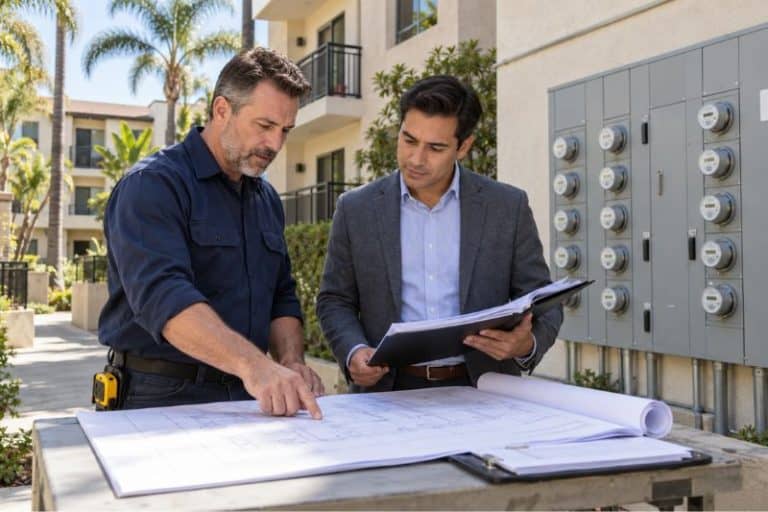
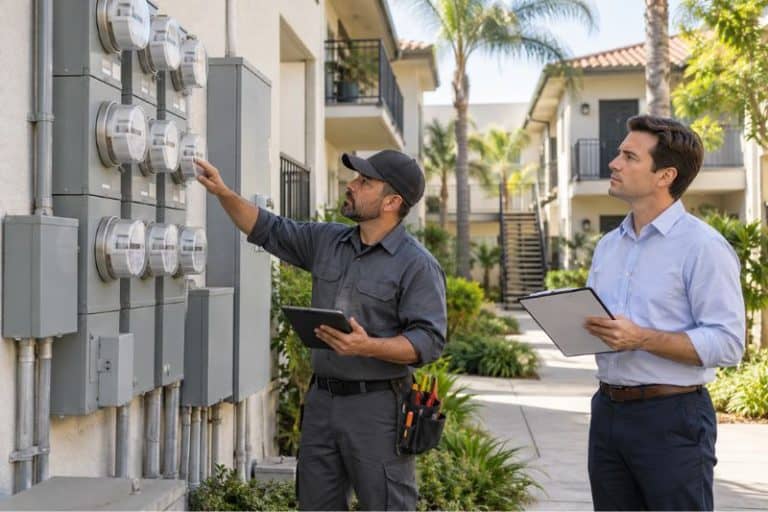
RG Electric’s process begins with a site visit. A technician or foreman walks the home, evaluates the existing wiring, assesses panel condition, identifies accessibility challenges, and notes any code corrections that will be required. This assessment is the basis for an accurate estimate. Roy, RG Electric’s supervising master electrician, reviews the findings and builds the project estimate. Our customer care coordinator then walks the homeowner through every line item, explains the reason for each element of the scope, and answers questions. There are no vague line items and no charges that aren’t explained before work begins.
Permitting and LADBS Approval
Before any wire is pulled, RG Electric submits for the required permits through LADBS. Permit timelines vary by project scope and current city processing volume, but RG Electric handles all submissions and follows up on permit status. The homeowner does not need to navigate the permitting process independently.
The Rewiring Process
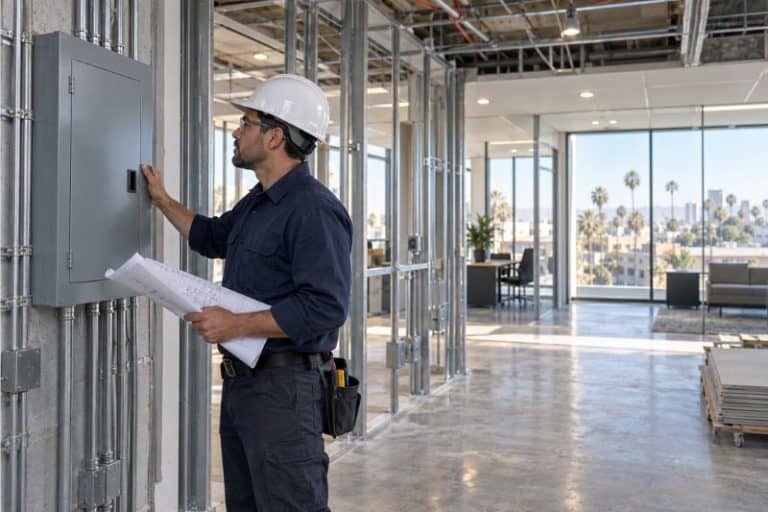
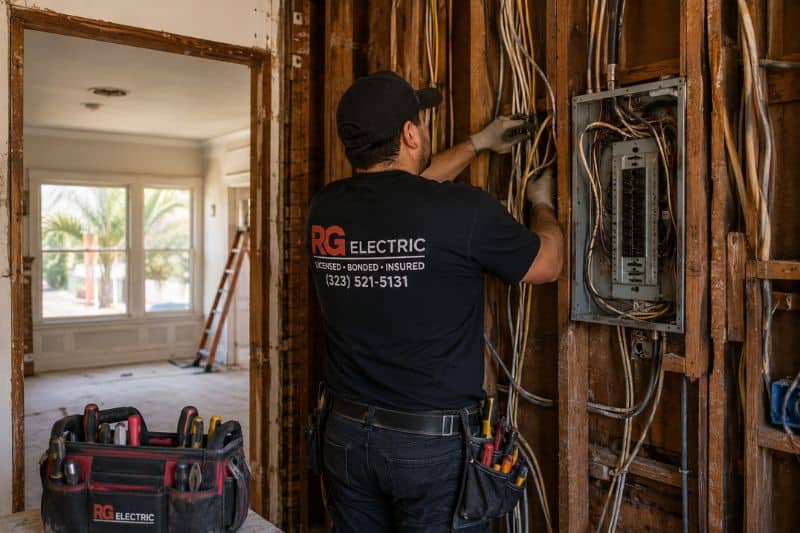
Once permits are issued, the crew begins the rewire. New copper wiring is run throughout the home, replacing the old circuits. Existing outlet, switch, and fixture locations are maintained where possible to minimize wall damage. Where walls need to be opened, the crew works carefully to limit the size and number of openings. Access through the attic eliminates the need to open many wall sections in homes with accessible attic space. The old wiring is removed as new wire is installed. New devices, outlets, and switches are installed throughout, all meeting current code requirements including GFCI protection in required locations and tamper-resistant outlets where code mandates them.
Panel Upgrade if Required
If the existing panel is being replaced as part of the project, that work is coordinated with the rewiring schedule. RG Electric installs Siemens panels, which are top-tier equipment. The new panel is sized appropriately for the home’s current load and any planned additions, such as EV charging or future appliance upgrades.
Final Testing and LADBS Inspection
Before requesting the final inspection, RG Electric tests every circuit, outlet, and fixture. When the inspector arrives, the crew is present to walk through the work. If the inspector identifies any items requiring correction, RG Electric addresses them and schedules the re-inspection. Final approval from LADBS closes out the permit and confirms that the work meets current code. The homeowner receives documentation of the completed permitted work, which is the correct record to present to an insurance carrier or a future buyer.
The process is linear and managed. A homeowner who understands each step going in is rarely surprised by what the project involves.
Why Unlicensed Rewiring Work Creates Long-Term Liability
The cost difference between a licensed rewire and an unlicensed one can look significant upfront. It is not a real savings. Unlicensed electrical work in Los Angeles creates a specific set of problems that typically cost more to resolve than the original work would have.
First, unpermitted work is not inspected, which means errors in the installation are not caught. Errors in electrical installations can cause fires. A fire in a home where the wiring work was unpermitted creates an insurance claim situation where the carrier has grounds to deny coverage, because the work was not done to code and was not inspected. The homeowner bears the full cost.
Second, unpermitted work becomes a disclosure obligation at resale. A homeowner selling a property in Los Angeles is required to disclose known unpermitted work. Buyers and their inspectors will find evidence of rewiring. If there are no permits, the buyer’s lender may require the work to be permitted retroactively, which involves opening walls, having the work inspected, and correcting anything that doesn’t pass. That process often costs more than the original permitted job would have.
Third, handyman-level electrical work, even when performed by someone competent at general construction, routinely produces code violations that a licensed electrician would not make. The most common ones RG Electric corrects after unlicensed rewiring work include missing GFCI protection in required locations, incorrect wire sizing for the circuits installed, improper junction box installation, and grounding errors. Each of those corrections requires additional work to fix.
RG Electric has held the same C10 license for over 20 years. The license is not at risk because the company does not take shortcuts. That position is not a marketing line. It is the reason the company is still operating at the same standard after two decades of work in Los Angeles.
How RG Electric Approaches Rewiring Projects in Los Angeles
RG Electric works with homeowners in older neighborhoods throughout Los Angeles, from Encino and Sherman Oaks in the San Fernando Valley to Beverly Hills, Culver City, Koreatown, and Downtown LA. The homes vary in age, construction type, and wiring condition, but the approach is consistent: assess accurately, estimate honestly, permit properly, and complete the work to a standard that passes inspection the first time.
Every rewiring estimate is custom. Roy evaluates each project individually based on what the site actually requires, not on a price chart designed to simplify the quoting process at the expense of accuracy. When the estimate is presented, every line item is explained. If the scope changes because something unexpected is discovered inside the walls, the homeowner is informed before additional work proceeds. There are no surprise charges at the end of the job.
RG Electric also provides a 12-month workmanship guarantee on completed work. If something related to the rewire requires attention within that period, the company returns without charging a new service fee. That is what standing behind the work actually means.
For homeowners in Los Angeles with older homes, the rewiring conversation is not a question of if but of when. Knowing the triggers, understanding the costs, and working with a licensed contractor who handles every step from permits through final inspection is how that conversation leads to a good outcome rather than an emergency one.
For immediate assistance or to schedule a professional evaluation, call RG Electric directly at (323) 521-5131.