
 Call (323) 5215131
What Licensed Electrical Contractors Do That Unlicensed Ones Skip: A Guide for Los Angeles Property Managers
For property managers in Los Angeles, the decision about who performs electrical work in a building carries consequences that extend well beyond the immediate repair or installation. A homeowner who hires an unlicensed handyman to replace an outlet takes on personal risk. A property manager who does the same thing takes on liability that affects tenants, building owners, insurers, and the property’s long-term value. The stakes are categorically different, and the distinction between what a licensed electrical contractor does and what an unlicensed one skips reflects that difference at every stage of the job. RG Electric holds California C10 License #910807 and works with property managers throughout Los Angeles on panel replacements, code corrections, multi-unit upgrades, and the full range of commercial electrical services that buildings in this city require. This guide explains specifically what that license means in practice, and why the gap between licensed and unlicensed work shows up long after the job is finished.
Why the Distinction Matters More for Property Managers Than for Homeowners
A homeowner who hires unlicensed help takes on personal risk in their own property. The consequences, if they materialize, are personal. A property manager operates in a fundamentally different legal and financial position. The building they manage belongs to someone else. Tenants occupy the units and have legal protections under California law. Insurance policies covering the building carry conditions about how maintenance and repairs are performed. And any electrical work that results in injury, fire, or a failed inspection doesn’t just create a maintenance problem. It creates a liability event that can involve the building owner, the property management company, the insurer, and potentially the tenants who were affected.
California law is explicit about who may perform electrical work on commercial and multi-unit residential buildings. A C10 license issued by the California Contractors State License Board authorizes a contractor to perform electrical work on those properties. Unlicensed electrical work on a multi-unit building isn’t a gray area. It’s a violation of state law, and the property manager who authorized it shares exposure for that violation regardless of who physically performed the work.
Property managers who understand this work with licensed contractors not as a preference but as a baseline requirement. The question isn’t whether to use a licensed electrician. The question is what specifically a licensed contractor does that an unlicensed one doesn’t, and why each of those things matters for the building.
Permits, Who Pulls Them and Who Doesn’t
The most consistent operational difference between licensed and unlicensed electrical work is the permit. A licensed electrical contractor pulls a permit before beginning any work that requires one under Los Angeles building code. An unlicensed contractor, almost without exception, does not. The reason is simple: pulling a permit requires a license number. Without a C10 license, there is no permit to pull.
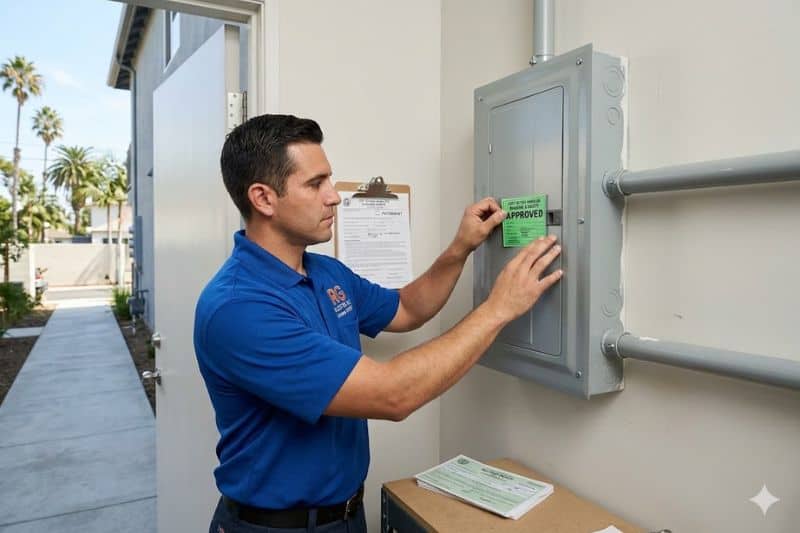
Permits exist for a specific reason. They create a record of the work with the city, require that the work meet current code standards, and trigger an inspection by a city-employed building official before the work is approved. For a property manager, that inspection record is documentation that the work was reviewed and accepted by an independent authority. It’s the difference between work that is officially approved and work that was simply performed and hoped to be adequate.
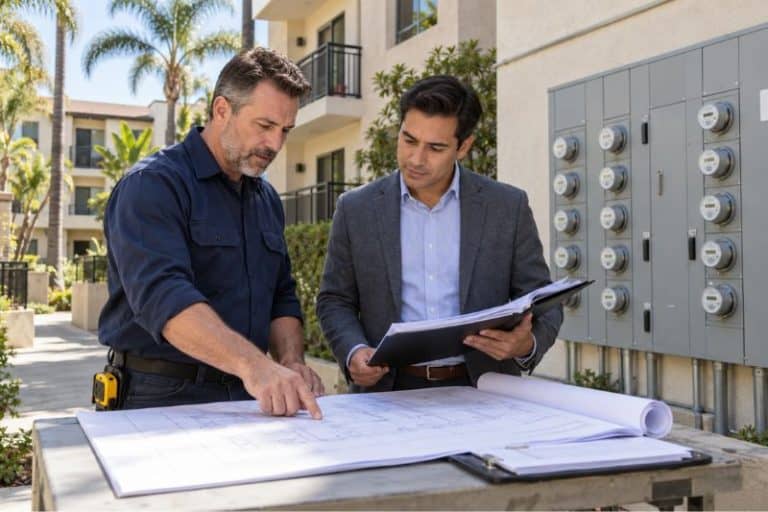
For multi-unit buildings in Los Angeles, the categories of work that require permits include panel replacements and upgrades, subpanel installations, new circuit runs, rewiring, and most work that involves opening walls or making changes to the building’s electrical distribution system. These are exactly the categories of work that property managers most commonly need performed. When unlicensed contractors perform this work without permits, the building has no record of the upgrade with the city, no inspection documentation, and no approved installation. If that work later causes a problem, the absence of a permit is the first thing an insurer or an attorney will identify.
Licensed contractors who regularly work in Los Angeles understand the permit process, know what triggers a permit requirement, and manage the permit application and inspection scheduling as part of the job. At RG Electric, the permit is pulled before work begins, not after the fact.
Code Compliance on the Job vs. Code Compliance on Paper
There’s a meaningful difference between an electrician who knows the code and one who follows it on every job regardless of whether anyone is watching. Licensed electricians in California are required to complete continuing education and maintain familiarity with current code standards as a condition of license renewal. The National Electrical Code is updated on a regular cycle, and California adopts its own amendments on top of the base code. What was compliant in a building wired ten years ago may not meet the current standard today, and a licensed contractor working in that building knows which requirements apply to the work being performed.
In practice, this shows up in details that are invisible to the property manager but matter significantly for the building’s safety and inspection record. Whether a circuit is protected by an arc-fault circuit interrupter where required. Whether GFCI protection is installed in the locations the code mandates. Whether wire gauge is correctly sized for the load on the circuit. Whether junction boxes are accessible and properly covered. Whether outdoor installations are rated for weather exposure. These are the details that a city inspector checks and that unlicensed work frequently gets wrong, not out of malice, but because the person performing it doesn’t have the training or accountability that licensure requires.
For property managers overseeing older Los Angeles buildings, code compliance isn’t abstract. Older buildings accumulate code deficiencies over decades. When a licensed contractor opens a panel to perform an upgrade and finds double-tapped breakers, ungrounded circuits, or wiring that doesn’t meet current standards, the correct response is to document the findings and address them as part of the scope. An unlicensed contractor, with no license to protect and no inspector to satisfy, has no incentive to do anything other than the minimum the customer requested.
Insurance and COI, What Licensed Contractors Provide That Protects the Building Owner
Commercial clients asking about electrical work in Los Angeles have a consistent first question: can you provide permits and a certificate of insurance? The certificate of insurance, or COI, is documentation that the contractor carries general liability coverage and workers’ compensation insurance. For a property manager, requiring a COI before any contractor begins work on the building is basic risk management. If a worker is injured on the property, the contractor’s workers’ compensation coverage responds first. If the contractor’s work causes damage to the building or an adjacent property, the contractor’s general liability coverage is the primary response.
An unlicensed contractor operating without proper insurance shifts all of that exposure back to the building owner. An uninsured worker injured on the property may have a claim against the property itself. Damage caused by uninsured work may fall to the building’s own policy to cover, and insurers who discover the work was performed without a license and without permits may dispute the claim or deny it outright. The COI isn’t paperwork for its own sake. It’s the document that establishes where liability sits if something goes wrong.
Licensed contractors can produce a COI on request because maintaining the required insurance coverage is a condition of holding the license. The license, the insurance, and the permit-pulling authority all come together as a package. A contractor who can’t produce one almost certainly doesn’t have the others in proper order either.
The Inspection Process, Who Stays Through It and Who Disappears
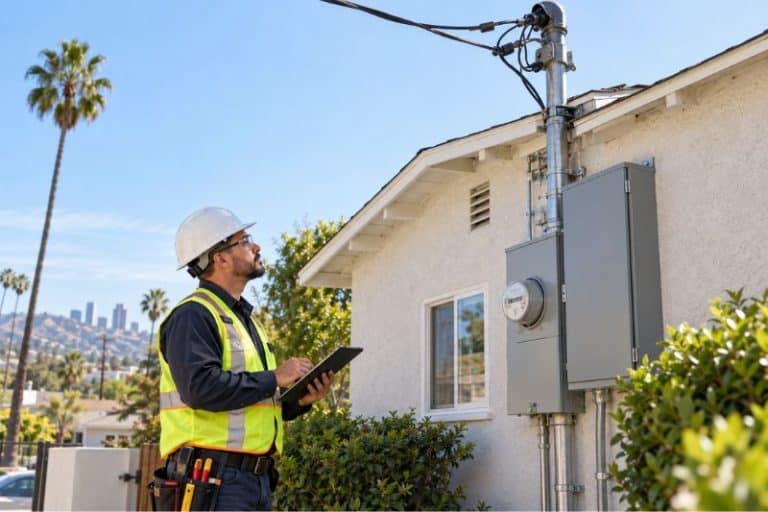
Permitted electrical work in Los Angeles requires a city inspection before the work is considered complete and approved. For a property manager, this inspection is one of the most valuable things a licensed contractor provides, because it means an independent authority reviewed the work and confirmed it meets the applicable standard. The inspection record becomes part of the building’s history with the city and is available as documentation if questions arise later about the condition of the electrical system.
Licensed contractors schedule and manage inspections as part of the job. They’re present during the inspection, they respond to any corrections the inspector requires, and they see the job through to final approval. This is a significant operational commitment. Inspections require coordinating availability with the city, being on-site when the inspector arrives, and addressing any findings before the job is closed out. Unlicensed contractors who don’t pull permits have no inspection to manage and no relationship with the building department. The work ends when they leave the property.
For property managers overseeing large or complex jobs, the inspection process can surface issues that weren’t visible at the start. A licensed contractor who has worked in Los Angeles long enough has navigated inspections where an inspector identified problems in parts of the building that weren’t part of the original scope. Handling those findings professionally, understanding what the inspector is requiring and why, and coordinating the additional work without creating a dispute or a delay is a skill that comes with experience and licensure. It’s not something an unlicensed contractor is in a position to manage.
What Happens When Unlicensed Work Is Discovered
Unlicensed electrical work in a multi-unit building has a way of surfacing at the worst possible moments. The three most common discovery points are a sale or refinancing, an insurance renewal or claim, and a city inspection triggered by permitted work somewhere else in the building.
During a sale or refinancing, a property inspection may identify electrical work that was performed without permits. The buyer’s lender may require the work to be brought into compliance before closing, which means permitted corrections, inspections, and additional cost at a moment when the transaction timeline is fixed. The seller, or the property manager who authorized the original work, is now explaining why unpermitted work exists in the building.
During an insurance renewal, carriers who have become more rigorous about electrical compliance in California, particularly since the 2025 wildfire season accelerated insurer scrutiny of residential and commercial properties, are increasingly asking for documentation of electrical upgrades. A building that had a panel replaced without a permit cannot produce that documentation. The carrier may require a licensed inspection of the electrical system as a condition of renewal, and any deficiencies found become conditions that must be corrected before coverage continues.
During a city inspection for permitted work, inspectors are not limited to reviewing only the work that was permitted. An inspector who opens a panel during a permitted upgrade and finds evidence of prior unpermitted work, double-tapped breakers left by a previous unlicensed contractor, wiring that doesn’t meet code, or equipment that was installed without proper materials, can require those conditions to be corrected before the current work is approved. The property manager ends up paying to fix both the new work and the accumulated problems from the old work, on a timeline set by the inspector rather than the building’s budget cycle.
How RG Electric Handles the Full Licensed Process for Multi-Unit Properties
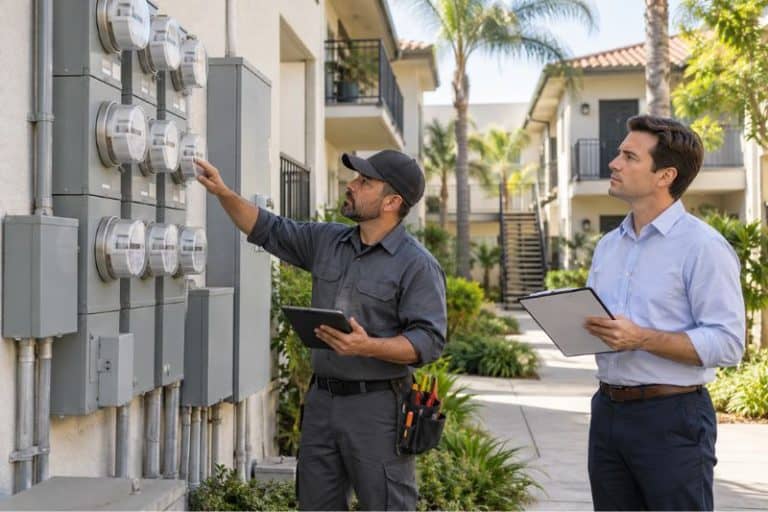
Property managers working with RG Electric on multi-unit buildings in Los Angeles get a contractor who manages the full licensed process, not just the physical work. That starts with a site evaluation that assesses the building’s current electrical condition, identifies what the proposed work requires in terms of permits and code compliance, and produces a clear estimate before anything begins. Estimates for new work are provided at no charge. Diagnostic service calls for existing problems carry a service fee that covers the technician’s time and evaluation.
Permits are pulled before work begins. The COI is available on request and can be provided to building owners, lenders, or insurers who require documentation. The work is performed to current California electrical code standards, and the installation is ready for city inspection when the work is complete. RG Electric manages the inspection scheduling, is present during the inspection, and addresses any findings before the job is closed out.
Communication is direct throughout the process. Property managers aren’t routed through a call center or left waiting for a callback from a sales representative. When a question arises about the scope, the timeline, or what an inspector required, the answer comes from someone who knows the job and can explain it clearly. That communication structure matters for property managers who are coordinating with building owners, tenants, and city officials at the same time.
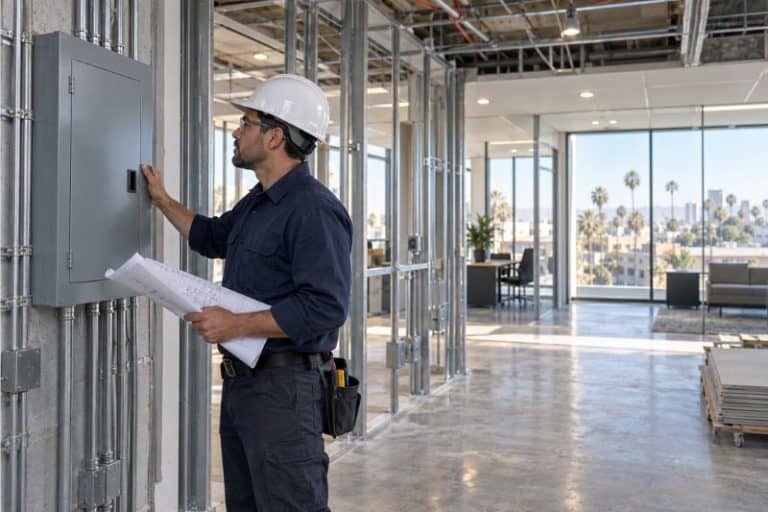
Our commercial electrical services in Los Angeles are built around the specific requirements of multi-unit buildings, from panel replacements and subpanel upgrades to code corrections and full rewiring projects. For buildings where deferred maintenance or prior unlicensed work has created compliance exposure, our electrical repair and assessment services can identify what needs to be corrected and what a compliant installation requires.
For immediate assistance or to schedule a professional evaluation, call RG Electric directly at (323) 521-5131.