
 Call (323) 5215131
Why Outlets Stop Working in Older Los Angeles Homes
When an Outlet Suddenly Goes Dead
It usually starts small. You plug something in, and nothing happens. The lamp won’t turn on. Your phone doesn’t charge. You try another device, then another outlet nearby, and suddenly you realize one outlet is completely dead while the rest of the room still has power.
In older Los Angeles homes, this scenario is extremely common. Many homeowners assume the outlet itself has simply worn out, or that it’s a minor issue they can ignore for now. After all, everything else seems to be working.
The reality is that a dead outlet is rarely just an isolated failure. In older homes, outlets often stop working because something else in the electrical system is under stress. Loose wiring, failing connections, overloaded circuits, or issues elsewhere on the same circuit can all cause an outlet to lose power without affecting the entire room.
What makes this tricky is that a dead outlet doesn’t always come with obvious warning signs. There may be no tripped breaker, no burning smell, and no visible damage. That’s why these problems are often ignored until more outlets fail or other electrical symptoms start appearing.
This article explains why outlets stop working so often in older Los Angeles homes, what those dead outlets usually mean, and when the issue should be taken seriously instead of brushed off as a minor inconvenience.
What It Usually Means When an Outlet Stops Working
When an outlet stops working, but the rest of the house still has power, the issue is almost never related to the utility company. Power is still reaching the home. The problem is happening somewhere inside the electrical system.
In most cases, a dead outlet means that electricity is being interrupted along the circuit that feeds it. That interruption can occur at many points, including another outlet, a junction box, a switch, or even the electrical panel. The outlet itself is often just where the problem becomes noticeable.
In older homes, electrical circuits are rarely simple. One circuit may feed multiple outlets, lights, and sometimes even appliances. If something fails upstream on that circuit, such as a loose connection or a tripped safety device, downstream outlets can lose power completely.
This is why a single dead outlet should not be viewed as a standalone problem. It’s a symptom that something along the circuit is no longer making a solid electrical connection. In some cases, that issue is minor. In others, it can indicate wiring or circuit problems that deserve prompt attention.
Understanding this distinction is important. Treating a dead outlet as “just a bad outlet” can delay identifying deeper issues that may affect other parts of the home later on.
The Most Common Reasons Outlets Stop Working in Older Los Angeles Homes
When an outlet suddenly stops working, the cause is usually something simple on the surface, but connected to deeper electrical conditions common in older homes. These issues tend to repeat themselves across Los Angeles housing stock.
A Tripped GFCI Protecting the Outlet
One of the most common reasons an outlet stops working is a tripped GFCI, even if the outlet itself does not look like a GFCI.
In many homes, especially older ones that have been partially updated, a single GFCI outlet may protect several standard outlets downstream. If that GFCI trips, every outlet connected to it can lose power.
This is why an outlet in a bedroom, living room, or garage may stop working even though there is no visible reset button nearby. The controlling GFCI may be in a bathroom, kitchen, laundry room, garage, or even outside.
Because these GFCIs are often hidden or forgotten, homeowners may assume the outlet itself has failed when the real issue is a safety device doing its job.
Loose or Failing Wiring Connections
Loose wiring connections are another very common cause of dead outlets in older Los Angeles homes.
Over time, electrical connections loosen due to heat, vibration, and natural aging of materials. Older installation methods and decades of use increase the likelihood that a connection has degraded somewhere along the circuit.
When a connection becomes loose, electricity may stop flowing past that point entirely. Any outlets downstream lose power, even though the breaker remains on and other parts of the room still work.
Loose connections are especially important to address because they don’t just cause dead outlets. They can also generate heat and, in some cases, arcing. While the outlet being dead may seem like a nuisance, the condition causing it can be more serious behind the walls.
Worn-Out or Failed Outlets
Sometimes, the outlet itself is the problem.
Electrical outlets wear out over time. The internal contacts that hold plugs securely can loosen or fail after years of use. When that happens, the outlet may stop delivering power even though electricity is still present at the wiring behind it.
In older homes, it’s not uncommon for outlets to be original to the house or decades old. While replacing a worn outlet can restore power, it’s important not to assume that’s always the full solution. Outlet failure can be a standalone issue, or it can be a symptom of broader electrical wear on the circuit.
Why Older Los Angeles Homes Are More Prone to Dead Outlets
Dead outlets are far more common in older Los Angeles homes because of how these homes were built and how they’ve evolved over time.
Many homes were constructed when electrical demand was minimal. Fewer outlets were installed, and circuits were designed for light usage. As technology and lifestyles changed, electrical systems were expanded in pieces rather than upgraded as a whole.
Outlets were added during remodels. Circuits were extended to new rooms. Fixtures were replaced without updating wiring. Over time, this layering increases stress on connections and makes failures more likely.
A dead outlet is often the first visible sign that part of the system is no longer holding up under modern demand.
When Dead Outlets Point to a Bigger Electrical Issue
A single dead outlet can sometimes be a simple problem. Multiple dead outlets, recurring failures, or outlets that stop working alongside other electrical symptoms usually indicate something more serious.
If several outlets on the same wall or in the same area stop working at once, the issue is often circuit-related. A failure at one point along the circuit, such as a loose connection in a junction box or a damaged wire, can interrupt power to everything downstream.
Dead outlets can also appear alongside other warning signs, such as flickering lights, breakers that trip repeatedly, or partial power loss in certain rooms. When these symptoms occur together, they often point to broader electrical stress rather than an isolated outlet failure.
In older Los Angeles homes, these issues can sometimes trace back to the electrical panel. Panels that are aging, undersized, or struggling to distribute power evenly can cause inconsistent performance across multiple circuits. Outlets may lose power intermittently or stop working altogether as components degrade.
The key point is that dead outlets are rarely random. When they occur repeatedly or affect multiple areas of the home, they’re often part of a larger electrical problem that deserves professional evaluation.
Why Replacing the Outlet Isn’t Always the Fix
When an outlet stops working, it’s natural to assume the outlet itself has failed. Sometimes that’s true. Outlets do wear out, and replacing a worn receptacle can restore power.
However, replacing the outlet does not fix problems elsewhere on the circuit. If the issue lies in the wiring, a junction box, a tripped safety device, or the electrical panel, a new outlet will behave exactly like the old one and remain dead.
This is why some homeowners replace an outlet only to discover that the problem comes back or that other outlets stop working shortly afterward. The visible symptom changes, but the underlying issue remains.
In older homes especially, replacing outlets without diagnosing the circuit can delay necessary repairs and allow hidden electrical stress to continue. Dead outlets should be treated as clues, not just inconveniences.
When to Call a Licensed Electrician
Some dead outlets are minor. Others are clear signals that it’s time to stop guessing and bring in a professional.
You should call a licensed electrician if:
- Multiple outlets stop working at the same time
- Dead outlets are accompanied by flickering lights
- Breakers trip when outlets stop working
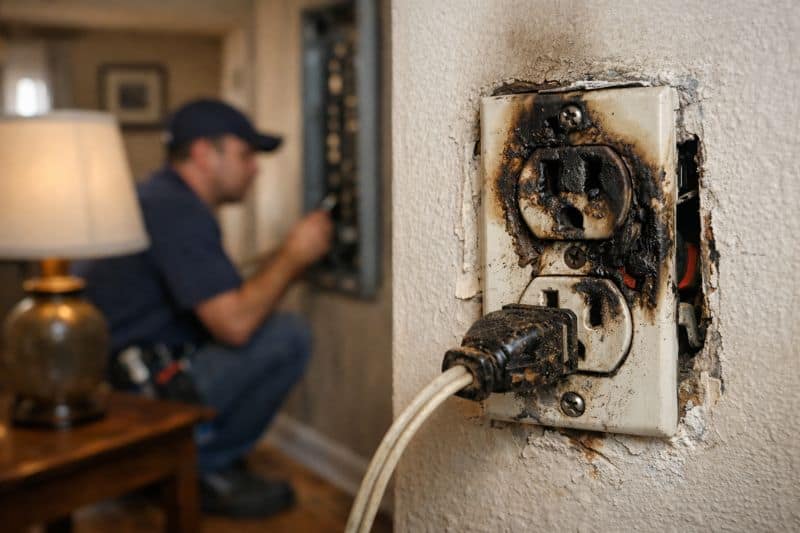
- Outlets feel warm, look discolored, or smell burnt
- The same outlet stops working repeatedly
These symptoms suggest conditions that shouldn’t be ignored. When electrical problems escalate unexpectedly, having access to emergency electrical repairs in Los Angeles can help prevent a minor issue from turning into a serious safety hazard.
https://www.rgelectric.net/emergency-electrical-repairs-in-los-angeles/
How Electricians Diagnose Dead Outlets Properly
Licensed electricians don’t assume the outlet itself is the problem. They diagnose dead outlets by evaluating the entire circuit feeding that outlet.
This process typically includes tracing the circuit, testing upstream connections, checking for tripped GFCIs, inspecting junction boxes, and verifying that wiring is intact and secure. Electricians also evaluate breaker performance and load at the electrical panel to determine whether the issue is isolated or part of a broader system problem.
In many cases, dead outlets are tied to wiring failures or circuit issues rather than the outlet itself. Addressing these problems correctly falls under professional electrical repairs services in Los Angeles, especially when wiring or circuit corrections are required.
https://www.rgelectric.net/electrical-repairs-services-in-los-angeles/
When Dead Outlets Are a Panel-Level Issue
In older Los Angeles homes, dead outlets sometimes point back to the electrical panel.
Panels that are aging, overloaded, or not designed for modern demand can deliver inconsistent power to circuits. As components wear down, some circuits may stop delivering power altogether, even though breakers appear to be on.
If dead outlets appear alongside other symptoms, such as breaker issues, flickering lights, or partial power loss, the panel may be contributing to the problem. In these situations, an evaluation through professional electrical panel services in Los Angeles can help determine whether the panel is still performing safely or if upgrades are needed.
https://www.rgelectric.net/electrical-panel-services-in-los-angeles/
Why Fixing Dead Outlets Protects Your Home and Insurance Coverage
Dead outlets aren’t just inconvenient. They can signal conditions that increase fire risk and electrical system instability.
Loose wiring, failing connections, and overloaded circuits can worsen over time if left unaddressed. When electrical issues lead to damage or injury, insurance investigations often examine whether warning signs were present and whether repairs were handled properly.
Having dead outlets diagnosed and corrected by licensed professionals provides documentation that the issue was addressed safely and to current standards. This matters during insurance renewals, claims, refinancing, or home sales, especially in older Los Angeles homes where electrical systems already receive extra scrutiny.
For issues involving worn receptacles or failing connections at the outlet level, professional electrical switches and outlets services in Los Angeles ensure repairs are completed correctly rather than temporarily patched.
https://www.rgelectric.net/electrical-switches-and-outlets-in-los-angeles/
A Dead Outlet Is Rarely Just an Inconvenience
When an outlet stops working, it’s easy to treat it as a small annoyance. In older Los Angeles homes, however, dead outlets are often an early warning sign that something in the electrical system is no longer operating as it should.
Whether the cause is a tripped safety device, loose wiring, worn components, or a panel struggling to support modern electrical demand, dead outlets usually point to an issue somewhere beyond the receptacle itself. Ignoring the problem or relying on temporary fixes can allow hidden electrical stress to build over time.
The good news is that most dead outlet issues are very manageable when addressed early. A proper evaluation can identify the root cause, restore power safely, and help prevent more disruptive or costly electrical problems down the road.
If one or more outlets in your home have stopped working, or if the issue keeps coming back, it’s worth having the system checked by a licensed professional. Contact RG Electric at (323) 521-5131 or visit https://www.rgelectric.net/ to schedule a professional electrical evaluation. Taking action now is far safer, and far less stressful, than waiting for a larger electrical failure later.