
 Call (323) 5215131
Outdoor Lighting Installation Services in Los Angeles
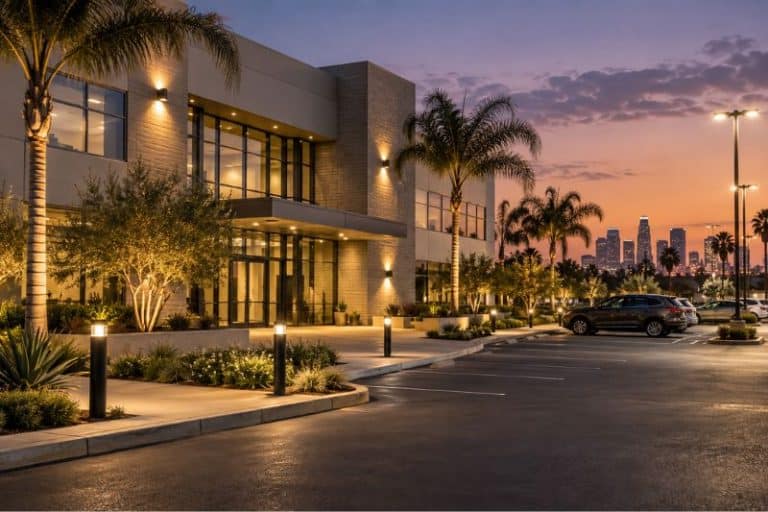
Outdoor lighting in Los Angeles does three jobs at once: it keeps people safe on paths and entries after dark, it deters the kind of activity that thrives in unlit corners, and it shapes how a property looks from the street at night. When any of those three jobs is not being done, the gap is visible, to tenants, to guests, to insurers, and to inspectors. RG Electric, licensed C-10 #910807, designs and installs exterior lighting for homes, apartment buildings, and commercial properties throughout Los Angeles, with work that is code-compliant, weatherproofed for the long term, and permitted where required.
Call (323) 521-5131 to schedule a free estimate for outdoor lighting installation or upgrades.
What Brings Most Customers to Us
The outdoor lighting calls we receive fall into recognizable patterns. Homeowners in Encino, Sherman Oaks, and the Hollywood Hills want path lighting and architectural accents that make their property look intentional at night without creating glare for neighbors. Property managers in Inglewood, Koreatown, and Torrance are dealing with tenant complaints about dark parking areas, unlit stairwells, and entry corridors that feel unsafe after dark. Landlords throughout the San Fernando Valley are managing properties where the original outdoor fixtures have corroded, failed, or never met the GFCI protection requirements that California code requires for outdoor circuits.
In each of these situations, the right response is a licensed electrician, not a handyman or a landscape crew. Exterior lighting that connects to the home’s wiring system involves line-voltage circuits, junction boxes, GFCI protection, weatherproof enclosures, and in many cases a permit. Work done without those elements produces installations that fail early, create code problems, and introduce liability at the worst possible time.
GFCI Protection and Outdoor Electrical Code Requirements
California electrical code requires GFCI protection on all outdoor circuits, including those serving exterior lighting, outlets, and equipment. This requirement exists because the combination of moisture, wet surfaces, and live electrical equipment creates a shock hazard that a standard breaker cannot prevent on its own. GFCI protection interrupts the circuit in milliseconds when a ground fault is detected, before the current level becomes dangerous.
Many older properties throughout Los Angeles, particularly those built before the 1970s and 1980s code updates, have outdoor fixtures and outlets that were never GFCI-protected. When those properties are inspected, whether for a sale, a permit, or an insurance renewal, the missing protection becomes a required correction. We install GFCI-protected circuits and devices as part of every outdoor lighting project, and we can bring existing outdoor circuits into compliance as a standalone service. For properties where outdoor outlets also need attention, our electrical outlets and switches services cover the full scope of outlet upgrades alongside lighting work.
Path, Step, and Entry Lighting
Pathways and steps that are poorly lit or completely dark are a trip hazard and a liability exposure for property owners. The standard is not simply to add light, it is to place the right amount of light at the right height and angle so the walking surface is clearly visible without creating glare that impairs vision on the path ahead.
Path and step fixtures
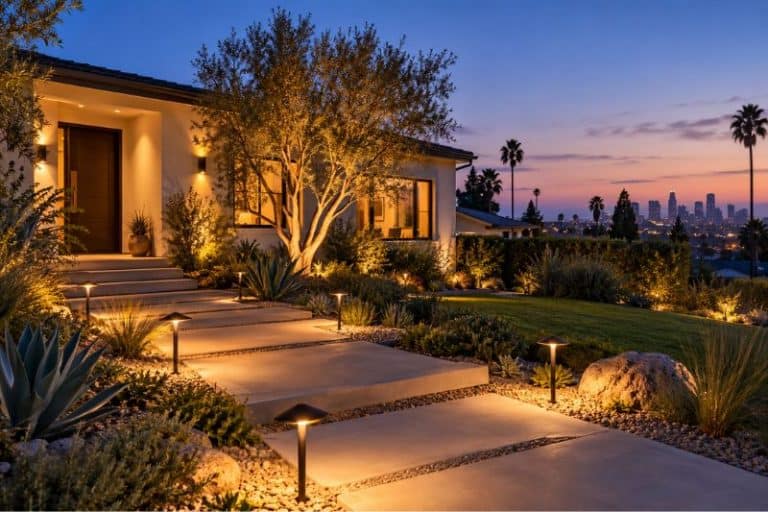
We position path lights to illuminate the walking surface rather than project upward into the eye. Step lights mount flush into risers or retaining walls where pathway fixtures would be in the way, providing low-level light that marks the edge of each step clearly. For long runs from Brentwood to Woodland Hills and throughout the basin, we balance voltage across the run so fixtures at the far end of a low-voltage system perform as well as those nearest the transformer.
Entry sconces and gate lighting
Entry sconces at front doors and pedestrian gates need to deliver consistent, reliable light at a height and angle that makes the entry feel welcoming and secure. We size junction boxes and bracing to support the weight of the fixture, seal all exterior penetrations against moisture intrusion, and verify that the circuit is GFCI-protected. For properties with automated gate systems, we coordinate lighting placement with the gate operator’s electrical requirements so both systems share conduit runs cleanly where the layout allows.
Soffit and overhang downlights
Recessed soffit downlights under eaves and covered entries provide clean, architectural light without exposed fixtures that can be damaged or tampered with. We use airtight, wet-location rated housings, verify that the soffit cavity does not create a thermal issue with insulation above, and select color temperatures that work with the property’s exterior finish. For apartment buildings and commercial entries, soffit downlights are often the most durable long-term solution because they are less accessible and less prone to vandalism than wall-mounted fixtures.
Security and Flood Lighting
Security lighting deters unwanted activity by eliminating the dark zones where it tends to occur. The goal is not maximum brightness, it is consistent, aimed coverage that removes hiding spots and makes activity visible from the street and from cameras.
Floodlight placement and aiming
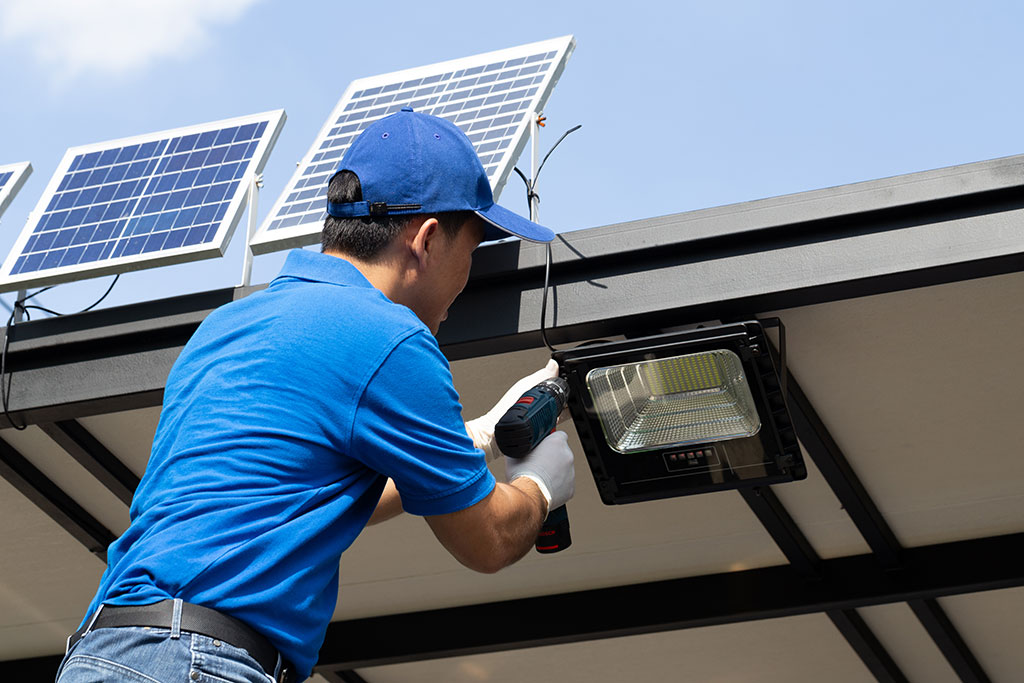
We mount floodlights at eave and gable corners where a single fixture can cover a wide area without creating a direct glare angle into neighboring windows. For parking areas and driveways in properties throughout Van Nuys, Gardena, and Downey, we calculate the mounting height and beam spread needed to achieve even coverage without dark gaps between fixtures. Motion-activated floodlights are set with appropriate sensitivity and timeout so they respond to activity without triggering on passing cars or wind-blown foliage.
Camera coordination
Lighting that serves security cameras needs to be positioned so the illuminated area falls within the camera’s field of view, at a color temperature that supports clear video rather than washing out the image. We coordinate beam direction and intensity with camera placement during the planning stage so the system works as a unit rather than as two separately installed components that undermine each other.
Architectural and Landscape Accent Lighting
Accent lighting shapes how a property reads at night from the street. Done well, it creates depth, highlights architectural features, and makes the property feel cared for. Done poorly, it creates hot spots, washes out texture, and looks unintentional.
Tree and planting uplighting
Trees are typically uplighted from ground level using narrow or wide beam fixtures positioned at the base of the trunk and aimed toward the canopy. The distance from the trunk, the beam angle, and the lumen level are all calibrated to the tree’s height and the density of the canopy. Palm trees throughout Los Angeles neighborhoods from Culver City to Long Beach respond to tight beam fixtures aimed straight up the trunk. Spreading oaks and mature eucalyptus need wider angles and often multiple fixtures to light the canopy without leaving dark voids.
Facade and architectural accents
Wall washing and grazing are two different techniques that serve different architectural surfaces. Washing from a fixture mounted away from the wall produces even illumination across a smooth surface. Grazing from a fixture mounted close to the wall and aimed nearly parallel to it creates shadow play that reveals texture in stone, brick, and stucco. We select the technique based on what the surface actually looks like and what the customer is trying to achieve, not as a default approach applied to every property.
Low-Voltage and Line-Voltage Systems
Most residential outdoor lighting projects use a combination of low-voltage landscape lighting and line-voltage fixtures, and understanding which application fits which purpose matters for getting a system that performs well over time.
Low-voltage landscape systems
Low-voltage systems operating at 12 to 15 volts are energy efficient, safe to handle, and well suited for path lighting, garden accents, and tree uplighting where output requirements are modest. The transformer is the critical component, we install listed, weather-rated transformers sized appropriately for the total fixture load with room for future additions, and we balance the runs so voltage drop does not dim fixtures at the end of a long cable. Cable is buried to required depth or run through conduit where it crosses hardscape.
Line-voltage exterior circuits
Line-voltage at 120 volts is required for wall sconces, soffit downlights, floodlights, and any application needing higher output or precise switching control. These circuits require a licensed electrician, proper weatherproof boxes and covers, GFCI protection, and conduit or direct burial cable rated for exterior use. We pull the circuit from the panel, run it correctly, and terminate at weatherproof enclosures with in-use covers where cords or connections are exposed to weather.
Smart Controls, Timers, and Automation
An outdoor lighting system that requires manual switching is rarely used consistently. Controls that automate the system based on time of day, daylight level, or motion make the lighting work reliably without requiring anyone to remember to turn it on or off.
We install astronomic timers that track local sunrise and sunset and adjust automatically through the year without seasonal reprogramming. Dusk-to-dawn photocells handle fixtures that should run from dark to light without a schedule. Motion sensors with adjustable sensitivity and timeout handle security zones where full-time illumination is not needed. Smart switches and low-voltage controllers support app control, scene presets, and integration with home automation platforms for customers who want that level of control. For apartment and commercial properties, we standardize control types across zones and provide a labeled control map for maintenance staff.
Outdoor Lighting for Apartment Buildings and Commercial Properties
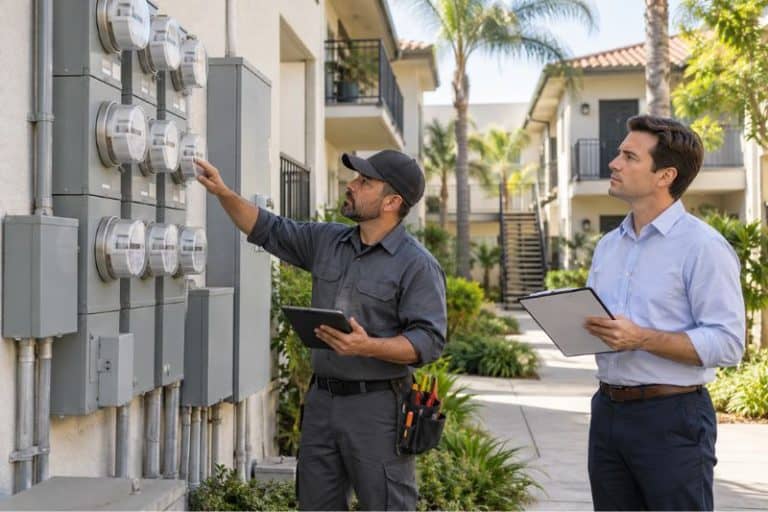
Property managers face outdoor lighting problems that homeowners do not. Common area lighting in apartment buildings is subject to California habitability standards, LADBS inspection requirements, and insurer conditions that can affect policy renewals. A parking area, stairwell, or walkway that does not meet minimum lighting levels is both a tenant relations problem and a liability exposure.
Parking areas and carports
Parking areas need even coverage without dark gaps between fixtures. We calculate mounting height, fixture spacing, and lumen output to achieve the foot-candle levels appropriate for the occupancy type, then specify fixtures rated for the exposure. For covered carport structures, we use fixtures rated for damp or wet locations depending on the roof overhang and weather exposure. Emergency and egress lighting requirements for multi-unit residential and commercial occupancies are verified during planning so the installation satisfies the inspection at the first attempt.
Courtyards, walkways, and pool areas
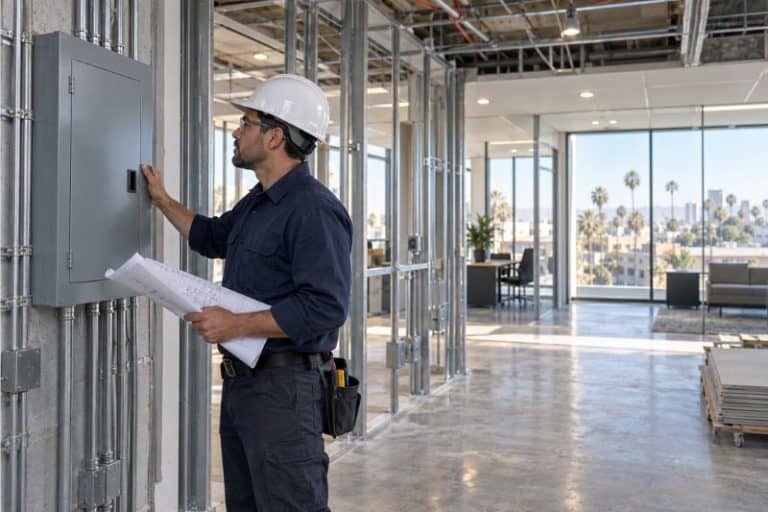
Shared outdoor spaces in apartment buildings throughout Koreatown, West Adams, and the San Fernando Valley need durable, consistent lighting that reduces maintenance calls and satisfies tenant expectations for safety. We standardize fixture types across courtyards and walkways so future lamp replacements do not require tracking down discontinued models. Pool and spa areas require wet-location rated fixtures and GFCI protection on all circuits, which we verify against current code during the project scope review. For larger commercial scopes involving multiple buildings or phased upgrades across a property portfolio, our commercial electrical services team handles the planning, permitting, and execution.
Weatherproofing and Long-Term Durability
Outdoor electrical work fails early when connections are not properly protected. Los Angeles’s climate is mild, but coastal salt air, irrigation systems, and occasional heavy rain create conditions that corrode exposed terminations, degrade unsealed penetrations, and introduce moisture into boxes that were not properly closed. We use listed, weather-rated enclosures with in-use covers, gel-filled or heat-shrink splices for low-voltage runs, and drip loops at fixture terminations to direct water away from electrical connections. Conduit is sized and supported correctly, penetrations through walls and soffits are sealed, and fixtures are specified with finishes and driver ratings suited for exterior exposure.
Permits and Inspections
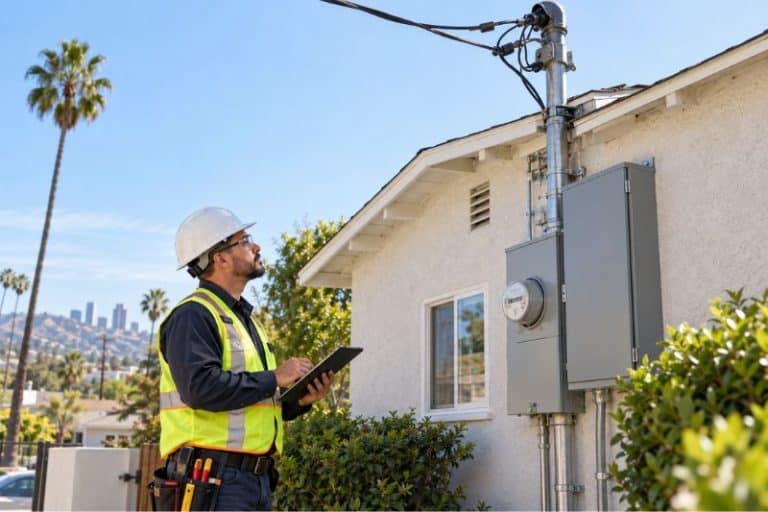
New outdoor lighting circuits in Los Angeles require a permit from LADBS when the work involves adding circuits, relocating panels, or performing work as part of a larger project. Unpermitted exterior electrical work creates the same problems as unpermitted interior work, complications at the point of sale, during refinancing, and when an insurance claim involves the electrical system. We evaluate permit requirements during the estimate, pull the permit where required, meet the inspector on site, and provide a documentation packet at closeout that includes the permit, inspection sign-off, and labeled photos of the completed installation.
Our Process, Start to Finish
The process begins with a site walkthrough or photo review of the property, the areas to be lit, and any existing fixtures or circuits already in place. We discuss the goals, whether that is safety and security, curb appeal, tenant satisfaction, or inspection compliance, and propose a fixture layout, control strategy, and circuit plan that fits the scope and budget. The estimate is clear and itemized, with no hidden additions once work begins.
On site, we protect landscaping during any trenching, run conduit or cable cleanly to all fixture locations, install weatherproof boxes and supports, and complete all wiring before fixtures are mounted and aimed. We verify GFCI protection on every outdoor circuit, test control operation through the full range of settings, and confirm that the panel directory is labeled accurately at closeout. For permitted work, we schedule and attend the final inspection. You receive a complete documentation packet and a labeled control map for the system before we leave.
Costs and Timeline
Pricing depends on fixture count, run length and access, whether trenching or surface conduit is required, control complexity, and permit requirements. A focused entry and path lighting project at a single-family home may complete in a day. Multi-zone landscape systems, apartment common area upgrades, and commercial parking area installations are scoped individually and may be phased to minimize disruption to tenants and operations. To speed the estimate, a rough site map or aerial photo of the property with the areas to be lit marked, along with an approximate fixture count and any existing system details, helps us prepare a more accurate range before the site visit.
Frequently Asked Questions
Do outdoor lighting circuits in Los Angeles need to be GFCI-protected? Yes. California electrical code requires GFCI protection on all outdoor circuits. This applies to lighting circuits, outlet circuits, and circuits serving outdoor equipment. Many older properties have outdoor fixtures installed before this requirement was enforced, and those circuits need to be brought into compliance when the property is permitted, sold, or inspected. We install GFCI protection as part of every outdoor lighting project.
Do I need a permit for outdoor lighting installation? It depends on the scope. Adding fixtures to an existing GFCI-protected circuit without new wiring typically does not require a permit. Installing a new circuit from the panel, adding a subpanel, or performing work as part of a larger renovation usually does. We evaluate permit requirements during the estimate and pull the permit where required. Unpermitted electrical work can create complications during a property sale or insurance claim.
What is the difference between low-voltage and line-voltage outdoor lighting? Low-voltage systems operate at 12 to 15 volts and are suitable for path lights, garden accents, and tree uplighting where modest output is sufficient. Line-voltage systems operate at 120 volts and are required for wall sconces, floodlights, soffit downlights, and applications needing higher output or switched circuits. Most properties use both, and we design the system so each application uses the right voltage for the job.
Our apartment building’s parking area lighting failed a city inspection. What happens next? We start with a walk of the area to identify what specifically failed, inadequate foot-candle levels, missing GFCI protection, damaged fixtures, or unsupported wiring. From there we provide a scoped estimate, pull any required permits, complete the corrections, and schedule a re-inspection. We provide documentation at closeout that satisfies LADBS and your insurance carrier if coverage was a factor in the inspection.
Can you add outdoor lighting without trenching through my landscaping? Often yes. Where existing conduit sleeves are present under hardscape, we can pull new wire without cutting. Surface-mounted conduit along wall bases and fence lines is another option where trenching is not practical. For low-voltage systems, cable can sometimes be run through existing planting beds with minimal disruption. We assess the site during the estimate and choose the approach that achieves the coverage you need with the least impact on the landscape.
How do I keep outdoor lighting from bothering my neighbors? Fixture selection, mounting height, and aiming all affect light trespass. We use shielded fixtures that direct light downward and toward the property rather than outward, set floodlight mounting angles to avoid projecting across property lines, and select lumen levels appropriate for the application rather than defaulting to maximum output. Motion-activated fixtures with appropriate timeout settings also reduce the continuous light exposure that neighbors notice most.
For immediate assistance or to schedule a professional evaluation, call RG Electric directly at (323) 521-5131.
Electrical work is hazardous. Consult a licensed electrician like RG Electric for inspections, permits, and code-compliant installations.