
 Call (323) 5215131
From Fire Risk to Safe Haven: Replacing Outdated Electrical Panels in LA Homes
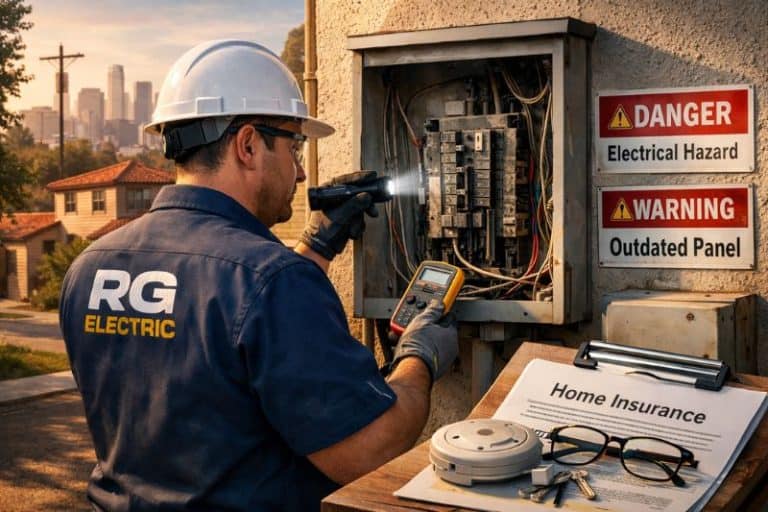
Los Angeles has a large inventory of older homes that still rely on electrical panels installed decades before modern safety standards existed. In neighborhoods like Silver Lake, Echo Park, Los Feliz, and West Hollywood, Craftsman bungalows and mid-century properties carry significant charm, and in many cases significant electrical risk. Panels from brands like Federal Pacific, Zinsco, Pushmatic, and Challenger were common in homes built before the 1980s and are now recognized as safety liabilities. They were not designed for the electrical loads modern households place on them, and some have documented failure modes that allow circuits to overheat without the breaker tripping. RG Electric (License C10 #910807) replaces these panels for homeowners throughout Los Angeles, correcting the underlying hazard with permitted, code-compliant work that holds up under inspection and insurance review.
This guide covers why outdated panels are dangerous, what the warning signs look like, how the replacement process works, and what homeowners in Los Angeles should expect when the time comes to address this upgrade.
Why Outdated Electrical Panels Create Real Safety Risk
The electrical panel’s job is straightforward: route power to circuits throughout the house and trip the breaker when a circuit carries more current than its wiring can safely handle. When a breaker fails to trip, the circuit continues carrying current beyond its rated capacity. The conductor heats up, the insulation degrades, and the conditions for ignition develop inside wall cavities where no one sees them. This is not a theoretical risk. Federal Pacific panels with Stab-Lok breakers have a documented history of failing to trip under overload conditions, and Zinsco panels have similar failure modes. Pushmatic panels are obsolete and no longer manufactured, making service and parts unavailable when components fail.
Beyond the breaker failure issue, older panels frequently have corroded bus bars, inadequate grounding, and wiring connections that have loosened over decades of heat cycling. In Los Angeles, where earthquake activity over time can disturb connections that would otherwise remain stable, and where the dry climate accelerates insulation degradation, these conditions are more pronounced than in many other markets. A panel that functioned adequately ten years ago may be operating with significantly more risk today simply due to age and accumulated stress.
Insurance carriers have recognized this. Properties with Federal Pacific, Zinsco, or other high-risk panel types face real consequences at renewal, including premium surcharges, coverage restrictions, and in some cases non-renewals. For homeowners in Los Angeles who are planning to sell, the panel type is increasingly a due diligence item that buyers and their inspectors flag during the transaction process.
Warning Signs That Your Panel Needs Attention
Some warning signs are visible without professional tools. Breakers that trip repeatedly on the same circuit are not a nuisance to be managed by resetting them. They are the panel communicating that the circuit is carrying more than it was designed for. Lights that flicker or dim noticeably when a large appliance runs indicate a system operating close to its voltage limits, without the headroom to absorb normal demand spikes. A burning smell near the panel, outlets that feel warm, or any discoloration around outlet covers or switch plates are serious signals that require immediate professional evaluation.
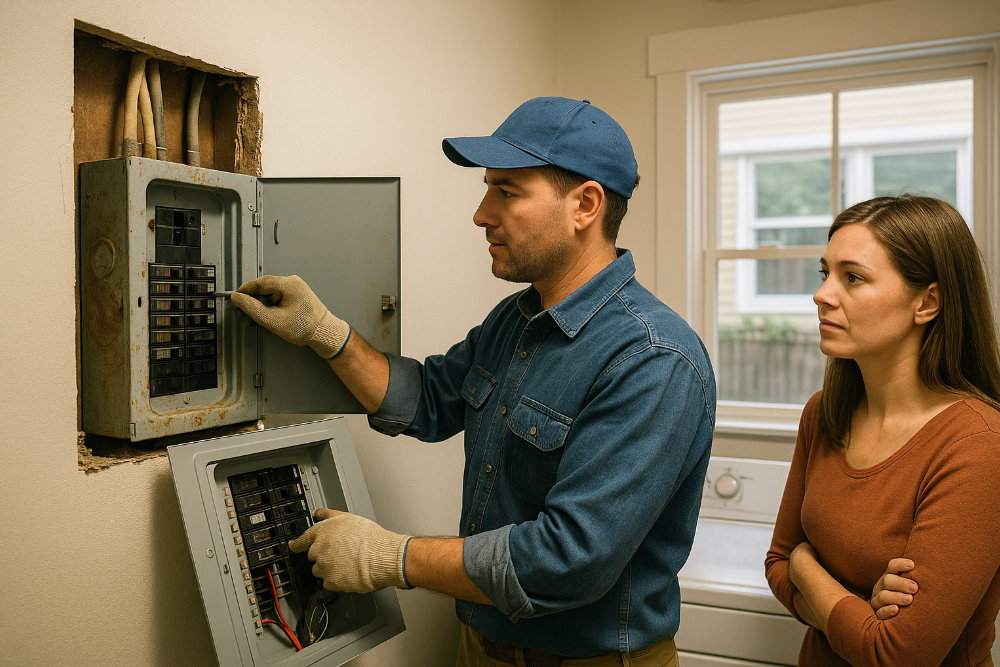
The panel brand itself is information. If you open the panel door and see Federal Pacific, Zinsco, GTE-Sylvania, Pushmatic, or Challenger on the interior label or the breakers, that identification alone is a reason to schedule a professional inspection. These are not panels that should be evaluated on condition alone. Their design characteristics create risk regardless of visible condition, and the appropriate response is a professional assessment of what replacement involves.
Homes built before the 1980s that have never had a professional electrical evaluation are also candidates for an inspection, even without active symptoms. The electrical system in a home of that age has never been compared against current NEC requirements, and compliance gaps in grounding, GFCI protection, and circuit capacity are common findings that a professional inspection surfaces.
Why Los Angeles Homes Face Elevated Panel Risk
The combination of factors that elevates electrical panel risk in Los Angeles is specific to this market. The housing stock in many neighborhoods skews significantly older. Echo Park, Mid-City, Hollywood, Van Nuys, and Koreatown all have large concentrations of buildings constructed before current electrical codes existed. The panels serving these buildings were sized for the loads of their era, not for the mini-split HVAC units, home office setups, and Level 2 EV chargers that tenants and homeowners are running today.
California’s electrification push has accelerated the mismatch between existing panel capacity and actual electrical demand. The state is actively incentivizing and in some cases requiring the replacement of gas appliances with electric alternatives. That adds load to systems that were already operating at or near their design limits, and the result is the pattern of nuisance trips and reliability complaints that homeowners describe as the house having electrical problems when the real issue is a panel that was not sized for how the home is being used today.
Earthquake activity over time also affects electrical infrastructure in ways that are not visible without a professional inspection. Connections in panels and junction boxes can loosen gradually due to seismic movement, creating the loose terminations that are arc ignition points. Homes that have never had their electrical connections professionally evaluated after significant seismic activity may have developing hazards that a thermal imaging inspection would surface.
What the Panel Replacement Process Involves
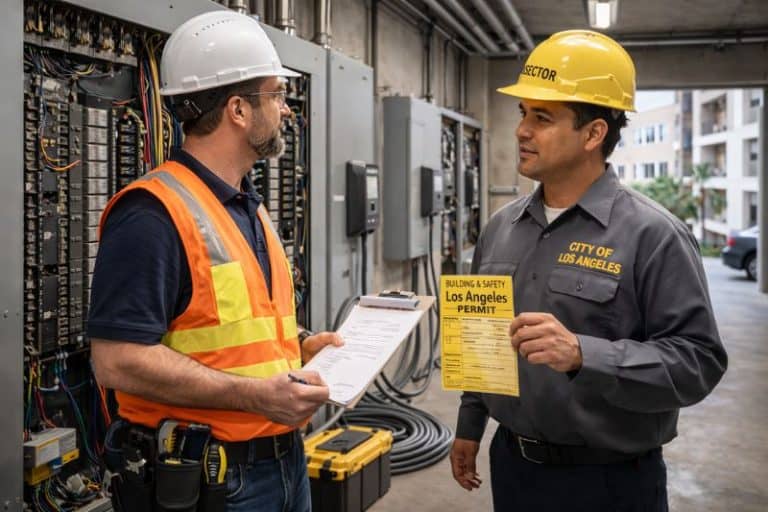
A panel replacement is permitted work in Los Angeles, which means it requires a LADBS permit application, an inspection by a city inspector, and documentation that the work meets current NEC requirements. This is not optional. Unpermitted panel replacements do not produce the documentation record that insurance carriers, buyers, and lenders expect to see, and they create a compliance gap that becomes a problem at the worst possible time.
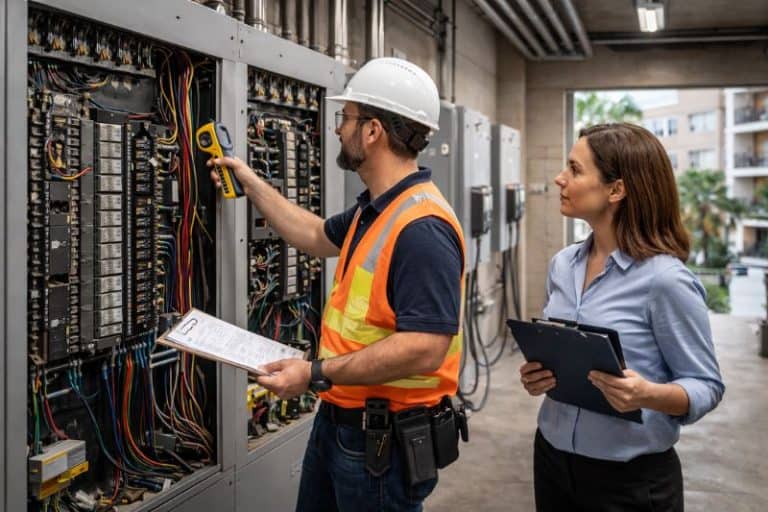
The process begins with a professional assessment of the existing panel and the home’s current electrical load. This determines whether the replacement panel needs to match the existing service size or whether a service upgrade is warranted. Many older Los Angeles homes running 100A service are candidates for an upgrade to 200A, particularly if EV charging, HVAC upgrades, or other high-draw equipment is part of the picture. This determination requires a load calculation, not just a visual inspection of the existing panel.
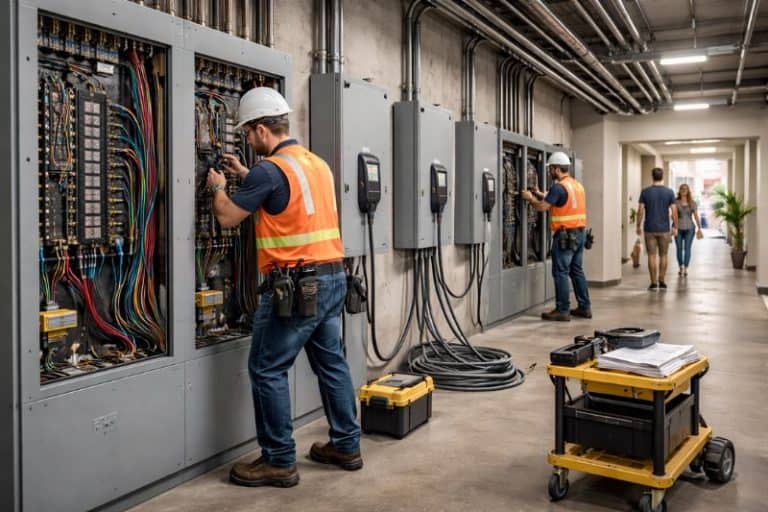
RG Electric manages the permit application, schedules and coordinates the LADBS inspection, and prepares all required documentation. The installation itself, in a straightforward residential panel replacement, typically takes a single day. The power to the home is off during the work, which is scheduled in advance and managed to minimize disruption. When the new panel is installed and inspected, the circuit directory is updated and labeled, AFCI and GFCI protection is incorporated where current code requires it, and the homeowner has a documented, inspection-approved upgrade on record.
For homes where the service upgrade requires LADWP involvement, meaning an increase in the utility connection capacity at the meter, that coordination runs as a parallel track. RG Electric initiates both the LADBS permitting and the LADWP service request concurrently to avoid the delays that come from treating them as sequential steps.
What a Modern Panel Provides That an Older One Does Not
A modern panel from a manufacturer like Siemens or Square D provides correctly functioning breakers that trip when circuits are overloaded, bus bars that are sized and rated for the service amperage, and space for the AFCI and GFCI breakers that current code requires. The connection quality is consistent because the work is new and inspected, not the result of decades of additions and modifications by contractors of varying quality.
AFCI protection, which detects the electrical signature of arcing within a circuit before ignition can occur, is now required in living areas under the NEC. Many older Los Angeles homes have none. GFCI protection in kitchens, bathrooms, laundry areas, and outdoor circuits is similarly required and similarly absent in many properties that have not had recent electrical work. A panel replacement creates the opportunity to bring the home into compliance with both requirements as part of the same project.
The capacity a modern panel provides also matters. A home upgraded from 100A to 200A service has meaningful headroom for the electrical loads that California’s electrification direction is producing. EV chargers, heat pump HVAC, induction ranges, and electric water heaters can all be supported by a properly sized modern panel in a way that a 100A panel running at capacity simply cannot.
Insurance and Compliance Considerations
Insurance carriers operating in the Los Angeles market have become substantially more rigorous about electrical risk documentation. Homeowners with Federal Pacific or Zinsco panels are increasingly receiving notices from their carriers requiring documentation of a replacement plan or facing non-renewal. For homeowners who receive these notices, the timeline for completing the work is often short, which makes proactive replacement a significantly better position than waiting for the notice to arrive.
Beyond the panel type issue, insurers are looking for inspection documentation and upgrade records that many homeowners of older properties cannot produce. The absence of documentation creates an information gap that underwriters fill with risk assumptions that are not favorable. A current, permitted panel replacement with a passed LADBS inspection is concrete evidence of a property that has been responsibly maintained, and it affects how underwriters evaluate the risk.
For homeowners planning to sell, the panel type and upgrade history are increasingly scrutinized during the buyer’s inspection process. A Federal Pacific or Zinsco panel found during a buyer’s inspection typically produces a repair credit request or a contingency that complicates the transaction. Addressing it proactively, before the property goes on the market, removes that friction and allows the upgrade to be presented as a completed improvement rather than a negotiating point.
Frequently Asked Questions
How do I know if my panel is a high-risk brand?
Open the panel door and look at the brand name on the interior label or on the breakers themselves. Federal Pacific panels often have “Stab-Lok” printed on the breakers. Zinsco panels may be labeled as “Zinsco” or “GTE-Sylvania.” Pushmatic breakers have a distinctive push-button design rather than a toggle. If you are uncertain, a licensed electrician can identify the panel type during a brief inspection.
Does a panel replacement require a permit in Los Angeles?
Yes. LADBS requires permits for panel replacements, and the completed work must pass a city inspection before it is considered compliant. RG Electric manages the permit application and inspection coordination as part of every panel replacement project.
How long does a panel replacement take?
The installation itself typically takes a single day for a straightforward residential replacement. Permitting and the LADBS inspection add time to the overall project timeline, which RG Electric manages concurrently to minimize total project duration.
Can a new panel support an EV charger?
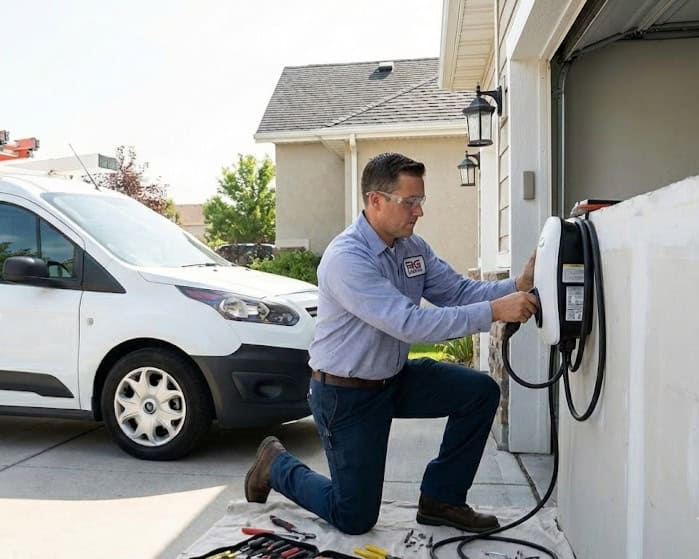
Yes, and determining whether your existing service can support EV charging is part of the load calculation that should precede any panel replacement. If the existing service is insufficient, a service upgrade to 200A is often the appropriate solution and can be completed as part of the same project. Our EV charger installation services in Los Angeles cover the full process from panel assessment through permit-compliant installation.
Will my insurance company know if I replace the panel?
You should notify your carrier after completing a panel replacement, particularly if the replacement addresses a high-risk panel type they have flagged. Providing the completed permit and inspection documentation is the appropriate way to do this. RG Electric provides all documentation needed for insurance purposes.
What happens if I don’t replace a panel I know is high-risk?
The safety risk continues. Insurance carriers may decline to renew coverage or impose surcharges. Buyers will flag it during a home inspection, creating transaction complications. And the liability exposure for a known, unaddressed defect increases over time. Proactive replacement is consistently the lower-cost outcome compared to any of these scenarios.
Schedule an Electrical Panel Evaluation
If your Los Angeles home has a panel that has never been professionally evaluated, if you know you have a Federal Pacific, Zinsco, Pushmatic, or Challenger panel, or if you are preparing for a sale or insurance renewal and want the electrical system documented and compliant, a professional evaluation is the right starting point. Our electrical panel services in Los Angeles cover the full scope of assessment, load calculation, permitted replacement, LADWP coordination, and post-installation inspection for homes throughout the region, including Silver Lake, Echo Park, Los Feliz, West Hollywood, Encino, Sherman Oaks, and the broader San Fernando Valley. For immediate assistance or to schedule a professional evaluation, call RG Electric directly at (323) 521-5131.