
 Call (323) 5215131
EV Charger Installation Services in Los Angeles
Updated March 2026
Adding a dedicated EV charger at home or in a multi-unit property saves time, reduces range anxiety, and protects your electrical system from the wear that comes with improvised charging on shared circuits. RG Electric designs and installs Level 1 and Level 2 charging with correct circuit sizing, permits, and inspections throughout the greater Los Angeles area. Our licensed C-10 #910807 team ensures reliable charging without nuisance trips or unsafe workarounds.
Typical projects include dedicated circuit installations for residential Level 2 chargers, multi-unit parking garage buildouts, workplace charging for commercial properties, subpanel additions to support EV load, and conduit infrastructure for future expansion. We handle everything from load evaluation to permit closeout.
Licensed C-10 #910807, insured, serving the greater Los Angeles metro. Free on-site estimates for homeowners and property managers.
Why Install a Dedicated EV Charger
Public charging infrastructure in Los Angeles has expanded significantly, but relying on it as a primary charging source creates friction that a home or property-based charger eliminates entirely. A dedicated circuit means predictable overnight charging, full battery most mornings, and no dependence on station availability at a shopping center or parking structure.
The problem with improvised home charging
Many EV owners start by plugging into a standard garage outlet. That works in the short term, but a 120V outlet on a shared circuit was not designed for the sustained load of nightly charging. Over time this can cause nuisance breaker trips, accelerated wear on the receptacle, and in older homes in areas like Sherman Oaks, Van Nuys, or the West Side, it can stress wiring that was already running at capacity before an EV entered the picture. A properly sized dedicated circuit eliminates all of that.
What we evaluate before installation
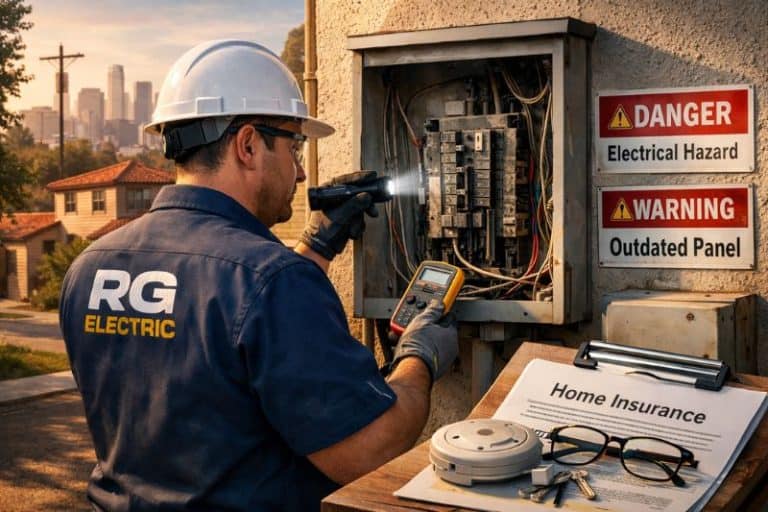
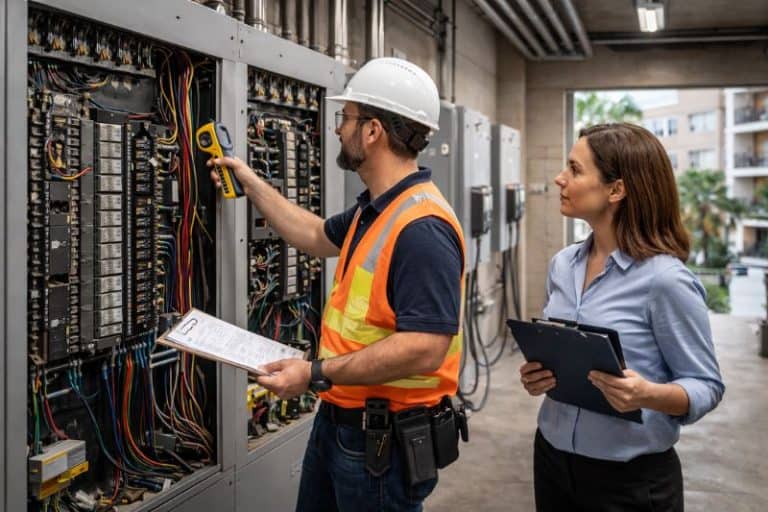
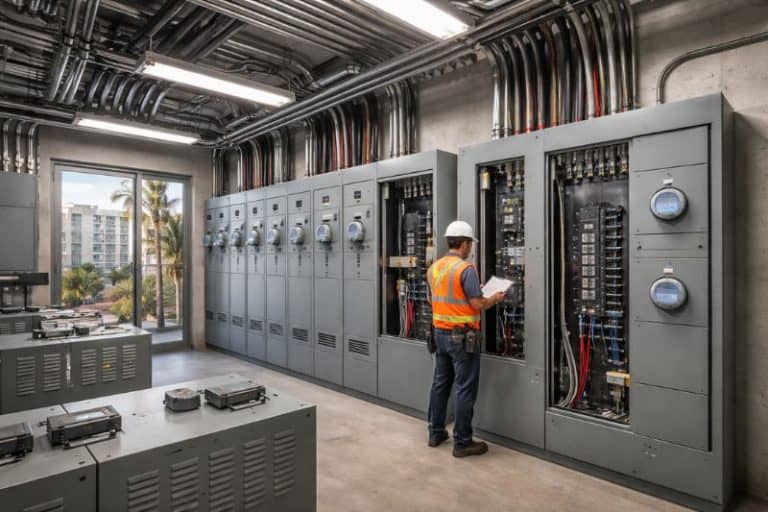
We evaluate your main panel capacity, available breaker spaces, grounding and bonding condition, and the most practical route from panel to parking before recommending any equipment. If your panel is undersized or a legacy brand flagged by insurers, we can coordinate a panel upgrade and the EV charger installation under a single permit, which avoids redundant scheduling and inspection coordination. We can also add whole-house surge protection while on site, which is particularly worthwhile when you are adding a significant new load to the system.
Level 1 vs Level 2 Charging
Choosing between Level 1 and Level 2 comes down to how much range you need to recover each night and what your panel can support.
Level 1: 120V charging
Level 1 uses a standard 120V outlet and is slow, typically adding 4 to 5 miles of range per hour. It is adequate for light daily driving or as a backup option when a Level 2 circuit is not yet installed. Most vehicles ship with a Level 1 cordset. When we install or verify a Level 1 setup, we confirm the outlet is on a dedicated circuit in sound condition and not sharing load with kitchen appliances, a garage door opener, or other garage equipment that draws current regularly.
Level 2: 240V dedicated circuit
Level 2 uses a 240V dedicated circuit, typically sized between 20A and 60A depending on the charger and the vehicle. It can add 20 to 30 or more miles of range per hour, which means most drivers wake up to a full charge after overnight use. We size the circuit based on the charger’s continuous load rating and manufacturer specifications, then verify voltage drop for the actual run distance and environment. Outdoor installations use weather-rated equipment and protected conduit runs. Most homeowners in areas like Encino, Culver City, Beverly Hills, and throughout the basin choose Level 2 for this reason.
EV Charger Installation for Apartments and Commercial Properties
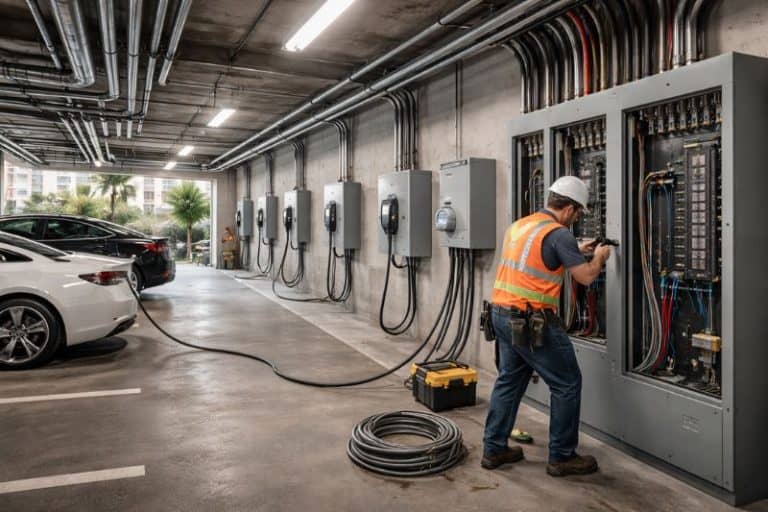
Multi-unit residential and commercial EV charging projects are a different scope than a residential garage installation. The electrical infrastructure requirements are larger, the coordination with tenants and property management adds complexity, and the compliance picture includes considerations that do not apply to single-family homes.
California Title 24 and CALGreen EV requirements
California’s building code now requires EV charging readiness for new construction and significant renovations on multi-unit and commercial properties. This means conduit, panel capacity, and circuit infrastructure must be in place even if chargers are not immediately installed. For property managers in Koreatown, Downtown LA, Inglewood, Torrance, and throughout the city who are planning renovations or additions, understanding these requirements early prevents expensive retrofits later. RG Electric plans EV-ready infrastructure that satisfies current code and positions the property to add stations as tenant demand grows.
Tenant demand and property value
EV adoption in Los Angeles is among the highest in the country. Property managers across the basin are fielding charging requests from existing tenants and hearing it raised during leasing conversations. Buildings without charging infrastructure are beginning to feel that gap competitively, particularly in markets like Santa Monica, the Westside, and neighborhoods around Culver City. A well-planned charging buildout is an amenity addition that directly supports occupancy and rental rate positioning.
How we plan multi-unit charging buildouts
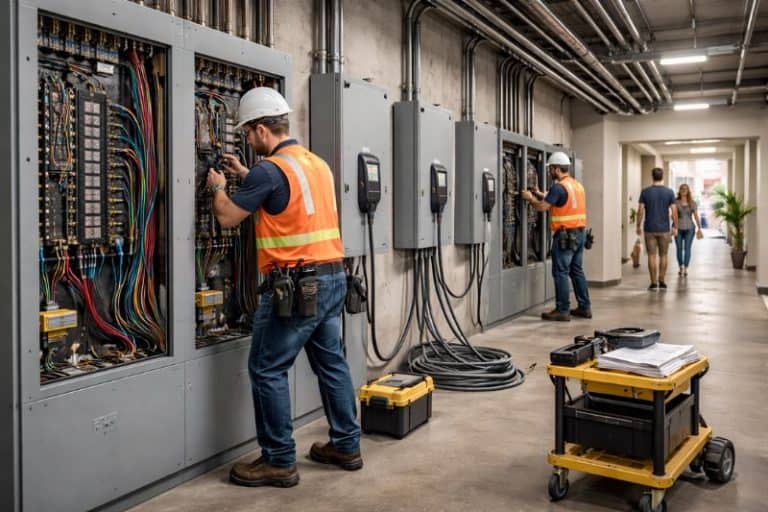
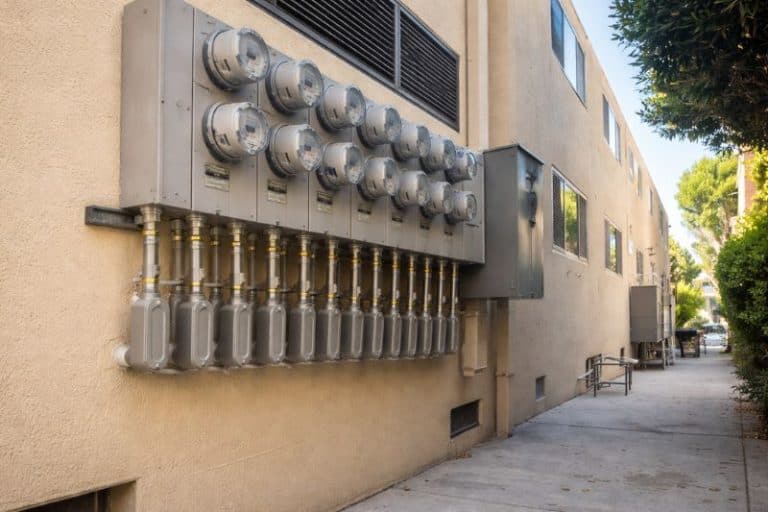
We begin with a site evaluation that maps the existing electrical infrastructure, identifies the house panel or meter main capacity, and determines how many stations the building can support with or without a service upgrade. From there we design a conduit plan that allows stations to be added in phases without redoing the primary run each time. If the main panel is full or undersized, we propose a subpanel addition or a full service upgrade, coordinated through our commercial electrical services, so the charging project and any electrical upgrade work move through permitting together.
Common scopes on multi-unit projects include conduit routing across parking garages, concrete coring with fire stopping at penetrations, trenching to detached parking areas, bollard installation for impact protection, ADA-compliant station placement, and signage. For networked chargers, we provision the equipment, test connectivity, and coordinate with your IT vendor or the charger manufacturer’s platform if a gateway or network configuration is required. Property managers receive clear labeling, access control documentation, and a closeout packet formatted for HOA oversight, insurance, or lender requirements.
Choosing the Right Charger
Speed, location, and safety drive the decision. For most homes, a 40A or 50A Level 2 unit balances charging speed with practical panel capacity. Hardwired units are standard for outdoor installations and higher-amperage setups. Plug-in units offer more flexibility when a protected 240V receptacle in a covered location is suitable. We recommend equipment that carries a recognized safety listing, has solid cable strain relief, and offers practical cord management for daily use rather than just the lowest purchase price.
Planning for a second EV
If there is any chance a second vehicle enters the picture, the time to run conduit for a second station is during the first installation, not as a separate project later. We can run conduit with a pull string to a second parking position, install a larger subpanel near the parking area, or leave breaker space reserved in the panel for a future circuit. This costs very little when done as part of the initial scope and saves significantly compared to mobilizing for a second project.
Long runs and voltage drop
For detached garages, carports at the far end of a driveway, or parking areas that require a long conduit run, voltage drop becomes a factor in conductor sizing. A circuit that tests fine at the panel can deliver noticeably reduced performance at the charger if the conductor is undersized for the distance. We calculate voltage drop for every run and adjust wire gauge accordingly so your charger delivers the power it is rated for consistently.
Permits, Inspections, and Timeline
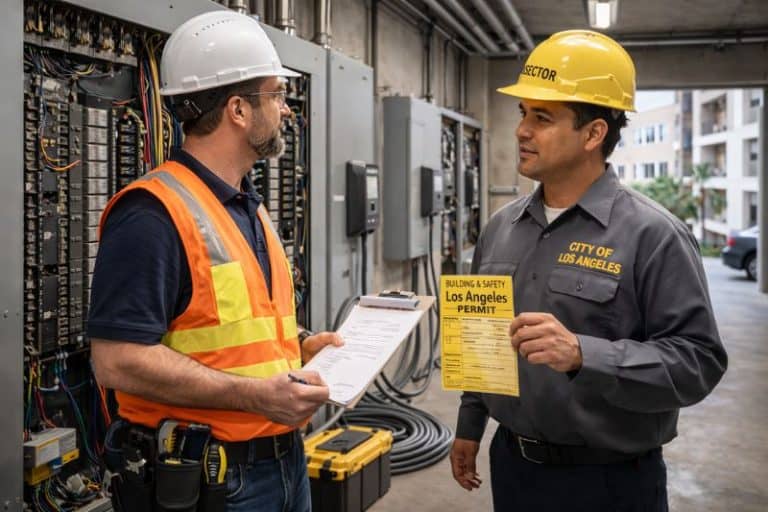
Most EV charger installations in Los Angeles require a permit and a final inspection. We handle the paperwork end to end: completing the permit application, preparing a site sketch or floor plan when needed, and submitting load information that confirms your panel can support the new circuit.
When the panel needs to be part of the scope
If the main panel is full or undersized, we propose options, adding a subpanel, relocating loads, or scheduling a service upgrade, and fold that work into the same permit so you are not managing multiple approvals. During permitting we coordinate any utility requirements that apply to your property, including LADWP shutoffs for panel work, meter location clearances, or utility access windows.
What installation day looks like
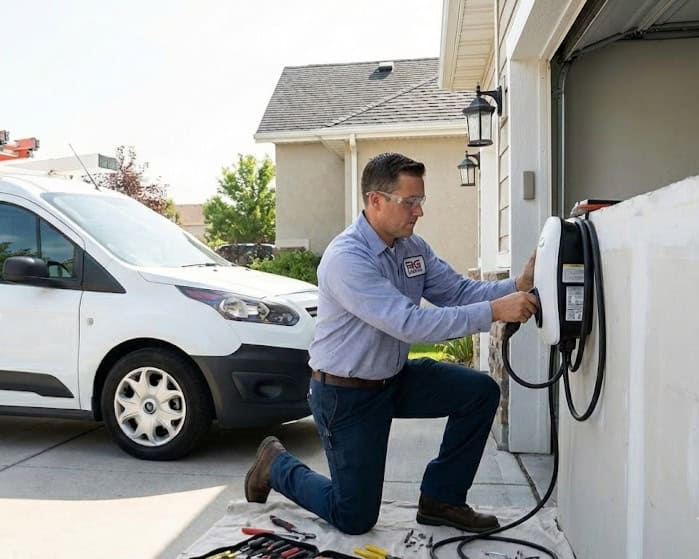
A standard home Level 2 installation typically takes a few hours once we are on site. That includes protecting finishes, running conduit or cable along the agreed path, mounting the charger, making terminations at the panel, labeling the new circuit, and commissioning the unit with your vehicle. If walls or ceilings are finished, we use strategic access points to minimize patching. Where runs require exterior trenching, concrete coring, or work on opposite sides of the home, we communicate that in advance so there are no surprises on the day of work.
Multi-unit and commercial timelines
Multi-unit and commercial projects take longer because coring, trenching, bollards, signage, and ADA-compliant routing require coordination with property management and sometimes other trades. We sequence work by zone to keep parking accessible, post advance notices for residents, and schedule any noisy work during approved hours. Inspection coordination follows the same approach as residential: our technician meets the inspector, demonstrates proper breaker sizing and labeling, verifies GFCI protection where required, and powers up the charger. You receive closeout photos, an updated panel directory, and any documentation your rebate or tax credit program requires.
Costs and What Affects Price
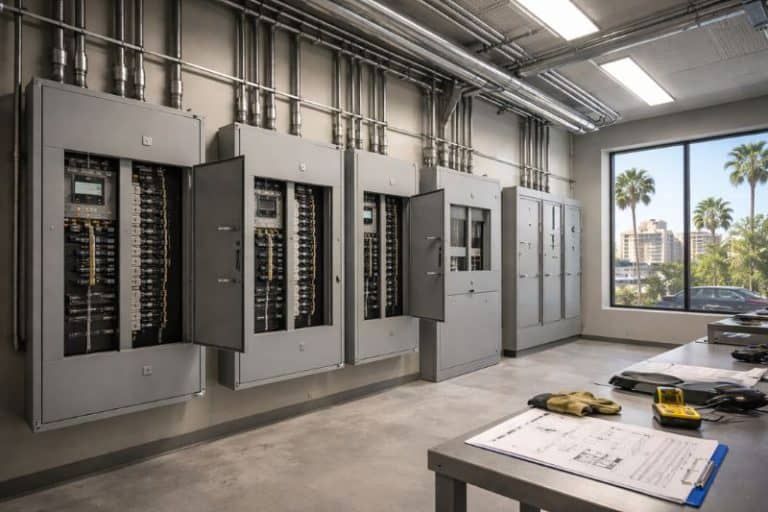
Pricing depends on the distance from panel to charger location, whether the run is surface-mounted conduit or in-wall, outdoor weather rating and protection requirements, and whether a panel upgrade or subpanel is needed. Trenching, concrete coring, and bollard installation add cost on commercial and multi-unit projects. For an accurate quote, share a clear photo of your main panel with the door open, any subpanels, and the desired charger location when you request an estimate. This lets us prepare before the visit and give you a more precise range upfront.
Related Electrical Services
Plan your charging project with complementary upgrades that improve reliability and capacity. See our wiring and dedicated circuits and emergency electrical repairs.
Frequently Asked Questions
Do I need a permit to install an EV charger in Los Angeles?
Yes, in most cases. LADBS requires a permit for new dedicated circuits, and a final inspection is part of the process. We handle the permit application and meet the inspector on your behalf.
Can my existing panel support a Level 2 charger?
It depends on your current load and available breaker space. We evaluate this during the estimate visit. If the panel is undersized or full, we can combine the panel upgrade and charger installation under a single permit.
How long does a residential installation take?
Most home Level 2 installations are completed in a few hours on the day of work. Longer runs to detached garages or exterior trenching may add time. We communicate this in advance.
Can you install EV chargers in a parking garage for an apartment building?
Yes. We handle the full scope including load evaluation, conduit design, coring, panel or subpanel work, ADA placement, bollards, and permit coordination. We phase the work to minimize parking disruption for residents.
What if I want to add a second charger later?
We can run conduit with a pull string to a second parking position during the initial installation at minimal added cost. Planning for future expansion upfront is significantly cheaper than returning for a second mobilization.
Do you work with HOAs and property management companies?
Yes. We provide certificates of insurance, one-line diagrams, equipment documentation, and permit closeout packets formatted for HOA and property management records. We also post advance notices for residents and coordinate access with building staff.
For immediate assistance or to schedule a professional evaluation, call RG Electric directly at (323) 521-5131.
Electrical work is hazardous. Consult a licensed electrician like RG Electric for inspections, permits, and code-compliant installations.