
 Call (323) 5215131
One of the most common questions property managers and homeowners in Los Angeles face after a technician visits is whether the work they need is a repair or a replacement. The answer affects cost, timeline, permit requirements, and in some cases, whether the work can legally be done at all. As a licensed C10 electrical contractor, License #910807, RG Electric makes this determination on every service call, and understanding how we think about it helps you make better decisions about your property before the estimate arrives.
Why the Distinction Matters More Than Most People Realize
Repair and replacement sound like a cost question, and cost is certainly part of it. But the more important difference is what each option actually accomplishes for the safety and compliance of your electrical system.
A repair addresses a specific fault. It restores something that was working to a working condition. A replacement removes a component entirely and installs a new one that meets current code. The two paths have different implications for inspections, insurance coverage, and how long the fix holds up over time.
Choosing the wrong path, specifically repairing something that should be replaced, is one of the most common ways a short-term electrical fix becomes a repeat expense. Understanding which situations call for which approach is part of what you’re paying for when you hire a licensed electrician.
When a Repair Is the Right Answer
Repairs make sense when the underlying component is sound, the fault is isolated, and restoring it to proper function brings it into compliance with current code. Not every electrical problem signals a failing system. Some issues are genuinely straightforward.
Loose Connections and Worn Contacts
Outlets and switches that have become loose, intermittent, or unresponsive are often a connection issue rather than a component failure. A trained technician can identify whether tightening or re-terminating the connection resolves the problem without replacing the device itself. When the wiring behind the device is in good condition and the outlet or switch is relatively current, a repair is appropriate.
Single Breaker Faults
A breaker that has failed but exists within a panel that is otherwise sound and code-compliant can often be swapped individually. The breaker itself is the failed component, not the panel. If the panel brand is one of the recalled types, however, the calculus changes entirely, and replacement of the panel becomes the correct answer regardless of how many individual breakers are functioning.
Wiring Faults in Limited Areas
A short in a single circuit, a damaged section of wire in an accessible location, or an incorrectly wired junction box can sometimes be addressed without rewiring the entire circuit. When the fault is contained and the surrounding wiring is in acceptable condition, targeted repair is efficient and appropriate. A thorough diagnostic, however, is what determines whether the fault is actually contained or whether it’s a symptom of something broader.
When Replacement Is the Only Code-Compliant Option
There are situations where a repair is not a legitimate option, either because the component itself has failed beyond repair, because California code requires replacement under the circumstances, or because repairing rather than replacing would leave the installation in a condition that cannot pass inspection. These situations are more common in Los Angeles than many homeowners expect, largely because of the age of the housing stock.
Recalled and Obsolete Panel Brands
Zinsco, Federal Pacific, Challenger, and Pushmatic panels cannot be repaired into compliance. These four brands are known fire hazards. Their breakers fail to trip under overload conditions, their bus bars are prone to overheating, and their designs do not meet current safety standards. Insurance companies in Los Angeles are increasingly refusing to cover properties that still have these panels installed, regardless of whether they appear to be functioning.
When RG Electric encounters one of these panels, the conversation is always about replacement, not repair. There is no repair path that resolves the underlying hazard. The panel has to come out.
Outlets That Predate Current Safety Requirements
Outlets installed before 2008 may not meet tamper-resistant requirements now mandated by code. Ungrounded two-prong outlets cannot be repaired into compliance with current grounding requirements. GFCI protection near water sources is required by code, and an outlet that lacks it must be replaced, not repaired. In each of these cases, the issue isn’t that the outlet has failed. It’s that it was never built to meet the standard that currently applies.
This is one of the most common points of confusion for homeowners. An outlet can work perfectly and still require replacement because what it does isn’t the same as whether it’s safe or compliant.
Deteriorated or Unsafe Wiring
Knob-and-tube wiring, aluminum branch circuit wiring from the 1960s and 70s, and cloth-insulated wiring that has become brittle with age are all candidates for replacement rather than repair. These wiring types have degraded to a point where patching a fault doesn’t address the condition of the surrounding material. Repairing a section of knob-and-tube wiring while leaving the rest in place doesn’t resolve the fire risk, and in many cases a city inspector will require the full circuit to be addressed before approving the work. Our wiring services in Los Angeles cover the full scope of these evaluations, from targeted circuit replacements to complete home rewires.
Components That Have Reached End of Life
Electrical components have service lives. Panels typically last 25 to 40 years under normal conditions. Outlets and switches installed decades ago in a home that has been heavily loaded can wear out mechanically. When a component is at or past its expected service life and is presenting faults, repair extends the problem rather than resolving it. Replacement is the answer that actually holds.
How RG Electric Makes the Determination
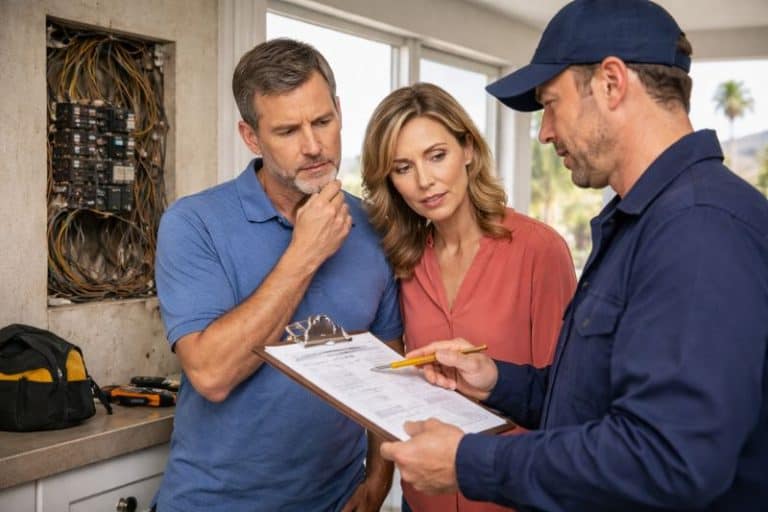
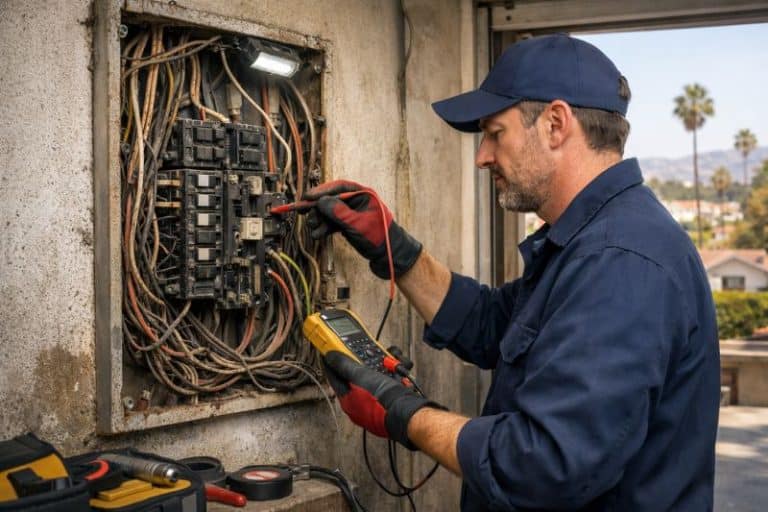
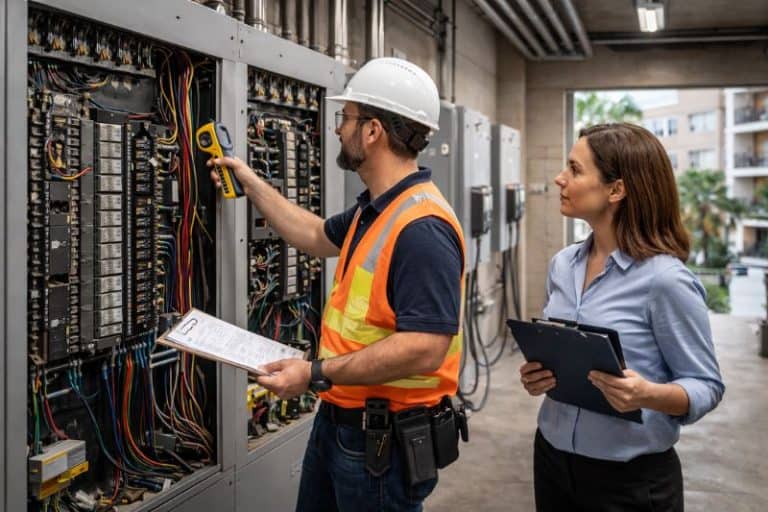
The decision between repair and replacement isn’t made at the door. It’s made after a thorough diagnostic by a trained technician who can see the full condition of the component and its surrounding system.
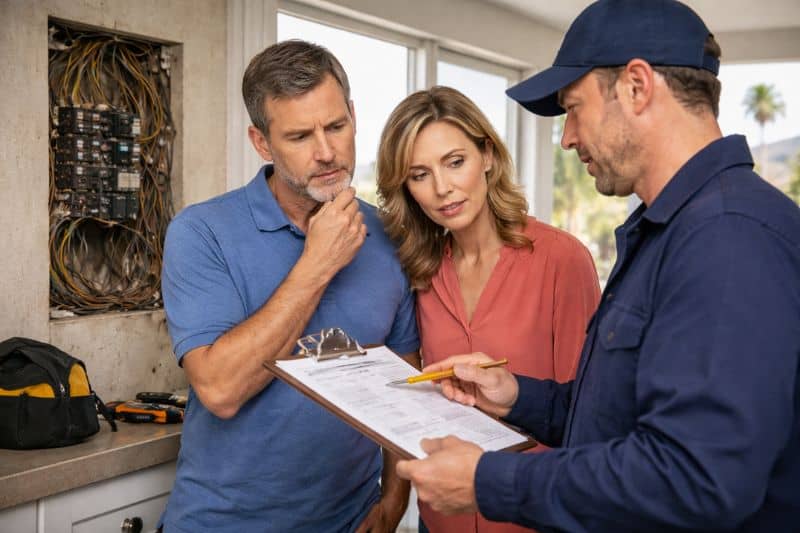
When a customer calls with a problem, a service call is scheduled and a fee is charged upfront. That fee covers the technician’s time and travel, and it exists because accurate diagnosis requires skilled labor. The technician examines the fault, assesses the surrounding system, and reports findings to Roy, our supervising master electrician. Roy then develops an estimate that reflects what the job actually requires.
If a repair will fully resolve the issue and bring the installation into compliance, that’s what we recommend. If the repair would leave a code violation in place, address only part of a larger problem, or involve a component type that cannot be made compliant, we’ll tell you that directly and explain why replacement is the appropriate path.
We don’t recommend replacement to increase the size of a job. We recommend it when it’s the only answer that actually solves the problem. And we explain our reasoning clearly so you understand what you’re deciding before you agree to anything.
The Insurance and Inspection Dimension
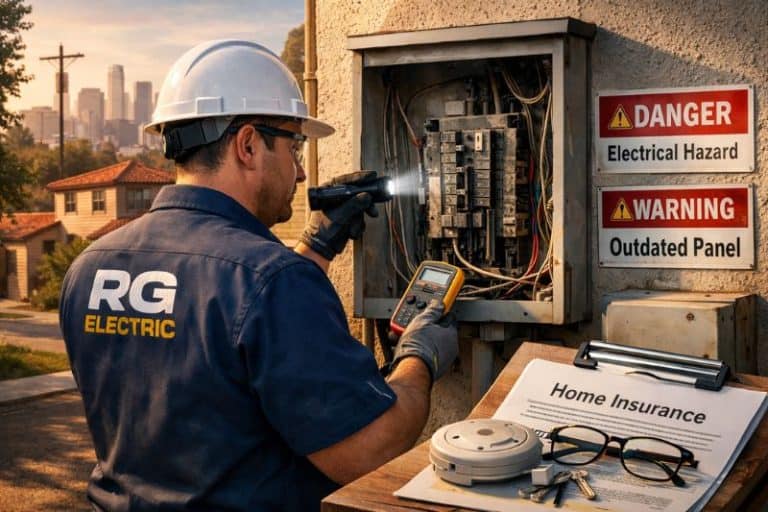
In Los Angeles, the repair-vs-replacement decision has an insurance dimension that homeowners and property managers increasingly can’t ignore. California insurers have been tightening their electrical requirements, particularly since the Pacific Palisades fire and the broader increase in wildfire-related claims. Panels, wiring types, and installation conditions that were acceptable to insurers five years ago are now triggering policy non-renewal notices.
A repair that restores function but doesn’t resolve an insurer’s underlying concern accomplishes nothing from a coverage standpoint. If your insurer has flagged an outdated panel, repairing a breaker within it doesn’t satisfy the condition. The panel itself is the issue, and replacement is what the insurer is requiring.
Property managers dealing with multi-unit buildings face this pressure more acutely than most. A building with several aging subpanels and mixed wiring conditions across units can accumulate repair costs over time without ever resolving the systemic issue. Our commercial electrical services in Los Angeles are built around this reality, helping property managers understand what their buildings actually need rather than managing the same recurring problems indefinitely.
What Each Path Looks Like in Practice
A Repair Job
A homeowner in Sherman Oaks calls because a bathroom outlet stopped working. The technician arrives, runs a diagnostic, and finds that the GFCI outlet has tripped and won’t reset because of a wiring fault upstream. The fault is a loose connection in the junction box feeding the circuit. The technician corrects the connection, confirms the GFCI is functioning, and the job is complete. The outlet was sound. The wiring behind it was sound. The fault was a specific, correctable connection problem.
A Replacement Job
A property manager in Koreatown calls because a unit’s kitchen has lost power. The technician finds a tripped breaker in a Zinsco panel. Resetting the breaker resolves the immediate problem, but the panel itself is a recalled fire hazard. The technician reports to Roy, and the estimate reflects full panel replacement, not breaker repair. Repairing the breaker in a Zinsco panel doesn’t address the hazard, wouldn’t satisfy the insurer’s requirements, and leaves the property owner exposed. Replacement is the only appropriate answer.
When a Repair Reveals a Replacement Need
A homeowner in Encino calls about a flickering light. The technician finds the fixture connection is sound but the wiring feeding it has deteriorated insulation along a longer run. What looked like a repair job becomes a circuit replacement. This is common in older homes, and it’s why the diagnostic process matters. The repair estimate isn’t wrong. The diagnostic just revealed that the repair wouldn’t have resolved the actual condition.
Questions to Ask Before Any Electrical Work Begins
Will this repair bring the installation fully into code compliance? If a contractor says yes but can’t explain how, that’s worth pressing. Code compliance isn’t a judgment call. Either the work meets the standard or it doesn’t.
Will this repair satisfy your insurance carrier’s requirements? If your insurer has flagged a specific component, confirm that the proposed work addresses the flagged item, not just a symptom of it.
What is the expected service life of the repaired component? A repair that buys six months before the same component fails again isn’t a solution. A licensed contractor should be able to give you an honest assessment of what you’re getting.
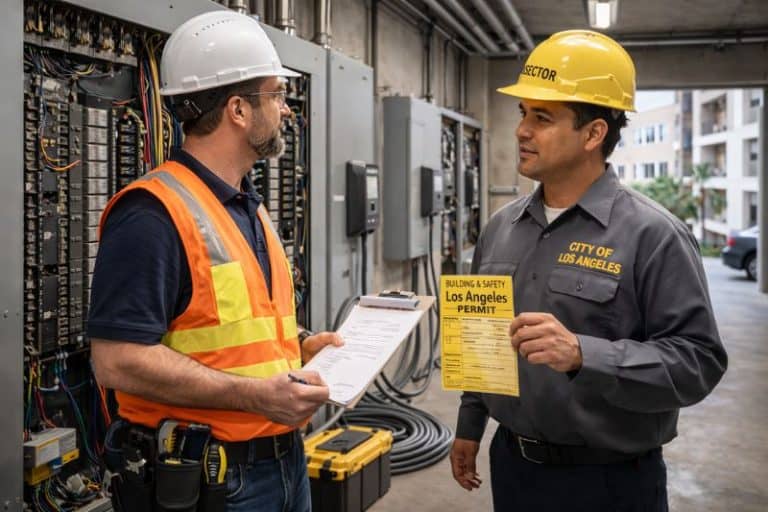
Does the repair require a permit? Significant electrical work in Los Angeles requires city permits and inspection. If a contractor proposes to skip the permit process, the work being done doesn’t meet the threshold for a repair. It meets the threshold for unpermitted work, and the liability for that falls on the property owner.
Making the Right Call for Your Property
The repair-vs-replacement decision is one of the most consequential calls in electrical work, and it shouldn’t be made based on which option is cheaper in isolation. The right question is which option actually resolves the problem, brings the installation into compliance, and holds up over time.
At RG Electric, we follow code to the teeth and we stand behind our work for twelve months. That means we have a direct interest in recommending the path that actually solves the problem. A repair that fails in three months isn’t a win for us or for you. Our electrical repair services in Los Angeles are built around giving you an accurate picture of what your system needs, whether that’s a targeted fix or a component replacement, so you’re not making the same call again six months from now.
If the work leads toward a panel evaluation, our electrical panel services team handles the full process from assessment through permitted installation and city inspection.
For immediate assistance or to schedule a professional evaluation, call RG Electric directly at (323) 521-5131.